Connect with us

News

JAMB ends affiliated degree programmes in Colleges of Education

Published

on

ADVERTISEMENT
Zoom Ad
ADVERTISEMENT
Zoom Ad

The Joint Admissions and Matriculation Board (JAMB) has formally ended admissions into affiliated degree programmes run by Colleges of Education, marking a major shift in Nigeria’s teacher education system and effectively making the Nigeria Certificate in Education the sole entry route into the institutions from the 2026/2027 academic session.


The decision is contained in JAMB’s newly released NCE/ND Agric Registration Guidelines issued by the Office of the Registrar in June 2026.

Under the new policy, the Board declared that ‘no admission into any affiliated programme in any College of Education from 2026/27 Session’.

JAMB also ruled out direct admission into 100 and 200 levels in Colleges of Education, insisting that all fresh entrants must now come through the NCE programme.

Advertisement

‘With effect from 2026/27 Session, no admission into 100 or 200 Level is allowed into any College of Education. All entrants are through NCE’, the Board stated.

The development signals the end of an era for affiliated degree programmes, which for decades enabled Colleges of Education to award university degrees through partnerships with conventional universities.

The reform is expected to affect thousands of candidates who applied for degree programmes through affiliated Colleges of Education for the 2026 admission cycle.

To cushion the impact, JAMB outlined options for candidates who had already selected affiliated Colleges of Education for degree programmes through Direct Entry.

Advertisement

According to the Board, affected candidates may apply for a change of institution at no cost, transfer to the parent university to which the degree programme is affiliated, or allow their second-choice institution to become their first choice for admission processing.

‘A candidate may choose to be moved to the parent university to which the Degree programme is affiliated’, the Board said.

JAMB added that candidates wishing to switch institutions had been given up to 22 June to complete the process.

Similarly, candidates seeking 100-level admission into affiliated Colleges of Education through the Unified Tertiary Matriculation Examination have been presented with three options: change institution, elevate their second-choice institution to first choice, or migrate to the NCE programme.

Advertisement

The Board said candidates who opt for the NCE route would be required to obtain an O’Level verification code from the relevant examination body and pay only ₦700 as registration fee on the JAMB portal.

‘The candidate may be moved to the NCE programme of the institution, on the understanding that the choice of the College of Education indicates an interest in pursuing the NCE qualification’, JAMB explained.

The guidelines further stipulate that every application for NCE admission is a deliberate choice and that candidates recommended for NCE admission would have any ongoing UTME or Direct Entry admission process suspended.

‘Anyone who chooses NCE and s/he is proposed/recommended, would have any ongoing UTME/DE process suspended’, the Board stated.

Advertisement

For candidates who have already applied through the 2026 UTME mode, JAMB said their details would be automatically migrated to their chosen first-choice College of Education or Agric-related Non-Technology ND programmes.

The Board also introduced mandatory O’Level verification for all NCE applicants, pegging the verification fee at ₦1,500 for one sitting and ₦2,000 for two sittings.

JAMB urged Colleges of Education, Institutional Professional Registration Centres, accredited CBT centres and its officials across the country to study the new guidelines and ensure strict compliance.

‘All PRCs, IPRCs and Officers of the Board are to study the guidelines and ensure strict compliance with the information contained therein’, the Registrar stated.

Advertisement

It was reported that Affiliated degree programmes have long served as a pathway for Colleges of Education to offer bachelor’s degrees in partnership with universities, allowing students to earn university degrees while studying in Colleges of Education.

The new JAMB policy effectively ends that arrangement for new admissions from the 2026/2027 academic session, reinforcing the NCE as the foundational qualification for teacher education in Nigeria.

Continue Reading
Advertisement

News

Benue probe uncovers N139.8bn missing funds, recommends recovery

Published

on

By

ADVERTISEMENT
Zoom Ad
ADVERTISEMENT
Zoom Ad

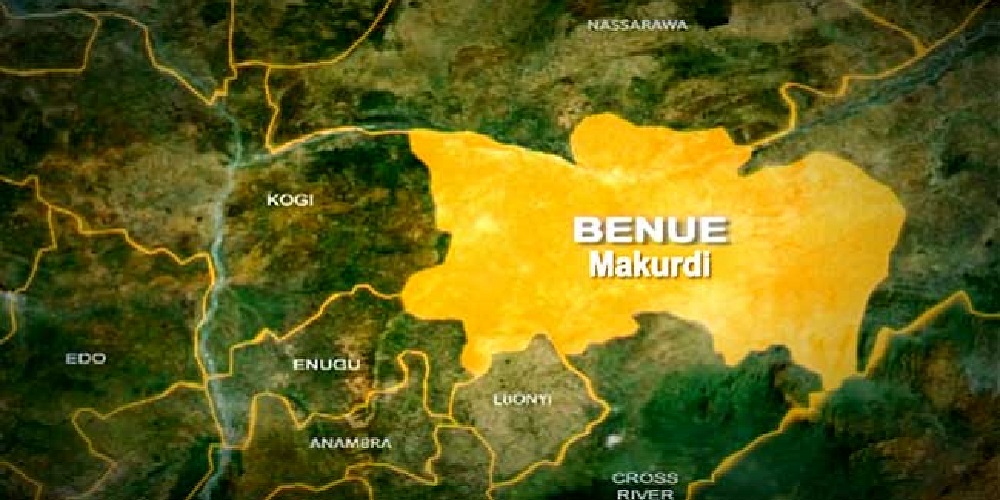
A commission of inquiry set up by the Benue State Government to investigate the state’s income and expenditure between 2015 and 2023 has uncovered N139.8 billion in unaccounted public funds.

The Chairman of the Benue State Income and Expenditure Commission of Inquiry, Justice Jubril Idrisu (retd), disclosed this on Friday while presenting the commission’s report to Governor Hyacinth Alia at the Government House, Makurdi.

Idrisu said the commission’s findings showed that the state generated more than N826.5 billion in revenue during the period under review, while expenditure stood at about N683.4 billion.

According to him, the records revealed an unaccounted balance of approximately N139.8 billion, which the commission recommended should be recovered from persons found responsible.

Advertisement

“The commission’s findings, contained in two volumes, revealed significant concerns in the management of public finances during the period under review.

“Records showed that the state generated over N826.5 billion in revenue, while expenditure stood at about N683.4 billion, leaving an unaccounted balance of approximately N139.8 billion,” he said.

The retired jurist explained that the commission, inaugurated in June 2025, was mandated to examine the income and expenditure of the immediate past administration and the 23 local government councils between May 29, 2015, and May 28, 2023.

He said the panel also uncovered questionable loan transactions involving some financial institutions and local government councils, including repayments that far exceeded the original loan amounts without adequate documentation.

Advertisement

Idrisu further disclosed that investigators identified irregular transfers of public funds to certain financial institutions without sufficient records or proof of legitimacy, recommending appropriate recoveries where necessary.

He stressed the need for stronger financial controls, including proper authorisation of online transactions by designated officers and an end to the practice of issuing blank pre-signed mandates.

According to him, such practices undermine transparency and accountability in public financial management.

Receiving the report, Alia reaffirmed his administration’s commitment to transparency, accountability and institutional reforms.

Advertisement

Represented by his deputy, Dr Sam Ode, Alia commended the panel for their courage and painstaking assignment undertaken in the public interest.

He said Justice Idrisu was selected to head the commission because of his reputation as a fearless jurist and a man of integrity.

Alia expressed confidence that implementation of the commission’s recommendations would strengthen institutions, curb the misuse of public resources and ensure accountability for those found culpable.

He acknowledged the challenges encountered by the commission, including difficulties in obtaining information and cooperation from some individuals and institutions, but commended members for their resilience and dedication.

Advertisement

He also apologised for logistical difficulties experienced by the commission, noting that the present administration inherited serious institutional and administrative challenges at the inception of its tenure.

He assured the panel that its work would serve as a critical reference point in the state’s efforts to rebuild public confidence and restore accountability in governance.

The governor added that future generations would look back at the report as evidence of the commission’s contribution to strengthening transparency and responsible management of public resources in Benue.

NAN

Advertisement
Continue Reading

News

Two Soldiers Reportedly Killed In IED Attack In Sokoto.

Published

on

By

ADVERTISEMENT
Zoom Ad
ADVERTISEMENT
Zoom Ad

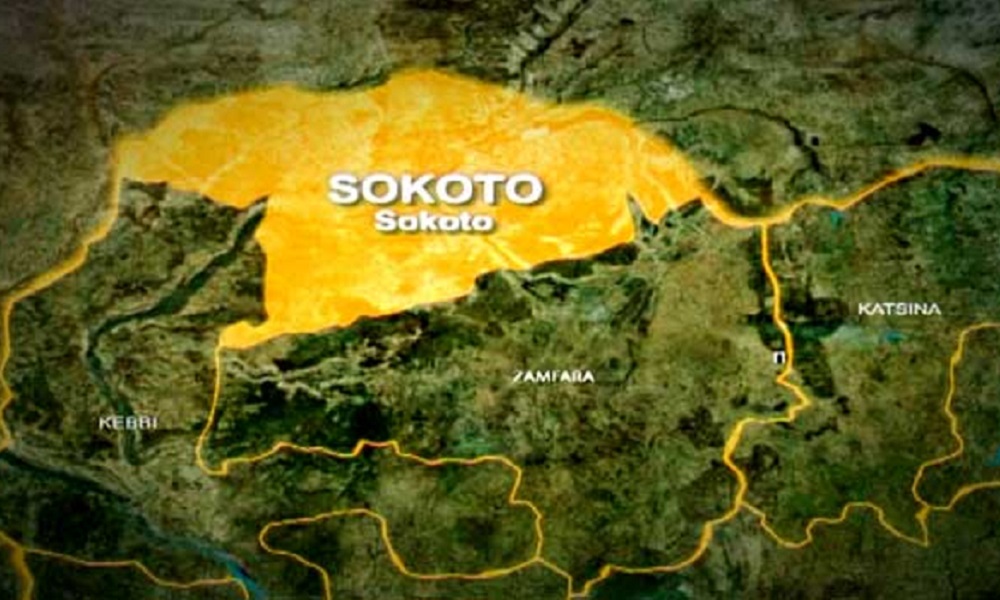
At least two soldiers have been reportedly killed and several others injured after an improvised explosive device (IED) allegedly struck a military vehicle in Sokoto State’s Isa Local Government Area during a response operation to a bandit attack on Bargaja community.

The incident was said to have occurred in the early hours of Saturday, June 21, 2026, along the Isa–Bargaja road, as troops moved in after residents raised an alarm over an ongoing assault.

Residents told Daily Trust that armed bandits invaded Bargaja community between 12:30am and 3:00am, firing sporadically and forcing locals to seek urgent military intervention.

According to accounts from villagers, the attackers allegedly planted an explosive device along the route before the arrival of security forces.

Advertisement

“They were on their way to rescue us when the vehicle hit the explosive. Many soldiers were affected,” a resident said on condition of anonymity, adding that one injured soldier later stumbled into the village seeking help after the blast.

The resident said the soldier sustained severe leg injuries, while confirming that two bodies believed to be soldiers were seen in the aftermath.

There are, however, differing accounts regarding the total number of casualties.

While some residents confirmed seeing two deceased soldiers, others claimed the death toll may be higher. One source alleged that up to three soldiers, including a driver, may have been killed in the incident, with additional personnel injured.

Advertisement

The remains of the deceased personnel were reportedly evacuated to Sokoto.

Another resident who visited a military base in Isa town said community members travelled to condole with troops following the incident.

“We hired two vehicles from our community and went to Isa to condole with the military over the loss of their personnel,” he said.

A separate source familiar with developments in the area claimed the troops may have been caught in a coordinated ambush while responding to the distress call.

Advertisement

According to the account, attackers allegedly allowed an Armoured Personnel Carrier (APC) to pass before targeting a following Hilux vehicle with gunfire and an explosive device.

“The APC was at the front and was allowed to pass. The attackers then opened fire and detonated an explosive device targeting the Hilux behind it,” the source said.

The source also claimed that one security operative fled into a nearby forest during the chaos, with efforts reportedly underway to locate him.

Residents described a night of sustained gunfire and confusion as security forces and attackers reportedly exchanged fire in the area.

Advertisement

“We never slept yesterday because of the sound of gunfire. I can’t confirm the exact number of the casualties,” another resident said, calling for official clarification.

Continue Reading

News

Nnamdi Kanu Expels Chika Edoziem, 9 Other Senior IPOB Members Over Alleged Betrayal, Sabotage, Power Grab

Published

on

By

ADVERTISEMENT
Zoom Ad
ADVERTISEMENT
Zoom Ad

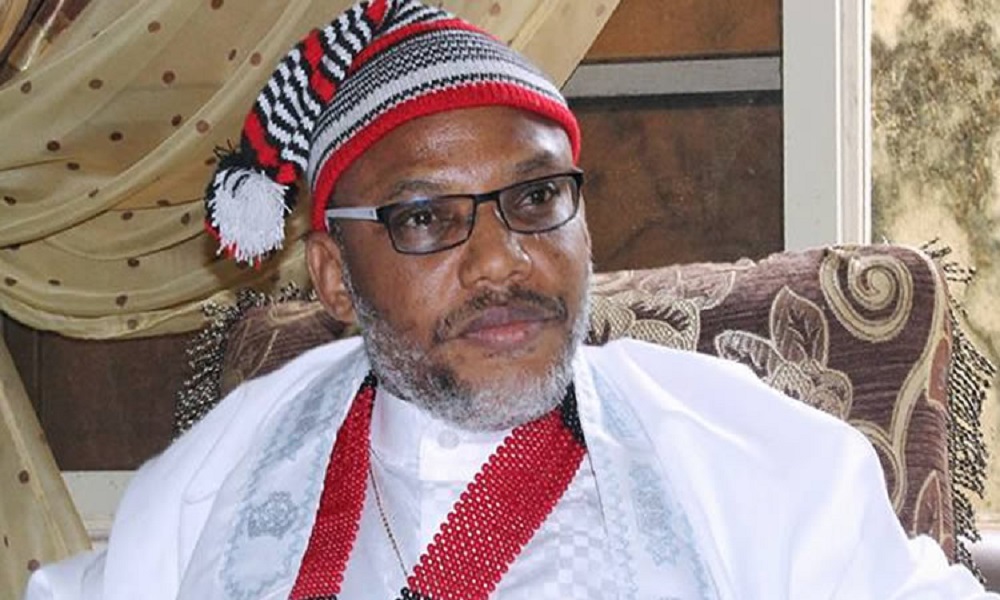
Imprisoned Indigenous People of Biafra (IPOB) leader Nnamdi Kanu has announced the indefinite expulsion of 10 senior members of the group’s dissolved third Directorate of State, headed by Chika Edoziem, accusing them of abandoning him in detention, undermining his legal battles, and attempting to hijack the separatist organisation for personal political gain.

In a statement attributed to Kanu and posted on X on Sunday by his brother Kanunta Kanu, the IPOB leader declared that the affected individuals no longer hold any authority to represent or speak on behalf of the group.

“The authority to appoint, discipline, suspend, remove, dissolve, or expel any officer or administration of IPOB is vested in the office of the Supreme Leader. The expulsions announced herein are made pursuant to that authority and in accordance with the IPOB Code of Conduct,” he said.

Those expelled are Chika Edoziem, Tony Nzurumike, Austin Agbanyim, Chukwudi Oforma, Isaiah Ubah, Colins Chinedu, Chinasa Nworu, Fidelis Ejiogu, Chidinma Nworu, also known as Juliet Edward Filatro, and Keke Uda.

Advertisement

Kanu said the expulsions followed what he termed repeated violations of the movement’s code of conduct.

According to him, the affected members were part of the third Directorate of State administration he appointed while being held at Kuje Prison in March 2017.

He noted that the administration’s original six-month tenure expired in September 2017 but continued to function at his discretion until it was dissolved.

Kanu stated that while the dissolution of the administration was an administrative measure, the latest expulsions were disciplinary actions stemming from the conduct of the individuals before and after the dissolution.

Advertisement

He accused the expelled members of abandoning him and other detained Biafrans without adequate legal, welfare, or medical support during their incarceration.

The IPOB leader further alleged that they obstructed efforts by groups including AVID, Rising Sun, and Ambassadors for Self-Determination to raise funds for his medical treatment when he was allegedly critically ill in the custody of the Department of State Services (DSS).

Kanu also accused the former officials of attacking his lawyers and collaborating with unnamed political actors in the South-East to undermine his court cases.

He claimed that they falsely blamed his brothers for his return to court after the October 13, 2022, judgment of the Court of Appeal and propagated narratives that President Bola Tinubu would only secure his release if he renounced the Biafra agitation.

Advertisement

“Persistent false claim that my brothers returned me to court after the Court of Appeal discharge of 13 October 2022, when in fact it was my then legal team (including Chief Mike Ozekhome and Ifeanyi Ejiofor) that went back to court instead of filing a preliminary objection to the Federal Government’s application for stay,” he said.

Kanu further alleged that the former officials spread stories that two African countries advised them to abandon him in detention and engaged in campaigns aimed at weakening his influence and taking control of the organisation.

He claimed that some of the expelled members altered the IPOB oath of office to demand personal loyalty and removed officers he had appointed, replacing them with individuals loyal to them.

Warning supporters and sympathisers, Kanu declared that any person or group associating with the expelled members would be considered as acting against the interests of IPOB and the Biafra cause.

Advertisement

He directed members and supporters worldwide to support the fourth Directorate of State administration headed by Chris Nwaọgụ, insisting that the movement remained united under his leadership.

Continue Reading

Trending

Copyright © 2024 Naija Blitz News