Connect with us

News

National Assembly moves to place security funding on first-line charge

Published

on

ADVERTISEMENT
Zoom Ad
ADVERTISEMENT
Zoom Ad

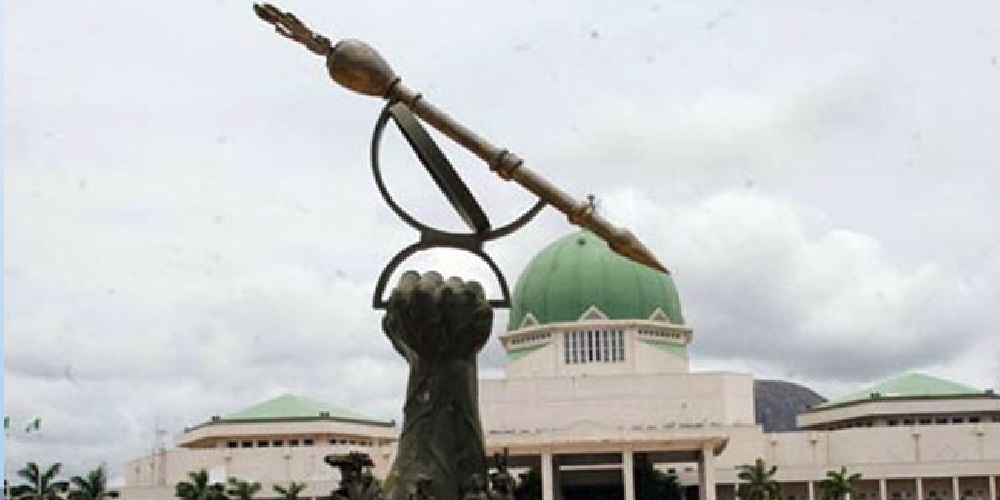
The National Assembly is considering a constitutional amendment that would place security funding on the first-line charge of the Federation’s revenue as part of efforts to tackle the country’s growing security challenges.


The proposal is contained in Bill No. 8 among the measures recommended for passage by the House of Representatives Committee on Constitution Review.

The amendment seeks to alter Section 81 of the Constitution to include the Armed Forces among institutions entitled to direct funding from the Consolidated Revenue Fund of the Federation.

Currently, agencies enjoying first-line charge funding under the Constitution include the Independent National Electoral Commission (INEC), the National Assembly and the Judiciary through the National Judicial Council (NJC).

Advertisement

Speaking at the Chatham House Africa Programme Roundtable in London on Tuesday, Deputy Speaker of the House of Representatives, Benjamin Kalu, said security has remained the foremost priority of the 10th National Assembly since its inauguration in June 2023.

Addressing the theme, “Nigeria’s 2027 Elections: How to Ensure Electoral Integrity Amid a Deepening Security Crisis,” Kalu said the legislature has deployed its constitutional powers to confront insecurity through increased funding, enhanced oversight and ongoing efforts to establish state police.

He noted that allocations to the security and defence sector have risen from ₦2.98 trillion to ₦5.41 trillion in the 2026 budget, representing an 81 per cent increase over the past three years.

According to him, committees of the House are working closely with the executive arm of government and security agencies to monitor expenditure and ensure effective implementation of security-related projects and programmes.

Advertisement

Kalu expressed confidence that sustained investment, stronger oversight mechanisms and institutional reforms would strengthen the country’s capacity to address insecurity and safeguard democratic processes ahead of future elections.

The Deputy Speaker said, “Through its appropriation powers, the National Assembly has ensured that security funding has grown consistently and remains the single largest sectoral allocation in the national budget. Since the 10th Assembly commenced in June 2023, security and defence allocations have risen from 2.98 trillion naira to 5.41 trillion naira in the 2026 budget, an increase of over 81% in 3 years, and the single largest sectoral allocation for three consecutive years.

“We are also advancing a constitutional amendment to make security funding a first-line charge on the national budget, guaranteeing its release before other lines and removing it entirely from the uncertainty of discretionary timing. We believe it will pass. Because the protection of citizens is not a budget item that should compete for space.

“Through its oversight function, our committees have worked in partnership with the executive and the security agencies to ask the questions that strong institutions must ask of themselves. Not to find fault, but to find answers. How are appropriated funds being deployed? Where are the gaps between planning and execution? What does implementation look like on the ground? This is the work of a legislature that takes its constitutional responsibility seriously, and it is work we conduct in the spirit of shared commitment to a more secure Nigeria.

Advertisement

“Resources must translate into results and parliament’s role is to help ensure that they do that. Through its representative function, the House has considered over 1,500 substantive motions in its first three legislative years, between June 2023 and June 2026, with between 350 and 400 of them specifically focused on security matters.

“The majority addressed issues of urgent public importance, including banditry, kidnappings, attacks on farming communities, and the protection of vulnerable populations. These were not procedural gestures. They produced results.

“Resolutions led to the summoning of security chiefs before the House. They mandated the recruitment of forest guards. They secured commitments to protect schools in high-risk areas and to establish permanent security outposts in communities that had been left exposed.”

He disclosed that under its representative mandate, the House has considered over 1,500 substantive motions between June 2023 and June 2026, about 400 of which focused mainly on security, banditry, kidnappings, attacks on farming communities, and protection of vulnerable populations.

Advertisement

According to him, the motions led to the concrete actions of summoning security chiefs, mandating recruitment of forest guards, securing commitments to protect schools in high-risk areas, and pushing for permanent security outposts in exposed communities.

The Deputy Speaker also said that the National Assembly has passed the revised Cybercrimes Act 2024 and the Control of Small Arms and Light Weapons Act 2024 while advancing the Joint Doctrine and Warfare Centre Bill for better coordination among armed forces.

On state Police which he described as the “legacy initiative” of President Bola Ahmed Tinubu, Kalu said the piece of legislation that was overwhelmingly passed with 289 votes in the House recently would enhance the security of the country.

He argued Nigeria’s centralised police, designed before independence has failed to provide quick response, fast enough for a 923,000 sqkm nation with over 230 million people.

Advertisement

He said: “we have passed the revised Cybercrimes Act 2024 and the Control of Small Arms and Light Weapons Act 2024. We are advancing the Joint Doctrine and Warfare Centre Bill to institutionalise coordination across the armed forces.

“The reform I want to speak about most specifically, because it bears most directly on the 2027 elections, is the State Police Bill, the legacy initiative of President Bola Ahmed Tinubu, which the House of Representatives passed with 289 votes. And as I speak here right now, the Senate is in chamber considering this bill for further legislative actions.

“The case for state police begins with a simple question about response time. When a security incident occurs in a Nigerian community today, how long does it take for help to arrive? The honest answer, in too many communities, is: too long.

“Studies of centralised policing in large federations consistently demonstrate that response times beyond 15 minutes allow situations to escalate from manageable to irreversible. In communities distant from federal police infrastructure, that window closes long before the response arrives.

Advertisement

“Nigeria’s current centralised policing architecture was designed before independence. It was not designed for the security complexity of a 923,000 square kilometre or a population of over 230 million people in 2026.

“State police addresses this directly. The officer who comes from a community knows its roads, its markets, its people, its tensions. The officer who knows the forest will police the forest better than those hired from outside”, he said.

while allaying the fears of many Nigerians on the possible abuse of the State Police, Kalu said the bill inherently carries formidable guardrails, saying “I am clear about the safeguards. State police is not a licence for political capture.

“The bill mandates merit-based recruitment, national minimum standards, independent state police service commissions for oversight, state assembly accountability and strict constitutional limits on political interference.

Advertisement

“The concern about governors weaponising state police is legitimate, and we have legislated against it. What is not legitimate is allowing that concern to perpetuate a policing model that is visibly failing the communities it exists to protect. Currently, it is obsolete and must be done with”.

Speaking on electoral matters, the Deputy Speaker said the Electoral Act 2026, signed by President Bola Ahmed Tinubu on 18 February this year on the ongoing efforts to achieve the credibility of the elections in Nigeria, carries some reforms to close what the 2022 Act left open.

He listed some of the reforms to include making electronic transmission of results to IReV a legal obligation admissible before the election tribunals, with 10 years imprisonment for officers who announce false results and empowering INEC to review declarations made under duress or contrary to procedure within seven days to correct errors before they become court cases.

It also include creating a permanent National Electronic Register of Election Results accessible to every citizen as certified documents; keeping voter registration open until 90 days before elections while allowing transfers and downloadable PVCs to reduce disenfranchisement; and requiring parties to submit verified digital membership registers 21 days before primaries, abolishing indirect primaries to enforce “one member, one vote” and transparent candidate selection”.

Advertisement

He said even though the country was yet to arrive at its democratic journey, it is making steady progress in all facets of its national life.

He said, “We know this better than anyone. 27 years of democracy is, by the measure of nations, a young journey. We have made mistakes. We have faced security challenges that have tested the limits of our institutions and we have not always had the answers we wished we had. But we have never stopped asking the right questions.

“We have never stopped building. What I have shared today is not a finished story. It is a progress report from a legislature that is working, that is learning, and that believes deeply that the democratic project in Nigeria is worth every difficult reform it demands”.


Advertisement
Continue Reading
Advertisement

News

Police arrest suspected bandit, recover ammunition in Kano

Published

on

By

ADVERTISEMENT
Zoom Ad
ADVERTISEMENT
Zoom Ad

The Kano State Police Command has arrested a 28-year-old suspected bandit and recovered an AK-47 magazine, 109 rounds of live ammunition, suspected military uniforms and other incriminating items during an operation in Bichi Local Government Area of the state.

In a statement by the Police Public Relations Officer, CSP Abdullahi Haruna Kiyawa, the arrest was made by operatives of the Bichi Divisional Police Headquarters following credible intelligence provided by a member of the public regarding a man allegedly wearing a suspected military uniform at Rimaye Village in Bichi LGA.

According to the statement, the police team, working in collaboration with members of the Rimawa Community, intercepted the suspect, identified as Mohammed Isah Haruna of Dan Dinshe Yamma Quarters in Dala Local Government Area.

A search of his bag led to the recovery of one AK-47 magazine loaded with 30 rounds of live ammunition, an additional 79 rounds of AK-47 ammunition, two sets of suspected military uniforms, three military caps, a suspected fake military identity card, personal identification documents, four ATM cards and a pair of desert boots.

Advertisement

The command said the suspect confessed during interrogation that he was in the area to deliver the recovered items to bandits operating in nearby forests. It added that the suspect is currently in police custody while investigations have commenced to apprehend other members of the criminal network before the case is charged to court.

The Commissioner of Police in Kano State, CP Ibrahim Adamu Bakori, commended the vigilance of the Rimawa Community for promptly alerting the police, describing the arrest as another demonstration of the importance of community participation in combating crime.

Continue Reading

News

Court stops FG from retiring education directors before 65

Published

on

By

ADVERTISEMENT
Zoom Ad
ADVERTISEMENT
Zoom Ad

The National Industrial Court of Nigeria has voided the Federal Government’s policy requiring education directors to retire after spending eight years in office, ruling that teachers and education officers who become directors are entitled to remain in service until they attain 65 years of age or complete 40 years of pensionable service.

Delivering judgment in Abuja on July 10, 2026, Justice O. Y. Anuwe nullified circulars issued by the Office of the Head of the Civil Service of the Federation and the Federal Ministry of Education seeking to enforce the eight-year tenure rule against teachers and education officers serving as directors.

According to the CTC obtained by our correspondent on Tuesday, the court held that the circulars were inconsistent with the provisions of the Harmonised Retirement Age for Teachers in Nigeria Act, 2022, and were therefore invalid to the extent that they applied to teachers and education officers.

“A teacher or education officer, whether he or she got to the post of director or not, is entitled to retire from service on attaining 65 years of age or 40 years of service,” Justice Anuwe held.

Advertisement

The judge added that serving as a director for eight years “is not a retirement condition for teachers any longer.”

The suit, marked NICN/ABJ/79/2025, was instituted by Mrs Rakiya Gambo Iliyasu, a Grade Level 17 director in the University Education Department of the Federal Ministry of Education, who challenged directives requiring directors who had spent eight years in office to retire.

Iliyasu argued that as an education officer, she qualified as a teacher under the Harmonised Retirement Age for Teachers in Nigeria Act, 2022, which guarantees compulsory retirement only at the age of 65 years or after 40 years of pensionable service.

She contended that the February 2026 circulars issued by the Head of the Civil Service of the Federation and the Federal Ministry of Education unlawfully sought to compel her and other education directors to retire before reaching the statutory retirement age.

Advertisement

Agreeing with the claimant, Justice Anuwe held that Section 3 of the Teachers’ Retirement Age Act expressly exempts teachers from any Public Service Rule requiring retirement before the age of 65 years or 40 years of pensionable service.

The judge also relied on the Act’s definition of a teacher, which expressly includes education officers, holding that the claimant fell squarely within the category of officers protected by the law.

The court further observed that the Office of the Head of the Civil Service of the Federation had, in an earlier 2025 correspondence, acknowledged that education officers covered by the Act were exempt from the eight-year tenure policy, making the government’s subsequent issuance of retirement directives inconsistent with its earlier position.

Consequently, the court declared the February 10, 2026, circular issued by the Head of the Civil Service of the Federation and the February 24 and February 26, 2026, circulars issued by the Federal Ministry of Education illegal, null and void insofar as they applied to teachers and education officers.

Advertisement

Justice Anuwe also set aside the three circulars and granted a perpetual injunction restraining the Federal Government and the Ministry of Education from implementing the eight-year tenure policy against teachers and education officers in a manner inconsistent with the Harmonised Retirement Age for Teachers in Nigeria Act.

Each party was ordered to bear its own costs.

The dispute arose after the Office of the Head of the Civil Service of the Federation and the Federal Ministry of Education issued circulars in February 2026 directing that directors who had spent eight years in office should retire in line with Rule 020909 of the Public Service Rules.

The directives affected several directors in the Federal Ministry of Education who are career education officers, despite the enactment of the Harmonised Retirement Age for Teachers in Nigeria Act, 2022, which extended the retirement age of teachers in public educational institutions to 65 years or 40 years of pensionable service.

Advertisement

The 2022 Act was signed into law to address the shortage of experienced teachers, improve retention of skilled education personnel and strengthen the quality of teaching and learning in Nigeria.

It also broadened the definition of teachers to include education officers, a provision that became central to the legal dispute.

The judgment is expected to have significant implications for director-level education officers across the Federal Ministry of Education and other education-related federal agencies, as it clarifies that the provisions of the Teachers’ Retirement Age Act override the eight-year tenure rule in the Public Service Rules for officers protected under the law.

Advertisement
Continue Reading

News

NANS declares emergency on dilapidated hostels

Published

on

By

ADVERTISEMENT
Zoom Ad
ADVERTISEMENT
Zoom Ad

The newly inaugurated President of the National Association of Nigerian Students, NANS, Akinteye Babatunde Afeez, on Tuesday declared a state of emergency on the worsening condition of students’ hostels across Nigeria’s tertiary institutions, describing the facilities as unfit for human habitation and a major threat to learning.

Speaking at his inauguration in Abuja, Afeez painted a grim picture of accommodation in universities, polytechnics and colleges of education, accusing authorities of neglecting hostel infrastructure while millions of students are forced to live in unsafe, overcrowded and unhealthy environments.

He warned that the continued deterioration of hostel facilities could no longer be tolerated, insisting that students’ welfare, safety and dignity would become the defining focus of his administration.

“The state of students’ hostels across our tertiary institutions is pathetically disheartening. Many hostels are in a deplorable and dilapidated condition, and they continue to deteriorate with little or no attention from the relevant authorities,” he said.

Advertisement

Lamenting poor sanitation, inadequate facilities and exposure to environmental hazards, the NANS president declared: “I hereby declare a state of emergency on students’ hostels across tertiary institutions in Nigeria. The welfare, safety and dignity of Nigerian students can no longer be compromised.”

Beyond accommodation, Afeez promised to transform NANS into a more proactive pressure group capable of compelling government institutions to respond to students’ concerns.

He said the era of symbolic activism was over, stressing that the association would focus on advocacy, accountability and measurable outcomes.

“NANS must return to being the true voice of every Nigerian student,not just in words but in action. You deserve an association that is fearless in advocating for you, pragmatic and transparent in its actions, and consistent in delivering results,” he stated.

Advertisement

Highlighting achievements recorded within his first 50 days in office, Afeez said the association had intervened in the rescue efforts involving abducted students and teachers in Orire Local Government Area of Oyo State and facilitated the reinstatement of suspended students at the Ladoke Akintola University of Technology ,LAUTECH, and the Federal University Oye-Ekiti ,FUOYE.

He also disclosed that NANS had constituted monitoring committees to track interventions by the Tertiary Education Trust Fund ,TETFund, Niger Delta Development Commission ,NDDC, North East Development Commission ,NEDC,and the Industrial Training Fund ,ITF, with the aim of ensuring that students fully benefit from government programmes.

On the Nigerian Education Loan Fund (NELFUND), Afeez said the association would closely monitor implementation of the student loan scheme and confront challenges affecting beneficiaries.

He announced that payment of students’ upkeep allowances would begin within the week and revealed that NANS had published a list of institutions allegedly withholding refunds due to students despite receiving NELFUND disbursements.

Advertisement

The student leader also unveiled plans to mobilise students ahead of the next general elections, saying NANS would spearhead a nationwide campaign for Permanent Voter Card (PVC) registration to increase youth participation in governance.

“As Nigerian students, and with NANS as our umbrella body, we constitute a large percentage of the nation’s population. We must be actively involved in determining who governs us,” he said.

He further pledged to pursue stronger partnerships aimed at expanding access to scholarships, employment opportunities, telecommunications support and quality education while preparing Nigerian students to compete in a technology-driven global economy.

Representing the Minister of Education, Dr Tunji Alausa, the Director of Polytechnic and Allied Institutions, Mrs Amy Igwe, urged the new NANS leadership to promote peace, unity and responsible engagement in advancing students’ interests.

Advertisement

She said the Federal Ministry of Education regarded NANS as a strategic partner in the development of the country’s education sector and advised the new executives to embrace dialogue in resolving challenges.

“The Ministry of Education recognises NANS as a critical stakeholder and partner in the development of our education sector. I charge you to lead with vision, unity, responsibility and patriotism,” the minister said.

In a keynote address, the Vice-Chancellor of Olusegun Agagu University of Science and Technology, Okitipupa, Prof. Temi Ologunorisa, challenged the new leadership to champion accountability, innovation, security and students’ welfare.

He urged NANS to monitor the implementation of government intervention programmes to ensure no student was denied access to available support and called on the association to launch a national innovation initiative within its first 100 days in office.

Advertisement

Goodwill messages were also delivered by the Minister of Interior, Olubunmi Tunji-Ojo; the Minister of Youth Development, Ayodele Olawande; Managing Director of NELFUND, Akintunde Sawyerr; and the Senior Special Assistant to the President on Students’ Engagement, Sunday Asefon.

They congratulated Afeez on his emergence and pledged continued collaboration with NANS in advancing students’ welfare, empowerment and youth development across the country.

Continue Reading

Trending

Copyright © 2024 Naija Blitz News