By Gloria Ikibah


President Bola Ahmed Tinubu has forwarded two executive bills to the House of Representatives for consideration, including proposals to strengthen senior secondary education and reform Nigeria’s criminal justice system, while withholding assent to two amendment bills passed by the National Assembly over constitutional and legal concerns.
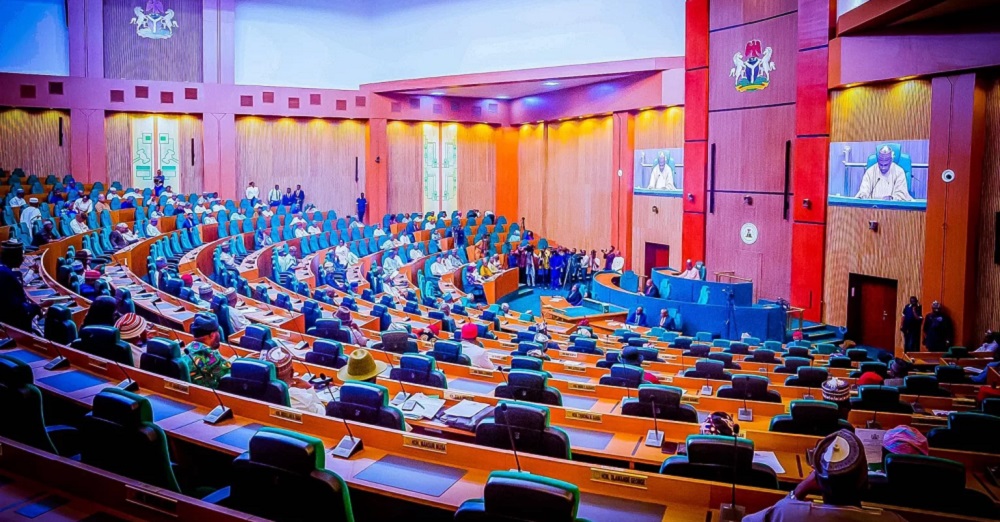
The President’s letters were read by Speaker of the House of Representatives, Rt. Hon. Tajudeen Abbas, during plenary on Wednesday. 
One of the proposed legislations, the National Senior Secondary Education Commission (Amendment) Bill, 2026, seeks to strengthen the administration and governance of public senior secondary education across the country.
In his communication to the House, President Tinubu said the bill was approved by the Federal Executive Council at its meeting of 30 April 2026 before undergoing legal vetting and final drafting by the Federal Ministry of Justice in line with constitutional and legislative drafting requirements.
The President said the amendment forms part of his administration’s broader commitment to strengthening Nigeria’s education sector and appealed to lawmakers to give it speedy consideration.
Tinubu also transmitted the Administration of Criminal Justice Bill, 2026, which seeks to repeal the existing Administration of Criminal Justice Act (ACJA), 2015 and replace it with a new legal framework designed to tackle longstanding procedural, legal and institutional weaknesses within the criminal justice system.
According to the President, the proposed legislation is intended to improve the administration of criminal justice institutions, accelerate the delivery of justice, strengthen public safety and better protect the rights of suspects, defendants and victims.
He explained that the bill will apply within the Federal Capital Territory and federal courts while also strengthening the Administration of Criminal Justice Monitoring Council.
The proposed legislation addresses several persistent challenges associated with the 2015 Act, including delays in criminal investigations and prosecutions, limited use of technology in criminal proceedings, weak coordination among justice sector institutions, ineffective case management and inadequate monitoring of compliance with the law.
Among its major reforms are the abolition of trial-within-trial proceedings for confessional statements through new admissibility procedures, the establishment of a National Sex Offenders Register to be maintained by the Office of the Attorney-General of the Federation, the creation of a Witness Support Fund to facilitate prompt payment of witness expenses and the introduction of plea forms to simplify arraignment procedures.
The bill also proposes mandatory timelines for courts to determine no-case submissions, wider use of written witness depositions to speed up criminal trials, improved judicial case management, a restructured Administration of Criminal Justice Monitoring Council with broader stakeholder representation, the appointment of an Executive Secretary for the council, powers for the Attorney-General to issue implementation regulations and measures aimed at preventing repeated trials arising from the death, retirement or transfer of judges.
President Tinubu urged lawmakers to give the bill expeditious consideration.
Meanwhile, the President declined assent to the Chartered Institute of Purchasing and Supply Management of Nigeria (Amendment) Bill, 2026, citing constitutional and legal objections to several of its provisions.
While acknowledging that many of the proposed amendments were well-intentioned, Tinubu argued that certain clauses seek to confer regulatory powers on the institute beyond those provided by law.
According to him, provisions requiring organisations to report procurement appointments to the institute, imposing financial penalties on employers who appoint non-members to head procurement units, compelling organisations to notify the institute whenever procurement staff are removed, empowering the institute to initiate legal proceedings against non-members and authorising inspection visits to private organisations amount to unreasonable restrictions and exceed the institute’s statutory mandate.
The President maintained that the institute is not the statutory regulator of procurement practice in Nigeria and therefore lacks the authority to compel independent organisations to comply with such provisions.
He advised the National Assembly to address the identified concerns before returning the bill for presidential assent.
Tinubu also withheld assent to the Raw Materials Research and Development Council (Amendment) Bill, 2026, citing structural deficiencies and drafting errors.
According to the President, the bill failed to properly capture its principal objectives in its long title and contained drafting defects that must be corrected before it can receive presidential approval.
The House is expected to begin legislative consideration of the two executive bills in the coming days, while lawmakers are also expected to review the rejected amendment bills in line with the President’s observations before deciding on the next legislative step.