News
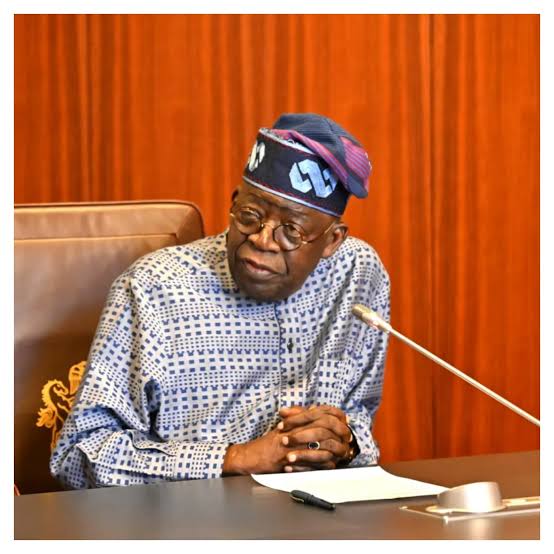
Tinubu’s Govt Makes Fresh Appointment
- /home/naijuinz/public_html/wp-content/plugins/mvp-social-buttons/mvp-social-buttons.php on line 27
https://naijablitznews.com/wp-content/uploads/2026/07/images-56.jpeg&description=Tinubu’s Govt Makes Fresh Appointment', 'pinterestShare', 'width=750,height=350'); return false;" title="Pin This Post">
- Share
- Tweet /home/naijuinz/public_html/wp-content/plugins/mvp-social-buttons/mvp-social-buttons.php on line 72
https://naijablitznews.com/wp-content/uploads/2026/07/images-56.jpeg&description=Tinubu’s Govt Makes Fresh Appointment', 'pinterestShare', 'width=750,height=350'); return false;" title="Pin This Post">
The Federal Government has inaugurated a Ministerial Advisory Committee made up of economists, public finance experts and private sector leaders to strengthen economic policymaking and support the implementation of ongoing fiscal reforms.

Members of the committee include the Managing Director of Sterling Bank, Abubakar Suleiman; the Chief Executive Officer of Economic Associates, Dr Ayo Teriba; the President of the Capital Market Academics of Nigeria, Prof. Uche Uwaleke; and the Director-General of the Lagos Chamber of Commerce and Industry, Chinyere Almona, among others.
Speaking during the inauguration in Abuja, the Minister of Finance and Coordinating Minister of the Economy, Taiwo Oyedele, described the committee as a strategic partnership between the public and private sectors aimed at closing the gap between policy formulation and implementation.

He said the committee would provide independent, evidence-based advice to support government decisions and help ensure that ongoing economic reforms improve the lives of Nigerians.
According to Oyedele, the Tinubu administration has introduced major reforms, including the removal of fuel subsidy, the unification of the foreign exchange market and the implementation of tax reforms to improve fiscal sustainability.
He said the government’s priority is to ensure these reforms lead to job creation, lower inflation, improved business confidence and better living standards.
“The committee will serve as a bridge between policy design and implementation by providing practical, evidence-based recommendations that strengthen government decisions and anticipate emerging economic risks,” Oyedele said.
The minister explained that the committee would not exercise executive powers or replace any existing government institution but would provide objective analysis and practical policy recommendations.
He urged members to assess how government policies affect businesses and households and recommend adjustments where necessary.
According to him, the committee will focus on economic policy, public financial management, economic coordination and strategies to ensure reforms produce meaningful national results.
Oyedele also restated the Federal Government’s goal of achieving seven per cent annual economic growth and building a $1 trillion economy by 2030.
He praised the members for agreeing to serve without pay, describing their decision as an act of patriotism. He assured them that their recommendations would help shape ministerial decisions and government policies.
The minister also encouraged the committee to remain objective, challenge existing assumptions and base its recommendations on credible evidence rather than political considerations.
He urged members to engage with businesses, manufacturers and citizens so that government policies reflect the realities across the country.
Earlier, the Permanent Secretary of the Federal Ministry of Finance, Raymond Omachi, described the committee as a strategic platform for evidence-based economic policymaking.
Omachi said the advisory body consists of economists, public finance specialists, governance professionals, development experts and private sector representatives who will provide advice on fiscal reforms, government efficiency, stakeholder engagement and economic coordination.
He added that the committee would support efforts to strengthen fiscal sustainability, improve public confidence and advance Nigeria’s economic transformation agenda.
Omachi congratulated the members on their appointment and thanked them for offering their expertise in service to the country.
Speaking on behalf of the committee, its chairman, Abubakar Suleiman, assured that members would focus on practical and workable recommendations.
News
See Dollar to Naira exchange rate today, August 12, 2026
The naira remained broadly stable against the United States dollar on Wednesday, August 12, 2026, with the official Nigerian Foreign Exchange Market (NFEM) rate trading around the mid-₦1,360 band while the parallel market hovered in the low-₦1,400 range.
Data from the Central Bank of Nigeria’s NFEM platform showed the official exchange rate at about ₦1,364 per dollar, reflecting only marginal movement from recent sessions. The official rate is derived from the volume-weighted average of trades executed on the market and serves as Nigeria’s benchmark exchange rate.
Currency dealers in Lagos said the parallel market (black market) traded at approximately ₦1,405 per dollar for buying and ₦1,415 per dollar for selling on Wednesday morning, keeping the spread between the official and unofficial markets relatively narrow compared with the sharp gaps recorded in 2024 and early 2025. Recent market trackers have shown street-market quotes clustering around the ₦1,410 region.
At the prevailing official rate, $100 exchanged for roughly ₦136,400, while $1,000 was worth about ₦1.364 million. In the parallel market, the same amounts were valued at about ₦141,500 for $100 and ₦1.415 million for $1,000.
Market participants attributed the relative calm to continued liquidity management by the Central Bank of Nigeria and steady foreign-exchange supply through the formal market. Analysts also noted that importer demand has remained moderate, helping the naira hold within a relatively tight range in recent weeks.
Reuters reported that traders expect the naira to remain broadly stable in the near term, supported by the CBN’s presence in the market and efforts to ease demand pressure for dollars. The report placed recent official-market trading around the ₦1,360 level and street trading near ₦1,425 per dollar.
The official market has traded mostly between ₦1,362 and ₦1,370 per dollar in recent sessions, according to market data compiled by Proshare, underscoring the currency’s recent consolidation around the ₦1,360 range.
For Nigerians monitoring exchange rates for travel, school fees, imports, or international payments, the key levels to watch today are about ₦1,364/$ at the official NFEM window and ₦1,415/$ in the parallel market.
News
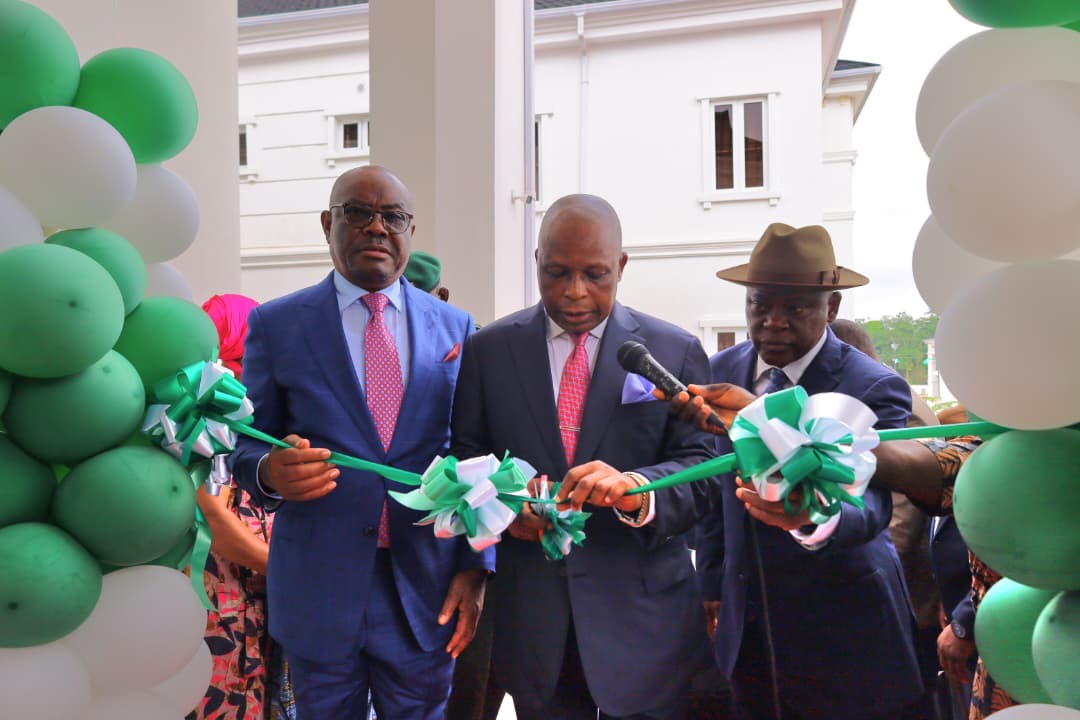
Wike Closes Secretariat Of Dissolved Committee On Sales of FG Houses In FCT
Minister of the Federal Capital Territory (FCT), Nyesom Wike, has directed that the Secretariat of the dissolved Ad-hoc Committee on Sales of Federal Government Houses (SFGH) in the Federal Capital Territory be closed down with immediate effect.
A statement on Wednesday, by the Senior Special Assistant on Public Communications and Social Media, Lere Olayinka, stated that the Minister also approved the creation of a division in the Departrment of Land Administration to handle matters relating to sales of Federal Government Houses in the FCT, hitherto carried out by the defunct SFGH.
Upon the completion of the assignments of Ad-hoc Committee on Sales of Federal Government Houses in the FCT, the Secretariat was retained to attend to issues arising from the committee’s activities.
With the formal closure of the Secretariat, the general public is enjoined to henceforth, approach the Department of Land Administration on all issues relating to sale of Federal Government Houses in the FCT.
Members of the public are also urged to be mindful of the antics and activities of fraudsters who parade themselves as staff, officers and members of the defunct Ad-Hoc Committee/Secretariat on SFGH as the Committee and Secretariat no longer exist.
News
Jonathan warns political parties, judiciary against undermining Africa’s democracy
Ex-President Goodluck Jonathan has charged political parties and the judiciary across Africa to strengthen democratic institutions and protect the will of the people, warning that democracy could become a mere facade if its foundational principles are weakened.
Jonathan, Chairman of the Goodluck Jonathan Foundation (GJF), gave the charge on Tuesday at the closing of the 2026 GJF Democracy Dialogue in Bauchi, with the theme, “Beyond Elections: Can Political Parties and the Judiciary Save Africa’s Democracy?
He said political parties must become genuine democratic institutions by embracing internal democracy, producing credible leaders, respecting their own rules and putting national interest above
partisan interests.
“Strong democracies cannot emerge from weak political parties,” Jonathan said, calling for stronger frameworks across Africa to regulate political parties and enhance democratic integrity.
He cited Kenya’s model of having a dedicated institution to regulate political activities alongside the electoral management body, saying other African countries could adopt similar arrangements to strengthen political accountability.
The former president also placed a heavy responsibility on the judiciary, saying it carried “an equally or more profound responsibility” in protecting democracy.
He urged judicial officers handling political cases to be guided by the principles represented by Lady Justice; impartiality, fairness and the rule of law.
Jonathan expressed concern that in some African countries, electoral contests were increasingly being settled in courtrooms rather than at the ballot box.
While acknowledging the judiciary’s constitutional responsibility to resolve electoral disputes, he said democracy was healthiest when the freely expressed will of the people was clear, respected and accepted by all.
“The courtroom should not become the arena where political mandates are routinely determined,” he warned.
According to a statement by Jonathan’s Special Assistant on Media, Ikechukwu Eze, the former President said a functional democracy must rest on eight cardinal pillars: sovereignty of the people, rule of law, separation of powers, protection of fundamental rights and freedoms, accountability and
transparency, free and credible elections, political pluralism, and an active civil society.
He cautioned that although no country could score perfectly on all the pillars, substantial compliance with most of them was necessary for democracy to remain stable and sustainable.
“When several of these foundations of democracy are weakened, what emerges is not genuine democracy but a pseudo-democracy; one that retains democratic forms while steadily losing democratic substance,” he said.
Jonathan urged African leaders to consciously build their political parties, legislatures, executives and judiciaries around these democratic principles.
“History will judge our democracies not by the number of elections we conduct, but by the strength of the institutions we build and the fidelity with which we uphold these democratic pillars,” he said.
He called on African countries to move away from the cycle of political instability and electoral crises and build strong institutions capable of promoting peace, development and shared
prosperity.
Jonathan thanked the Bauchi State Government and Governor Bala Mohammed for supporting the dialogue, as well as former Nigerian President Olusegun Obasanjo, and other participants for attending the event.
-
News12 hours agoFormer President, Goodluck Jonathan Gets Chieftaincy Title In Bauchi
-
News12 hours agoOkpebholo Sacks SUBEB Chairman
-
News12 hours agoOsun 2026: ‘Trump’s People Have Reached Out’ — Davido
-
News12 hours agoShehu Sani Reacts As Davido Appeals To Trump Over Osun Election
-
News12 hours agoOsun Poll: Adeleke Demands Fadahunsi’s Arrest Over Alleged Killings Threat Against Accord Members
-
Foreign12 hours agoTrump Hid In Catering Truck During Secret Plane Swap Over Iran Threat – Report
-
News11 hours agoKatsina deploys 23 APCs, drones, 200 patrol vans against banditry
-
News11 hours agoNANS seeks NELFUND access for Nigerians studying abroad