Connect with us

Sports

2026 FIFA World Cup: What To Know About The Prize Money For Winner

Published

on

ADVERTISEMENT
Zoom Ad
ADVERTISEMENT
Zoom Ad

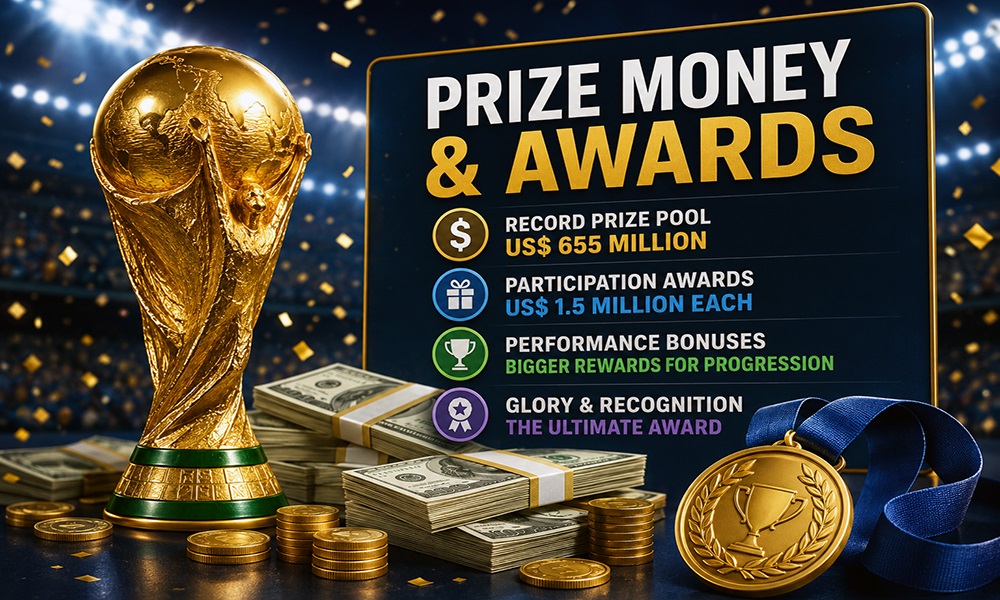
The 2026 FIFA World Cup will offer the biggest prize money in the tournament’s history, with the champions set to receive $50 million.


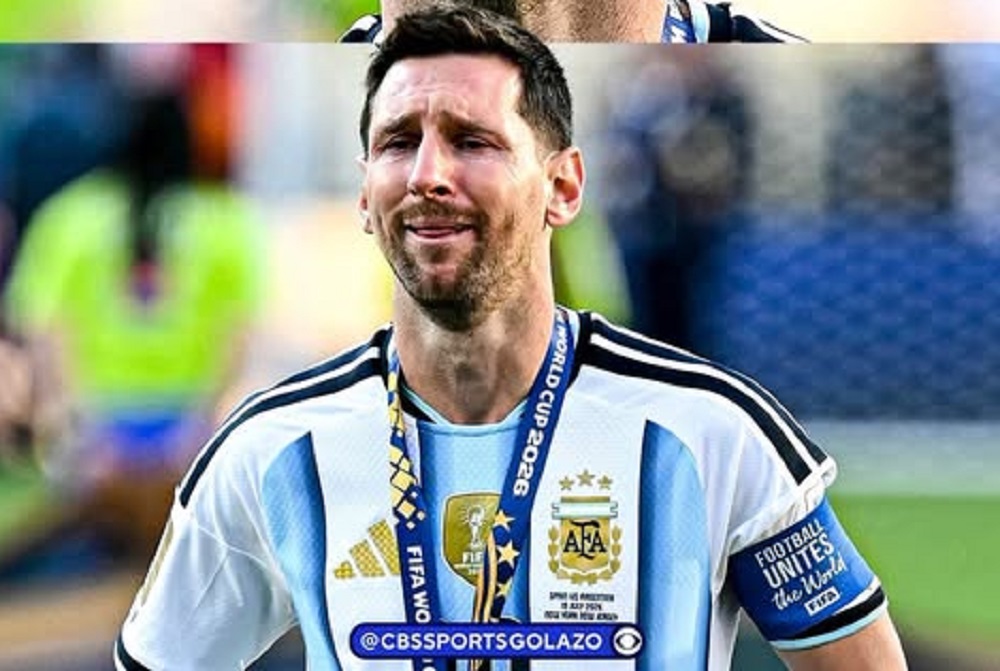
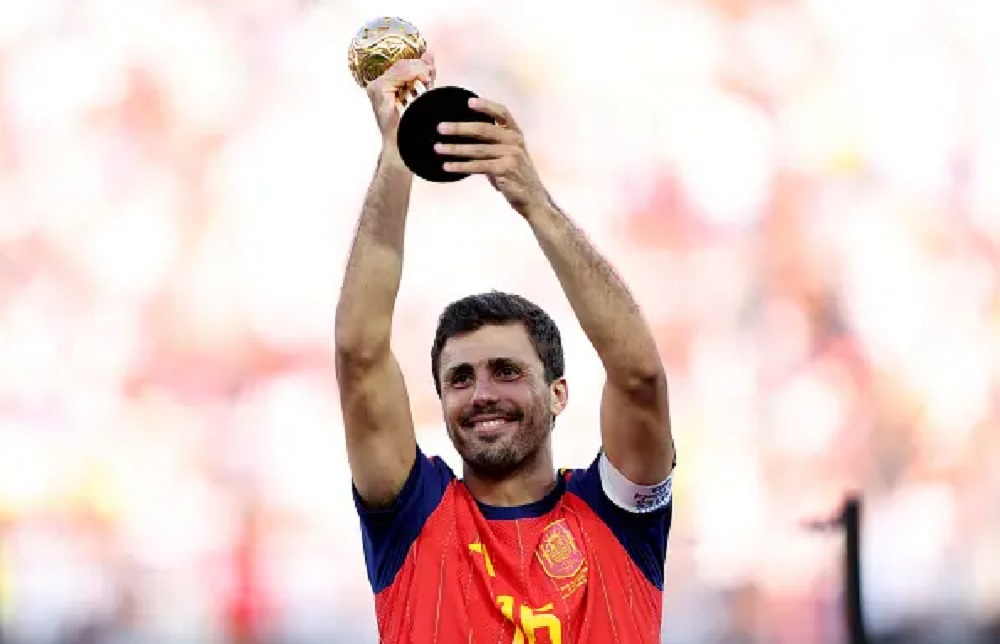
The winners of Sunday’s FIFA World Cup final (July 19) between Spain and Argentina will receive $50 million, while the runners-up will earn $33 million (KSh4.27 billion).

The winner of Saturday’s third-place playoff between France and England will take home $29 million, with the fourth-placed team receiving $27 million (KSh3.49 billion).

Below are the full details;

Advertisement

The winner of the World Cup will get a trophy, receive championship rings for the first time, and gain a lifetime of glory in what will be a defining moment in the country’s sports history.

FIFA expanded the payout for the 2026 World Cup, setting a record with a combined $871 million paid to the 48 participating teams.

That tally includes more than $100 million that was added in April after some federations in Europe lobbied for help to cover costs at a tournament across three countries that has required extensive travel and lodging costs.

The $51 million for either Argentina or Spain is a large sum, but it also pales in comparison to the fortunes that are spent on global soccer.

Advertisement

It’s also smaller than what last year’s Club World Cup winner earned in a tournament also played in the U.S.

For perspective, the $51 million for the winner is less than the transfer fee paid Tuesday by English club Brighton for a 19-year-old defender who spent most of the World Cup on the bench, Croatia’s Luka Vušković.

All teams get paid

FIFA pays money to the 48 national federations in two categories: Prize money bonuses based on how far each team advances in the tournament and across-the-board payments to cover training and preparation costs.

Advertisement

All 48 get at least $12.5 million for competing in the World Cup, including $10 million in prize money for qualifying and playing in the group stage. Each receives $2.5 million for pre-tournament training and expenses.

That upfront money was agreed at past World Cups to help avoid pre-tournament tensions when it wasn’t uncommon for players to claim that bonuses had not been paid by their federation.

The prize money goes up depending on how far the teams advance.

Higher amounts come after federation demands
Some federations, especially from Europe, had told FIFA that the prize money structure and payments for preparation costs set last year would leave them losing money on the tournament unless their teams went deep into the knockout rounds.

Advertisement

World Cup champion gets the big bucks
The eventual champion receives $51 million, compared to $42 million for Argentina’s federation for winning the 2022 tournament in Qatar. That 32-team edition had a total prize fund of $440 million.

Here is what the others are getting:

Runner-up: $34 million
Third place (England): $30 million
Fourth place (France): $28 million
Quarterfinalists (fifth to eighth): $20 million each
Round of 16 (ninth to 16th): $16 million each
Round of 32 (17th to 32nd): $12 million each
Group stage (33rd to 48th): $10 million each

Flights and hotels are covered
In addition to the payout sums and under World Cup regulations, FIFA is already obliged to pay for business‑class return flights for each federation to travel to the tournament plus board and lodging for a 50-person delegation, which includes the players.

Advertisement

The hotel payments start five nights before a team’s first game and one night after it is eliminated.

FIFA also covers the cost of domestic travel for up to 50 delegation members, and “a dedicated fleet of vehicles, including an equipment truck.”

The soccer federations of World Cup teams must pay for “adequate insurance … including but not limited to injury, accident, disease and travel,” plus “incidental hotel costs” and housing additional members of a delegation.

The World Cup trophy
On Sunday, the champions will celebrate with it after the final whistle during an award ceremony.

Advertisement

The original trophy is not awarded permanently. Instead, the winners will receive a gold-plated replica, which they can keep.

As for World Cup prize money, that’s paid by FIFA to the federations — not the players. It’s up to each federation’s rules how they handle the money.

For example: U.S. soccer will get to keep 20% of the prize money. The remaining 80% that the U.S. men’s national soccer team receives will be split evenly between the men’s and women’s national teams following a 2022 milestone agreement to pay its men’s and women’s teams equally, making the American national governing body the first in the sport to promise both sexes matching money.

Medals and World Cup Rings
Beyond the cash rewards, the World Cup winners will also receive gold medals.

Advertisement

All 26 players in the winning squad, together with the coaching staff, will each receive a gold medal. The runners-up will be awarded silver medals, while the third-placed team will receive bronze medals.

The tradition of awarding medals has evolved over the years. Before the 1978 World Cup, only the 11 players who featured in the final received medals.

In 2007, FIFA retrospectively awarded 122 medals to squad members from World Cup-winning teams between 1930 and 1974 who had missed out because they did not play in the final.

Match officials selected to officiate the World Cup final will also receive commemorative medals.

Advertisement

Following the final, FIFA will present its individual awards, including the Golden Ball for the tournament’s best player, the Golden Glove for the best goalkeeper and the Golden Boot for the tournament’s top scorer.

For the first time, FIFA will also present World Cup championship rings to the winners.

30 rings will be awarded to the champions, while another 1,996 commemorative rings featuring a miniature World Cup trophy and engraved band will be made available to fans.
Advertisement
Continue Reading
Advertisement

Sports

Just in: Unlucky Sunday for Nigeria as Super Falcons, Flying Eagles crumble, World Cup hopes dimmed

Published

on

ADVERTISEMENT
Zoom Ad
ADVERTISEMENT
Zoom Ad


It is an unlucky Sunday for two National teams of Nigeria, the Super Falcons fell to Cameroon just as Nigeria’s Flying Eagles have been knocked out of the race for the 2027 FIFA U-20 World Cup after suffering a heavy 4-1 defeat to Burkina Faso in the final of the 2026 WAFU Zone B U-20 Championship.

The defeat at the Stade Charles Konan Banny in Yamoussoukro, Côte d’Ivoire, also ended Nigeria’s hopes of qualifying for the 2027 U-20 Africa Cup of Nations.

The WAFU Zone B final carried added importance, as the winner was guaranteed a place at the 2027 U-20 AFCON, which will serve as the qualifying tournament for the FIFA U-20 World Cup.

Advertisement

With Burkina Faso emerging victorious, the Young Stallions secured the region’s ticket, while Nigeria’s hopes of returning to the global youth tournament came to an end.

Burkina Faso took control of the final from the opening whistle, scoring three goals within the first 15 minutes and leaving the Flying Eagles with a huge deficit.

Nigeria struggled to contain the Young Stallings’ attacking pressure and could not recover from the early setback before the break.

Coach Abdu Maikaba’s side attempted to fight back after the interval but failed to produce the response required to turn the game around.

Advertisement

Burkina Faso eventually added another goal to complete a convincing 4-1 victory, while Nigeria’s consolation effort was not enough to change the outcome.

The result was particularly painful for the Flying Eagles after Burkina Faso had already defeated them 2-0 during the group stage.

Nigeria had hoped to avenge that earlier loss in the final but instead suffered another defeat to the Young Stallions when the stakes were highest.

The Flying Eagles had reached the final after overcoming Côte d’Ivoire in a dramatic semi-final.

Advertisement
Continue Reading

Sports

WAFCON 2026: Super Falcons suffer shock defeat as Cameroon gets automatic ticket for World Cup

Published

on

ADVERTISEMENT
Zoom Ad
ADVERTISEMENT
Zoom Ad


The defending champions Nigeria Super Falcons suffered a shock 1-0 defeat to Cameroon at the Larbi Zaouli Stadium in Casablanca, ending their WAFCON title defense and missing an automatic spot for the World Cup.

A 20th-minute free-kick by Maeva Nyadjou sealed the historic win for the Indomitable Lionesses .

Breakthrough: Teenage defender Maeva Nyadjou scored from a powerful 20th-minute free-kick to put Cameroon ahead.Nigerian Pressure: Nigeria dominated possession and created numerous chances, racking up heavy pressure and shots on goal, but couldn’t break down a resolute Cameroonian defense.Goheroics: Cameroon’s goalkeeper put in a player-of-the-match performance, denying late attacks including a final-moments chance from Esther Okoronkwo.Consequences of the LossWorld Cup Qualification: Cameroon booked an automatic ticket to the FIFA Women’s World Cup in Brazil and advanced to the WAFCON semi-finals against Morocco.Play-off Path: Nigeria’s title defense is over, but they move into a Wednesday play-in match against South Africa to chase a remaining inter-confederation play-off spot.Watch the match highlights and key moments from the dramatic quarter-final encounter:

Advertisement
Continue Reading

Sports

Barcelona, Real Madrid, Argentine FA Mourn Lionel Messi’s Father, Jorge Messi

Published

on

By

ADVERTISEMENT
Zoom Ad
ADVERTISEMENT
Zoom Ad

Barcelona, Real Madrid and the Argentine Football Association have joined the football world in mourning the death of Jorge Messi, father and long-time representative of Lionel Messi.

Jorge Messi died aged 68 in the early hours of today, August 8, in his hometown of Rosario, Argentina, following a long illness.

Following Jorge’s demise, Real Madrid issued a statement expressing their condolences to the Messi family.

“Real Madrid, its president and board of directors deeply mourn the passing of Jorge Messi, father of Messi,” the club’s statement reads.

Advertisement

“Our club extends our condolences to Leo, his family and all his relatives and friends. May the deceased rest in peace.”

Barcelona also paid tribute to Jorge, while acknowledging his role in Lionel Messi’s remarkable career and his close relationship with the club.

“The President and Board of Directors of FC Barcelona express their deepest condolences on the passing of Jorge Messi, father of Lionel Messi, and extend their sympathies to the Messi family on behalf of the entire Barcelona family,” the club said.

“FC Barcelona thanks Jorge Messi for his unwavering support and dedication to the club, and for entrusting us with the formative years and greatest moments of his son Leo’s football career.

Advertisement

“May he rest in peace.”

Jorge had served as Lionel’s agent since the Argentina captain was 14 and played a central role in his son’s rise from Rosario to the summit of world football.

Lionel joined Newell’s Old Boys at the age of seven before moving to Spain with his father in 2001 after Barcelona signed him as a 13-year-old.

While the rest of the family later returned to Rosario, Jorge remained in Barcelona with his son as Lionel developed through the club’s academy.

Advertisement

Newell’s Old Boys, the club supported by Jorge, also remembered his influence on Lionel’s career.

“Jorge was the pillar and the person who supported with vision, rigor and affection the career of the greatest player of all time alongside his wife, Celia Cuccittini,” the club posted on X.

“His constant companionship and behind-the-scenes leadership were essential in backing every step of Lionel, from his beginnings at Malvinas [youth academy] to the pinnacle of world football glory.

“Thank you for teaching him to love these colours.”

Advertisement

The Argentine Football Association also expressed its grief over the death of Jorge, describing Lionel as its captain and emblem.

The association said it “deeply mourns with sadness and sorrow the passing of Jorge Messi, father of our captain and emblem, Lionel Messi”.

It added: “From here, we stand in solidarity with the entire family during this difficult time and send the most heartfelt, warm and affectionate embrace.”

Jorge’s influence extended far beyond his role as an agent. He remained closely involved in Lionel’s career as the forward went on to win eight Ballon d’Or awards, four Champions League titles and 10 La Liga crowns with Barcelona.

Advertisement

He was also in Qatar in 2022 when Lionel finally led Argentina to World Cup glory, completing one of the most celebrated careers in football history.

Jorge’s death comes after previous speculation over his health during the World Cup. The Messi family had confirmed at the time that he was dealing with a “health-related situation” but did not disclose further details.

The family had also faced distress earlier when an Argentine television presenter falsely reported that Jorge had died during Argentina’s opening match at this summer’s World Cup. The presenter later resigned.

Jorge is survived by his wife, Celia, and their children Lionel, Rodrigo, Matias and Maria Sol.

Advertisement
Continue Reading

Trending

Copyright © 2024 Naija Blitz News