
News
FG Says ‘No Going Back on Subsidy Removal’, Defends Tinubu’s Economic Reforms

- /home/naijuinz/public_html/wp-content/plugins/mvp-social-buttons/mvp-social-buttons.php on line 27
https://naijablitznews.com/wp-content/uploads/2026/08/20260819_12531511.jpg&description=FG Says ‘No Going Back on Subsidy Removal’, Defends Tinubu’s Economic Reforms', 'pinterestShare', 'width=750,height=350'); return false;" title="Pin This Post">
- Share
- Tweet /home/naijuinz/public_html/wp-content/plugins/mvp-social-buttons/mvp-social-buttons.php on line 72
https://naijablitznews.com/wp-content/uploads/2026/08/20260819_12531511.jpg&description=FG Says ‘No Going Back on Subsidy Removal’, Defends Tinubu’s Economic Reforms', 'pinterestShare', 'width=750,height=350'); return false;" title="Pin This Post">


…Finance Minister insists reforms saved Nigeria from deeper economic crisis despite rising hardship
…Poverty reduction remains “unfinished business” – Oyedele
By Gloria Ikibah
The Federal Government has ruled out any reversal of its economic reforms, particularly the removal of fuel subsidies, insisting that the policy prevented Nigeria from slipping into a more severe fiscal and economic crisis.
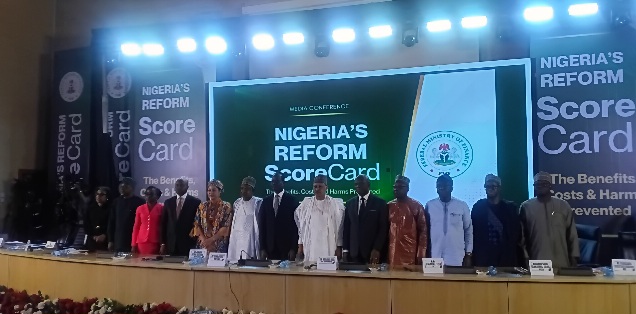
The Minister of Finance and Coordinating Minister of the Economy, Mr Taiwo Oyedele, defended the administration’s controversial policies during a media briefing in Abuja on Tuesday, where he presented what he described as “Nigeria’s Reform Scorecard: The Benefits, Costs and Harms Prevented.”
Oyedele said the aim of the briefing was not to celebrate the reforms but to provide Nigerians with a transparent account of their impact.
According to him, the administration of President Bola Ahmed Tinubu embarked on difficult but necessary reforms to tackle longstanding structural problems that had weakened the economy.
“For the past three years, the administration of President Bola Ahmed Tinubu has embarked on major reforms to address age-long economic challenges.
“The removal of a fuel subsidy that was quietly bankrupting the country and the unification of an exchange rate system that had become a source of arbitrage, distortion and corruption rather than stability,” Oyedele said.
He maintained that the reforms were introduced to correct deep-rooted distortions in the economy rather than to generate additional government revenue.
However, the minister acknowledged that the policies came with painful consequences for millions of Nigerians.
“Those decisions came at a real cost, and we’re not here to pretend otherwise. Prices rose.
“Nigerians adjusted sharply. Households and businesses felt it, and many still do. What we want to do today is put the whole picture in front of you, the Nigerian people.
“What those reforms cost, what they delivered, and just as importantly, what they prevented,” he added.
Oyedele said the government considered it necessary to explain not only the benefits of the reforms but also the consequences the country would have faced had it maintained the old system.
He argued that the removal of fuel subsidies and the unification of the foreign exchange market created the fiscal space needed to stabilise the economy and avert a looming financial crisis.
The minister also stressed that the administration remained committed to staying the course, despite public criticism and concerns over the rising cost of living.
His comments come amid growing debates over the impact of the government’s economic policies, which have triggered increases in fuel prices, transportation costs and the prices of essential goods across the country.
Despite the hardship, the government insists that reversing the reforms is not an option, arguing that doing so will undermine efforts to restore fiscal stability and put the economy on a sustainable growth path.
According to Oyedele, the newly released scorecard contains four key sections: a breakdown of how resources generated through the reforms were raised and spent; 10 benefits delivered to Nigerians; 10 economic dangers the reforms prevented; and 25 indicators comparing Nigeria’s current position with projections of what could have happened without the reforms.
He urged Nigerians to study the entire report before reaching conclusions.
Subsidy removal generated N15.8 trillion
Providing a breakdown of the figures, Oyedele disclosed that between June 2023 and December 2025, the reforms generated ₦15.8 trillion in additional resources for the federation.
He explained that many Nigerians had questioned where the savings from subsidy removal had gone because there was no specific budget line labelled “subsidy savings”.
“As a matter of fact, there wasn’t any allocation to the federation account with the description ‘subsidy savings.
“The subsidy savings showed up in the form of higher collection by Customs because for every one naira or one dollar of import duty before, at N460, it became one dollar at N1,004, N1,003 or N1,005.
“The savings showed up in the federation accounts by way of higher revenue collections as a result of the reforms’,” he said.
According to him, of the N15.8 trillion generated, the Federal Government received N5.4 trillion, while states and local governments received N10.4 trillion.
He also revealed that the Federal Government generated an additional N3.1 trillion through remittances from government-owned agencies, while incremental borrowing amounted to N11.9 trillion.
“So people will say, ‘You said you have exceeded your revenue. Why are you still borrowing?’ I will come to that.
“The additional borrowing that the Federal Government took for that period, from June 2023 to December 2025, amounted to N11.9 trillion.
“A figure that would have been far higher and economically destabilising without the fiscal space the reforms created”, the minister said.
Wage increases exceeded subsidy savings
Oyedele disclosed that the Federal Government recorded incremental expenditure of N30.64 trillion during the period under review.
He said N9.39 trillion was spent on wage adjustments, including the implementation of the new minimum wage and other salary-related obligations.
“The incremental amount that the Federal Government spent paying higher wages is more than the entire savings that the Federal Government earned from subsidy removal,” he said.
He added that another N9.37 trillion was spent servicing external debt, while N6.5 trillion was invested in strategic infrastructure projects.
“It is instructive that the single largest expenditure line, wage adjustments at N9.39 trillion, outstrips the Federal Government’s entire savings from subsidy removal.
“This is evidence that the reform was never introduced for revenue purposes, but to address entrenched corruption in an artificially managed fuel subsidy and foreign exchange market”, he said.
Twenty-seven states no longer owe salaries
One of the strongest arguments presented by the government was the improvement in salary payments across the states.
According to Oyedele, before the reforms began, 27 states struggled to pay salaries and pensions.
Today, he said, that number has dropped to zero.
“When 27 states that were defaulting in paying salaries and pensions no longer default, today that number is zero.
“We are not paying rich people; we are paying the average Nigerian, who can now put food on the table.”
He also cited the increase in the minimum wage from N30,000 to N70,000, the introduction of student loans through the Nigerian Education Loan Fund, cash transfers to vulnerable households, subsidised mortgages and agricultural interventions as some of the reforms’ direct benefits.
He described the student loan programme as “one of the most affordable student loan schemes globally”, adding that it had already supported more than 1.5 million students.
Defending the removal of fuel subsidies, Oyedele argued that maintaining the old system would have resulted in a more severe crisis.
He said the government was not attempting to conceal the painful consequences of the reforms.
“We’re being honest about the cost. We’re not saying all of it is rosy.
“A scorecard that only lists wins is not a scorecard. It’s a campaign leaflet. And we did not come here to give you one”, he stated.
He acknowledged that the Monetary Policy Rate had increased from 18.5 per cent to 26.5 per cent, while petrol prices had risen from about N185 per litre to between N1,100 and N1,400 per litre.
“That is a major felt cost, and I will not stand here and tell you otherwise”, he said.
However, he argued that under the old subsidy regime, fuel scarcity would have worsened.
“On the pre-reform path, petrol would likely be simultaneously unavailable.
“It would still be N185 per litre, but it would not be available at the official price.
“It’s likely to be trading in the black market for at least N3,000 per litre”, he said.
He further warned that Nigeria’s net external reserves had fallen to less than $3 billion before the reforms.
“We were owing over $7 billion. That’s bankruptcy.
“And you know we can’t print dollars because we’re not the United States of America.”
The government also highlighted what it described as improvements in key economic indicators.
According to the scorecard, headline inflation declined from 22.41 per cent in May 2023 to 15.91 per cent by June 2026.
Food inflation also dropped from 24.82 per cent to 17.52 per cent.
Gross external reserves increased from about $35 billion to $52.5 billion, while net reserves rose from about $3 billion to $34.8 billion.
The stock market’s capitalisation also increased from N31 trillion to about N150 trillion.
“Real GDP growth has strengthened to 3.89 per cent, against a baseline of 2.31 per cent and a no-reform estimate that had us, at best, stagnant and, at worst, in recession by now,” Oyedele said.
He also pointed to Nigeria’s sovereign credit rating upgrade by S&P Global in May and the country’s removal from international financial watchlists.
“S&P Global upgraded our sovereign credit rating to B in May, our first upgrade in 14 years.
“Nigeria exited the FATF grey list in October last year and exited the European Union’s anti-money laundering and combating the financing of terrorism deficiency list in January 2026, restoring our standing in the global financial system”, he noted.
Poverty remains ‘unfinished business’
Despite highlighting the gains, Oyedele admitted that poverty and household welfare remained major concerns.
“Food and household welfare remain a work in progress.
“Poverty and household welfare recovery are still classified in our scorecard as unfinished business.
“Not a victory lap.”
He said the next phase of the reforms will focus on ensuring that ordinary Nigerians experienced the benefits of economic stability through expanded cash transfers, increased agricultural support and deeper collaboration with state and local governments.
“We will stay the course of reform and accelerate how we translate the macro gains into meaningful impacts for every household,” he said.
He added that the government will continue implementing the Nigeria Tax Act while introducing additional fiscal reforms aimed at improving budgeting, accountability and public financial management.
In a direct appeal to Nigerians, Oyedele urged citizens to support beneficial government policies while holding public officials accountable.
“We cannot build our country by opposing every government action. Criticise government constructively.
“Misinformation, like anything else we amplify, shapes the reality we all end up living in.
“We actually pay a price for amplifying negativity about our country.”
He encouraged Nigerians to interrogate the data rather than rely on assumptions.
“We are not here to pretend these reforms were painless.
“We are here to show you honestly and with numbers what they cost, the benefits they delivered and the harm that they prevented.
“We invite you to engage with the scorecard in good faith and with an open mind. Together, let us build the Nigeria of our dreams”, he appealed. Oyd
News
2027: Wike rallies support for Tinubu In Obio-Akpor, Insists He’II resign as Minister should president lose FCT, Rivers(Photos)

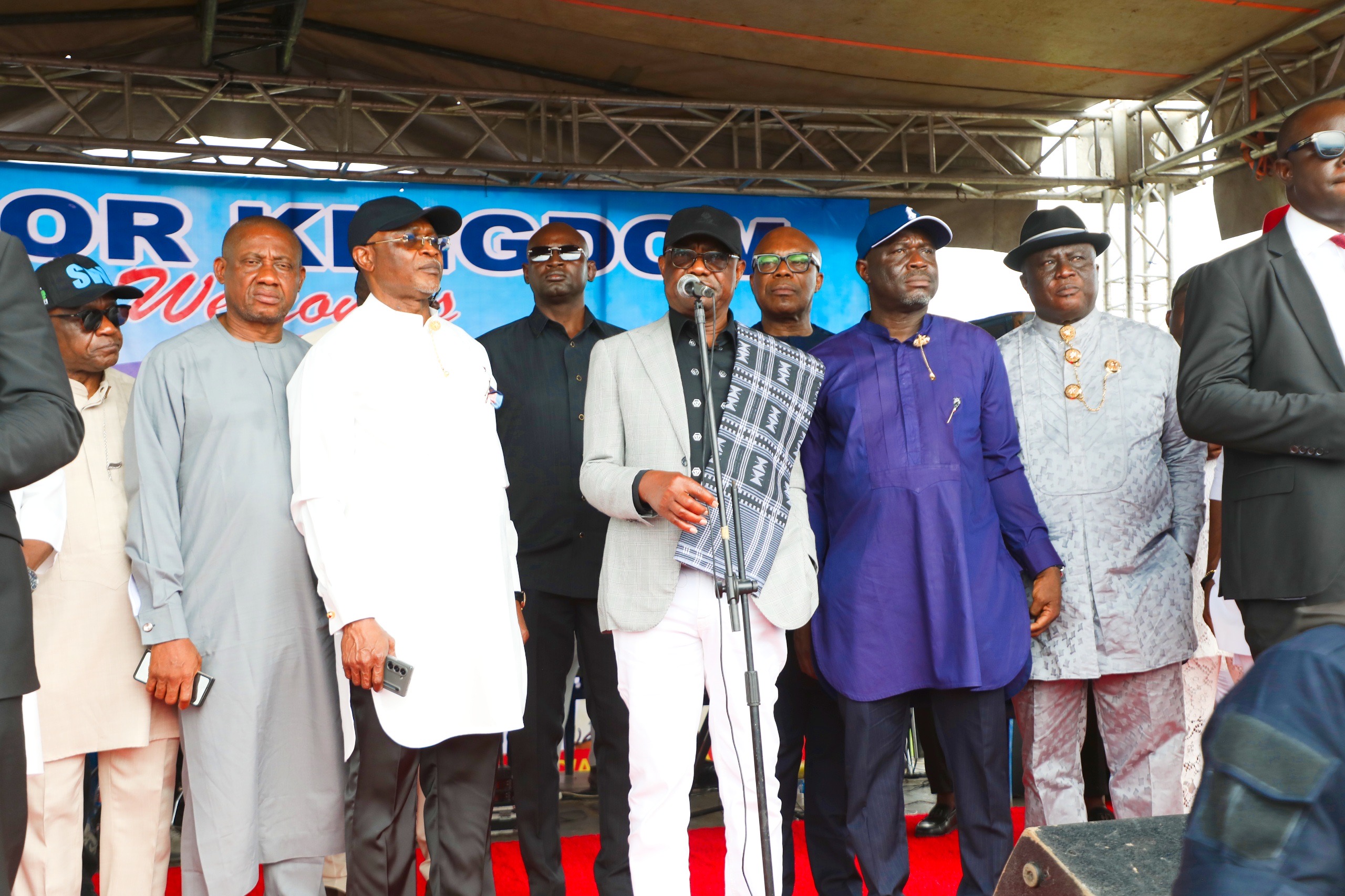
The Minister of the Federal Capital Territory (FCT), Nyesom Wike, on Friday declared that his political alignment with President Bola Tinubu remains unshakable, rallying the political structure of Rivers State to consolidate support for the President.
”My interest in Rivers State is for God to use me as a vessel to help our people. I am back here not for what I will get, but for what I will be to raise my people”, Wike declared during a strategic consultative meeting with stakeholders of the Akpor Kingdom in Obio-Akpor Local Government, Rivers State, Wike emphasized that politics is driven by the collective interest of the people rather than perpetual animosity.
He also reiterated his decision to resign his position as Minister should President Tinubu lose in Rivers State and the FCT.
The former governor of Rivers State maintained that expanding the political base is essential for delivering democratic dividends.
He said; “there is no permanent enemy in politics what we have is permanent collective interest.
“It is all about the interest of our people. The more you are in number, the happier you become. Leadership is like a waste dustbin. If you cannot absorb things, both the good and the bad, then you cannot be a true leader.”
Reflecting on the political trajectory that led to his appointment as FCT Minister, Wike noted that working with President Tinubu was an extraordinary milestone that defied political convention.
He stressed that his return to grassroots mobilization in Rivers State is aimed at leveraging his position as a vessel to uplift the state and its people.
”You know how difficult, you know how impossible it looked, but he made it possible for us to produce the Minister of the Federal Capital Territory,” Wike told the gathering.
He charged political actors in the state not to be distracted by social media criticism regarding his open-door policy toward former detractors, asserting that true political strength lies in numerical superiority.
In a fiery charge to local leaders, Wike demanded an all-inclusive campaign structure spanning every stratum of society in Obio-Akpor Local Government Area.
He called on traditional rulers, clergy, and community leaders to unite behind a single political direction.
”Obio-Akpor as a whole, whether you are a politician, whether you are a traditional ruler, whether you are a pastor, or whether you are a native doctor, I need everybody now,” he declared.
Wike said further; “Because all of them will vote. For the purpose of voting and elections, we must bring everyone together. ”
Drawing from his political history as the first elected chairman in the history of Obio-Akpor Local Government to win a second term following its creation in 1989, Wike reminded incumbent council leaders that performance and human connection remain the ultimate yardsticks for re-election.
He stated; “I was not elected two times because I was just Chairman.
“I was elected because people felt the impact of governance and because I related with the people. Anywhere, whether for burial or thanksgiving, I was always identifying with them”.
Outlining the electoral roadmap, the FCT Minister highlighted Wards 15, 16, and 17 in Obio-Akpor Local Government as strategic strongholds capable of deciding electoral outcomes across the local council.
”We have over 200 units across three very important wards Ward 15, Ward 16, and Ward 17. These three wards can defeat ten wards in Obio-Akpor. They are three wards with a difference, and you must utilize them to make that difference,” he instructed.
Wike directed local leaders to immediately deploy unit coordinators and door-to-door canvassers across all polling units, urging them to mobilize their immediate families, in-laws, and neighbors to ensure a decisive victory.
Reiterating his loyalty to his constituency, Wike affirmed that he would remain the state’s “Chief Critic” and guide to ensure elected council officers stay accountable to the electorate.
Wike was accompanied by the Rivers State APC governorship candidate, Kingsley Chinda and other political leaders.
News
Echoes of Wike ‘na our own ‘ song takes over at ongoing Akpor town hall meeting in Obio/Akpor LGA today (Video)
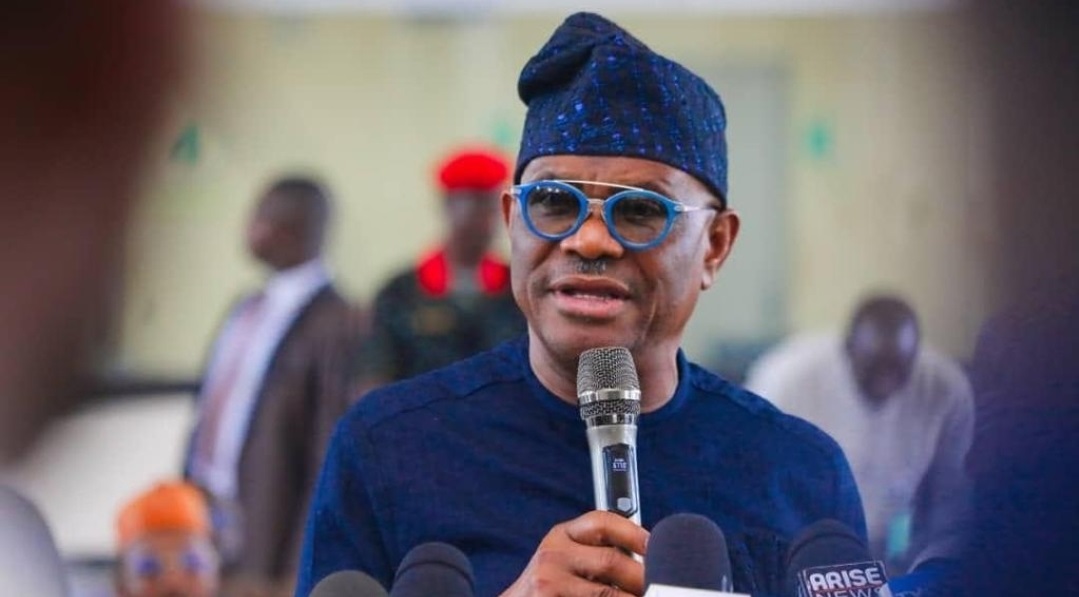
Echoes of Wike ‘na our own ‘song rent the air at ongoing Akpor town hall meeting at Obio/Akpor LGA in Rivers State today.
Watch clip below:
News
Watch moment, traditional rulers present kola to FCT minister Wike at ongoing town hall meeting in Akpor, Obio/Akpor LGA
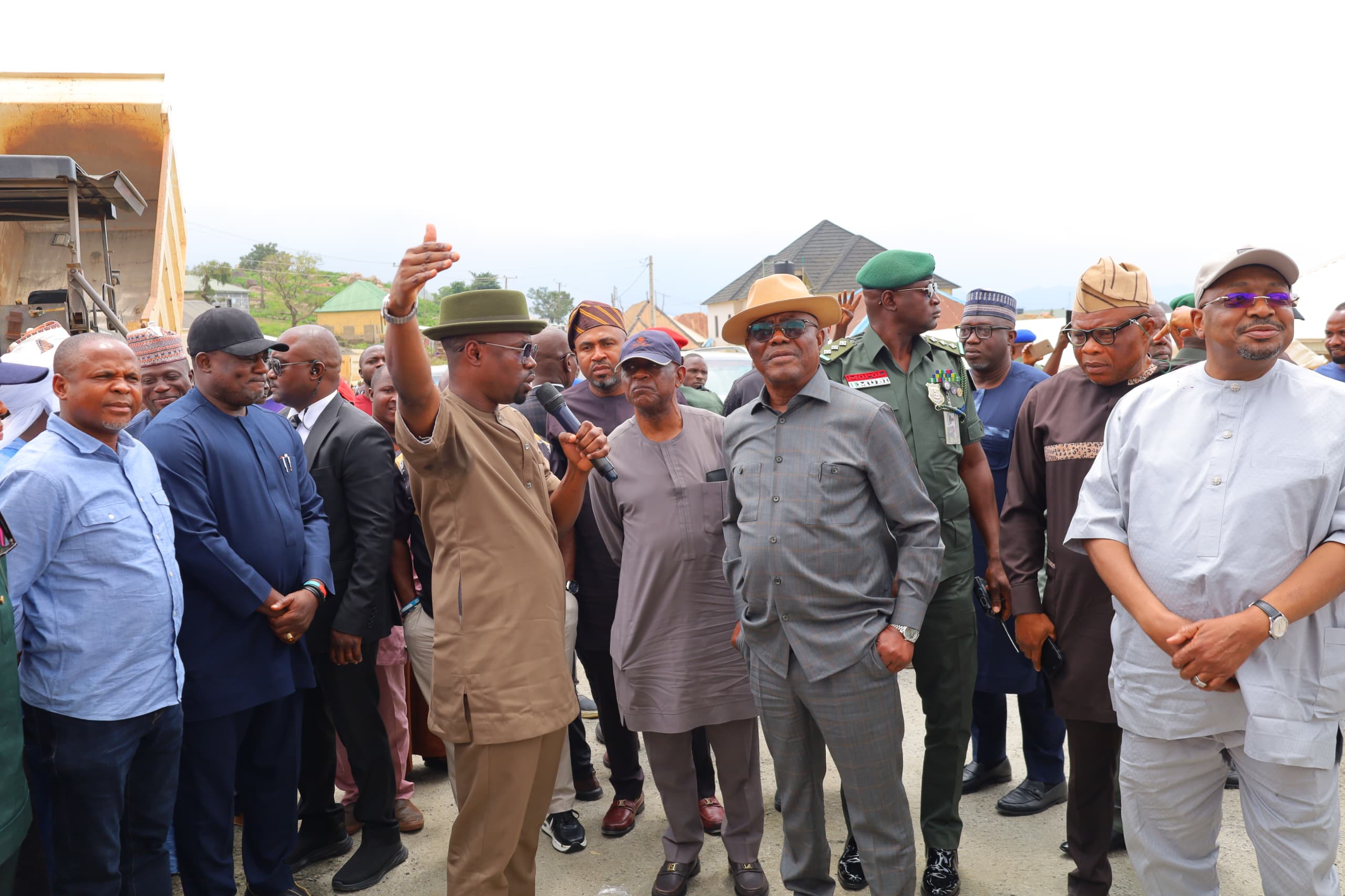
A video clip showing traditional rulers presenting kola to FCT minister Nyesom Wike at Akpor in Obio/Akpor LGA in Rivers State has emerged.
Watch:

2027: Wike rallies support for Tinubu In Obio-Akpor, Insists He’II resign as Minister should president lose FCT, Rivers(Photos)

Echoes of Wike ‘na our own ‘ song takes over at ongoing Akpor town hall meeting in Obio/Akpor LGA today (Video)

Watch moment, traditional rulers present kola to FCT minister Wike at ongoing town hall meeting in Akpor, Obio/Akpor LGA


-
 News12 hours ago
Nigeria at 66: ‘Tinubu made Yahoo Yahoo promise to Nigerians, he’s fake’ – Atiku
-

 Metro12 hours ago
Gunmen Abduct 20 Corps Members In Imo
-

 Foreign12 hours ago
UK government begins freeing 5,000 prisoners due to extreme prison overcrowding
-

 News12 hours ago
Nigeria Is Now the Worst Place To Be Born — Peter Obi
-

 News12 hours ago
If you elect me as your president in 2027, I will end election rigging in Nigeria — Atiku
-

 News12 hours ago
Nigerian researcher Chika Onochie wins grant for male fertility study in Canada