At least 30 children, most of them British, are feared to have been conceived through IVF treatment in northern Cyprus using sperm or egg donors different from those selected by their parents.


The cases were uncovered by a BBC investigation involving families who say they carefully chose anonymous donors based on factors including medical history, appearance, personality, education and interests.
However, the parents later became concerned that the donors they had selected were not used during their fertility treatment. 
Half of the 30 children were born following treatment at the Dogus IVF Centre, where several members of staff were involved in the care of affected patients.
The families’ concerns have raised questions about the regulation of fertility clinics in northern Cyprus, a territory recognised internationally only by Turkey and outside the European Union’s regulatory framework.
Clinics in the territory have become popular among British patients seeking IVF treatment because of lower costs, high advertised success rates and access to a wide range of sperm and egg donors.
One mother, identified as Rachel, said she was “absolutely scandalised” after discovering that the sperm donor she had selected for her treatment at Dogus may not have been used.
Rachel underwent treatment at the clinic in 2012 and selected an anonymous Danish sperm donor through Cryos International, the world’s largest sperm bank.
She said she chose the donor because his profile indicated that he would be willing for any biological children to contact him once they turned 18.
But after her son Jonah was born, Rachel became concerned that he did not resemble the donor described in the profile.
She said she repeatedly asked the clinic for medical documentation confirming that the donor’s sperm had been used, but never received the information she wanted.
Thirteen years later, DNA testing carried out by Rachel and Jonah indicated that he was biologically related to her but did not have the genetic ancestry expected from the Danish donor she had selected.
The BBC contacted Cryos International, which said it had no record of supplying sperm to Dogus for Rachel’s treatment.
The revelation has left Rachel concerned that her son may have been deprived of the opportunity to identify and contact his biological donor in the future.
“I wouldn’t be surprised if there are genetic siblings out there,” she said.
At least 11 of the 30 children identified by the BBC have undergone commercial DNA testing. The results indicate that they have genetic ancestry from Turkey or surrounding regions, raising further questions about whether the donors selected by their parents were used.
Most of the children who have taken DNA tests were conceived through IVF at Dogus between 2012 and 2024.
Fertility experts consulted by the BBC said the number of cases was highly unusual.
The British Fertility Society said the apparent use of incorrect donors on multiple occasions could indicate “negligence” or “deception” and suggested that the issue could reflect a systemic problem rather than the actions of a single doctor or clinic.
Several staff members have been linked to the cases at Dogus.
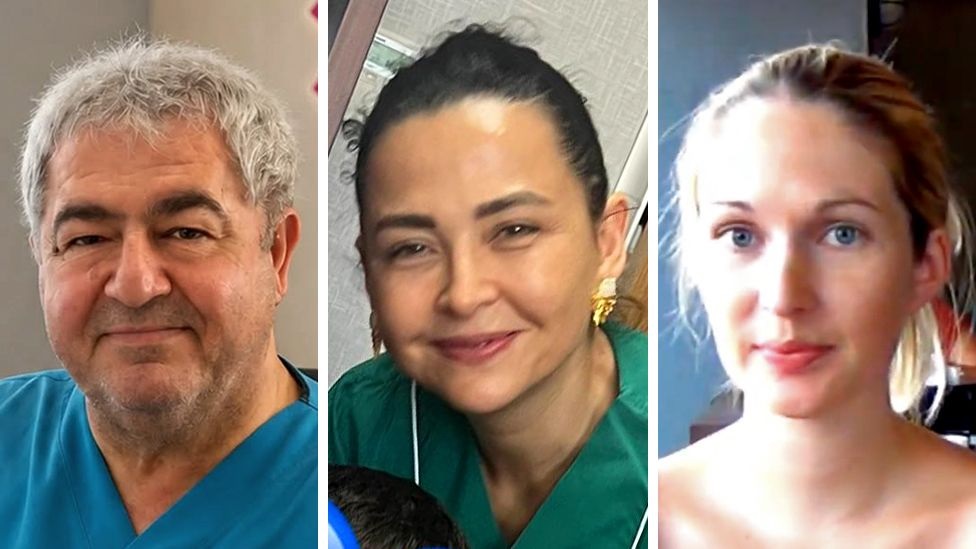
Dr Sevket Alpturk, the clinic’s owner and responsible manager, treated the parents of six children whose families have told the BBC they suspect the wrong donors were used.
The BBC approached Alpturk with the allegations, but he did not respond.
Dr Firdevs Uguz Tip treated nine of the other children linked to Dogus. She has denied misleading patients and said Alpturk was responsible for signing off procedures at the clinic.
Firdevs later worked at other clinics, including Miracle IVF, which she currently runs. Nine additional cases identified by the BBC involved patients treated by her after she left Dogus in 2015.
She said her clinic has complied with the law and that patients sign consent forms explaining how donors are selected.
However, several parents told the BBC they were not properly informed about the donor arrangements.
Patient co-ordinator Julie Hodson, who was a main point of contact for many British patients at Dogus, has also been linked to several of the cases.
Emails seen by the BBC show Hodson telling patients that Firdevs would arrange orders for sperm from Cryos.
Firdevs disputes this, saying the procurement of sperm was not part of her responsibilities and that she did not know patients were being told otherwise.
The BBC contacted Hodson about the allegations, including claims that she failed to place or pass on donor requests, but she did not respond.
Cryos International said it was shocked by the number of families who could have been affected.
The sperm bank told the BBC that it had blacklisted Dogus in 2016 after concerns that the clinic had failed to order Cryos sperm for a patient despite telling the patient that it would.
Cryos has since suspended its relationship with Firdevs and Miracle IVF while an investigation by the northern Cyprus authorities continues.
The territory’s Ministry of Health said earlier this year that it had launched an official investigation into the allegations. However, the ministry has not responded to repeated requests from the BBC for an update.
Firdevs has said she was cleared of breaking any laws, although the BBC has been unable to independently verify that claim with the Ministry of Health.
The UK Foreign Office has also updated its travel advice, warning that fertility treatment in northern Cyprus carries risks because of the lack of regulation and advising people seeking treatment there to conduct thorough research.
The allegations have left affected families facing uncertainty over their children’s biological origins and potential genetic medical histories.
Laura Bridgens, founder of Donor Conceived UK, described the reports as deeply troubling and said donor-conceived people have a fundamental right to know the truth about their origins.
For families such as Rachel’s, the issue goes beyond the circumstances of their children’s conception.
Rachel said she loves her son and that the discovery does not change their relationship, but she remains upset that Jonah may have lost the opportunity to know his biological donor.
“Even so, what happened is not OK,” she said. “It’s a huge deal and could have been absolutely traumatising for him.”
The investigation has raised questions about how many other families could have been affected and whether authorities will be able to establish how the alleged donor mix-ups occurred.