By Gloria Ikibah


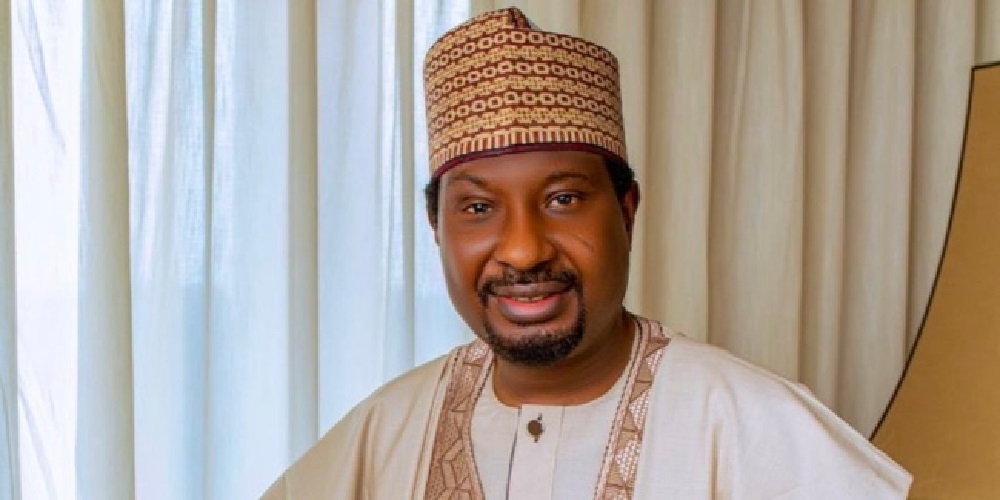
Deputy President of the Nigerian Senate and First Deputy Speaker of the ECOWAS Parliament, Senator Barau Jibrin, has urged West African countries to draw lessons from Nigeria’s experience with farmer-herder conflicts and the humanitarian crises arising from them.
First Deputy Speaker made the call in a presentation titled, “Strategies for addressing internal displacement and farmer-herder conflicts in Nigeria”, delivered on his behalf by Senator Sadiq Umar during the Second Extraordinary Session and Seminar of the ECOWAS Parliament in Accra, Ghana. 
He said Nigeria’s experience offered important lessons for the region and the African continent, particularly in addressing conflicts linked to competition for land and water.
According to him, Nigeria has extensive agricultural and pastoral economies, with a large proportion of the population depending on farming and livestock production for their livelihoods.
He, however, said increasing pressure on land and water resources had contributed to conflicts, banditry, terrorism and other humanitarian disasters.
Barau said the Federal Government had introduced measures to address the humanitarian consequences of the conflicts, including the creation of the Ministry of Humanitarian Affairs and Poverty Reduction.
He said the ministry was, among other responsibilities, established to manage emergency relief operations and responses to internally displaced persons (IDPs).
He said: “Nigeria’s approach is increasingly consistent with the international shift from short-term humanitarian response towards government-led development-orientated solutions.
“Nigeria is also one of the countries selected under the United Nations Secretary-General’s Action Agenda on Internally Displaced and Focused National Pathways towards Durable Solutions.
“Nigeria’s commitment to the protection of internally displaced persons has also been strengthened through its engagement with the African Union Convention for the Protection and Assistance of Internally Displaced Persons in Africa, commonly known as the Kampala Convention”.
Despite these interventions, Barau expressed concern that the crisis had continued to defy efforts to resolve it, with more than three million Nigerians still living in internally displaced persons’ camps across the country.
He argued that internal displacement should not be regarded as the sole responsibility of humanitarian agencies, but should involve coordinated action by relevant Ministries, Departments and Agencies (MDAs), traditional institutions and other stakeholders.
First Deputy Speaker also called for greater attention to early warning systems, conflict prevention mechanisms and climate adaptation as part of efforts to prevent conflicts before they escalate.
He said livestock should not be viewed merely as a security issue but also as an important economic sector capable of contributing to livelihoods and national development.
According to him, investment in ranching, animal feeding and breeding could help reduce some of the pressures associated with uncontrolled livestock movement.
Barau also urged ECOWAS parliamentarians to develop appropriate legislative frameworks for the protection of displaced persons and the regulation of land and livestock management.
“Parliamentary committees should conduct evidence-based oversight of government programmes and expenditure relating to displacement, security, agriculture, livestock and reconstruction,” he said.
He stressed that Nigeria’s experience had shown that internal displacement and farmer-herder conflicts were complex challenges that could not be resolved through isolated interventions.
The Senator said effective implementation of policies and programmes was equally important to ensuring that farmers and herders could pursue their lawful and productive livelihoods without unnecessary conflict.
Barau’s presentation focused on Nigeria’s internal security challenges and their socio-economic consequences, while urging other countries in the region to focus more on preventing similar crises rather than waiting to respond after they occur.
“For Africa, the challenge extends beyond responding to crises after they occur, it requires building resilient institutions, economies and communities capable of preventing conflicts and protracted displacement.
“As parliamentarians, we have a responsibility to support appropriate legislation, strengthen oversight, promote inclusive dialogue and ensure that public resources are directed towards sustainable solutions,” he added.