

Connect with us

News

Niger Bridge: Works minister directs workers to bring all ads down to be replaced with Tinubu’s photos

Published

on

ADVERTISEMENT
Zoom Ad
ADVERTISEMENT
Zoom Ad


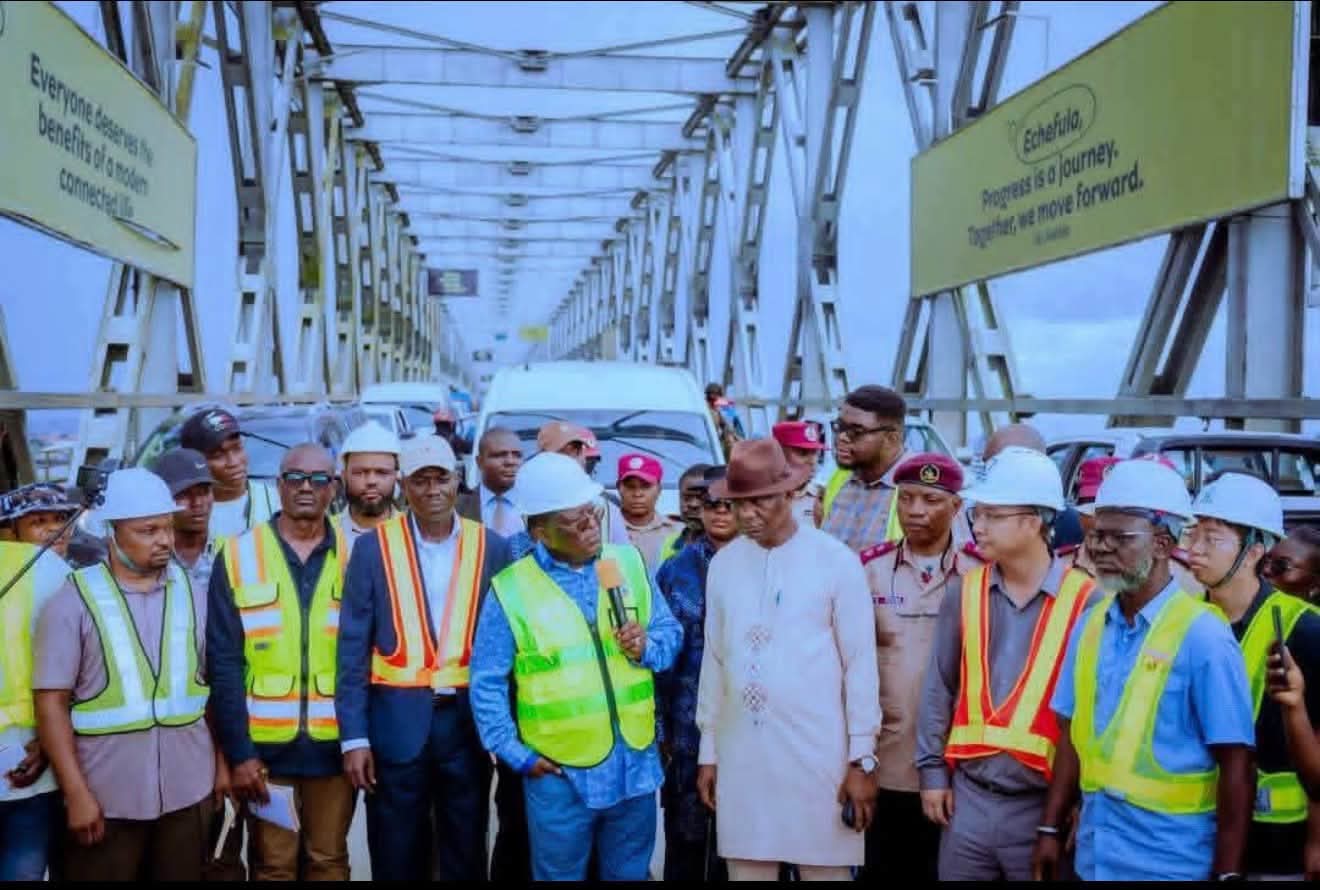
The Federal Government is repairing the First Niger Bridge to restore its structural integrity, but Works Minister David Umahi has introduced a political dimension to the rehabilitation: President Bola Tinubu’s photographs are to adorn the bridge once the engineering works are completed.

Umahi, who inspected the bridge linking Onitsha in Anambra State to Asaba in Delta State, directed the removal of illegal advertisements from the public infrastructure, while saying the cleared spaces would, “for now,” carry photographs of President Tinubu.

The directive has immediately raised questions over the distinction between prohibited commercial displays and politically favourable imagery on public infrastructure.

Advertisement

If unauthorised advertisements are considered an improper use of the bridge, the question is whether presidential photographs require a different regulatory specification simply because they carry the image of the nation’s president.

The issue is particularly striking because the bridge is currently undergoing emergency structural intervention after vandals removed critical components, including bolts, nuts and portions of its expansion-joint steelwork.

The bridge was closed to vehicular traffic on September 7, 2026, to allow contractors to execute the emergency works. The rehabilitation includes removal of the deteriorated asphalt surface, installation of a new approximately 40-millimetre wearing course, replacement and repair of damaged structural components, and installation of solar streetlights and CCTV systems.

The original September 21 reopening target was pushed back by a week after persistent rainfall disrupted construction activities and affected some completed sections.

Advertisement

Following his September 23–24 inspection, Umahi said the bridge would reopen next week, subject to completion of critical works and safety certification.

That safety-first position is consistent with basic civil-engineering logic: a bridge cannot be reopened merely because a political or administrative deadline has arrived. Structural integrity, load capacity, expansion-joint performance, carriageway condition and overall safety must determine when traffic resumes.

For now, motorists have been diverted to the Second Niger Bridge through Obosi.

But while engineers are calculating loads and replacing compromised components, another kind of load is being placed on the public infrastructure – the political symbolism of presidential imagery.

Advertisement

The First Niger Bridge is not merely another transport structure.

Built by the French construction company Dumez following feasibility studies by Netherlands Engineering Consultants (NEDECO), the approximately 1,404-metre steel bridge was constructed principally between 1964 and 1965 and opened to traffic in December 1965.

It was commissioned by then Prime Minister Sir Abubakar Tafawa Balewa shortly before the political crisis that culminated in his assassination in January 1966.

The bridge subsequently endured the Nigerian Civil War, during which it was partially destroyed, before being repaired and returned to service.

Advertisement

For decades, it has remained one of Nigeria’s most important east-west transport corridors, carrying enormous volumes of commercial and passenger traffic between the South-East and South-South.

Its engineering history is therefore one of endurance, reconstruction and continuous maintenance.
But the current controversy is not about steel fatigue, asphalt failure or expansion-joint displacement.

It is about where public infrastructure ends and political messaging begins.

Advertisement

Umahi’s position creates an unusual visual equation: illegal advertisements are to be removed, yet the President’s photographs are to occupy the resulting space.

That distinction may require more explanation than the bridge’s expansion joints.

A public bridge is designed to carry traffic – not political branding. Its structural drawings specify dead loads, live loads, wind loads and safety factors; they do not ordinarily contain a political billboard schedule.

The government may legitimately determine what can be displayed on federal infrastructure. But where one category of display is removed as illegal and another is permitted, the regulatory basis for that distinction becomes a legitimate matter of public scrutiny.

Advertisement

The engineers may be repairing the bridge’s physical load-bearing system. The government may now have to explain the political load it is asking the same bridge to carry.

Continue Reading
Advertisement

News

2027: Tinubu’s good governance ‘ll secure FCT victory – Wike

Published

on

ADVERTISEMENT
Zoom Ad
ADVERTISEMENT
Zoom Ad


Minister of the Federal Capital Territory (FCT), Nyesom Wike, has expressed confidence that the visible achievements of President Bola Tinubu’s administration will secure victory for the ruling party, All Progressives Congress (APC) in the FCT during the 2027 general elections.

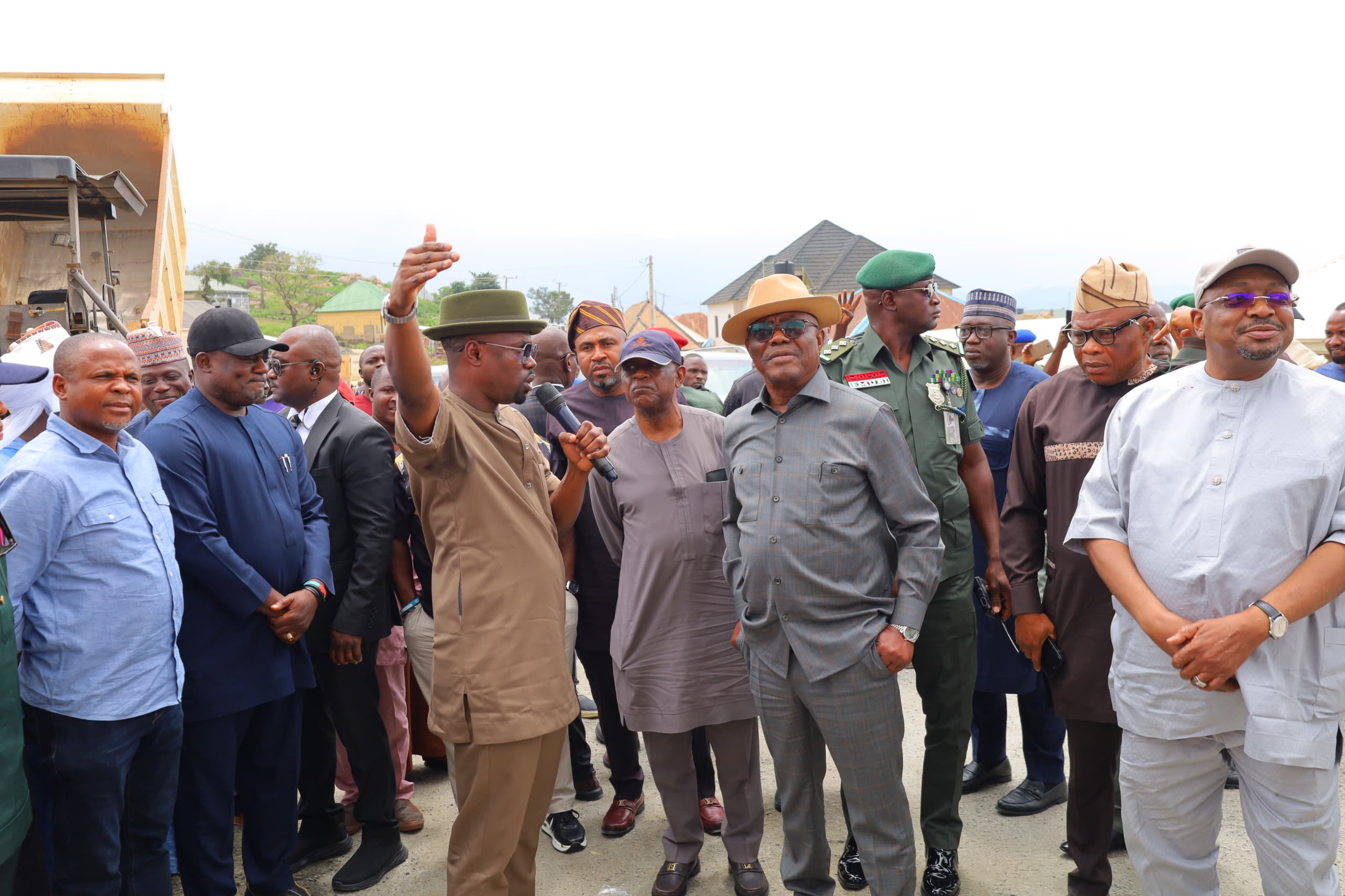
Wike, who stated this after inspecting the ongoing Apo-Karshi and Bwari-Kubwa road projects, stressed that good governance remains the most reliable metric for political success.

He said that the administration’s performance in infrastructure delivery, particularly in long-neglected satellite towns, leaves the opposition with nothing to offer voters beyond empty stories.

Advertisement

He argued that the tangible results on the ground make an unassailable case for President Tinubu’s re-election, including Sen. Philip Aduda (FCT) and House of Representatives candidate John Gabaya (Bwari Federal Constituency).

He said; “If good governance is a barometer to measure whether a government has succeeded or not, then we have nothing to fear.

“Now, the Tinubu administration has come and it’s not only listening to you, it’s not only caring for you, it’s solving your problems. Why will they want to change their mind?”

Dismissing opposition rhetoric, the minister said; “This is the campaign. The people who will come, what will they come with?

Advertisement

“They will tell them stories. But we have not come with stories, we have come with facts, verifiable facts. I can beat my chest, I can close my eyes and go home and sleep with my two eyes closed, that Tinubu will emerge. I have no fear at all.”

The minister pointed out that Tinubu’s Renewed Hope Agenda has shifted development priorities beyond the city centre to directly touch satellite communities.

“The Renewed Hope administration has redefined infrastructure delivery as far as FCT is concerned, not just within the city, but also within the satellite towns.

“We thank God Almighty that has given us a President who has come to listen and to change the narrative that development must not only be concentrated within the city centers, but also spread in the satellite towns,” he said.

Advertisement

Speaking on the projects, Wike said the long-delayed Apo-Karshi road project was on course for completion in November.

He also said that the dualisation of the Bwari-Kubwa road, where residents turned out in large numbers to welcome his delegation, would also be delivered in December.

“Work on site is set to intensify by the first week of October as seasonal heavy rains abate,” he said.

Advertisement
Continue Reading

News

NDLEA busts Nigerian-Mexican meth cartel, docks kingpins over Enugu clandestine lab(Photos)

Published

on

ADVERTISEMENT
Zoom Ad
ADVERTISEMENT
Zoom Ad

. Dismantling the syndicate is another proof transnational drug networks won’t have any space to operate in Nigeria, says Marwa

The National Drug Law Enforcement Agency (NDLEA) has once again struck a decisive blow against transnational organised crime with the dismantling of a Nigerian-Mexican drug cartel operating a clandestine methamphetamine laboratory in Eziama community in Obeagu, Awgu Local Government Area of Enugu State.

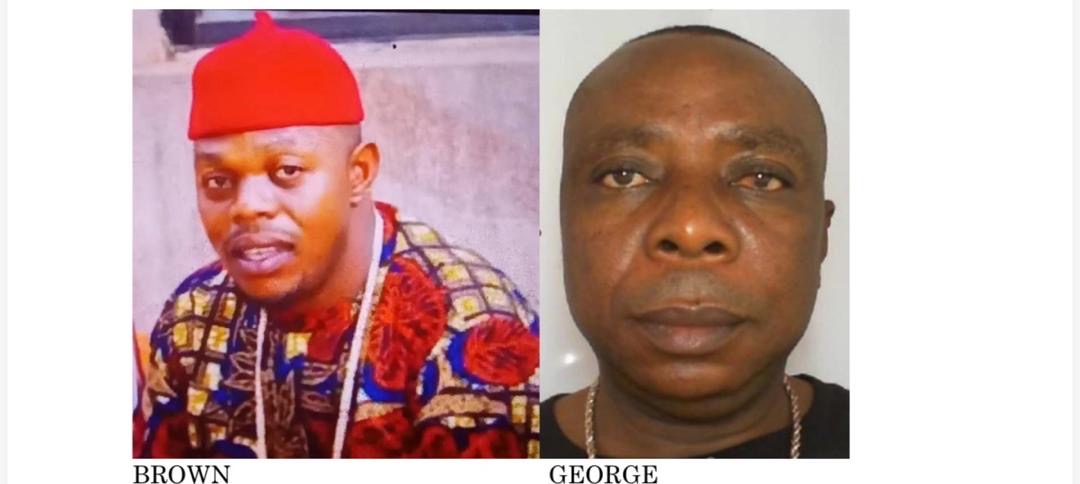
Two kingpins: 45-year-old Chukwu Obumneme Christopher, alias Brown, and 60-year-old Chukwu Georginus Monday, alias George, were arrested in connection with the operation of the meth lab in partnership with a notorious Mexican drug cartel member, Rodriguez Villanueva, based in Mexico City, Mexico, after several months of intelligence and surveillance on the syndicate.
As a result, they were arraigned before Hon. Justice Mabel Taiye Segun-Bello of the Federal High Court, Enugu Judicial Division, on a five-count charge bordering on conspiracy, the organisation, management and financing of a Drug Trafficking Organization, and unlawful possession of precursor chemicals used in methamphetamine production, contrary to the NDLEA Act. After their plea, Justice Segun-Bello has now scheduled their trial for 21st October 2026, following an application by the Agency for an accelerated hearing.

Also named in the charge, and currently at large, are Uchenna, alias Uche; Celestine Ikemefuna Iwuchukwu; and Rodriguez Villanueva, who is a notorious member of a Mexican drug cartel.

Investigations by a Special Operations Unit (SOU) of NDLEA revealed a sophisticated, transnational operation by the Nigerian-Mexican cartel. Surveillance activities by NDLEA between 1st and 4th December, 2025, tracked Brown’s movements between Lagos, Enugu and Anambra States, ultimately leading operatives to a compound in Obeagu where a clandestine laboratory capable of producing methamphetamine in commercial quantities was uncovered. The lab, fitted with improvised reactors and distillation apparatus, mirrored similar facilities recently dismantled in Ogun, Oyo and Ebonyi.

A search of the premises led to the recovery of vast quantities of precursor chemicals, including 690 litres of methylamine, 1,000 litres of isopropyl alcohol, 300 litres of hydrochloric acid, 290 litres each of toluene and acetone, 400 litres of liquid sodium hydroxide, 125 kilograms of N-phenylacetamide, 414 kilograms of lead acetate, and 769.6 kilograms of tartaric acid, among other controlled substances, a haul consistent with a high-potency, P2P-based methamphetamine manufacturing operation.

A related search of George’s family residence yielded eight large fuel tanks, four commercial gas burners, four dehydrators, and 11 kilograms of ephedrine, further underscoring the scale of the cartel’s operations.
Reacting to the development, Chairman/Chief Executive of the NDLEA, Brig. Gen. Mohamed Buba Marwa (Rtd), reaffirmed the Agency’s unwavering resolve to track down every fleeing suspect connected to the cartel, and ensure that they all face the full weight of the law.

He
commended all NDLEA officers involved in the operation for their professionalism and doggedness in cracking yet another international drug syndicate. He described the Enugu lab bust as further proof that Nigeria will not be allowed to become a haven for transnational drug cartels, warning that the Agency’s intelligence-driven operations and international partnerships would continue to close every loophole exploited by drug barons, whether local or foreign. He reiterated his charge to all NDLEA personnel to sustain the momentum of relentless enforcement until the nation is rid of the scourge of illicit drug production and trafficking.

Advertisement
Continue Reading

News

MURIC Faults NMDPRA Over 830,000-Tonne Petrol Import Approval

Published

on

ADVERTISEMENT
Zoom Ad
ADVERTISEMENT
Zoom Ad


The Muslim Rights Concern (MURIC) has criticised the Nigerian Midstream and Downstream Petroleum Regulatory Authority (NMDPRA) for approving the importation of 830,000 tonnes of Premium Motor Spirit (PMS) in the fourth quarter of 2026.

MURIC described the approval as unnecessary, wasteful and counterproductive, arguing that greater priority should be given to Nigeria’s domestic refineries.

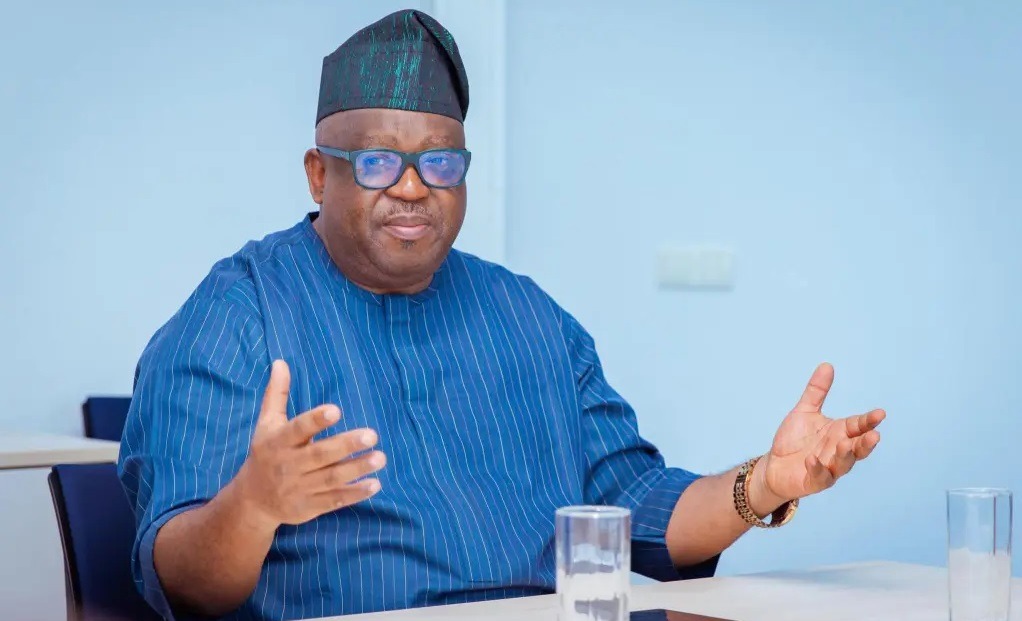
The organisation made its position known in a statement signed by its Executive Director, Prof. Isiaq Akintola, and made available to journalists on Thursday.

Advertisement

NMDPRA recently approved the importation of 830,000 tonnes of PMS for the fourth quarter of 2026. However, MURIC said the decision was difficult to justify amid increased domestic refining capacity, particularly with the operations of the Dangote Refinery.

Akintola urged the petroleum industry regulator and other relevant government agencies to work closely with local refineries and reduce the country’s reliance on imported refined petroleum products.

According to him, continued importation could undermine investments in Nigeria’s refining sector and frustrate efforts to achieve greater domestic fuel production.

“We expect NMDPRA and all other government agencies in the petroleum industry to cooperate with our local refineries. The importation of refined fuel should stop forthwith,” he said.

Advertisement

The group argued that Nigeria should prioritise locally refined petroleum products as part of efforts to strengthen the domestic economy and maximise investments in the country’s refining infrastructure.

“The Downstream Petroleum Regulatory Authority, NMDPRA, has approved 830,000 tonnes of Premium Motor Spirit, PMS, imports for the fourth quarter of 2026 despite ample evidence of petrol self-sufficiency in the country with the presence of local production efficacy courtesy of Dangote Refinery.

“MURIC considers this move as unnecessary, wasteful, counterproductive, regressive and unpatriotic. We therefore condemn it in the strongest terms,” the statement added.

Advertisement
Continue Reading

Trending

Copyright © 2024 Naija Blitz News