Sixty-six years after the Union Jack came down, we have travelled far without deciding where we are going. It is time to agree on a destination.


By Osamhanze Idahosa
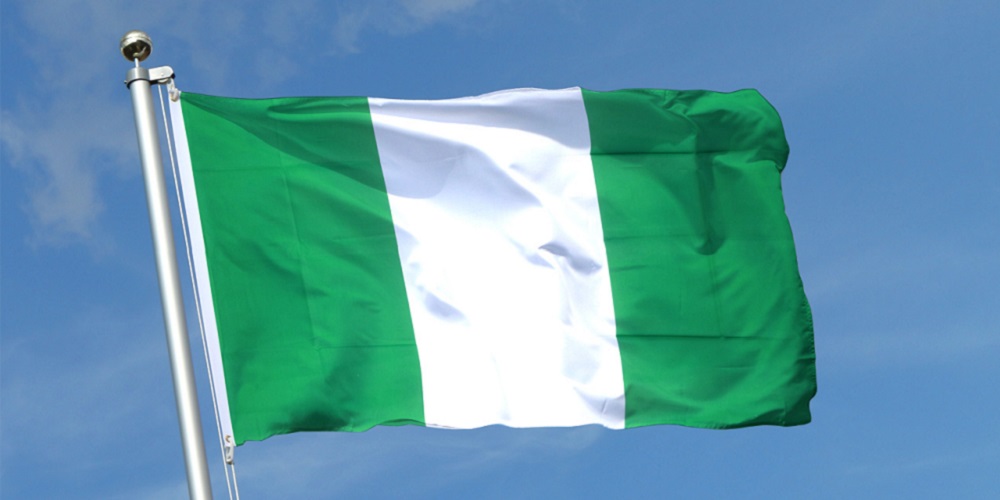
At midnight on 1 October 1960, the Union Jack came down at the Racecourse in Lagos and the green-white-green went up. 
Africa’s most populous nation stepped onto the world stage with educated elites, fertile land, a vibrant people and, soon, oil.
Sixty-six years later, the question is not whether we left the harbour of colonial rule.
We did. The question is whether we ever agreed on where we were sailing to.
An anniversary is not a funeral, and this is not an obituary. It is an invitation to take honest stock, because a nation that refuses to examine its wounds will keep bleeding.
In 1975, the sociologist Peter Ekeh offered one of the most penetrating diagnoses of our condition.
Colonialism, he argued, left Africans living in two publics.
The primordial public of village, clan and faith commands genuine moral obligation: we give to it and would be ashamed to steal from it. The civic public of the state and its treasury, we learnt to see as alien. From it we take; to it we owe little.
The official who diverts public funds to build a school in his hometown is, in his own eyes, not a thief but a son bringing home the spoils of a foreign field.That thread runs back to our founding. Nigeria began not as a compact among peoples but as an administrative convenience. The 1914 amalgamation joined territories governed, educated and prepared differently for statehood. Obafemi Awolowo called the country “a mere geographical expression.” It was a diagnosis, not an insult. More than a century later, we still debate the terms of our union as though we signed it last week.We have never lacked constitutions. From Clifford in 1922 through Richards, Macpherson and Lyttelton to the documents of 1960, 1963, 1979 and 1999, we have tried almost every architecture on offer. What we have lacked is a constitution Nigerians wrote for themselves. The 1999 Constitution opens with “We the people”, yet it was promulgated by military decree. The national conferences of 2005 and 2014 produced thoughtful recommendations that were largely shelved. A constitution the people do not own will be circumvented, not kept.A nation that cannot count itself cannot plan for itself. Yet our history of headcounts is a history of controversy. The 1962 census was canceled amid allegations of inflated figures. The 1963 exercise that replaced it was bitterly disputed. The 1973 census was annulled. The 1991 and 2006 counts were contested in court and in the court of public opinion. The census planned for 2023 was postponed, and two decades after our last headcount, we still govern a country of well over 200 million people on estimates.Why is counting so hard? Because in Nigeria, numbers are never just numbers. They determine revenue allocation, legislative seats, and the balance of power between regions.
When population becomes a weapon, every enumerator becomes a combatant. Until we separate the census from the contest for power, we will keep building schools, hospitals and budgets on guesswork.Look closely at how many of our leaders arrived at the top, and a troubling pattern emerges. Tafawa Balewa became Prime Minister partly because the Sardauna of Sokoto, Sir Ahmadu Bello, preferred to remain Premier of the North. General Aguiyi-Ironsi inherited power after the January 1966 coup that he did not lead. General Yakubu Gowon emerged from the July 1966 counter-coup. General Olusegun Obasanjo took office in 1976 after the assassination of General Murtala Mohammed and returned in 1999 almost straight from prison. Chief Ernest Shonekan headed an interim arrangement in 1993. General Abdulsalami Abubakar rose after the sudden death of General Sani Abacha. Goodluck Jonathan became acting president through the so-called doctrine of necessity during President Umaru Yar’Adua’s illness.Many of these men served with sincerity, and some served with distinction. But leadership that arrives by accident, by barracks arithmetic or by elite arrangement, rather than through an open, credible contest, often carries a deficit of legitimacy. Leaders who must first prove they belong spend their energy on appeasement rather than transformation. The result is a governing style built on balancing interests instead of building institutions.Nothing shows the cost of these failures more painfully than the Civil War. The coups and killings of 1966, the collapse of the Aburi Accord and the pride of men who would not bend ended in thirty months in which Nigerians killed Nigerians.
Estimates of the dead run as high as three million, many of them children lost to starvation. “No victor, no vanquished” was noble, but a slogan is not healing. The abandoned property disputes and the flat £20 paid out regardless of prewar savings left wounds that still echo in today’s agitations, a conversation we ended with guns instead of completing with words.In 1972 and again in 1977, the Nigerian Enterprises Promotion Decrees sought to transfer ownership of the economy into Nigerian hands. The goal was patriotic: economic independence to match political independence. But ownership was transferred faster than competence. Shares moved; skills did not. In too many cases, well-connected individuals became front men, foreign technical expertise departed, and enterprises that had been productive were stripped rather than grown.The oil boom of the 1970s masked the damage for a while, but the lesson is plain. The Asian economies we now admire invested in education, technical training and managerial capacity before and alongside the transfer of ownership. We did it the other way around, and the trajectory of our industrialisation paid the price.
Nationalism without capacity is a slogan, not a strategy.Then came the soldiers, who ruled for roughly 29 of our first 39 years. Each coup promised correction; each deepened impunity. The annulment of the 12 June 1993 election, widely regarded as our freest, remains a national wound. Since 1999, we have enjoyed our longest unbroken stretch of civilian rule, an achievement worth defending. But democracy is more than the absence of soldiers.
Vote-buying, godfatherism and elections settled in courtrooms show that we have mastered the form of democracy faster than its substance.Having named these wounds, we must not live inside them; bitterness is a poor architect. Letting go is not forgetting. It means learning from history without being imprisoned by it. Today’s Nigeria is overwhelmingly young, with a median age below 20. These Nigerians did not create our problems, but they will inherit them. We owe them a nation that works, and that demands four things.First, an economic compact that outlives any one administration. We have swung from Structural Adjustment to privatisation, and from decades of petrol subsidy to its removal in 2023, each shift imposed from the top and often reversed by the next government.
Business, labour, government, academia and civil society must agree on what the state should do, how we move from sharing oil rent to creating wealth, and how fiscal federalism can reward states that produce rather than those that merely collect.Second, a culture of competence. Federal character was designed to promote inclusion, not to replace excellence, and we must honour both. A nation that rewards connection over competence will be governed by the connected and the incompetent.Third, faith communities that redefine success. Nigeria is among the most religious nations on earth, yet our public life rarely reflects the values our faiths proclaim. Churches and mosques must become schools of integrity, not showrooms of affluence, and religious leaders must ask the source of a donation before celebrating its size.Fourth, politics beyond sentiment.
Too often, voters first ask where a candidate comes from or how he worships, not what he will do. Yet a hungry man in Kano and a jobless graduate in Enugu share the same problem: a state that has failed to deliver. Voters must demand manifestos, and the media, including those of us who hold microphones every Sunday morning, must insist on substance over spectacle.Ekeh’s diagnosis contains its own cure. If our problem is that we do not feel the nation belongs to us, the solution is to make it ours.
National pride cannot be decreed or bought with an anniversary parade. It is built brick by brick: a passport that arrives on time, electricity that stays on, a police officer who protects rather than extorts. Every Nigerian who pays tax, refuses a bribe, or votes on the issues lays a brick in the house we all say we want.Our founders began a journey they did not finish, and neither will we. But at 66, Nigeria is past the age of excuses. The destination remains within reach: a nation where birth, tribe and faith do not determine destiny, and where no one hesitates to say, without qualification, “I am a Nigerian.” All hands must be on deck. Happy Independence Day, Nigeria.Osamhanze Idahosa is the Vice President of the Africa Development Studies Center (ADSC), Abuja