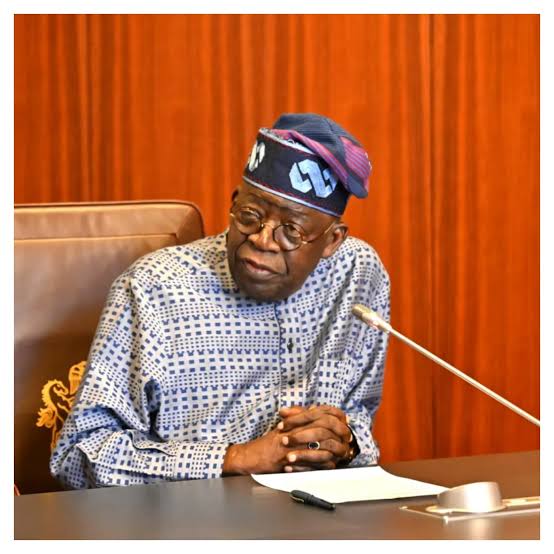
The Presidency on Tuesday rejected claims by The Economist that Nigerians dislike President Bola Tinubu, describing the assertion as “intellectual fraud” and insisting that the President’s economic overhaul is unstoppable.


In a statement signed by the Special Adviser to the President on Media and Public Communications, Sunday Dare, the Presidency said the foreign publication’s position “smells of opposition and is riddled with inconsistencies.”
The statement is titled ‘Beyond the Economist Condescension: Nigeria’s Re-engineering Under Tinubu is Unstoppable.’ 
The Presidency argued that it had become a tired, predictable ritual for foreign publications, which it described as operating from “comfortable, insulated drawing rooms,” to view Nigeria through a cracked, distorted lens.
According to Dare, such observers, in their “rush to paint a picture of impending doom, structural paralysis, and widespread citizen despair,” routinely “traffic in sensationalist half-truths.”
Dare argued, “The Economist claims Nigerians dislike their President, but it’s a claim that smells of opposition and is riddled with inconsistencies.
“It has become a tired, predictable ritual of external commentary, most notably from the comfortable, insulated drawing rooms of foreign publications, to look at the complex, dynamic, and pulsating canvas of the Federal Republic of Nigeria through a cracked, distorted lens.
“In their rush to paint a picture of impending doom, structural paralysis, and widespread citizen despair, these overseas observers routinely traffic in sensationalist half-truths.”
The Presidency accused the publication of pushing a false narrative about the President’s standing with Nigerians.
It said, “They love to peddle the lazy, hollow fiction that ‘Nigerians hate President Bola Ahmed Tinubu,’ packaging localised administrative growing pains into neat, uniform narratives of national rejection.
“This is not merely analytical laziness; it is an intellectual fraud. It completely overlooks the monumental, Herculean task of national salvage undertaken by the Tinubu administration since May 2023.
“To understand modern Nigeria, one must look past the superficial insinuations of distant desk-bound pundits and reckon with the unyielding grit, transformative structural surgery, and profound grassroots realignment taking place across the country’s thirty-six states and the Federal Capital Territory.”
According to the Presidency, Tinubu’s stewardship could only be judged fairly against the state of the economy when his administration began.
“To evaluate President Bola Tinubu’s stewardship fairly, one must first confront the catastrophic baseline from which this administration began exercising its mandate.
“President Tinubu did not inherit a functioning, well-oiled state; he inherited a broken economic ecosystem on the precipice of total sovereign bankruptcy,” it argued.
It also noted that for decades, the opaque, resource-draining, and rent-seeking fuel subsidy regime operated as a monumental financial leak, feeding the insatiable greed of a parasitic portfolio oil mafia while mortgaging the future of generations.
“It was an unsustainable fiscal death trap that siphoned trillions away from public infrastructure, education, and healthcare into private pockets,” Dare stated.
The Presidency also pointed to the state of the foreign exchange market, public finances and national assets before 2023, and defended the pain that accompanied the reforms.
It said, “The Nigerian economy groaned under multiple, distorted foreign exchange windows that bred corruption and choked legitimate enterprise.
“Debt service-to-revenue ratios hovered near a staggering 95 per cent, leaving the treasury virtually empty.
“Decades of underinvestment left critical national assets, security architecture, energy grids, and infrastructural arteries severely fractured.”
It further argued that Tinubu tackled the challenges head-on rather than postpone his economic reforms for later.
“To suggest that these structural cancers could be excised overnight without transitional pain is economically illiterate.
“Yet, rather than kicking the can down the road like his predecessors, President Tinubu summoned the political courage to confront these structural contradictions head-on,” Dare opined.
The Presidency affirmed that the administration had overturned decades of economic distortion, and listed the subsidy removal, forex reform and the Nigerian Education Loan Fund among its achievements.
According to Dare, “Far from presiding over stagnation, the Tinubu administration has systematically dismantled decades of economic distortion through a series of hard-core, visionary policies that have fundamentally altered Nigeria’s trajectory.
“By decisively terminating the burdensome fuel subsidy on Day One, the administration stopped the bleeding of national resources, saving the federation trillions of Naira and redirecting funds toward productive capital development and fiscal sustainability.
“The rationalisation of the forex market removed systemic arbitrage, boosted foreign portfolio investments, and saw trade surpluses and external reserves rebound robustly, signalling profound international investor confidence.”
It said the implementation of the Nigerian Education Loan Fund has transformed the academic landscape even as hundreds of thousands of indigent students now pursue higher education without the burden of tuition.
The Presidency also credited Tinubu with local government autonomy, a higher minimum wage, cheaper commuting and support for farmers.
It said, “By championing and securing financial autonomy for local governments, President Tinubu brought governance directly to the grassroots, ensuring allocations reach local communities without state-level bottlenecks.
“The upward review of the national minimum wage to a dignified floor, alongside targeted palliatives and the deployment of mass-transit Compressed Natural Gas buses to cut commuter costs, has cushioned millions against inflationary pressures.
“Through massive fertiliser distributions, agro-loans, and the deployment of modern farming equipment (such as thousands of tractors), the administration has laid the foundation for genuine national food sovereignty and rural economic revitalisation.”
Responding to the claim of public hostility, it said such a narrative did not hold up against what ordinary Nigerians experience daily.
It argued, “The notion that millions of Nigerians harbour blind hatred for President Tinubu collapses when you meet everyday reality.
“Walk into the lecture halls of federal and state universities, and you will find students and relieved parents whose educational dreams have been rescued by NELFUND.”
It urged its detractors to seek clarity on the everyday reality of Nigerian workers whose wages, it said, rose in the past three years.
“Speak with public servants whose take-home monthly pay has been elevated by progressive wage reforms.
“Speak with local government chairmen and community leaders who finally have the financial independence to execute localised projects. Engage farmers witnessing targeted interventions.
“These citizens recognise a leader doing the heavy, foundational lifting, someone cleaning up decades of accumulated governance debris. They know that the current reforms are the bitter medicine required to cure a chronic national ailment,” Dare noted.
While defending the administration’s record, the Presidency acknowledged that Nigeria’s political and economic environment is difficult, but maintained that foreign commentators had distorted it.
It said, “Nigeria’s political and economic ecosystem is admittedly complex, shaped by security challenges and global economic headwinds. However, external commentators’ attempt to reduce this complex sovereign nation to a caricature of helpless misery does a disservice to the truth.
“President Bola Tinubu remains a master strategist whose bold, unyielding policy posture has put the nation on an irreversible path toward sustainable growth, fiscal independence, and enduring prosperity.
“The narrative of inevitable rejection is exposed daily as a hollow illusion, dismantled by the tangible fruits of a renewed, resilient republic.”