

…as lawmakers seek licensing framework, local investment and after-sales support
By Gloria Ikibah 
The House of Representatives has called for a regulatory framework for the importation of electric vehicles (EVs), compressed natural gas (CNG) vehicles and related infrastructure, insisting that importers must provide maintenance facilities, genuine spare parts and after-sales support in Nigeria.
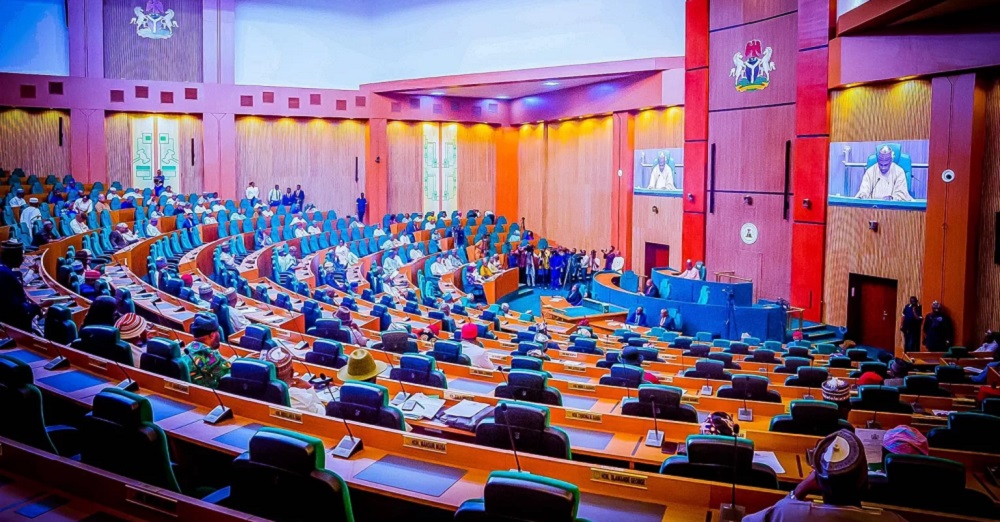
The call followed a motion sponsored by Rep. Ademorin Kuye on Wednesday during plenary, where lawmakers expressed concerns over consumer protection, vehicle safety, local investment and the country’s preparedness for the growing adoption of alternative-fuel vehicles.
The House urged the Federal Government to establish a transparent licensing and approval system for the commercial importation of electric vehicles, CNG vehicles and related clean-mobility equipment.
It also called on the National Automotive Design and Development Council (NADDC), working with the Bureau of Public Procurement, Standards Organisation of Nigeria, Nigeria Customs Service and other relevant agencies, to develop objective criteria for approving importers.
Under the proposed framework, companies seeking approval may be required to establish certified service and maintenance centres in Nigeria, provide genuine spare parts and warranty support, and employ and train qualified Nigerian technical personnel.
Other proposed requirements include investments in electric-vehicle charging infrastructure or CNG refuelling facilities, compliance with Nigerian safety, environmental and technical standards, and the submission of consumer protection and after-sales service plans.
The motion further proposed a public register of approved importers and infrastructure providers to promote transparency and consumer confidence.
It emphasised that the approval process should remain open, competitive, transparent and non-discriminatory, allowing every company that meets the prescribed standards to obtain approval without undue preference.
The House also urged the Federal Government to link tax incentives, import duty concessions and other fiscal benefits to compliance with the proposed framework, with a view to encouraging sustained investment in local infrastructure and technical capacity.
Contributing to the debate, Rep. Dominic Okafor warned that Nigeria must not become a dumping ground for vehicles manufactured without adequate consideration for the needs of developing countries.
He said importers should be required to demonstrate their capacity to maintain vehicles and support consumers after sales.
“It’s very important to see that all the players in this motion are dressed seriously, so that Nigeria is not made of dumping ground,” Okafor said.
He noted that manufacturers in some Western countries produced different categories of vehicles for Western markets and developing countries, including Nigeria, making it necessary for the government to establish safeguards for imported vehicles.
“There are so many, in order with some of these western countries, they produce for the western world and they produce for the developing countries, especially Nigeria. So, efforts should be made to ensure that whoever that is imposing all this electric mobility into the country has to think of the after-sales support,” he said.
The lawmaker stressed that electric vehicles required continued maintenance and technical support, unlike products consumed after purchase.
“Because electric vehicles are not a one-sell product. What I mean by one-sell product is maybe you buy a lot of food and eat and then that ends it. He has to think of after-sales support, availability of maintenance centres and stoppers, so that consumers will not suffer,” he said.
Okafor also raised concerns about the safety of CNG-powered vehicles and trucks, calling for adequate facilities and technical safeguards before companies were allowed to import them commercially.
“And of course, talking about safety, a lot of us have experienced a lot of deaths as a result of all these CNG vehicles and trucks. So, efforts should be made that whoever that imposter is issued to has some of these facilities, not just in it as a trading activity,” he added.
Also supporting the motion, Rep. Kalejaiye Adeboye Paul said the establishment of local maintenance and repair centres was essential to sustaining Nigeria’s transition to alternative-fuel transportation.
He said his support was informed by the growing adoption of the programme by state governments and the need to prepare for the long-term consequences of using imported vehicles without adequate local technical capacity.
“I’m not supporting this bill because it’s from a colleague. And that’s because we are from Lagos State. I’m supporting it because we have seen the events going on. We are seeing that most of us state governments are beginning to embrace this programme,” he said.
Paul warned that Nigeria’s limited capacity to manufacture or assemble such vehicles could create challenges as the number of users increased.
“But I think that establishing their own centre here in Nigeria for maintenance and repairs is very essential. It has to be a condition for which we can continue to embrace this. We are not manufacturing here. We are not assembling here. And we do not have what it takes to keep this going,” he said.
He added that the long-term effects of using the vehicles without adequate maintenance infrastructure might not be immediately apparent.
“Very soon, we are still new. We are not seeing the damage that will be occurring with time. As time goes on, we will start to experience this. Therefore, I wholeheartedly support that this be considered and passed. In the interest of our people, in the interest of our country, I so support,” he said.
In his contribution, Rep. Stanley Olajide said the proposed framework was timely, given global concerns about greenhouse gas emissions and climate change.
He argued that a properly regulated transition to cleaner transportation would help Nigeria contribute to environmental protection while supporting the country’s development priorities.
“Mr Speaker, this motion could not have come at a better time. I want to commend my brother, Honourable Kuya, for bringing this up at the right time, in the interest of the world, and in the interest of our great country, Nigeria.
“I believe having this framework will not only be responsible as a nation, it will also help us toward the line of having an environment-friendly system where we can actually say we are contributing to the right cause in the world”.
Similarly, Rep. Sada Soli described the motion as a progressive step towards providing a legal foundation for the Federal Government’s clean transportation policy.
Soli recalled that the government had announced fiscal incentives for CNG and certain categories of electric vehicles, arguing that a clear legislative framework was needed to guide implementation.
“What is lacking in this policy is the legal aspect of it, so that the government can consider coming up with a piece of legislation or the model of this motion would have gone further to come up to draft a small bill that will define how do we administer this within the country to fit into the government policy,” he said.
He identified environmental protection, lower transportation costs and employment generation as potential benefits of a well-managed transition to alternative-fuel vehicles.
“So this is a brilliant thing. This is very, very progressive because of the importance it has, one, to our environment, two, it will reduce the cost of transportation, three, it will improve even the way we use vehicles because these vehicles are determined by time,” Soli said.
He argued that the transition can create opportunities for employment and income generation as consumers and businesses adopted new transportation technologies.
The lawmaker urged Rep. Kuye to develop the motion further into a bill, saying the National Assembly should not leave the responsibility of establishing the necessary legal framework entirely to the executive.
“So I would advise the mover of this motion to go further, draft this legislation. We should not surrender it to the government because the government has built on this policy.
“We would have expected an executive bill to come along with the policy so that it has some complete legal framework on how this policy can be implemented”, he said.
The House unanimously adopted the motion and mandated the House Committees on Industry, Commerce, Gas Resources, Environment and Legislative Compliance to ensure implementation, by monitoring the process and report within four weeks for further legislative action.
Following the debate, the presiding officer, Speaker Tajudeen Abbas, said the motion had received support and encouraged the sponsor to consider developing it further by providing more details on how the proposed policy would operate.
The debate highlighted lawmakers’ concerns that Nigeria’s transition to cleaner transportation should go beyond importing vehicles to building the local infrastructure, technical expertise and consumer protection mechanisms needed to sustain the sector.