

…seek nationwide crackdown on counterfeit herbal products
By Gloria Ikibah 
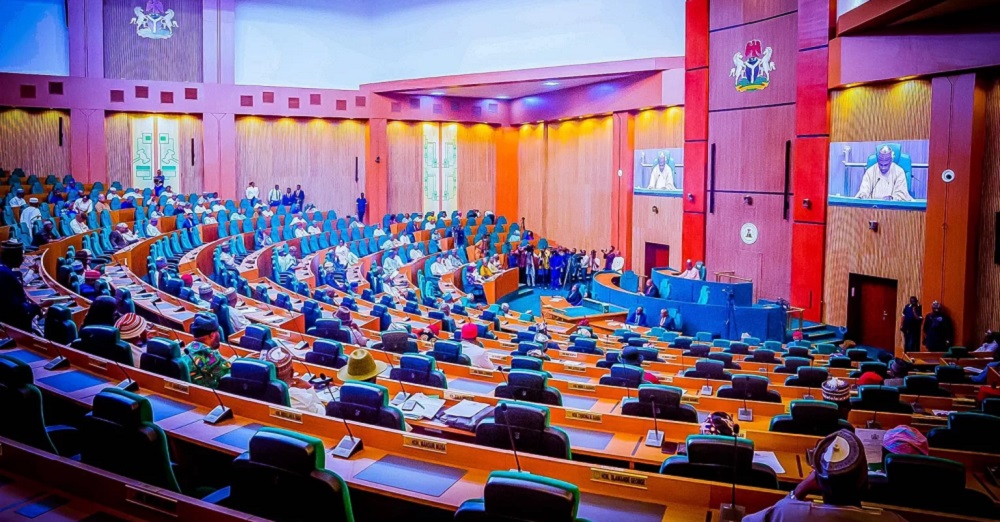
The House of Representatives has resolved to invite the heads of the National Agency for Food and Drug Administration and Control (NAFDAC), Department of State Services (DSS) and Nigeria Police Force to explain measures being taken to tackle the growing circulation of fake drugs and drinks across the country.
The decision was sequel to the adoption of a motion of urgent public importance moved by David Agada, representing Obi/Oju Federal Constituency of Benue State, on Wednesday during plenary.
The motion was prompted by the reported deaths of four people in Obi/Oju after allegedly consuming a suspected poisonous herbal medicine distributed in the area by three individuals.
Moving the motion, Rep. Agada said the incident occurred on October 31, 2026, when three men identified as Muhammad Sani Adamu, Musa Alhaji Kala, who claimed to be from Sokoto State, and Alhaji Muhammad Sule from Bauchi State allegedly introduced and distributed the product, claiming it could cure typhoid fever, waist pain and other ailments.
He said several residents bought and consumed the product, only to develop severe symptoms within hours and require emergency medical attention.
He said: “The House is concerned that on October 31 2026, three individuals identified as Muhammad Sani Adamu, Musa Alhaji Kala who claim to come from Sokoto State and Alhaji Muhammad Sule from Bauchi States allegedly introduced and distributed a herbal medicinal product in Oju/Obi Federal Constituency, Benue State, claiming that the product could cure typhoid fever, waist pain and other ailments.
“We are concerned that several residents reportedly purchased and consumed the said product, after which a number of them developed severe symptoms within hours and were rushed to different hospitals for emergency medical attention.
“The House is disturbed that the incident has reportedly resulted in the deaths of four persons, namely-Awugo Joseph Oyije, who died on 2nd November, 2026; James Ogah Onma, who died on 4th November, 2026, following referral for further medical treatment; Ode Friday Ogah died on November 5, 2026; and Mr Agi Edugbeke who died on the 11th day of November, 2026.”
Agada said 11 other people were affected and were receiving medical attention, with two referred to hospitals in Makurdi, the Benue State capital.
They were identified as Otumala Ochele, Binta Sule, Onu Oboh, Adoga Onu, Upa James, Igbo Pius, Ochele Genesis, Otumala Amos, Uwa Baku, Ate Vivian Okpune and Roman Ehile.
The lawmaker warned that other residents might have consumed the suspected product without being identified or could be receiving treatment outside recognised health facilities.
“The House is worried that other residents within the affected communities may have consumed the suspected product without being identified or may be receiving treatment outside recognised health facilities, thereby increasing the possibility of further casualties.
“The House is further worried that the composition, source, manufacturing conditions, NAFDAC registration status, safety, dosage and possible adverse effects of the product remain unverified, raising serious concerns about the possible circulation of poisonous, adulterated, unregistered or substandard herbal medicinal products”, he added.
He described the incident as a serious public health concern requiring urgent intervention to establish the circumstances surrounding the deaths, prevent further exposure and ensure that anyone found culpable was brought to justice.
Contributing to the debate, Leader of House, Rep. Julius Ihonvbere, said the problem had gone beyond NAFDAC’s capacity, citing the agency’s limited workforce and inadequate nationwide presence.
“This issue has gone beyond NAFDAC which has only a staff strength of about 2,000 people. The agency requires at least 10,000 staff members to be able to execute its mandate. NAFDAC does not have a presence everywhere; it is not in my village in Edo State.
“I think we need to have a holistic conversation about this problem because it is getting out of hand. If we do not do something quickly, more Nigerians will continue to die of fake drugs and drinks”, he said.
Rep.Ihonvbere urged the House to recommend tougher penalties for those involved in the manufacture and distribution of fake and contaminated products.
“Mr Speaker, I think we can suggest life imprisonment or even the death penalty for those involved in this criminal enterprise and may bring the DG of NAFDAC to come and tell us where they are on this matter,” he added.
Ali Shettima (APC, Yobe) also urged lawmakers to address the problem nationwide rather than limit the investigation to the incident in Benue State.
“Let us look beyond Benue and focus on what the issue of fake drugs is doing throughout the country. NAFDAC needs to intensify its work in regulating the activities of herbal medicine producers. Selling fake products to innocent citizens in the name of drugs and drinks is very unfortunate. An enabling law should be enacted to ensure that those involved in this are penalised if they are found guilty,” he said.
However, another Yobe lawmaker, Fatima Talba, cautioned against focusing only on the sellers, arguing that some Nigerians patronised unregulated herbal products because they lacked access to reliable alternatives.
“Some of the people who patronise these do not have any other place to go to. It is not as if these people are forced to buy these products because even in the hospitals, there are fake drugs. We cannot tell these people not to patronise these fake herbal drug sellers because we have not given them alternatives,” she said.
Peter Uzoekwe (NDC, Anambra) proposed sanctions against market executives in areas where fake drugs were manufactured or sold, arguing that they should be held responsible for activities within their markets.
“Let us make it a duty that any market where fake drugs are manufactured or sold, we will depose the executives. If we do this, you will see that those executives would act as taskforce,” he said.
Rep. Ismaila Haruna, representing Toro Federal Constituency of Bauchi State, called for an investigation into deaths allegedly linked to the use of sexual performance-enhancing drugs.
“There are existing laws in place guiding the regulation of herbal medicine. What is left is enforcement. Is NAFDAC doing its job? Again, we need to investigate why men are dying in their numbers because many times, we hear of men dying in hotel rooms and what have you,” he said.
The House subsequently resolved to invite NAFDAC, the Nigeria Police Force and DSS to brief its relevant committees on the measures being taken to tackle the circulation of fake herbal medicines and drinks across the country.