
News
WASSCE candidates again write exams late in the night

- /home/naijuinz/public_html/wp-content/plugins/mvp-social-buttons/mvp-social-buttons.php on line 27
https://naijablitznews.com/wp-content/uploads/2024/03/WAEC-Exam.jpg&description=WASSCE candidates again write exams late in the night', 'pinterestShare', 'width=750,height=350'); return false;" title="Pin This Post">
- Share
- Tweet /home/naijuinz/public_html/wp-content/plugins/mvp-social-buttons/mvp-social-buttons.php on line 72
https://naijablitznews.com/wp-content/uploads/2024/03/WAEC-Exam.jpg&description=WASSCE candidates again write exams late in the night', 'pinterestShare', 'width=750,height=350'); return false;" title="Pin This Post">


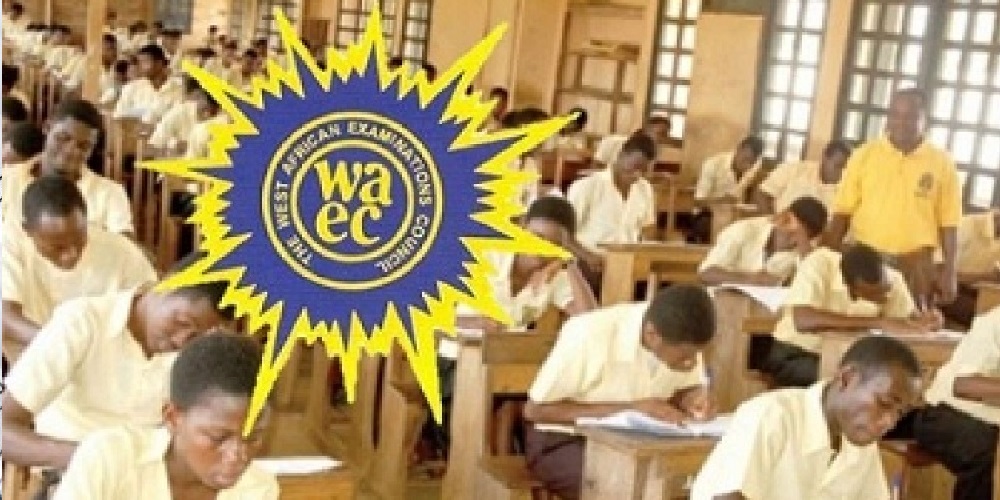
The ongoing West African Senior School Certificate Examination (WASSCE), conducted by the West African Examinations Council (WAEC), has been disrupted by significant delays, forcing candidates in some centres to write examination papers late into the night.
The development has sparked concern among parents, school administrators and education stakeholders, coming barely a year after similar incidents saw candidates sitting for examinations as late as midnight.
Checks across several centres in Lagos, particularly on Lagos Island and in the Lekki axis, revealed that the delays became more pronounced this week.
On Monday, Physics Papers 2 and 1, scheduled to hold between 2 p.m. and 5 p.m., reportedly did not commence on time, with some candidates writing the second paper at about 8 p.m.
Similarly, on Wednesday, candidates sitting for General Mathematics experienced major disruptions. The essay paper, slated for 9:30 a.m. to noon, and the objective paper, scheduled for 3 p.m. to 4:30 p.m., were reportedly concluded around 10 p.m.
As of Thursday evening, candidates scheduled to sit for Agricultural Science Practical were still waiting for examination materials several hours after the paper was expected to begin.
Candidates at some centres were reportedly informed that examination materials had yet to arrive.
A school principal, who spoke anonymously, expressed disappointment over the recurring challenges.
“Why are we experiencing this again after what happened last year? Apart from the security concerns in the country, these delays have psychological effects on candidates. Imagine preparing for an examination scheduled for noon and eventually writing it at 7 p.m. or later,” the principal said.
He added that many stakeholders had expected WAEC to have addressed the challenges following last year’s incidents.
A parent in Lekki also criticised the situation, saying the delays were affecting students’ welfare and raising concerns about examination management.
“My child returned home around 10 p.m. on Wednesday. We expected lessons would have been learned from last year’s experience, but the same issues are happening again,” he said.
The issue has also generated reactions on social media, where several parents and concerned citizens complained about delayed commencement of examinations, shortages of question papers and the impact on students.
Some users alleged that candidates in certain centres had to wait hours before examination supervisors arrived, while others claimed schools were demanding payments for mathematics sets used during the examination.
One parent questioned how candidates could be expected to remain focused after spending an entire day waiting to write examinations, while others raised concerns about students’ safety and well-being as they returned home late at night.
Responding to the concerns, a WAEC official who was not authorised to speak publicly on the matter confirmed that the council was aware of the challenges and was working to address them.
“Yes, we are aware of some hitches due to unforeseen circumstances. However, we are doing everything possible to address the issues, and hopefully, things will return to normal soon,” the official said.
The examination body has yet to issue an official public statement on the delays. However, stakeholders are urging WAEC to provide clarity on the causes of the disruptions and implement measures to prevent a recurrence.


A Kano State High Court has sentenced a resident of Farawa in Kumbotso Local Government Area, Shuaibu Abdulkadir, to death by hanging for the murder of 22-year-old Rumaisa Shuaibu.
The judgment was delivered on Friday by Justice Farida Dan Baffa, who found the defendant guilty of culpable homicide punishable with death under Section 221 of the Penal Code Law.
Abdulkadir was arraigned before the court on August 23, 2025, on a one-count charge following investigations into the killing.
During the trial, the prosecution, led by Basiru Kabiru Aliyu, called three witnesses, including the deceased’s husband, Ibrahim Muhammad; the defendant’s fiancée, Asiya Abdulmalik; and the investigating police officer, ASP Chindo Chiwa.
To prove its case beyond reasonable doubt, the prosecution tendered several exhibits, including a video recording of the crime, a flash drive containing electronic evidence, the defendant’s written confessional statement, English and Hausa transcripts of the confession, photographs of the deceased marked as Exhibits D–D4, the knife allegedly used in the attack, marked as Exhibit E1, and the defendant’s mobile phone.
Following the close of the prosecution’s case, the defence, led by Mustapha Idris, presented its arguments before the court.
After reviewing the evidence, Justice Dan Baffa held that the prosecution had established its case beyond reasonable doubt and found Abdulkadir guilty of murdering Rumaisa Shuaibu after she became pregnant for him. The court subsequently sentenced him to death by hanging.
Reacting to the judgment, the Kano State Attorney General and Commissioner for Justice, Abdulkarim Kabiru Maude, SAN, described the conviction as a significant milestone in the ministry’s commitment to ensuring that criminal cases are prosecuted professionally, fairly and diligently.
According to him, the judgment reflects the determination of the Kano State Ministry of Justice to protect the rights of victims, uphold the rule of law and ensure that offenders are held accountable for their actions.
Maude also commended the prosecuting counsel, Basiru Kabiru Aliyu, for what he described as exceptional professionalism, meticulous preparation and dedication throughout the trial, noting that his performance reflected the high standards expected of state counsel in the ministry.
He urged all state counsel to remain steadfast in the discharge of their constitutional responsibilities by conducting prosecutions with integrity, competence, fairness and an unwavering commitment to justice.
The attorney general reaffirmed the ministry’s commitment to strengthening the prosecution of serious criminal offences, safeguarding citizens’ rights, promoting law and order, and ensuring that justice remains the foundation for peace, security and sustainable development in Kano State.

A United States Congressman, John James, has renewed his call for the release of the detained leader of the proscribed Indigenous People of Biafra(IPOB), Nnamdi Kanu, linking the separatist leader’s continued incarceration to what he described as religious persecution against Christians in Nigeria.
James, a Republican representing Michigan, made the appeal on the floor of the US House of Representatives on while urging lawmakers to support H.Res. 1321, a resolution he introduced on May 22, 2026.
The resolution, which is currently before the House Committee on Foreign Affairs, urges the Nigerian government to ensure that all legal proceedings involving Kanu comply with the country’s Constitution and international human rights obligations.
Addressing fellow lawmakers, James alleged that Nigeria had become the world’s deadliest country for Christians, claiming that tens of thousands had been killed since 2019 in what he described as a sustained campaign of religious violence by Islamist extremists.
“Since 2019, tens of thousands of Christians in Nigeria have been slaughtered as part of a sustained pattern of religiously motivated violence by Islamist jihadis ignored or enabled by the Nigerian government,” he said.
He further alleged that extremist groups, including Boko Haram, continued to operate with little or no effective response from Nigerian authorities.
James also criticised Kanu’s conviction on terrorism charges, describing the trial as a “farce show trial” and portraying the IPOB leader as someone punished for speaking out against the killings.
According to him, Kanu, who is serving a life sentence, should either be granted a fresh trial conducted in line with Nigeria’s Constitution and international legal standards or be released unconditionally.
“I implore my colleagues to support my bill, H.Res. 1321, calling on the Nigerian government to conduct another trial in accordance with its own constitution based on evidence with access to legal counsel, medical care, and international law pertaining to humane conditions of detention, or better yet, release Mazi Nnamdi Kanu immediately and unconditionally,” James said.
The congressman also questioned continued American financial assistance to Nigeria, saying the US should not continue funding a country where Christians were allegedly being persecuted.
“America gives billions to Nigeria. We will not continue to fund a Christian genocide,” he said, adding that the United States had a moral responsibility to ensure Christians in Nigeria could worship freely.
Kanu was sentenced to life imprisonment on November 20, 2025, by the Federal High Court in Abuja after Justice James Omotosho found him guilty on terrorism-related charges.
The IPOB leader has remained in custody following his arrest in Nairobi, Kenya, in 2021 and subsequent transfer to Nigeria.
James’ resolution also references a July 20, 2022 opinion by the United Nations Working Group on Arbitrary Detention, which concluded that Kanu’s detention violated international human rights standards and recommended his release alongside appropriate remedies.

The Nigeria Union of Teachers has announced plans to stage a peaceful protest in Delta State over what it described as attempts to divide the union and undermine an agreement reached with the Academic Staff Union of Secondary Schools in 2018.
The union said the protest is scheduled for Thursday, July 30, 2026, and has notified the Department of State Services, requesting security protection for its members.
In a letter dated July 24 and signed by the Delta State Secretary of the union, Dan Basime, the NUT said the planned protest followed recent developments which, according to it, could threaten industrial peace in the state’s education sector.
The union said its decision was triggered by a meeting convened on July 20 by the Office of the Secretary to the State Government with ASSUS and other stakeholders over the reversal of the ₦500 check-off levy deduction by the Office of the Head of Service.
However, the NUT, in another letter dated July 23 and addressed to the Secretary to the State Government, protested its exclusion from the meeting.
The union argued that it was a major stakeholder and signatory to the agreement reached in 2018, adding that no discussion on the matter should have taken place without its participation.
It warned that holding meetings on issues affecting the union in its absence could create unnecessary divisions and disrupt industrial harmony in the education sector.
The NUT also maintained that issues relating to trade unions and check-off dues are regulated by federal law and fall under the authority of the Registrar of Trade Unions.
It added that no association has the power to change existing arrangements outside the legal framework.
The union recalled that the 2018 stakeholders’ agreement, convened by the administration of former Governor Ifeanyi Okowa, approved a quarterly ₦500 levy and insisted that no meeting had been held since then to review or amend the decision.
It said any attempt to reverse or alter the agreement without the involvement of all parties would amount to a breach of the understanding reached at the time.
The union reaffirmed its commitment to dialogue and collective bargaining but stressed that its preference for peaceful engagement should not be seen as a sign of weakness.
It also expressed support for the administration of Governor Sheriff Oborevwori and his M.O.R.E. Agenda.
As of the time of filing this report, the Delta State Government and ASSUS had yet to respond to the planned protest or the issues raised by the union.
If the protest goes ahead, it is expected to draw attention to the lingering disagreement over check-off dues and union representation in the state’s education sector.
Kano Court Sentences Man To Death For Murder Of Pregnant Woman

US Congressman Renews Call For Nnamdi Kanu’s Release

NUT plans protest over alleged move to divide union in Delta




-

 News24 hours ago
Full List: 68 Lawyers Elevated To SAN Rank
-
 News16 hours ago
US Slams Killing of Rev. Ezekiel Dachomo’s Family in Plateau, Demands Justice
-

 News24 hours ago
Soludo’s daughter graduates with First Class from UK university
-

 Metro24 hours ago
Soldier declared wanted over alleged sale of military uniforms to terrorists
-

 News17 hours ago
Photo News: Proud father, FCT minister, Wike hosts friends to dinner in celebration of daughter’s graduation
-

 News24 hours ago
US Pastor Convicted For Stealing Over $340,000 From Churches To Fund Gambling, Personal Expenses
-
 News12 hours ago
Just in: Bangladesh President Mohammed Shahabuddin Quits Office
-
 News11 hours ago
‘Defected govs believe presidency will write results’ – Kwankwaso on why Govs joined APC