
News
Team Europe explores Kannywood’s potential to create jobs, skills, opportunity and social change across northern Nigeria

- /home/naijuinz/public_html/wp-content/plugins/mvp-social-buttons/mvp-social-buttons.php on line 27
https://naijablitznews.com/wp-content/uploads/2026/06/IMG-20260616-WA0019-1000x600.jpg&description=Team Europe explores Kannywood’s potential to create jobs, skills, opportunity and social change across northern Nigeria', 'pinterestShare', 'width=750,height=350'); return false;" title="Pin This Post">
- Share
- Tweet /home/naijuinz/public_html/wp-content/plugins/mvp-social-buttons/mvp-social-buttons.php on line 72
https://naijablitznews.com/wp-content/uploads/2026/06/IMG-20260616-WA0019-1000x600.jpg&description=Team Europe explores Kannywood’s potential to create jobs, skills, opportunity and social change across northern Nigeria', 'pinterestShare', 'width=750,height=350'); return false;" title="Pin This Post">


By Ojomah Austin.
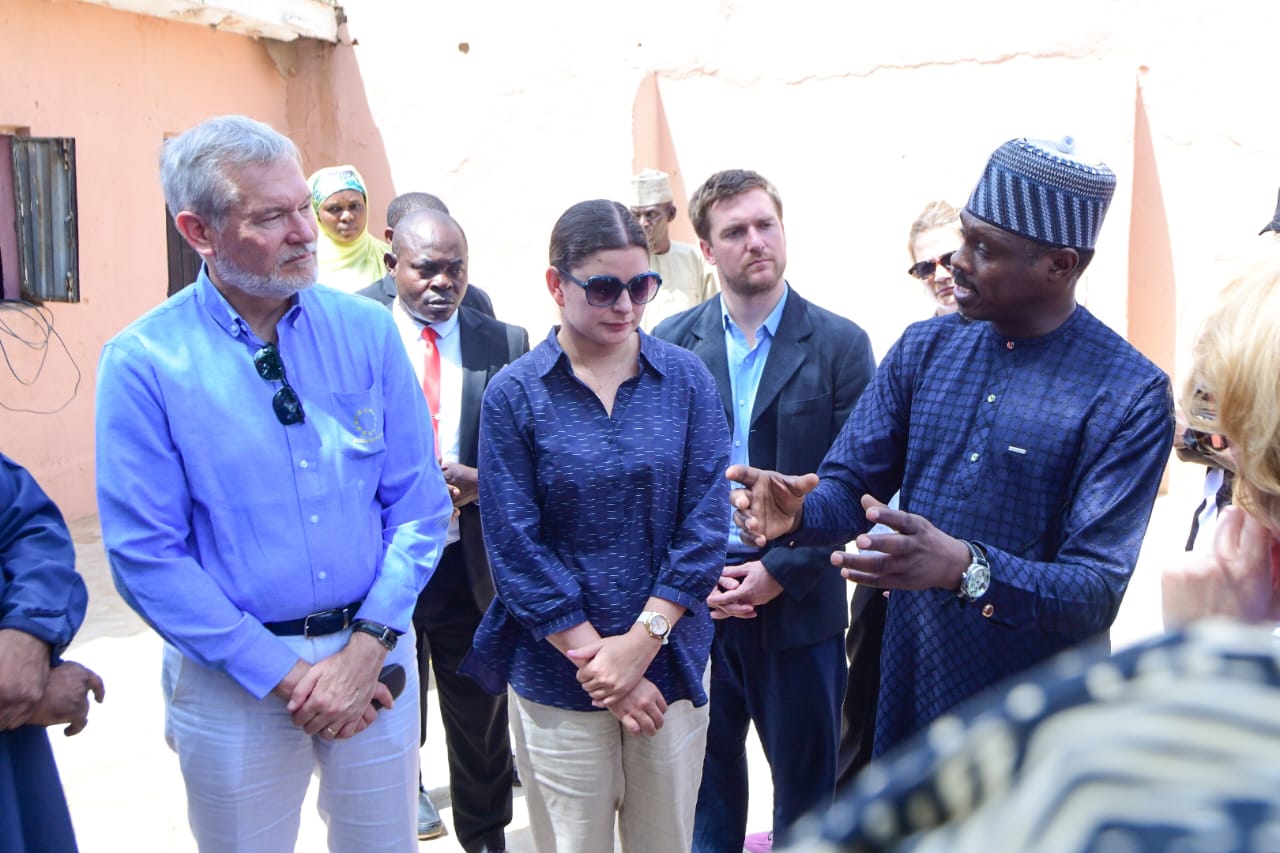
Diplomats visited Kano Film Village to gain first-hand insight into how Kannywood is contributing to youth employment, education and economic opportunity across northern Nigeria. And to experience first-hand how a good entertainment can carry important social messages.
The delegation, led by the European Union Ambassador to Nigeria and ECOWAS, Gautier Mignot, included ambassadors and deputies from Denmark, Spain, Italy, France, Czechia, Finland, Belgium and Austria.
The delegation was received by the Executive Secretary of the Kano State Films and Video Censorship Board, Alhaji Abba El-Mustapha, and the Managing Director of the Nigerian Film Corporation, Ali Nuhu.
Team Europe met filmmakers, actors, producers and regulators. They observed the production of Hindatu, a film telling a story of a young girl determined to continue her education and become a medical doctor despite her family intention to marry her.
Speaking during the visit, Ambassador Mignot stressed the power of visual and creative arts to influence people’s behaviour:
“Stories have the power to inspire change. Films that promote education, opportunity and inclusion can spark important conversations and encourage positive change within communities,” he said.
“Creative industries are not only about culture. They are also about jobs, skills, entrepreneurship and creating opportunities for young people. Across Nigeria, young people are demonstrating remarkable talent and creativity, and industries such as Kannywood are helping transform that potential into livelihoods and economic opportunity”, he added.
Executive Secretary of the Kano State Films and Video Censorship Board, Mr Alhaji Abba El Mustapha noted that Kannywood plays an important role in promoting positive social values while creating opportunities for practitioners across the creative sector. He added that Films and Video Censorship Board, had approved more than 10,000 films over the years while supporting the industry through training programmes, workshops and stakeholder engagement.
“Our role is not only regulatory.
We also work with filmmakers to strengthen professional standards, support capacity development and ensure that films contribute positively to society,” he said.
The delegation also toured Kano Film Village, a production facility developed by broadcaster and filmmaker Abdullaziz Dansmall, a dedicated production environment where films could be produced efficiently.
“Our first major production was Gidang Haya. We used the revenue from that project to build little by little, expanding the facility over time. Our long-term ambition is to transform the site into a fully developed film village capable of supporting larger productions.”, Mr Dansmall said.
Managing Director of the Nigerian Film Corporation, Mr Ali Nuhu, highlighted the industry’s economic significance, citing research that identified film production as the second-largest source of youth employment in Kano State after agriculture.
The industry’s impact extends far beyond entertainment, creating livelihoods and supporting businesses throughout the value chain.
He also highlighted ongoing challenges facing the sector, particularly around distribution and access to production facilities, noting that the industry has increasingly adapted to digital platforms and online distribution channels as traditional DVD markets declined.
Team Europe visit also came as the European Union expands its support for cultural cooperation between Africa and Europe through initiatives such as the Africa-Europe Partnerships for Culture (AEPC), a €30 million programme supporting artist mobility, cultural spaces and collaboration between African and European creative professionals. The initiative reflects the EU’s growing recognition of culture and creative industries as drivers of economic opportunity, innovation and social development.




News
Wike’s flashback on Amaechi: “I was his campaign DG in 2011, after that he has not won any election in Rivers”(Video)

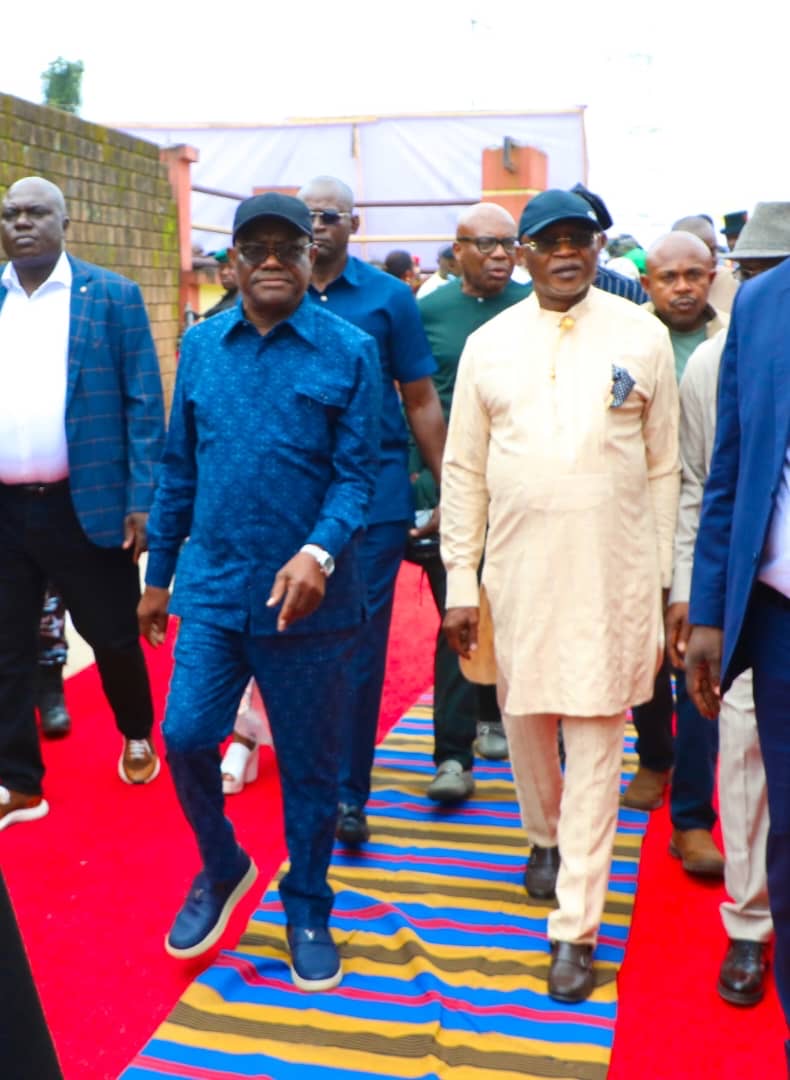
Federal Capital Territory FCT minister Nyesom Wike on a memory lane said his predecessor, Rotimi Amaechi has failed to win any election after he supervised his Guber election in Rivers in 2011.
WATCH:
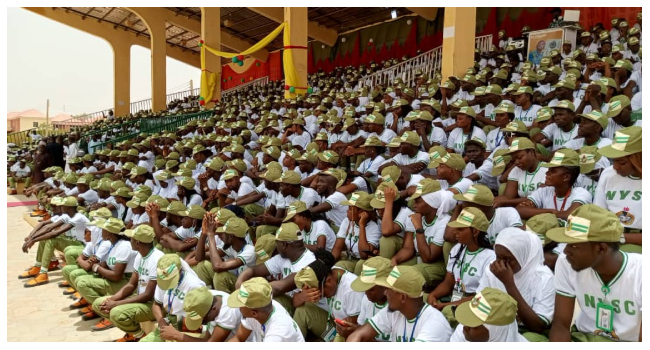
Families of prospective National Youth Service Corps (NYSC) members from Oyo State have been thrown into panic after kidnappers reportedly demanded a combined N50 million ransom for each of their victims abducted along the Owerri-Onitsha Road in Imo State.
Recall that the victims were travelling from Ibadan, Oyo State, to NYSC orientation camps in Abia and Akwa Ibom States when gunmen attacked two buses in the Umunoha area of Imo State on Thursday.
The Managing Director of Uko Akwa Ibom Motors Nigeria Limited, Isiah Akpan, whose company operates the buses, confirmed the development.
According to Akpan, the kidnappers contacted some of the victims’ families and demanded ₦50 million for each abducted passenger.
The development has heightened fears among relatives, who are anxiously awaiting the safe return of their loved ones as security agencies intensify efforts to locate the victims.
Akpan said the two buses departed Bodija/Samonda Park in Ibadan on Wednesday but were delayed by heavy traffic around Benin, Edo State.
He said the buses eventually arrived in Onitsha, Anambra State, late that day.
However, due to the condition of the road, the drivers and passengers decided to spend the night in Oba before continuing their journey the following morning.
According to him, the buses resumed the journey from Oba at about 5 a.m. on Thursday.
Akpan said the vehicles had barely entered Imo State when gunmen emerged from the bush, blocked the buses and forced 19 passengers into the bush.
“They blocked the two vehicles and took 19 passengers, all corps members, into the bush,” Akpan said.
He said the drivers escaped and alerted security personnel at a nearby checkpoint, prompting police and military personnel to commence a search for the abductors.
Akpan, however, said the operation was initially delayed after some villagers allegedly prevented security personnel from moving the abandoned buses from the scene.
The buses were eventually left at the location, with some of the passengers’ belongings scattered inside.
Less than 24 hours after the incident, the Imo State Police Command said that 10 victims had been rescued.
Families of the victims have been receiving ransom demands
The reported ransom demands have deepened the anxiety of relatives of the missing graduates.
Some of the parents who spoke to Channels Television appealed to both the state and federal government to come to their aid and secure the release of their children.
Some of the parents in an interview with Channels Television noted that they are helpless in the face of the demands being made by the kidnappers. They are also worried about the safety of their children.
Olawale Olaleke, while speaking with Channels Television, said his son was one of those posted to Abia State to serve but was unfortunately kidnapped before he got to his destination.
Another parent, Olawale Olalere, narrated his ordeal with tears in his eyes, calling on Governor Seyi Makinde and President Bola Tinubu to come to their rescue.
He said, ” The vehicle took off from Samonda and slept in Onitsha, from where they took off the following morning, and just as they got to Owerri in Imo State, we heard they had been kidnapped.
” We are here to appeal to the government to come to our rescue. This morning, when they confirmed that they have been kidnapped, they’re already demanding N50 million naira on each victim”.
Mrs Oladosu said her daughter, Greatness, was travelling to Uyo when she was abducted
According to Oladosu, the kidnappers briefly contacted the family through her daughter’s phone and allowed them to see Greatness and other victims during a video call.
She said the victims were seen sitting on the ground in the bush and crying.
“Where will petty traders get N50 million? They are just going to serve Nigeria; why this punishment?” she said.
Another victim’s mother, Alimotu Akanke, said her son, Akande Farouq, who was posted to Abia State, managed to send a brief message to his family before his phone went off.
Farouq reportedly sent the word “Kidnappers!” to the family’s WhatsApp group before communication was lost.
Meanwhile, Friends and relatives of the victims have begun to seek help online.
As families await news of the victims, friends and associates of some of the abducted graduates have launched social media campaigns calling for assistance and their safe release.
A manifest from the two buses reportedly listed 30 passengers, 15 in each bus, although the number of people actually abducted and the identities of those rescued remained subject to clarification as security agents are yet to release the manifest from the transport company.
Oyo Govt Condemns Crime
The Oyo govt has condemned the abduction of the corps members and assured the parents and relatives of the victims of their safe release.
The assurance was given at the Oyo State Government Secretariat when the families affected paid a visit in protest of the abduction.
Executive Assistant to Gov Seyi Makinde on Security, Sunday Odukoya who attended to the group, attempted to calm frayed nerves, assuring them that Gov Makinde is working with all relevant stakeholders to secure the release of the Corps members.
Police Launch Rescue Operation
The Police Public Relations Officer, DSP Henry Okoye, said security agencies were pursuing the abductors and had launched a coordinated operation to rescue the remaining victims.
However, it is unclear whether those 10 rescued persons were among the corps members reportedly abducted from the two buses.
… FCT Minister challenges ex-Rivers governor over stalled projects, 24-year public record
… Questions N10bn anti-malaria fumigation spending, electoral claims
… Says political leadership should empower, not pull others down
The Minister of the Federal Capital Territory (FCT), Nyesom Wike, has fired back at former Rivers State Governor Rotimi Amaechi, challenging him to account for major projects and expenditures incurred during his administration.
Wike made the statements on Saturday, during a visit to the Uzugbani Ekpeye National Executive Council at Ekpeye House in Ahoada, Ahoada East Local Government Area of Rivers State.
Wike, who spoke on Saturday during an interactive meeting with the Uzugbani Ekpeye National Executive Council as well as leaders and stakeholders of Ahoada East and West Local Governments, Rivers State at the Ekpeye House in Ahoada, was reacting to Amaechi’s appearance on Channels Television’s Politics Today on Friday evening.
Amaechi, a former governor and Minister of Transportation, had criticised the Federal Government over its record of project delivery and challenged the administration to name major projects it had completed.
But Wike turned the spotlight on his predecessor’s record in Rivers, questioning what became of several projects initiated under Amaechi.
He specifically raised questions over the $39 million reportedly paid for the Justice Adolphus Karibi-Whyte Specialist Hospital, the N68 billion monorail project and about N10 billion allegedly spent on an anti-malaria fumigation programme.
Wike asked what became of the money committed to the hospital project after the facility was not completed.
The controversy over the hospital dates back to the Amaechi administration.
A Rivers State judicial commission set up under Wike had investigated the payment of $39.2 million to a contractor for the project and its failure to materialise.
Wike also questioned the fate of the monorail project, which was among the major infrastructure schemes initiated by the Amaechi administration, as well as the expenditure on the fumigation programme.
He went further to criticize a $10 million malaria control project that was executed with Cuba to eradicate mosquitoes in the state, dismissing the initiative as a scam.
“Ask him about the fumigation of Rivers State with people from Cuba in which $10 million was spent. Ask him whether mosquitoes have stopped biting us in Rivers State,” he said.
The FCT Minister said such issues should be considered when assessing the records of political leaders seeking higher office.
Wike also challenged Amaechi’s record after spending eight years each as Speaker of the Rivers State House of Assembly, governor and Minister of Transportation.
“Someone was Speaker of the House of Assembly for eight years, Governor for eight years, and Minister for eight years, that is 24 years in top leadership positions. What can anybody point to that he attracted to Ekpeye Land in all those 24 years? Nothing! Not one single thing!” he said.
The minister urged the people of Ahoada East and West Local Governments to demand evidence of projects and political empowerment allegedly attracted to the area during Amaechi’s years in public office.
Wike said leadership should not be measured only by the offices occupied but by the people empowered, projects delivered and structures left behind.
He contrasted this with what he described as his own efforts to empower people and develop political successors, saying leaders should not deliberately prevent others from rising.
Wike also criticised what he described as the use of personal and family tragedies for political purposes.
He said political disagreements should not descend into the exploitation of private grief, particularly matters surrounding the death of family members.
The minister warned against a political culture in which personal tragedies are deployed to gain sympathy or attack opponents.
Wike further challenged claims about Amaechi’s political influence in Rivers State, asking supporters to examine his electoral record.
“Since I left him in 2011, after 2011, mention one election that he has ever won in Rivers State,” he said.
The minister also recalled their political relationship and past disagreements, including controversies surrounding appointments and business interests involving federal maritime agencies.
He contrasted what he described as Amaechi’s approach with the Tinubu administration’s establishment of regional development structures and appointments involving people from the South-South.
His latest comments deepen the long-running political feud between the two former Rivers leaders, who once worked together before becoming major political rivals.

Wike’s flashback on Amaechi: “I was his campaign DG in 2011, after that he has not won any election in Rivers”(Video)

Confusion As Abductors Of Oyo Corps Members Demand ₦50m Ransom For Each Victim
Wike tackles Amaechi: Account for $39m Hospital, N68bn Monorail, N10bn anti-malaria fumigation



-

 News10 hours ago
Court Denies KC Luxury Bail, Remands Influencer Over ₦39bn Cocaine Trafficking Allegation
-

 Metro11 hours ago
Edo APC Chairman Tenebe Sparks Outrage Over ‘AK-47 Fire’ Threat Against Tinubu Vote Opponents
-
 Metro11 hours ago
Fear grips RCCG Church members as pastor collapses, dies while preaching about sudden death
-

 News10 hours ago
Amaechi: I’ll Dump Atiku, Back Tinubu If Petrol Drops to ₦600 Per Litre
-
 News8 hours ago
Nigeria at 66: TeeJay Yusuf Calls for Urgent Action to Tackle Hardship, Insecurity, Restore Hope
-
 News5 hours ago
Grand reception for FCT minister Wike at Ekpeye Kingdom on a visit to Uzugbani NEC, in Ahoada LGA today (VIDEO)