Connect with us

Foreign

Trump To End HIV Funding For South Africa Over Violence

Published

on

ADVERTISEMENT
Zoom Ad
ADVERTISEMENT
Zoom Ad

The US government says it will stop funding programmes in South Africa intended to tackle the spread of HIV and Aids.


More than eight million South Africans are living with HIV – the highest number of any country in the world.

The US State Department appeared to link the decision to South Africa’s alleged failure to protect the white-minority Afrikaner community – an allegation the South African government has repeatedly rejected.

South Africa’s health ministry responded by saying that though it had not been informed of this decision, it had “long been working on a self-reliance plan”.

Advertisement

Until 2025, the US was supporting South Africa’s efforts to deal with the virus with an estimated $400m (£300m) a year through the President’s Emergency Fund for Aids Relief (PEPFAR).

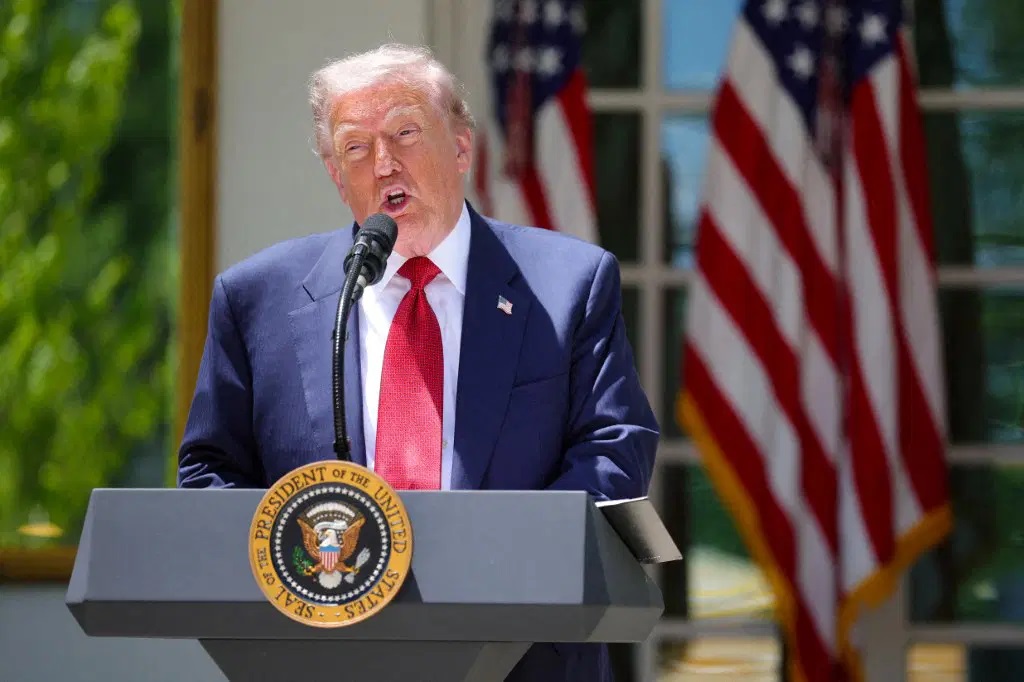
But since the inauguration of President Donald Trump, relations between the two countries have increasingly soured.

Shortly after he came into office, Trump issued an executive order alleging that “countless” South African policies dismantled equal opportunities and fuelled violence “against racially disfavored landowners”.

This is disputed by the South African government, which says its Black Economic Empowerment policy is needed to correct economic inequality dating from the apartheid era.

Advertisement

The executive order also highlighted South Africa’s case against Israel at the International Court of Justice and its links to Iran.

The White House said that given these “unjust and immoral practices”, further aid to South Africa would not be provided.

Trump has also falsely alleged that there is a “white genocide” taking place in South Africa, which has led to the administration setting up a refugee programme for Afrikaners – descendants of Western Europeans who settled in southern Africa in the 17th Century.

They are now just about the only refugees being allowed into the US.

Advertisement

The genocide claim has been widely discredited.

Pepfar funding, which had been providing about a fifth of South Africa’s total spending on HIV programmes, got a reprieve last October with what was called a “bridge plan”.

But a US State Department official has confirmed that a “phased drawdown” of Pepfar funding would now start.

This was because of “South Africa’s failure to make demonstrable progress on policy requests by the administration”, the official said.

Advertisement

The US government intended to “foster self-reliance” and reduce dependency on American funding, they added, pointing out that “South Africa is a middle-income country and is more than capable of supporting its own health programs”.

South Africa’s health ministry has said that while Pepfar contributed to the country’s HIV programme, the provision of life-saving antiretroviral drugs was funded entirely separately, with most coming from the government.

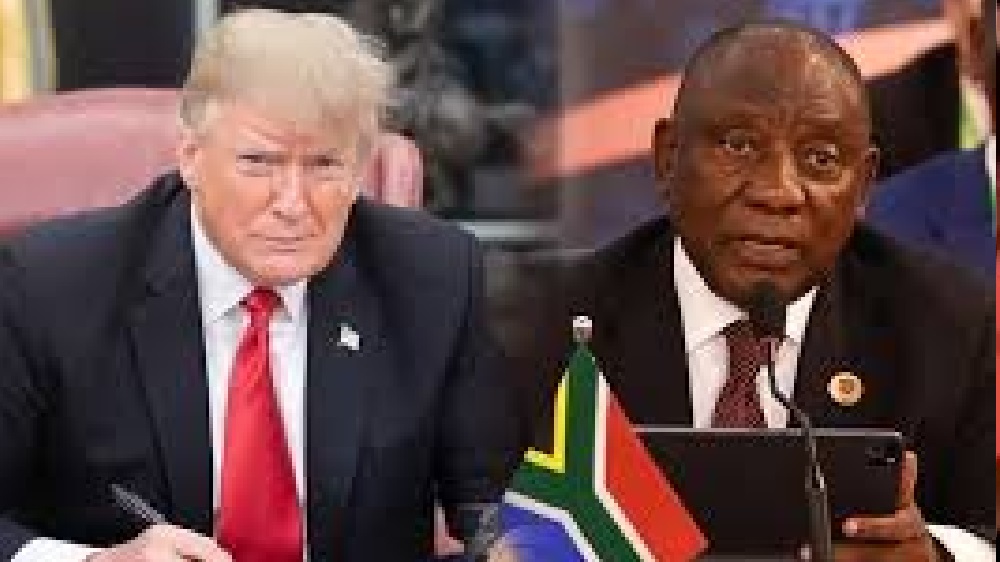
Attempts to mend US-South Africa relations have floundered. These include a high-profile White House meeting between Trump and South African President Cyril Ramaphosa just over a year ago, when the US president confronted his counterpart with his claims of white persecution.

The US also boycotted the G20 meeting, a gathering of the world’s major economies, hosted by South Africa last November.

Advertisement
Continue Reading
Advertisement

Foreign

Israel, Hezbollah Agree Ceasefire As US-Iran Deal Under Strain

Published

on

By

ADVERTISEMENT
Zoom Ad
ADVERTISEMENT
Zoom Ad

Israel and Hezbollah agreed a ceasefire on Friday, a US official said, after deadly exchanges between the two sides in Lebanon put a deal to end the Middle East war under strain, less than two days after it was signed.

Talks that were scheduled to take place between the US and Iran in Switzerland on Friday to build on the deal and work towards a lasting settlement were postponed amid the fighting, with no new date announced.

Tehran’s top negotiator warned it would not bend on its red lines and that its finger was still “on the trigger”, even as shipping appeared to pick up in the Strait of Hormuz, which had essentially been closed during the war.

The deal signed this week by President Donald Trump and his Iranian counterpart Masoud Pezeshkian aims to end a war that began on February 28 with US-Israeli strikes that killed supreme leader Ayatollah Ali Khamenei.

Advertisement

The agreement was also meant to halt the fighting in Lebanon, which Iran has always insisted should be covered under any accord, turning Israel’s ongoing campaign there into a source of frustration for Washington.

Israel’s military said Friday that it had struck more than 80 Hezbollah targets in Lebanon and killed dozens of members of the Iran-backed group.

‘Permanent war’

Lebanon said 47 people were killed and 97 others wounded in Israeli strikes on Lebanon Friday. Israel’s military reported four troops were killed.

Advertisement

But a US official told AFP a truce between Israel and Hezbollah, beginning immediately, had been brokered by US and Qatari mediators following talks with Israel and Iran. A Gulf diplomat confirmed the ceasefire.

Yet even after the truce was announced, Lebanese state media reported an Israeli airstrike on the country’s south in the Jezzine region.

A previous truce nominally agreed in April did nothing to stop attacks by either side, and Prime Minister Benjamin Netanyahu had said just hours earlier that the Israeli army would stay in Lebanon “as long as necessary” and would make Iran-backed Hezbollah pay a “heavy price” for its attacks.

Far-right Israeli National Security Minister Itamar Ben Gvir went even further, saying after the soldiers’ deaths that “all of Lebanon must burn”.

Advertisement

Iran’s Foreign Minister Abbas Araghchi accused Israel of only being interested in “permanent war”.

‘No urgency’

Preparations had been made to host Iranian and US delegations led by Tehran’s top negotiator Mohammad Bagher Ghalibaf and US Vice President JD Vance at the Swiss resort of Burgenstock, overlooking Lake Lucerne.

The talks were due to kick off a two-month period of negotiations to discuss outstanding issues not covered by the initial deal, notably Iran’s nuclear programme.

Advertisement

Switzerland’s foreign ministry confirmed the discussions had been postponed but said it “remains ready to facilitate these talks”.

Quoting diplomats, the Financial Times said Israel’s strikes on Lebanon had led to the postponement but there was no immediate confirmation.

Iranian foreign ministry spokesman, Esmaeil Baqaei, said there was “no urgency to hold the meeting” but that it was planned “in the coming days”

‘Crushing response’

Advertisement

Ghalibaf said on Friday that talks with the United States would remain bound by Tehran’s “red lines”.

“If the enemy seeks to be excessive, we have proven that our fingers are on the trigger and we have no hesitation in giving a crushing response to the enemy,” he said, in remarks published by the official IRNA news agency.

Vance, meanwhile, has expressed a degree of exasperation with the Israeli government rare for a top US official, telling the New York Times “you can’t just kill your way out of solving every single national security problem that you have”.

A key aspect of the deal was the immediate re-opening of the Strait of Hormuz, the key shipping bottleneck whose closure caused global energy prices to rise.

Advertisement

A total of 25 commercial vessels crossed the newly-reopened strait on Thursday, the highest number since mid-April, according to data from maritime tracking firm AXSMarine published on Friday.

American forces on Thursday lifted their parallel naval blockade of Iranian ports, the US military said, noting that American warships “will remain in the general area”.

Iran’s maritime authority said on Friday that all ships seeking to cross the Strait of Hormuz should submit a transit request “48 hours in advance”, despite its reopening.

AFP

Advertisement
Continue Reading

Foreign

Vance defends Iran deal, eyes Swiss talks

Published

on

By

ADVERTISEMENT
Zoom Ad
ADVERTISEMENT
Zoom Ad

US Vice President JD Vance on Thursday defended the deal to end the Iran war, saying he would likely head to Switzerland for talks to turn it into a long-term agreement.

“The Iranians have to perform,” Vance told a briefing at the White House as President Donald Trump faced mounting criticism over the deal.

“If they don’t perform as we’ve said before, they don’t get any of the benefits of the bargain.”

Vance — a war skeptic who has become the public face of the deal Trump signed at Versailles on Wednesday — rejected claims that the deal rewards Iran without achieving Trump’s war aims.

Advertisement

The most controversial points have been around oil sales, sanctions relief and a $300 billion reconstruction fund for Iran, while there is no firm program for destroying Iran’s nuclear program.

But Vance said Iran would only get the rewards if it proves that it has complied with the terms that will be hammered out in a 60-day period that he said began on Thursday following the signing of the memorandum of understanding (MoU).

“There’s a lot of discussion — the MoU, the gentleman’s agreements, the final deal. Words don’t matter, ladies and gentlemen, we’re about verification,” Vance told reporters.

He added that oil prices were falling, and said the US had lifted its blockade of Iran.

Advertisement

The US military “has allowed north of a dozen ships to go through our naval blockade, and so we’re also honoring our end of the early part of the agreement,” Vance told journalists.

– ‘Smell the reality’ –

Vance said he now planned to head to Switzerland for technical talks on a long-term deal, although the arrangements were not yet finalized.

“I plan to go to Switzerland,” Vance said. “I suspect this weekend but I’m not sure. It just depends on exactly when the Iranians can get there.”

Advertisement

Vance’s new role as Iran pointman is a political gamble for a man who is widely expected to run for president in the 2028 US election.

If a deal to end the war succeeds it will be a boost for a long-term skeptic of US military entanglements — but if it fails, Trump has already said that he will blame Vance.

“I mean, I think the president was joking, as he often does,” Vance said when asked if he feared that Trump would make him the fall guy.

“But, no, look, the entire team has worked very well on this, and we’ve got this thing to a very good place for the American people.”

Advertisement

Vance meanwhile issued an extraordinary rebuke to Israeli critics of the Iran deal, amid growing tensions between Trump and Prime Minister Benjamin Netanyahu.

“If I was in the cabinet of the Israeli government, I might not be attacking the only powerful ally that I have anywhere left in the entire world,” Vance said.

“Anybody in Israel who thinks their biggest problem is the president of the United States needs to wake up and smell the reality of the situation.”

AFP

Advertisement
Continue Reading

Foreign

UK imposes 70 new sanctions on Russia

Published

on

By

ADVERTISEMENT
Zoom Ad
ADVERTISEMENT
Zoom Ad

The UK is imposing a raft of new sanctions against Russia, including on tankers that transport LNG, in a bid to pressure Moscow into halting the war against Ukraine, Prime Minister Keir Starmer announced as a special G7 summit session got underway Tuesday.

Ukrainian President Volodymyr Zelensky is attending the summit of seven leading world powers in the French resort town of Evian-les-Bains, with allies looking to tilt the balance in Kyiv’s favour after over four years of war and intensify pressure on Russian President Vladimir Putin.

“Working with our G7 allies, we will continue to increase the pressure on Putin and his circle of collaborators until Russia’s war machine is brought to a halt and peace returns to our continent,” said Starmer.

The talks are taking place after a Russian barrage of missiles and drones early Monday killed at least 11 people across Ukraine and sparked a fire at one of the most important Orthodox monasteries in the capital.

Advertisement

“UK announces 70 new sanctions targeting Russia’s decrepit shadow fleet, military procurement supply chains and illicit finance networks used to circumvent sanctions,” a statement by UK’s Foreign, Commonwealth & Development and Starmer’s offices read on Tuesday.

The new sanctions actions “will choke Russia’s war effort across multiple fronts” by targeting Russia’s illicit “shadow fleet,” military procurement supply chain and finance networks used to circumvent sanctions, Starmer’s office said further.

The actions against the so-called “shadow fleet” — used by Russia to transport energy and other assets under a different flag — target more than 20 oil tankers.

Starmer’s office said the United Kingdom is now the first G7 country to sanction several Liquefied Natural Gas (LNG) vessels recently acquired by Russia to service an already sanctioned Arctic LNG project.

Advertisement

The British premier — under pressure at home after his defence minister resigned in a row over military spending last week — is to tell leaders at the session that “the G7 should collectively go further to ensure Ukraine secures the just and lasting peace it deserves”.

Starmer’s office also announced a deal to send enriched uranium to fuel Ukrainian nuclear power stations which would “power Ukraine for the next two years”.

Some £210 million ($282 million) worth of export finance will allow the UK-based Urenco to supply enriched uranium to Ukraine’s nuclear power producer, Energoatom, it said.

AFP

Advertisement
Continue Reading

Trending

Copyright © 2024 Naija Blitz News