
News
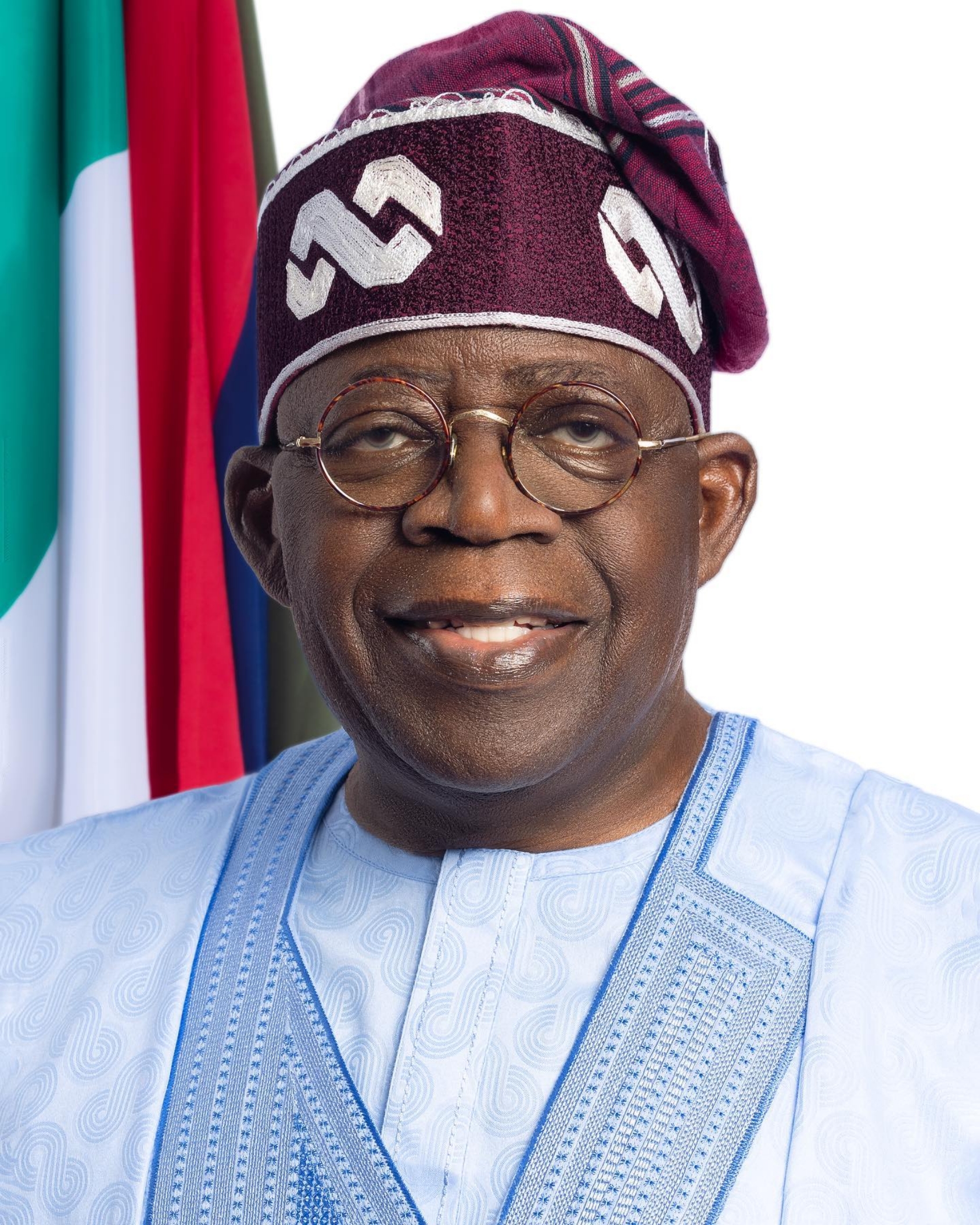
Tinubu Sends Two Key Bills to Reps, Rejects Two National Assembly Amendments

- /home/naijuinz/public_html/wp-content/plugins/mvp-social-buttons/mvp-social-buttons.php on line 27
https://naijablitznews.com/wp-content/uploads/2025/01/Bola_Tinubu_portrait-1000x600.jpg&description=Tinubu Sends Two Key Bills to Reps, Rejects Two National Assembly Amendments', 'pinterestShare', 'width=750,height=350'); return false;" title="Pin This Post">
- Share
- Tweet /home/naijuinz/public_html/wp-content/plugins/mvp-social-buttons/mvp-social-buttons.php on line 72
https://naijablitznews.com/wp-content/uploads/2025/01/Bola_Tinubu_portrait-1000x600.jpg&description=Tinubu Sends Two Key Bills to Reps, Rejects Two National Assembly Amendments', 'pinterestShare', 'width=750,height=350'); return false;" title="Pin This Post">


By Gloria Ikibah
President Bola Ahmed Tinubu has forwarded two executive bills to the House of Representatives for consideration, including proposals to strengthen senior secondary education and reform Nigeria’s criminal justice system, while withholding assent to two amendment bills passed by the National Assembly over constitutional and legal concerns.
The President’s letters were read by Speaker of the House of Representatives, Rt. Hon. Tajudeen Abbas, during plenary on Wednesday.
One of the proposed legislations, the National Senior Secondary Education Commission (Amendment) Bill, 2026, seeks to strengthen the administration and governance of public senior secondary education across the country.
In his communication to the House, President Tinubu said the bill was approved by the Federal Executive Council at its meeting of 30 April 2026 before undergoing legal vetting and final drafting by the Federal Ministry of Justice in line with constitutional and legislative drafting requirements.
The President said the amendment forms part of his administration’s broader commitment to strengthening Nigeria’s education sector and appealed to lawmakers to give it speedy consideration.
Tinubu also transmitted the Administration of Criminal Justice Bill, 2026, which seeks to repeal the existing Administration of Criminal Justice Act (ACJA), 2015 and replace it with a new legal framework designed to tackle longstanding procedural, legal and institutional weaknesses within the criminal justice system.
According to the President, the proposed legislation is intended to improve the administration of criminal justice institutions, accelerate the delivery of justice, strengthen public safety and better protect the rights of suspects, defendants and victims.
He explained that the bill will apply within the Federal Capital Territory and federal courts while also strengthening the Administration of Criminal Justice Monitoring Council.
The proposed legislation addresses several persistent challenges associated with the 2015 Act, including delays in criminal investigations and prosecutions, limited use of technology in criminal proceedings, weak coordination among justice sector institutions, ineffective case management and inadequate monitoring of compliance with the law.
Among its major reforms are the abolition of trial-within-trial proceedings for confessional statements through new admissibility procedures, the establishment of a National Sex Offenders Register to be maintained by the Office of the Attorney-General of the Federation, the creation of a Witness Support Fund to facilitate prompt payment of witness expenses and the introduction of plea forms to simplify arraignment procedures.
The bill also proposes mandatory timelines for courts to determine no-case submissions, wider use of written witness depositions to speed up criminal trials, improved judicial case management, a restructured Administration of Criminal Justice Monitoring Council with broader stakeholder representation, the appointment of an Executive Secretary for the council, powers for the Attorney-General to issue implementation regulations and measures aimed at preventing repeated trials arising from the death, retirement or transfer of judges.
President Tinubu urged lawmakers to give the bill expeditious consideration.
Meanwhile, the President declined assent to the Chartered Institute of Purchasing and Supply Management of Nigeria (Amendment) Bill, 2026, citing constitutional and legal objections to several of its provisions.
While acknowledging that many of the proposed amendments were well-intentioned, Tinubu argued that certain clauses seek to confer regulatory powers on the institute beyond those provided by law.
According to him, provisions requiring organisations to report procurement appointments to the institute, imposing financial penalties on employers who appoint non-members to head procurement units, compelling organisations to notify the institute whenever procurement staff are removed, empowering the institute to initiate legal proceedings against non-members and authorising inspection visits to private organisations amount to unreasonable restrictions and exceed the institute’s statutory mandate.
The President maintained that the institute is not the statutory regulator of procurement practice in Nigeria and therefore lacks the authority to compel independent organisations to comply with such provisions.
He advised the National Assembly to address the identified concerns before returning the bill for presidential assent.
Tinubu also withheld assent to the Raw Materials Research and Development Council (Amendment) Bill, 2026, citing structural deficiencies and drafting errors.
According to the President, the bill failed to properly capture its principal objectives in its long title and contained drafting defects that must be corrected before it can receive presidential approval.
The House is expected to begin legislative consideration of the two executive bills in the coming days, while lawmakers are also expected to review the rejected amendment bills in line with the President’s observations before deciding on the next legislative step.

By Gloria Ikibah
Irregular migration across West Africa is expected to remain at persistently high levels for the rest of 2026 despite tougher border controls and increased interception operations.
Assistant Superintendent of Immigration with the Gambia Immigration Department (GID), Alkali Jammeh, gave the warning while addressing parliamentarians at the ECOWAS Parliamentary Citizen Engagement on the Dangers of Irregular Migration and Modern Slavery, held in Banjul from 6 to 10 July.
Jammeh said current trends pointed to sustained migration pressure across the region, fuelled by increasingly sophisticated smuggling networks and continued movement through established migration corridors.
According to him, enforcement efforts have done little to slow the pace of illegal migration during the first six months of the year.
“Current indicators suggest that irregular migration will remain high during the second half of 2026.
“Irregular migration remained at a high and sustained level during the first half of 2026 despite intensified border enforcement and interception operations by the Gambia Immigration Department (GID),” he said.
He added that operational intelligence showed, “The Gambia continues to function as both a transit and departure country along the Atlantic migration route.”
Jammeh said data collected during the second quarter revealed a sharp rise in the interception of migrants, voluntary returns from Libya and Tunisia, and deportations from European countries, particularly Germany and Italy; he also warn that criminal syndicates were adapting quickly.
“In the second quarter, a significant increase in migrant interceptions, voluntary returns from Libya and Tunisia, and deportations from Europe (mainly Germany and Italy) demonstrated that migration pressures remained strong and are becoming increasingly organised.
“Smuggling networks continue to exploit coastal communities, unauthorised border crossings, and regional migration corridors, requiring sustained intelligence-led operations and enhanced regional cooperation,” he said.
He also disclosed that security agencies continue to intercept large groups of migrants, with most coming from neighbouring West African countries.
Jammeh further revealed that a growing number of vulnerable migrants, including Gambians, were being intercepted.
He said migration remained largely male-dominated but observed a gradual increase in female migration, but also raised concerns about the increasing presence of children among migrants, saying it suggested that more families were embarking on dangerous journeys.
“Migration remains predominantly male. Nearly one in five migrants are female. Female migration is becoming more visible in mixed migration flows.
“The presence of children indicates family migration and child protection remains a priority,” he stated.
Providing a breakdown of migrants intercepted, Jammeh said Senegal accounted for the largest share.
“Senegalese nationals form the largest group (842 or 33.7%). The Gambians remain a significant proportion (781 or 31.3%). Guinea (424 or 17.0%) and Mali (383 or 15.3%) continue to contribute to migration flows,” he explained.
“Nearly all migrants originated from ECOWAS Member States,” he said, identifying Senegal, The Gambia, Guinea and Mali as the principal countries of origin.
“The implication suggests that migration trend remains predominantly regional,” he added.
Summing up developments during the second quarter, Jammeh painted a worrying picture of the evolving migration landscape.
“Key observations during Quarter 2: Increase in organised group movements. Continued dominance of ECOWAS migrants. Persistent involvement of Gambian nationals. Growing number of women and children. Continued use of irregular migration routes,” he said.
He also identified weak legal frameworks, inadequate patrol and surveillance equipment, limited operational funding, shortages of fuel for border patrols and the complicity of some local communities as major obstacles to tackling migrant smuggling.
Looking ahead, Jammeh warned that the situation could deteriorate further unless governments across the region strengthen cooperation.
“Current indicators suggest that irregular migration will remain high during the second half of 2026.
“Smuggling networks are likely to continue exploiting coastal departure areas while adapting their methods to evade law enforcement operations.
“Migration flows from Senegal, Guinea and Mali are expected to remain significant, while returns from North Africa and deportations from Europe are likely to continue increasing.
“Without sustained enforcement, intelligence gathering, community engagement and regional cooperation, migrant smuggling activities may become more organised and difficult to disrupt,” he explained.
By Gloria Ikibah
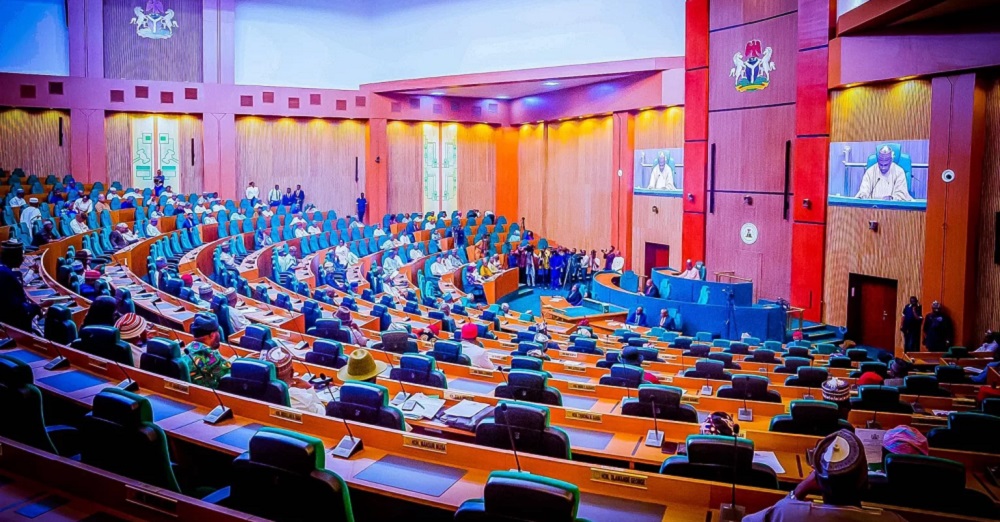
The House of Representatives has defended Speaker Rt. Hon. Tajudeen Abbas over Wednesday’s controversy surrounding a motion on the implementation of capital projects in the 2026 Budget, insisting that the disagreement was purely procedural and not an attempt to prevent debate on the issue.
In a statement issued on Wednesday, by the House Spokesman, Akin Rotimi, he said public reactions to the incident had misconstrued what transpired during plenary, stressing that the Speaker acted strictly in accordance with the House Standing Orders.
The clarification followed debate over a Matter of Urgent Public Importance sponsored by the member representing Aba North/Aba South Federal Constituency of Abia State, Rep. Alexander Mascot Ikwechegh, on funding challenges confronting Ministries, Departments and Agencies (MDAs) and the execution of the capital component of the Federal Budget.
According to the House, the controversy did not stem from the subject matter of the motion but from discrepancies between the version submitted to the Speaker for approval and the one eventually presented on the floor.
“The issue was not the substance of the motion, but a procedural matter relating to a difference between the version of the motion submitted to the Speaker for approval and the version presented on the floor,” the statement said.
It explained that under Order Eight, Rule 5(1) of the Standing Orders of the House of Representatives (Eleventh Edition), every Matter of Urgent Public Importance must first be submitted to the Speaker before it can be raised during plenary.
“This ensures that only matters meeting the required threshold of urgency are admitted and that Members deliberate on an authenticated text,” the statement added.
The House noted that despite objections from some lawmakers, Speaker Abbas admitted the motion for debate, allowing Ikwechegh to present it before members.
However, while the motion was being moved, the Speaker observed that key aspects of the document differed from the version earlier approved.
“Some portions of the motion, particularly the proposed resolutions and prayers, differed materially from the version earlier submitted and approved. Additional prayers not contained in the approved document had been introduced,” the statement said.
To safeguard the integrity of parliamentary proceedings, the Speaker directed that the officially submitted version be read aloud and invited members of the Minority Caucus to verify the discrepancies.
“As an institution built on records and due process, the House can only take decisions based on motions and documents duly submitted, authenticated, and admitted for consideration. Any substantial alteration to an approved motion during presentation must follow the appropriate parliamentary procedure,” the statement further read.
The House rejected suggestions that the opposition lawmaker had been prevented from raising the matter.
“It is important to emphasise that the sponsoring Member was not prevented from raising the issue before the House. The concern was solely about ensuring compliance with established procedures and maintaining the integrity of legislative records,” it stated.
The statement further reminded lawmakers of their responsibility to comply strictly with parliamentary rules.
“While acknowledging that Members continue to deepen their understanding of parliamentary practice, all Members are expected to present motions strictly in the form submitted and approved for consideration,” it noted.
According to the House, the Speaker subsequently referred the matter, based on the prayers contained in the officially approved motion, to an ad hoc committee for further legislative examination and a report.
Reaffirming its commitment to due process, the House said it will continue to protect members’ right to raise issues of urgent public importance while ensuring that legislative business is conducted in line with established rules.
“The House of Representatives remains committed to protecting Members’ rights to raise matters of public importance while ensuring that all proceedings are conducted in line with the Standing Orders, due process, and the highest standards of parliamentary integrity,” the statement asserted.

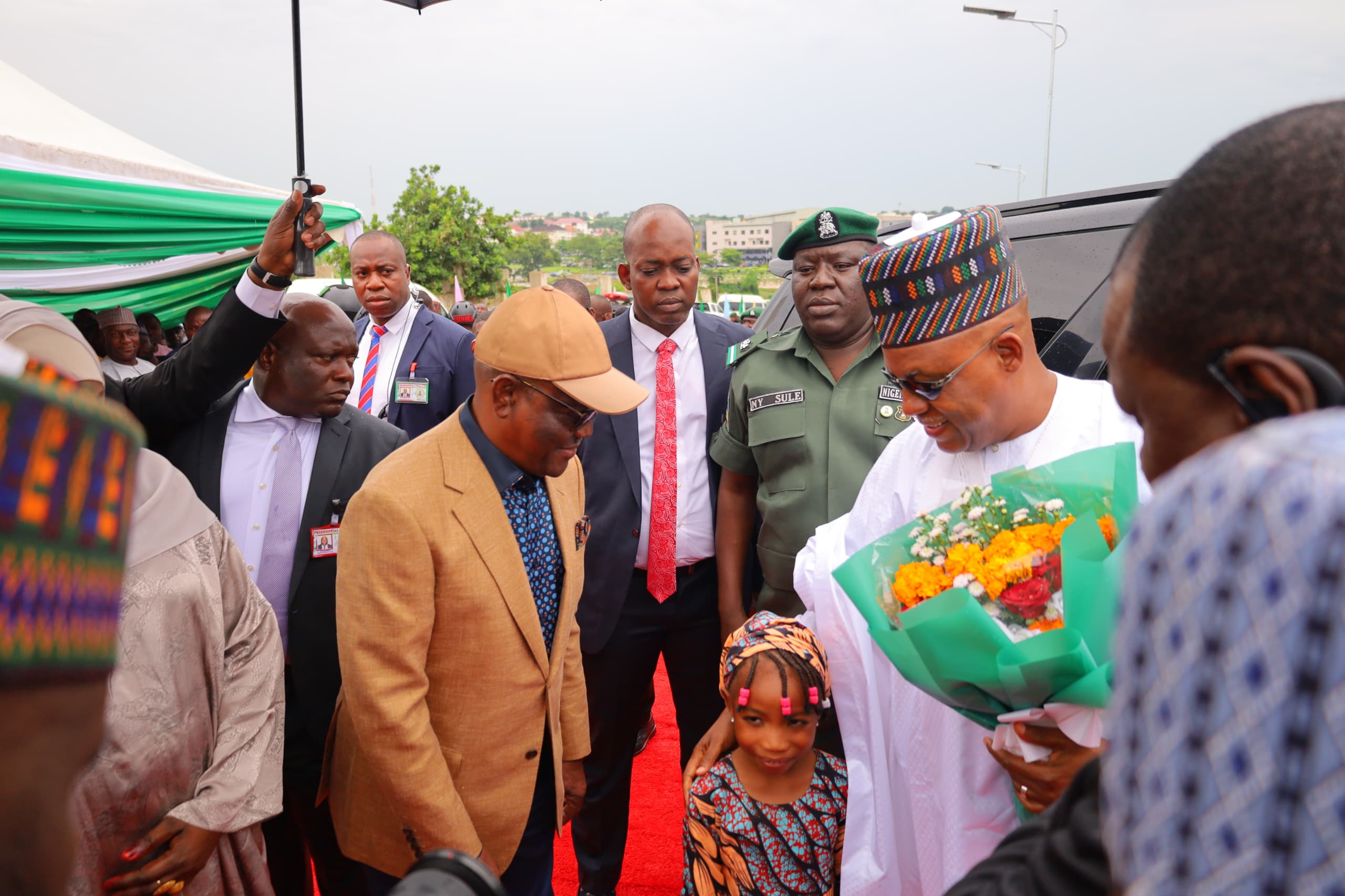
The President of the Senate, Godswill Akpabio has said that the City Boy Movement is posied to ensure maximum victory for the re-election of President Bola Ahmed Tinubu in 2027.
Addressing a delegation of the City Boy Movement during a courtesy visit to his office on Wednesday, Akpabio commended the commitment and patriotism exhibited by the group whose primary mission is to ensure Tinubu is back in office for a second tenure as President in 2027.
Akpabio remarked that “The City Boy Movement is like a wind blowing across the nation. You may not see it but you can feel it. Every political party in Nigeria is already feeling the impact of the City Boy Movement.
“Never again shall we have a situation in any polling unit in Nigeria where Mr President will not have an agent because we have the City Boy Movement.
“In the last election, if your Movement had existed, many of our votes that were not counted in many polling units would have been counted.
“I want you to have it in mind that you have come up at the right time and l do know that you are all poised to ensure maximum victory come 2027.
“Know that while you are doing all these and you are going round the country mobilising, sensitising the populace, the voters, educating them, other political parties are sleeping. They are not doing the same.
“But when the victory of President Bola Ahmed Tinubu will be announced, you will hear people saying it is rigged. That they did this, they did that. Ignore all those things and remain focused.
“This is now your turn to shape your future. This is your turn to take the lead on how Nigeria should go. I know that as you campaign for the President, you are also learning and acquiring knowledge on how to mobilise and campaign for yourselves in future.
“So what l will say is that, we are with you. The Senate of the the Federal Republic of Nigeria is pleased with the youths of this country who have decided to tow the right path.
“We are mindful of the fact that some youths, as a result of cultism and drug abuse, have fallen aside and are misguided. We are mindful of that.
“But when they say “build the youths,” because they are the future of the nation, l also want to urge “maintain the elders,” because they are the people today that God has given wisdom to.”
Quoting from a Philosopher, Akpabio who is also the Grand Patron of the Movement offered some advice to members of the group and to the Nigerian youths in general: “It is not a tragedy when a nonentity whimpers through life and ends up a failure in the grave. But it is a tragedy when a potentially achieving young man or woman, out of a flaw in his or her character becomes a failure and ends up in the grave.
“Where you are now, you are privileged to work for the future of your country. You are privileged to tow the right path that has nothing to do with cultism or terrorism.
“You are privileged to chart the path of the next administration. You are also privileged to belong to the incoming government of Asiwaju Bola Ahmed Tinubu in 2027. It will be a tragedy for any of you to derail. We assure you that here we are 100 percent with you.”
Earlier, the Director-General of the City Boy Movement, Francis Shoga said the visit was an opportunity to strengthen collaboration between lawmakers and the Movement.
“We seek your continued guidance and support as we expand our programmes across the country, deepen civic engagement among the young Nigerians and contribute meaningfully to national development,” Francis said.

Migration Challenge Worsen in West Africa as Smuggling Networks Adapt

House Defends Abbas Over Capital Projects Motion, Says Row Was About Procedure, Not Debate

Tinubu Sends Two Key Bills to Reps, Rejects Two National Assembly Amendments



-

 Foreign19 hours ago
US Launches ‘Powerful’ Strikes On Iran After Hormuz Attacks
-

 Foreign19 hours ago
Monaco bombing suspect found dead in Ukraine
-

 Health18 hours ago
Medical academics give FG 21-day strike ultimatum
-

 Sports19 hours ago
Lionel Messi Breaks 96-Year FIFA World Cup Record
-

 News19 hours ago
FG Suspends New Digital Economy Rules
-
 News18 hours ago
PSC Dismisses Four Senior Police Officers, Sanctions 31 Others
-
 News2 hours ago
Video: DAY 22 of Projects Commissioning in the FCT
-
 News19 hours ago
Senate Rejects Calls To Take Over MTN, DStv Over Xenophobic Attacks