
Economy
See Dollar to Naira exchange rate today, August 3, 2026


- /home/naijuinz/public_html/wp-content/plugins/mvp-social-buttons/mvp-social-buttons.php on line 27
https://naijablitznews.com/wp-content/uploads/2024/06/Screenshot_20240605-141212.png&description=See Dollar to Naira exchange rate today, August 3, 2026', 'pinterestShare', 'width=750,height=350'); return false;" title="Pin This Post">
- Share
- Tweet /home/naijuinz/public_html/wp-content/plugins/mvp-social-buttons/mvp-social-buttons.php on line 72
https://naijablitznews.com/wp-content/uploads/2024/06/Screenshot_20240605-141212.png&description=See Dollar to Naira exchange rate today, August 3, 2026', 'pinterestShare', 'width=750,height=350'); return false;" title="Pin This Post">


The naira opened the week with a relatively stable performance against the United States dollar at both the official Nigerian Foreign Exchange Market (NFEM) and the parallel market on Monday, August 3, 2026.
Data published by the Central Bank of Nigeria showed that the official NFEM rate was trading around ₦1,368 per dollar, with the most recent available closing rate at ₦1,368.22/$ as of August 2. The CBN stated that the NFEM rate is derived from the volume-weighted average of trades executed in the market.
The official market has remained within a narrow band in recent sessions. Historical NFEM data indicate that the dollar closed at about ₦1,365.12 on July 31 and ₦1,365.53 on August 1, suggesting only mild day-to-day fluctuations in the official exchange window.
In the parallel market, commonly referred to as the black market, currency traders in Lagos quoted the dollar at about ₦1,410 per dollar for buying and ₦1,425 per dollar for selling on the latest available market update. This places the gap between the official and parallel market rates at roughly ₦57 per dollar.
The spread between both markets has narrowed considerably compared with the wider premiums seen during the height of Nigeria’s foreign exchange volatility in 2024, reflecting improved liquidity conditions and reduced speculative pressure in recent months.
For individuals and businesses, this means $100 would exchange for about ₦136,800 at the official NFEM window and about ₦142,500 at the parallel market selling rate, depending on the channel used.
Analysts say the naira’s near-term direction will continue to depend on foreign exchange inflows from oil exports, portfolio investors, remittances, and the Central Bank’s liquidity management operations in the official market.

The Central Bank of Nigeria (CBN) has disclosed that the next stage of fintech development in Nigeria must focus on five important outcomes to achieve sustainable growth of the initiative.
The CBN Governor, Mr. Yemi Cardoso, said in a goodwill message at the 3rd Business Journal Fintech & Financial Inclusion Roundtable 2026 in Lagos that Nigeria’s fintech development must deliver digital financial services that are reliable, secure, fair and accessible.
Cardoso, who was represented by Dr. Rakiya Yusuf, Director, Payments System Supervision, added that Nigerians should be able to transact with confidence, including during periods of high demand.
He said, “Charges should be clear, complaints resolved promptly and failed transactions addressed without unnecessary hardship to customers, Cybersecurity and fraud prevention must remain a shared responsibility, institutions must continually invest in secure technology, effective controls and practical customer education.”
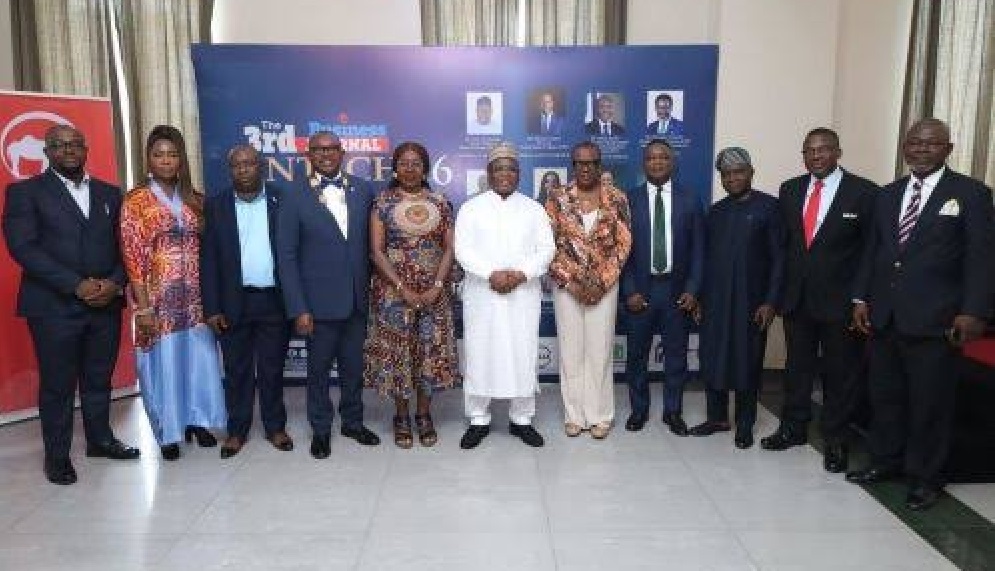
Mr. Babatunde Ajiboye, Assistant Director at CBN, who stood in for Yusuf, said another major strategy is to ensure that “competition must also remain open and fair, with qualified participants having equal access to essential payment infrastructure.”
The apex bank said it cannot achieve these strategies alone, saying that banks, fintech companies, mobile money operators, switches, processors, telecom companies, consumer groups and government institutions all have important roles to play to realise the outcomes.
Looking ahead, the CBN said: “The future of Nigeria’s digital financial ecosystem is promising. Our population is young, entrepreneurial and increasingly connected. Our financial institutions have demonstrated a strong capacity for innovation.
“With appropriate regulation, responsible conduct and sustained investment, Nigeria can build a digital financial system that serves as a model for Africa and the wider world.”
The CBN governor promised that the apex bank will continue to support innovation that solves real problems, expands access and strengthens the economy.
“We will also continue to act where market conduct, concentration, weak governance or operational risks threaten customers or the stability of the system. Our message is simple: innovation welcome, fair competition is essential and public trust must remain at the centre of everything we do.”
He commended the Business Journal Media Group for organising the Roundtable and encouraged participants to engage openly and develop practical recommendations that will advance a safer, fairer and more inclusive digital financial ecosystem in Nigeria.
The Federal Airports Authority of Nigeria (FAAN) has clarified that there was no fire outbreak at Terminal 2 of the international wing of the Murtala Muhammed Airport (MMA), Lagos.
This is contrary to initial concerns that prompted an emergency response by the agency yesterday.
An initial post on the social media handle of FAAN had alleged that there was a fire incident at the Lagos airport.
The post had stated: “The Federal Airports Authority of Nigeria (FAAN) wishes to inform the public that a fire incident has occurred at Terminal 2 of the Murtala Muhammed International Airport, Lagos.
“The FAAN Aerodrome Rescue and Firefighting Service (ARFFS) is currently responding to the incident and working diligently to contain the situation. There have been no reported casualties or loss of life,” the authority said.
But a statement yesterday by the Director, Public Affairs and Consumer Protection, FAAN, Henry Agbebire, debunked the earlier post by the agency.
According to Agbebire, the smoke within the terminal was caused by the discharge of the facility’s FM-200 fire suppression system.
The statement emphasised that investigations were ongoing to determine what triggered the automatic activation.
FAAN said normal flight operations had resumed at the terminal following the incident.
The statement read in part: “Preliminary findings indicate that there was no fire at the terminal. The smoke observed within the affected area resulted from the discharge of the terminal’s FM-200 fire suppression system. The reason for the activation of the fire suppression system is currently being investigated.
“Normal operations have since resumed at the terminal, while detailed investigations are ongoing to determine the exact cause of the incident.”
FAAN, therefore, assured passengers, airlines and other airport users that safety remained its top priority, stressing that a comprehensive investigation had commenced to establish the exact cause of the incident.
The agency also said that the temporary congestion experienced at the terminal’s entry screening points was a direct consequence of the precautionary evacuation carried out after the smoke was detected.
According to FAAN, all passengers were safely evacuated from the terminal before being allowed back into the facility after emergency responders declared the area safe.
It said the re-entry process required every passenger and their baggage to undergo fresh security screening, resulting in longer processing times and queues at the terminal.
However, FAAN confirmed that the backlog had been cleared, with passenger movement and access points returning to normal.
Nigeria’s mobile telecommunications market has recovered to its strongest level in more than two years, with total active subscriptions across the country’s four major operators rising to 189.4 million in May, latest industry data from the Nigerian Communications Commission has shown.
The May figure represents the highest subscriber level recorded since April 2024, when the combined mobile database stood at 216.6 million, following a period of significant declines triggered by regulatory efforts to clean up inactive and improperly registered SIM cards.
The recovery was driven largely by growth recorded by the country’s leading operators, with MTN Nigeria maintaining its dominance of the market. The largest network operator in Nigeria closed May with 96.9 million active subscriptions, accounting for 51.19 per cent of the total mobile market.
Airtel Nigeria, the second-largest operator, recorded 65.4 million active subscriptions during the period, representing 34.55 per cent market share.
Globacom, Nigeria’s third-largest telecom operator, had 23.4 million active subscriptions, equivalent to 12.39 per cent of the market, while T2, formerly known as 9mobile, remained the smallest operator with 3.5 million subscriptions.
The latest data highlights the gradual recovery of Nigeria’s telecom sector after a challenging period marked by subscriber losses arising from SIM registration compliance exercises and restrictions on unverified lines.
Despite the overall industry recovery, competition among operators remains uneven, with MTN continuing to widen its lead over rivals.
T2, which rebranded from 9mobile about a year ago as part of efforts to reposition the business, has struggled to significantly expand its customer base. The operator has remained within the three million subscription range since September 2025.
The company, which once had more than 22 million subscribers, has faced persistent challenges, including network investment pressures and customer retention issues, despite an infrastructure-sharing agreement signed with MTN in July 2025.
The recovery in subscriber numbers comes as telecom operators continue to invest in network expansion, data infrastructure, and digital services to meet rising demand for connectivity.
With mobile subscriptions serving as a key indicator of Nigeria’s digital economy growth, industry analysts say sustained growth will depend on operators’ ability to improve service quality, expand coverage, and manage rising operational costs.

NYSC makes NERD clearance mandatory for corps members’ mobilisation
CBN lists 5 strategies to drive next stage of Fintech growth in Nigeria

INEC unveils Final list of candidates for 2027 elections, Jonathan, Nwoko, Goje, others missing




-

 News21 hours ago
Troops rescue 34 abductees, nab ISWAP informant, recover arms
-

 News21 hours ago
Joint military task force rescue kidnapped Lt Col, civilian after 10-day search operation
-

 Metro9 hours ago
Gunmen abduct Catholic seminarian, six others in Enugu
-

 News9 hours ago
State Police: Sharia council warns FG against rushed constitutional amendment
-

 Economy9 hours ago
Dangote commits $800m to double Itori cement capacity
-

 News9 hours ago
Tinubu’s Remarks On Flyovers Not Directed At Oborevwori – Waive
-

 Economy9 hours ago
Mobile market rebounds to highest level since 2024 – NCC
-

 News22 hours ago
JUST IN: Fire engulfs Lagos airport’s Terminal 2