News
NAMA Pushes for 56% Share of Aviation Revenue
- /home/naijuinz/public_html/wp-content/plugins/mvp-social-buttons/mvp-social-buttons.php on line 27
https://naijablitznews.com/wp-content/uploads/2026/08/images-47.jpeg&description=NAMA Pushes for 56% Share of Aviation Revenue', 'pinterestShare', 'width=750,height=350'); return false;" title="Pin This Post">
- Share
- Tweet /home/naijuinz/public_html/wp-content/plugins/mvp-social-buttons/mvp-social-buttons.php on line 72
https://naijablitznews.com/wp-content/uploads/2026/08/images-47.jpeg&description=NAMA Pushes for 56% Share of Aviation Revenue', 'pinterestShare', 'width=750,height=350'); return false;" title="Pin This Post">
…agency say ageing infrastructure threatens airspace safety

…AAAU call for statutory funding to build aviation workforce
By Gloria Ikibah

The Nigerian Airspace Management Agency (NAMA) has urged the National Assembly to increase its share of the statutory five per cent aviation revenue pool from 22 per cent to 56 per cent, warning that the current funding structure is no longer sufficient to sustain the country’s air navigation infrastructure.
At the same public hearing organised by the House of Representatives Committee on Aviation on Thursday, the African Aviation and Aerospace University (AAAU), Abuja, also wants inclusion as a statutory beneficiary of the five per cent Ticket Sales Charge (TSC), proposing that at least 10 per cent of the fund be reserved for aviation education, research and manpower development.
Speaking before lawmakers, NAMA Managing Director, Engr. Farouk Ahmed Umar, said the responsibilities of the agency had expanded significantly over the years while its funding had remained inadequate, despite the critical role it plays in ensuring the safety of Nigeria’s airspace.
He stressed that aviation safety depends on well-funded institutions across the sector, including the regulator, accident investigators, meteorological services and training institutions, but argued that NAMA’s operational burden deserved greater financial support.
According to him, the agency currently receives just 22 per cent of the statutory revenue pool, despite being responsible for managing Nigeria’s air navigation services.
Umar clarified that NAMA was not asking for an increase in the existing five per cent charge on air tickets but a review of how the available revenue is shared among aviation agencies.
“Long before a passenger boards an aircraft, NAMA’s personnel and systems are already at work. A flight plan must be processed, aeronautical information must be current. Radios must be clear. Navigation aids must be serviceable. Surveillance must be available. Controllers must be at their positions. Engineers must be ready to respond. Power and backup power must hold.
“When the aircraft takes off, all these elements must come together, not later that day, not after a supplementary release, but at that very moment.
“That is the nature of air navigation services. They are continuous, technology-intensive and unforgiving of delay. A broken office printer can wait until morning. A degraded safety-critical communication link cannot. A postponed meeting may be inconvenient. Deferred radar support, navigation-aid calibration or controller training can reduce the resilience of the national system”, he said.
The NAMA chief revealed that the agency spent more than N43 billion on its operations in 2023, including about N21 billion on personnel costs, over N12 billion on capital projects and more than N10 billion on overheads.
He lamented that the agency’s navigation charge had remained at N11,000 per flight since 2008 despite rising inflation, exchange rate pressures, higher energy costs and increasing expenses associated with maintaining modern aviation technology.
“These are not abstract numbers. Behind them are controllers, engineers, communication systems, navigation aids, surveillance platforms, power systems, spares, software, calibration, training and facilities spread across our country.
“At the same time, a navigation charge as low as ₦11,000 per flight had remained unchanged since June 2008.
“Consider what has happened to the cost of fuel, electricity, foreign exchange, imported components, software licences and specialist training since 2008. The service has had to absorb today’s costs with yesterday’s tariff base.
“The dedication of our workforce has helped bridge that gap, but dedication is not a substitute for a sustainable funding system”, he added.
Umar also drew attention to the ageing Total Radar Coverage of Nigeria (TRACON) system, warning that maintaining obsolete surveillance equipment was becoming increasingly difficult due to limited availability of spare parts and changing manufacturer support.
He added that Nigeria must also invest in emerging technologies such as performance-based navigation, satellite surveillance, digital aeronautical information systems and cybersecurity to remain globally competitive.
The NAMA boss further appealed to lawmakers to recognise obstacle assessment and WGS-84 aeronautical surveys as chargeable technical services undertaken by the agency.
He explained that NAMA was uniquely positioned to carry out the specialised technical work linking aeronautical surveys, obstacle analysis, flight procedure design and airspace management.
While insisting that the regulatory aspect of Aviation Height Clearance should remain with the appropriate authority, he argued that NAMA should be paid directly for the technical components of the service.
Umar also called for the harmonisation of existing aviation laws, noting that while the Civil Aviation Act allocates 22 per cent of the revenue pool to NAMA, the agency’s enabling Act provides for 23 per cent.
“The law should speak with one voice. The beneficiaries should be named correctly; the percentages should total 100 per cent; collection and remittance responsibilities should be unambiguous; and the effective date should be clear”, he said.
Although he acknowledged that redistributing the statutory revenue could affect other aviation agencies, he argued that future allocations should be based on operational realities rather than historical arrangements.
“A regulator and an Air Navigation Service Provider are both indispensable, but their cost structures are not identical. The law should recognise those differences while ensuring that every safety institution remains viable”, he said.
Making a final appeal, Umar urged lawmakers to consider the critical infrastructure and skilled workforce behind every safe flight within Nigerian airspace.
“When a pilot calls an air traffic controller over Nigerian airspace, that voice is more than a radio transmission. It is the sound of a national safety system working.
“Behind it are years of training, towers and centres, antennas and links, radar and navigation aids, engineers and procedures, generators and batteries, software and vigilance. The country expects that voice to be clear, confident and continuously available.
“I respectfully pray the National Assembly to approve a 56 per cent allocation to NAMA from the existing five per cent pool; harmonise the affected enactments; recognise obstacle assessment and WGS-84 aeronautical survey as chargeable NAMA technical services; establish transparent, automated remittance; and pair the enhanced allocation with firm accountability and oversight.
“Give us the means and hold us to the result. Give Nigerian airspace the resilience it requires and require us to demonstrate that resilience. In doing so, this National Assembly will not simply amend a percentage. It will strengthen the safety, efficiency, sovereignty and future competitiveness of our nation’s airspace”, he stated.
Also addressing the hearing, Acting Vice-Chancellor of the African Aviation and Aerospace University, Prof. Mustapha Abdullahi, argued that sustainable growth in the aviation industry will not be possible without consistent investment in training and research.
He said the university, established as Nigeria’s specialised aviation institution, should be recognised as a statutory beneficiary of the Ticket Sales Charge to support the development of skilled aviation professionals.
According to him, aviation safety ultimately depends on a steady supply of competent air traffic managers, aeronautical engineers, aviation managers, meteorologists, aerospace scientists, airport managers and other specialists.
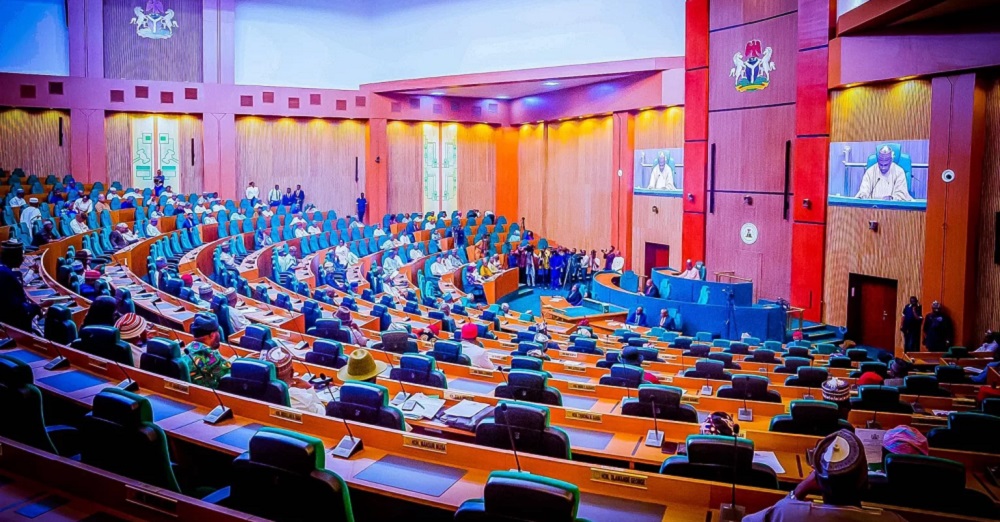
Earlier, Speaker of the House of Representatives, Rt. Hon. Tajudeen Abbas, reaffirmed the commitment of the 10th House to strengthening the financial framework of Nigeria’s aviation industry.
Represented at the hearing, the Speaker said the proposed legislative reforms were aimed at improving the capacity of aviation agencies to safeguard the country’s airspace while boosting investor confidence in the sector.
Chairman of the House Committee on Aviation, Rep. Abdullahi Garba, said the bills under consideration were designed to strengthen the financial and institutional foundations of Nigeria’s aviation industry, improve transparency and enhance service delivery across the sector.

News
Abbas hails Team Nigeria for sterling outing at Commonwealth Games
By Kayode Sanni-Arewa
The Speaker of the House of Representatives Hon. Abbas Tajudeen, has hailed Team Nigeria on their sterling performance at the Commonwealth Games in Glasgow, Scotland, saying the national contingent made their country proud at the sports tournament.
Speaker Abbas, in a statement issued by his Special Adviser on Media and Publicity, Musa Abdullahi Krishi, commended the Nigerian athletes for their patriotism and commitment to their country, noting that they were strongly determined to keep Nigeria on the map of sports excellence.
While noting that trophies and medals only symbolise performance ratings, the Speaker noted that it is discipline, resilience, and determination that make victory a reality. These, he stated, have earned Nigeria 24 medals—10 gold, 7 silver, and 7 bronze—at the latest edition of the Commonwealth Games.
Describing Team Nigeria as the country’s “global sports ambassadors,” Speaker Abbas thanked the Nigeria Olympic Committee and the National Sports Commission for creating the logistics and support needed for the athletes to win medals.
The Speaker urged Nigerians, especially the youth, to draw inspiration from Team Nigeria, especially regarding discipline and excellence in any field they find themselves in. He urged all to remain patriotic citizens and good ambassadors of Nigeria across the world.
News
Aviation Agencies, Airlines Clash Over 5% Levy as Minister Misses Reps Hearing
By Gloria Ikibah
Sharp divisions emerged within Nigeria’s aviation industry on Thursday as regulators, service providers, airline operators and aviation training8 institutions advanced conflicting proposals on how the statutory five per cent Ticket Sales Charge (TSC) should be shared during a public hearing organised by the House of Representatives Committee on Aviation.
The hearing, which focused on proposed amendments to the Civil Aviation Act, 2022 and the Nigerian Airspace Management Agency (NAMA) Act, brought together major stakeholders seeking changes to the current revenue allocation formula.
Noticeably absent was the Minister of Aviation and Aerospace Development, Festus Keyamo, despite the significance of the proposed amendments to agencies under his supervision.
Although stakeholders agreed that the aviation sector requires stronger and more sustainable funding, there was little consensus on how the existing revenue should be distributed.
However, the Nigerian Civil Aviation Authority (NCAA) opposed any reduction in its allocation, insisting that the regulator depends heavily on the Ticket Sales Charge to discharge its statutory oversight responsibilities.
Director-General of Civil Aviation, Capt. Chris Najomo, argued that while the NCAA supports improved funding for all aviation agencies, any review of the revenue-sharing formula must comply with International Civil Aviation Organisation (ICAO) standards.
According to him, unlike NAMA, which generates significant income from commercial air navigation services, the NCAA relies substantially on the statutory levy to perform its regulatory functions.
“We submit that NCAA’s allocation of the five per cent Ticket Sales Charge be restored to 65 per cent to overcome the deficiencies identified by ICAO at its last audit and bring Nigeria in line with global best funding practices,” Najomo said.
He stressed that aviation safety depends on more than legislation.
“Aviation safety is not sustained by legislation alone. It depends upon competent inspectors, effective surveillance, continuous certification, recurrent technical training, international cooperation and an independent regulator possessing the financial capacity to discharge its statutory mandate,” he added.
Domestic airline operators, however, maintained that the issue goes beyond simply redistributing the existing revenue.
Speaking on behalf of the Airline Operators of Nigeria (AON), former NAMA Managing Director and aviation expert, Capt. Roland Iyayi, described the current funding structure as outdated and burdensome to operators.
“The five per cent service charge has outlived its usefulness. It has created a burden on domestic airlines,” Iyayi said.
He disclosed that the association had already submitted a comprehensive proposal advocating broader institutional reforms across the aviation sector rather than merely adjusting the current sharing formula.
According to him, airlines are struggling with escalating operational costs, particularly aviation fuel, which now accounts for nearly 40 per cent of operating expenses.
He explained that many operators now find it increasingly difficult to remit the statutory levy because much of their ticket revenue is consumed by fuel costs.
While backing NAMA’s request for a larger share of the existing pool, the airline operators proposed replacing the percentage-based levy with a unit charge system similar to the Passenger Service Charge collected by the Federal Airports Authority of Nigeria (FAAN).
Iyayi also proposed the establishment of an Aviation Development Fund into which all industry revenues would be paid before being transparently distributed among aviation agencies.
He further urged lawmakers to exempt aviation agencies from the Fiscal Responsibility Commission’s remittance requirements, arguing that surplus revenues should remain within the aviation sector for infrastructure development instead of being transferred to the Consolidated Revenue Fund.
The airline operators also recommended that revenues from obstacle clearance fees currently collected by the NCAA should be transferred to NAMA, which they said performs the technical assessments required for such approvals.
Declaring the hearing open on behalf of the Speaker of the House of Representatives, Rt. Hon. Abbas Tajudeen, Chairman of the House Committee on Aviation, Rep. Abdullahi Idris Garba, said the proposed amendments were intended to strengthen transparency, improve institutional funding and enhance safety across Nigeria’s aviation sector.
He assured stakeholders that every memorandum submitted during the hearing would receive fair and objective consideration before the committee presents its recommendations to the House of Representatives.
The committee is expected to review all submissions before deciding whether to amend the contentious revenue-sharing formula governing the aviation industry’s five per cent Ticket Sales Charge.
News
Just in: Court sacks top APC candidate from contesting 2027 election
By Kayode Sanni-Arewa
A Federal High Court in Abuja has removed Timehin Adeleye as the All Progressives Congress (APC) candidate for the Owo/Ose Federal Constituency House of Representatives election in Ondo State ahead of the 2027 general election.
The court ruled that Abdugani Arobo is the rightful APC candidate after finding that he won the party’s primary election.
The judgment was delivered on Wednesday by Justice Peter Lifu following a suit filed by Arobo against the APC and the Independent National Electoral Commission (INEC). Arobo challenged the party’s decision to submit Adeleye’s name as its candidate.
Although the APC National Working Committee forwarded Adeleye’s name to INEC, the decision was opposed by some party members and leaders in Ondo State, prompting Arobo to take the matter to court.
In its judgment, the court held that the APC did not make a lawful return from the primary election and said the evidence presented by the party contained contradictions.
Justice Lifu ruled that Arobo won the APC primary election held on May 16, 2026, after securing the highest lawful votes.
-
News22 hours agoConfusion as three kids found dead in female witch doctor’s apartment
-
Entertainment13 hours ago‘I No Send Your Father’ — Charly Boy Addresses Gay Rumours
-
News13 hours agoFG Sets Aside N2.47tn For 124 Strategic Road Projects In 2026 Budget
-
News22 hours agoOsun govt set to drag EFCC to court over frozen state account days before guber election
-
News23 hours agoBREAKING: Dangote Refinery slashes petrol, diesel prices
-
News12 hours agoArmy puts N60m price on wanted ISWAP gov, deputy
-
News13 hours agoCanada’s Ontario Opens New Permanent Residence Programme For Foreign Workers
-
Sports13 hours agoSuper Falcons Defeat Egypt In 8 Goal Triller To Narrowly Qualify For WAFCON 2026 Quarter Finals