
News
Amnesty lawyer faults N100m SERAP judgment, recalls Ribadu defence



The Socio-Economic Rights and Accountability Project defended Nuhu Ribadu when the former Economic and Financial Crimes Commission chairman was being persecuted by the government over his anti-corruption activities.
Now, the civil society organisation is facing a N100m defamation judgment in favour of two Department of State Services officials, with Ribadu serving as National Security Adviser in the same administration.
The contrast was highlighted by legal adviser at Amnesty International’s International Secretariat, Kolawole Olaniyan, in an opinion article titled, “When the state turns the law against dissent under Tinubu’s watch.”
Olaniyan recalled that SERAP had campaigned against Ribadu’s removal as EFCC chairman in 2008, when the late President Umaru Yar’Adua administration sent him on what was described as a “refresher course” after removing him from the anti-graft agency.
According to him, SERAP condemned the decision, petitioned the United Nations over Ribadu’s removal and threatened legal action concerning his replacement.
He added that after Ribadu survived assassination attempts later that year, SERAP demanded an investigation and protection for his life.
Olaniyan further recalled that Ribadu became the inaugural recipient of the Civil Society Anti-Corruption Defender Award in 2009, an initiative he said he helped establish to recognise activists, human rights defenders and civil society organisations fighting corruption.
The Wole Soyinka Centre for Investigative Journalism, which was part of the award jury alongside SERAP, WARDC, HEDA and CDHR, confirmed that Ribadu received the inaugural award in 2009.
The centre said Ribadu was honoured for his “courage and commitment to the fight against corruption” and for the “persecution, harassment and intimidation” he had suffered from Nigerian authorities because of his anti-corruption work.
It is against that history that Olaniyan drew attention to SERAP’s current legal battle involving DSS officials.
In September 2024, SERAP alleged that DSS operatives had unlawfully occupied its Abuja office and demanded to see its directors after the organisation called on President Bola Tinubu to investigate allegations of corruption and mismanagement involving the Nigerian National Petroleum Company Limited.
Two DSS officials, Sarah John and Gabriel Ogundele, subsequently sued SERAP and its Deputy Director, Kolawole Oluwadare, over the organisation’s publications concerning the incident.
The officials alleged that SERAP’s publications falsely portrayed them as having invaded the organisation’s office.
The Federal Capital Territory High Court in Abuja, in a judgment delivered by Justice Yusuf Halilu on May 5, 2026, found SERAP liable for defamation and awarded N100m in damages to the two officials.
The court also ordered SERAP to publish apologies to the claimants, pay N1m in litigation costs and pay 10 per cent annual post-judgment interest on the damages until the judgment is fully satisfied.
SERAP has appealed the judgment and sought a stay of execution, describing the decision as legally and procedurally flawed.
In its appeal, the organisation challenged, among other issues, the court’s treatment of the parties, the evidence relied upon and the application of principles of defamation law.
The DSS, however, has distanced itself from the suit as an institutional action.
Following the judgment, the service said the case was not instituted by the DSS but by John and Ogundele in their personal capacities after they allegedly felt defamed by SERAP’s publications.
The agency said an internal investigation was conducted and that the officers obtained approval from the Director-General of the DSS before seeking legal redress.
For Olaniyan, the development is particularly striking because of SERAP’s previous role in defending Ribadu when he was on the receiving end of government pressure.
“SERAP repeatedly defended Ribadu when he was targeted for confronting corruption,” Olaniyan wrote, recalling the organisation’s intervention after his removal from the EFCC.
He described the present circumstances as an irony, writing that “the same organisation that once defended Ribadu against harassment, intimidation and threats to his life is now facing similar tactics of harassment and intimidation for doing its own human rights work.”
Olaniyan said the contrast raised broader questions about the relationship between security institutions and civil society organisations under the Tinubu administration.
“Today, under Ribadu’s watch as National Security Adviser, the DSS is weaponising the judicial system against SERAP and other critics,” he wrote.
However, the DSS’s position is that the defamation action was a personal suit by the two officers rather than a case instituted by the agency itself.
Olaniyan’s article placed the SERAP case alongside other disputes involving the DSS and critics of the government, including its legal challenge to Prof Pat Utomi’s proposed “shadow government” and the cybercrime prosecution of activist and journalist Omoyele Sowore over social media comments about Tinubu.
He also pointed to President Tinubu’s own remarks on criticism in his 2025 Democracy Day address, when the President said Nigerians should not suffer injustice merely for writing a bad report about him or calling him names.
“No one should bear the brunt of injustice for merely writing a bad report about me or calling me names,” Tinubu said, adding that democracy required “a fair degree of tolerance for harsh words and stinging insults.”
Olaniyan said the President’s statement stood in contrast to what he described as the growing use of security and legal mechanisms against critics and civil society organisations.

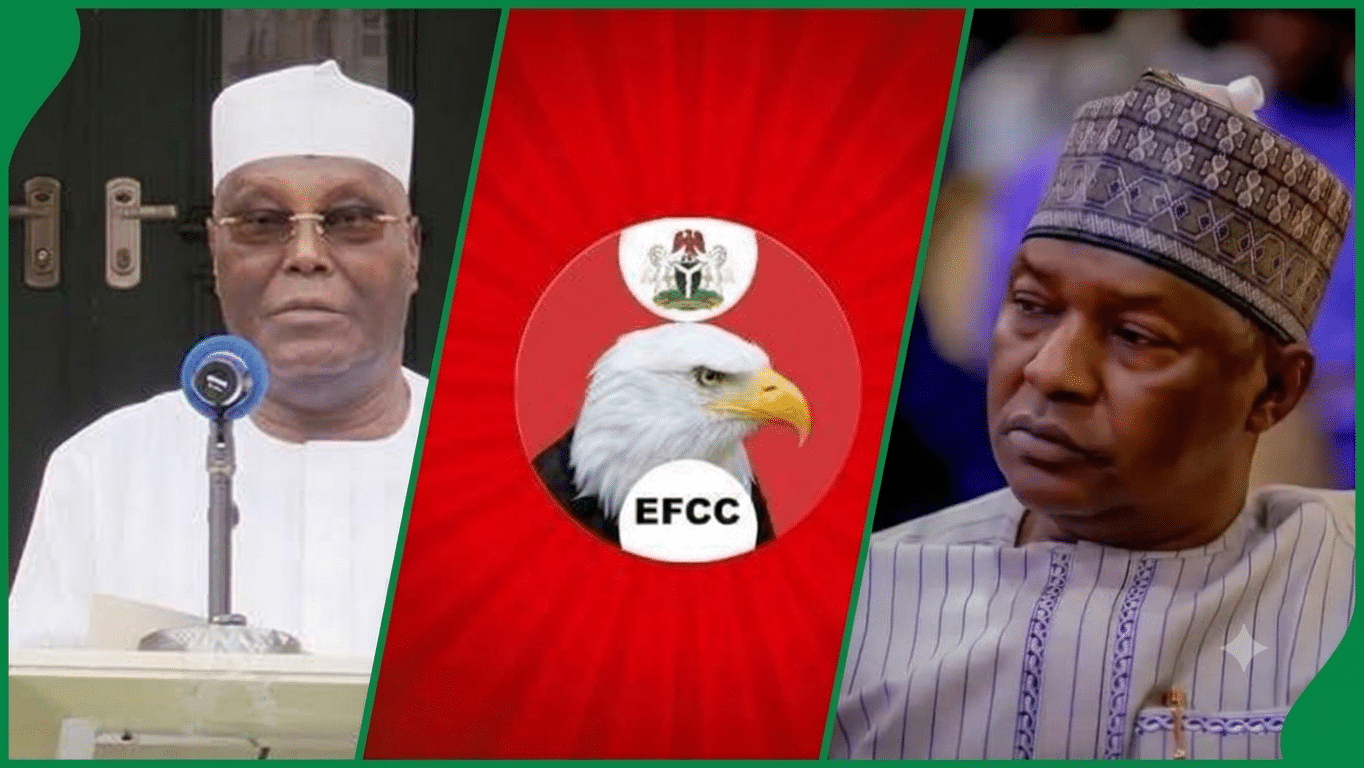
The Economic and Financial Crimes Commission (EFCC) has constituted a team to investigate individuals named in alleged questionable dealings linked to the Mambilla Hydroelectric Power Project, following a recent ruling by the International Chamber of Commerce (ICC) in Paris, France, in favour of Nigeria.
Sources familiar with the development told Premium Times that the investigative team is being supervised by the Chairman of the EFCC, Ola Olukoyede.
The investigation comes days after the ICC tribunal dismissed major claims brought before it by Sunrise Power and Transmission Company Limited against Nigeria over the 3,960-megawatt Mambilla Hydroelectric Power Project in Taraba State.
The company had made a claim against the Federal Republic of Nigeria, demanding $680 million as a settlement sum and interest in respect of another arbitration in which it is claiming over $2.7 billion in compensation and interest.
Delivering its verdict on Thursday, the tribunal directed Sunrise and its promoter to refund Nigeria’s legal fees of $11.8 million. It also rejected Sunrise’s claim for an order that Nigeria should pay the company $400 million in satisfaction of the settlement sum of $200 million and the default sum of $200 million.
The tribunal insisted that Leno Adesanya, the promoter of Sunrise, is bound by the arbitration agreement with Nigeria pursuant to the settlement agreement, adding that it has jurisdiction over Nigeria’s counterclaim against him and his firm.
According to sources, EFCC investigation will focus on individuals mentioned in the tribunal’s findings over payments and transactions that the panel described as raising concerns or ‘red flags.’
The tribunal revealed that many Nigerian politicians and individuals who held public offices were named as associates or officials who had dealings with Adesanya
The officials include former Vice President Atiku Abubakar, his then-wife Jennifer Douglas, Abubakar Malami, Olu Agunloye, Sambo Dasuki, his son Abubakar Dasuki, Abdullahi Yola, and Dere Awosika.
Malami, a former Attorney-General of the Federation (AGF), was severely criticised by the tribunal for acting against Nigeria’s national interest. He was accused of maintaining an “inappropriate relationship” with Adesanya, and entering into a corrupt deal. Already, Mr Malami is facing trial after the EFCC accused him, his wife, and son of conspiring to conceal, disguise and retain about N8.7 billion proceeds of unlawful activities.
Atiku, former vice president of Nigeria, was named by the tribunal in its review of a $500,000 payment made by Adesanya on 30 January 2003 from the Swiss bank account of his offshore company, China Castle Investments Ltd, to a US bank account belonging to Ms Douglas, Atiku’s ex-wife.
The payment was made less than four months before the Mambilla BOT contract was purportedly awarded to Sunrise by then Minister of Power and Steel, Olu Agunloye. Mr Adesanya told the tribunal that the money was part of a foreign-exchange transaction carried out for Atiku through his bureau de change business.
But the tribunal said that the explanation was not supported by documentary evidence. It said Adesanya did not produce records showing the underlying naira payment, the exchange rate applied, instructions from Atiku or his aides, correspondence concerning the transaction or documentation establishing its commercial purpose.
The tribunal also noted that neither Atiku nor Ms Douglas provided a witness statement or declaration supporting the explanation.
It noted that Atiku had led a Nigerian government delegation to Beijing in July 2002, which included Adesanya, during which the Nigerian government and the Chinese state-owned NCPEC signed a memorandum of understanding covering, among other projects, the Mambilla project.
However, Atiku has denied being indicted by the tribunal and said he was not responsible for awarding the contract.
Agunloye, a former minister of Power and Steel, was linked to payments he described as part of “medical expenses”. He is currently standing trial over charges relating to the Mambilla power project.
The tribunal also questioned payments of $1.74 million made to Abubakar Dasuki, the son of Sambo Dasuki, a former National Security Adviser (NSA), adding that the transaction raised “considerable red flags.”
The tribunal said Dasuki failed to substantiate his claim that the payment was a loan, citing inconsistencies in his evidence, the absence of a loan agreement and the lack of records showing how the transaction was accounted for by Sunrise.
Yola and Awosika were also named among those involved in alleged bribery and the receipt of controversial payments.
Sources told Premium Times that the EFCC may invite Atiku and his ex-wife, Douglas, for questioning in the coming days or weeks.

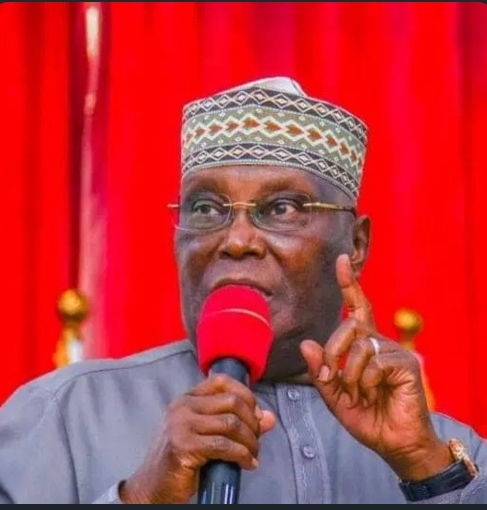
Former Vice President Atiku Abubakar has demanded an explanation from President Bola Ahmed Tinubu over his decision to stay away from the United Nations General Assembly for the third consecutive year.
Atiku’s criticism followed the Presidency’s announcement that Vice President Kashim Shettima would represent Tinubu and lead Nigeria’s delegation to the 81st Session of the UNGA in New York. The 2026 General Debate is scheduled for September 22 to 28.
In a statement issued on Sunday by his Senior Special Assistant on Public Communication, Phrank Shaibu, Atiku said Tinubu had been absent from the 79th UNGA in 2024, the 80th in 2025 and would again not attend the 81st session in 2026.
Atiku, the presidential candidate of the African Democratic Congress, said the repeated delegation of the Vice President could no longer be regarded as routine diplomatic representation.
He argued that the UNGA provides heads of government with an important platform to advance their countries’ interests, hold bilateral meetings, attract investments, pursue trade opportunities and engage development partners.
According to him, while Shettima could effectively represent Nigeria, the Vice President’s participation could not completely substitute for the President’s personal presence and visibility at a major international diplomatic gathering.
Atiku further argued that Nigeria could lose opportunities for investment and development financing when the President is absent from such high-level engagements.
“The cost is eventually transferred to ordinary citizens: fewer investments mean fewer businesses and fewer jobs,” he said.
The former vice president also questioned reports that Nigeria’s Permanent Representative to the United Nations, Jimoh Ibrahim, had secured a seat for Tinubu close to United States President Donald Trump during the General Assembly.
“The seat was secured, but the President disappeared,” Atiku said.
He also questioned reports that the Tinubu administration had spent up to $9 million on American lobbyists, asking why Nigeria would commit such funds to lobbying efforts in the United States while the President repeatedly stayed away from the UN gathering in New York.
“What exactly did Nigerians purchase with that money?” Atiku asked.
Questions over Tinubu’s US legal history
Atiku subsequently raised questions about Tinubu’s past legal proceedings in the United States, citing Case No. 93 C 4483 before the US District Court for the Northern District of Illinois.
He referred to the forfeiture proceedings involving funds held in accounts in Tinubu’s name and those of associated companies, alleging that US court documents linked the funds to narcotics trafficking and money laundering.
Atiku said the proceedings ultimately resulted in the forfeiture of approximately $460,000 to the US government.
However, he stressed that he was not claiming Tinubu was legally barred from entering the United States.
“We are not asserting that Tinubu is legally prohibited from entering the United States. The Presidency has announced no such restriction,” Atiku said.
He nevertheless questioned whether Tinubu’s past legal history in the US had any connection with his repeated absence from the UNGA.
“Nigerians are therefore entitled to ask whether Tinubu’s three consecutive UNGA absences have anything to do with this documented American history,” he said.
Atiku called on the Presidency to explain the reason for Tinubu’s absence if there was no legal, diplomatic, medical or personal impediment preventing him from attending.
“Has one man’s personal history become a burden on Nigeria’s diplomatic engagement?” he asked.
He also questioned whether the President’s absence could affect Nigeria’s diplomatic engagement with the United States and other countries.
Atiku concluded by demanding greater transparency from the Presidency over the decision to send Shettima to the UNGA for a third consecu
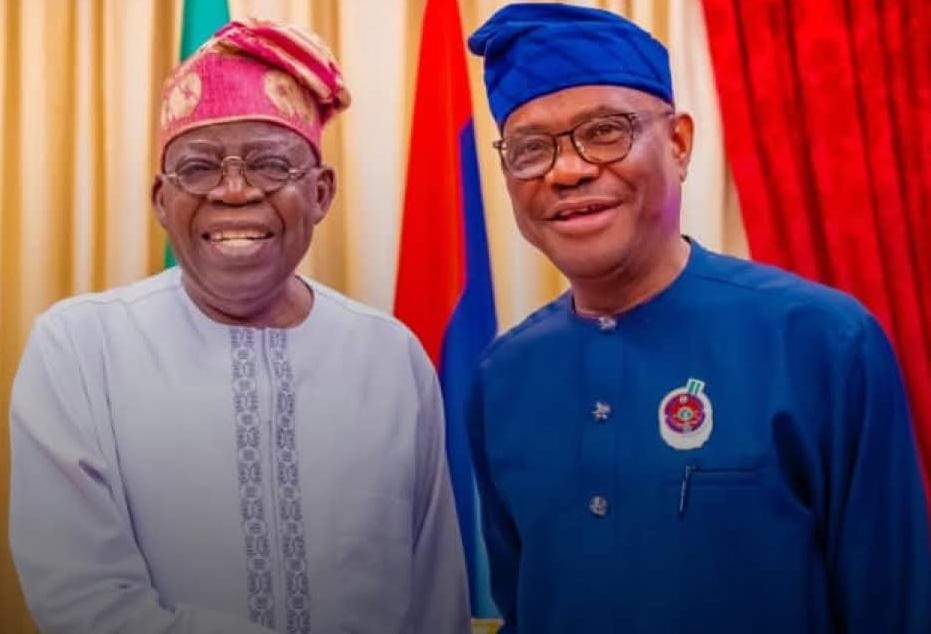
President Bola Ahmed Tinubu is moving to give Minister of the Federal Capital Territory (FCT), Nyesom Wike, a clearly defined role in his 2027 presidential re-election campaign, with the former Rivers State governor expected to coordinate campaign activities in Rivers and the FCT.
The emerging arrangement, reported by THISDAY on Monday, is designed to harness Wike’s political network in the two territories without formally placing him within the hierarchy of the All Progressives Congress (APC), despite his prominent support for Tinubu’s re-election.
Wike remains a member of the Peoples Democratic Party (PDP) and has repeatedly stated that he has no intention of joining the APC to support Tinubu’s second-term bid.
The reported arrangement comes amid growing tensions between Wike and some APC governors over the structure and control of political mobilisation ahead of the 2027 elections.
Wike to Coordinate Rivers, FCT
Wike has consistently maintained that he does not need to belong to the APC or occupy the position of Director-General of Tinubu’s campaign council before supporting the President’s re-election.
Instead, the FCT minister has publicly declared that his objective is to deliver Rivers State and the FCT for Tinubu in 2027.
During a media interaction in Port Harcourt earlier this month, Wike described himself as the “General Commander of the Political Infantry” in Rivers and the FCT.
“You do not need to be governor before you can be in charge. I am the General Commander of the Political Infantry; therefore, I am in charge. So also in FCT. I owe the President to give these two,” Wike said.
The proposed campaign arrangement would give a formal framework to the political responsibility Wike has already publicly claimed in the two territories.
The reported move comes after Tinubu constituted the APC Presidential Campaign Council in August, with former Zamfara State Governor Abdulaziz Yari appointed Director-General.
Imo State Governor Hope Uzodimma was named secretary, while Tinubu serves as chairman. Vice President Kashim Shettima and APC National Chairman Nentawe Yilwatda were named vice-chairmen.
Senate President Godswill Akpabio, House of Representatives Speaker Tajudeen Abbas and Yobe State Governor Mai Mala Buni were also assigned deputy director-general roles.
However, the emerging campaign structure is not expected to operate strictly through a single chain of command. According to the report, Akpabio and Deputy Senate President Jibrin Barau are expected to operate with distinct responsibilities rather than directly reporting to Yari.
The arrangement is reportedly intended to accommodate the different political blocs and influential figures expected to play roles in Tinubu’s re-election campaign.
Why Wike’s Role Is Different
Wike presents an unusual political situation for the Tinubu campaign.
Although he remains a PDP member, he has become one of the President’s most prominent political allies outside the APC.
His relationship with Tinubu became particularly significant during the 2023 presidential election, when Wike and four other PDP governors known as the G5 refused to support the party’s presidential candidate, Atiku Abubakar.
Wike subsequently supported Tinubu while remaining in the PDP.
After the election, Tinubu appointed him Minister of the FCT, making him one of the most prominent opposition-party politicians serving in the APC-led Federal Government.
Since then, Wike has repeatedly defended the Tinubu administration and declared his support for the President’s 2027 re-election bid.
The reported campaign arrangement comes against the backdrop of disagreements between Wike and APC governors over his proposed Rainbow Coalition.
Wike has described the coalition as a cross-party platform designed to mobilise support for Tinubu’s presidential re-election.
Thisday

Man City Survive Sunderland Scare, Liverpool Sneak Past Bournemouth

Fresh Crisis: Atiku, Malami, Others Fingered As EFCC Begins Fresh Probe Of Mambilla Power Deal

Atiku Challenges Tinubu Over Third Straight UNGA Absence, Questions ‘American Baggage’



-

 News17 hours ago
TeeJay Yusuf mourns Ex-Kogi Governor Ibrahim Idris
-
 News21 hours ago
Ekiti ADC senatorial candidate demands police probe into campaign office attack
-
 Sports18 hours ago
EPL: Shearer Warns Arsenal After Brighton Humbling
-
 News23 hours ago
How God Brought My Wife Back After Six-Month Coma — Akpabio
-
 News16 hours ago
Just in: Former Kogi Governor Ibrahim Idris reportedly dies in UK
-

 News20 hours ago
Arewa Youths Hail NNPCL Boss Ojulari For Launch of Nigeria’s Pioneer Smart Self-Service Station