***Says Project Has Ended Years Of Dependence On boats , Helicopters,


**Urges Bonny Residents To Support Continuity
The Minister of the Federal Capital Territory (FCT), Barr. Nyesom Wike, has cited the completion of the Bonny-Bodo Road as evidence of the development achievements of President Bola Tinubu’s administration, urging residents of Bonny Kingdom to support the president’s re-election in 2027. 
Wike said the road had ended years of uncertainty surrounding access to the island community, where journeys had often depended on boats and helicopters.
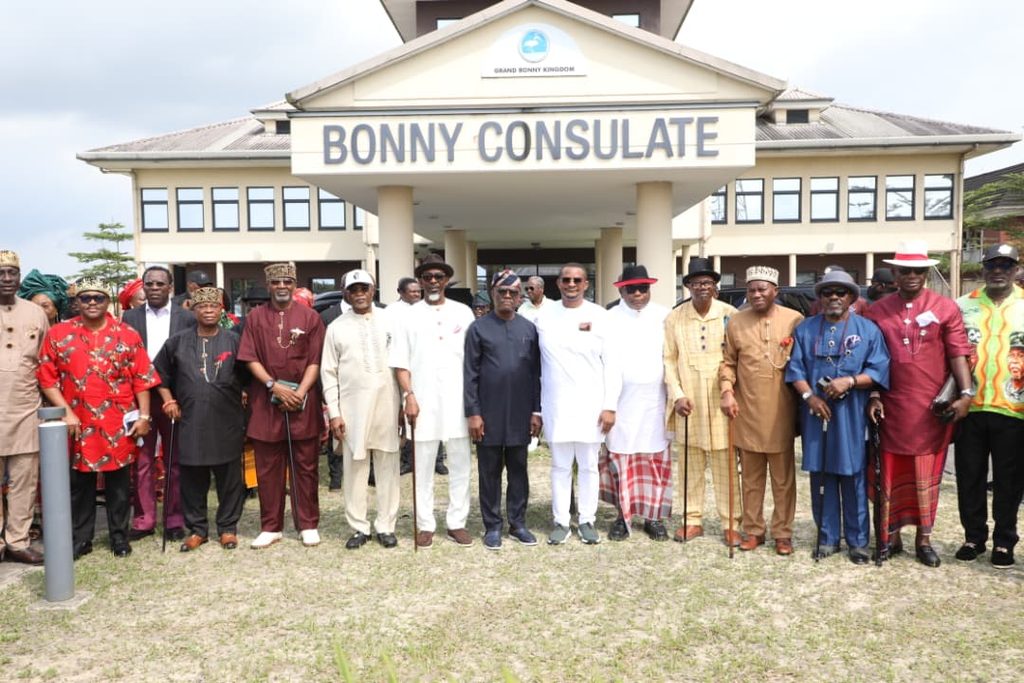
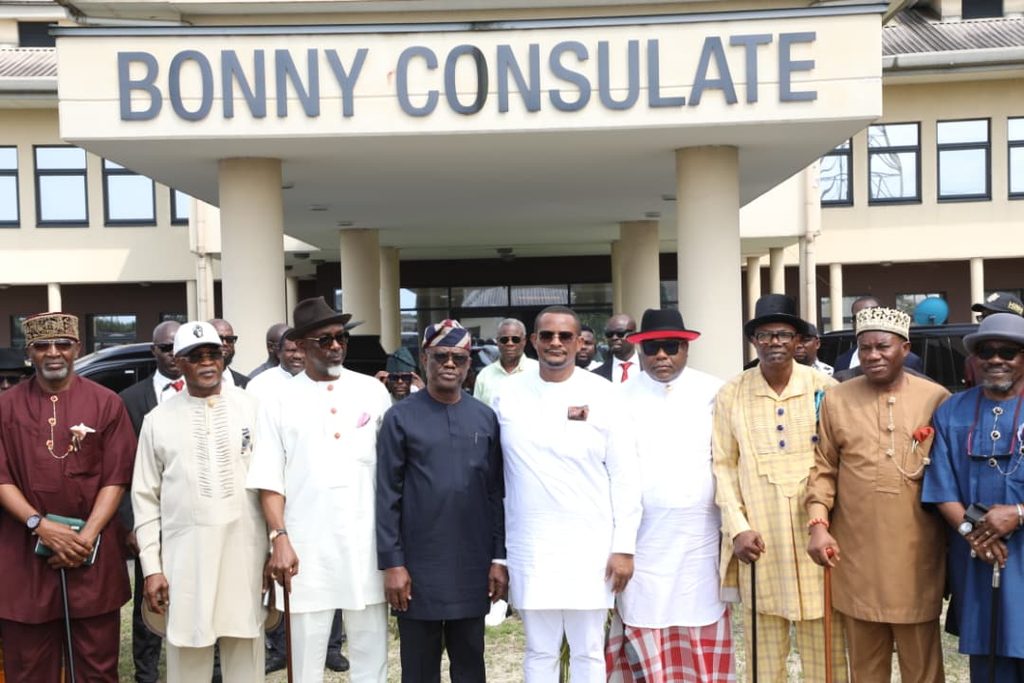
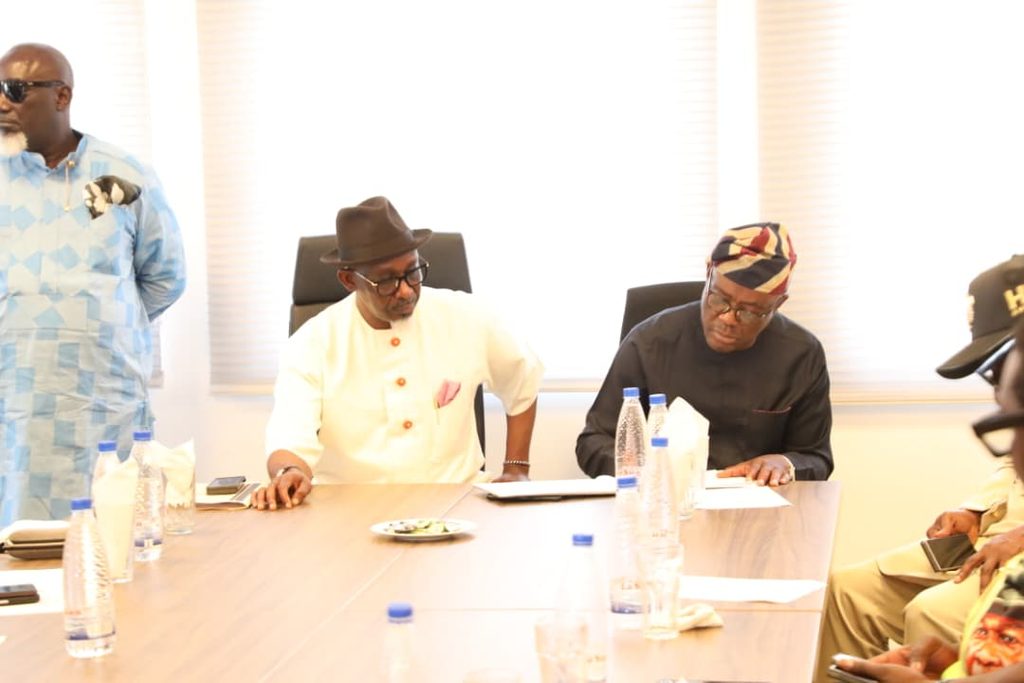
The minister spoke on Saturday during a courtesy visit to the Amanyanabo of Bonny Kingdom, King Edward Asimini William Dappa Pepple III, in Port Harcourt, ahead of an interactive meeting with residents of Bonny Local Government Area.
According to him, the road had remained a political promise under successive administrations until its completion under the current federal government.
“The advantage is that we can now go by road to Bonny. Administrations have come, and this road has become a political road. It is not today. So many governments have said, ‘We will try,’ but thank God, under the administration of the present president, this road has been completed,” Wike said.
He described the development as an important milestone for residents, businesses and visitors, arguing that improved road connectivity would support economic activities and reduce the difficulties associated with travelling to the community.
Wike, who coordinates Tinubu’s re-election campaign in Rivers State and the FCT, urged Nigerians to assess political leaders by their willingness to make difficult decisions and deliver projects that improve people’s lives.
He said his visit was intended to explain developments in the country and encourage residents to make informed political choices ahead of the 2027 general elections.
The minister also defended Tinubu’s decision to remove the petrol subsidy, describing it as a difficult but necessary reform.
He said previous administrations had acknowledged the problems associated with the subsidy regime but had failed to take decisive action.
“Each time a president comes, fuel subsidy is a scam. What have you done with it? Nobody has been able to make a courageous decision,” he said.
Wike acknowledged the hardship caused by rising petrol prices and the cost of living but argued that the policy had increased the revenue available to states and local governments.
He claimed that states now receive at least N15 billion monthly from federal allocations, excluding other revenue inflows, and urged sub national governments to channel available resources into development projects.
The former Rivers State governor recalled that the financial resources available to states were significantly lower when he assumed office in 2015.
He maintained that the reforms had created additional opportunities for governments to improve infrastructure, education and public services.
Wike also claimed that public universities had not embarked on strikes in the three years preceding his remarks, linking the development to improved funding conditions.
He argued that the benefits of difficult reforms should be assessed over time rather than solely by their immediate economic effects.
Wike urged Nigerians to examine the records of politicians seeking public office, warning against leaders he accused of making promises without delivering meaningful development.
He criticised aspects of the previous Rivers State administration and raised questions about the management of funds allocated to major projects.
Among the projects he cited were a proposed 1,000-bed Justice Karibi-Whyte Specialist Hospital, a monorail and the sale of a power-related asset.
The minister alleged that $39 million was paid for the proposed hospital without the project progressing to the foundation stage. He also claimed that $308 million received from the sale of a power plant in December 2014 had dwindled to $308,000 by the time he assumed office in May 2015.
He said the money could have supported development across the state’s local government areas if properly managed.
The claims were made by Wike at the event and could not be independently verified from the information available for this report. The responses of the individuals and companies concerned were not included in the supplied account.
The minister used the examples to argue that political leaders should be judged by their records of accountability, project delivery and the management of public resources.
He also cautioned voters against politicians who repeatedly seek elective office without demonstrating a clear plan for addressing the country’s challenges.
Wike said government should engage communities before deciding which projects to execute, stressing that development priorities differ from one locality to another.
He urged traditional rulers, youths and community leaders to identify their most pressing needs and communicate them to the appropriate authorities.
According to him, effective development requires consultation, realistic prioritisation and cooperation between communities and the different levels of government.
He said residents should consider the administration’s record on infrastructure and economic reforms when deciding whether to support Tinubu for a second term.
Earlier, King Edward Asimini William Dappa Pepple III welcomed Wike and acknowledged his contributions to Bonny Kingdom.
The monarch said the minister had maintained a longstanding relationship with the kingdom, even before becoming governor of Rivers State.
He recalled Wike’s support for the establishment of Bonny Polytechnic during his time as a minister and his interventions on security-related matters.
The monarch also acknowledged the minister’s role in the Bonny-Bodo Road project, describing his contribution as important to the kingdom.
“The minister has been of immense support to us, ranging from where we tried to establish the Bonny Polytechnic. He played a major role towards having this polytechnic started at the time he was minister,” he said.
The traditional ruler described the Bonny Kingdom as an important part of Nigeria’s economic and national life, adding that the community occupied a significant position in the country.
He also commended Wike’s emphasis on infrastructure and project delivery.