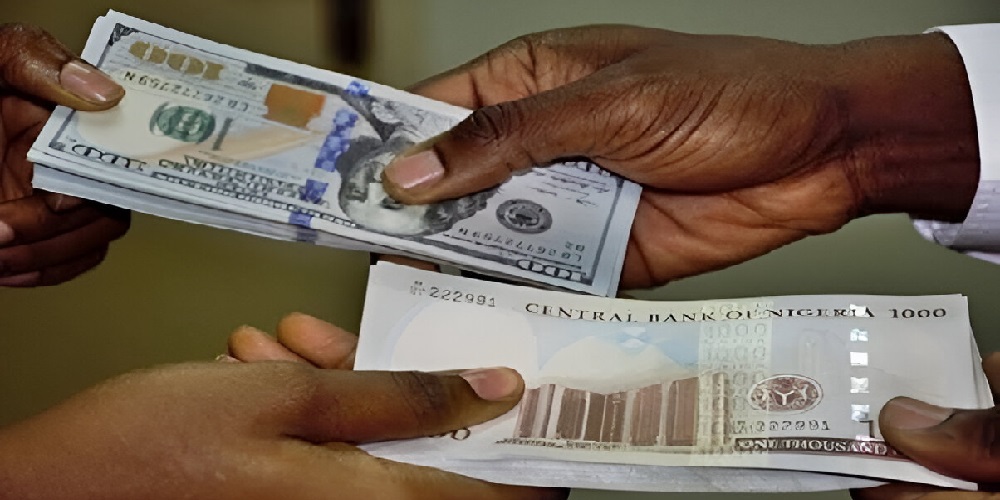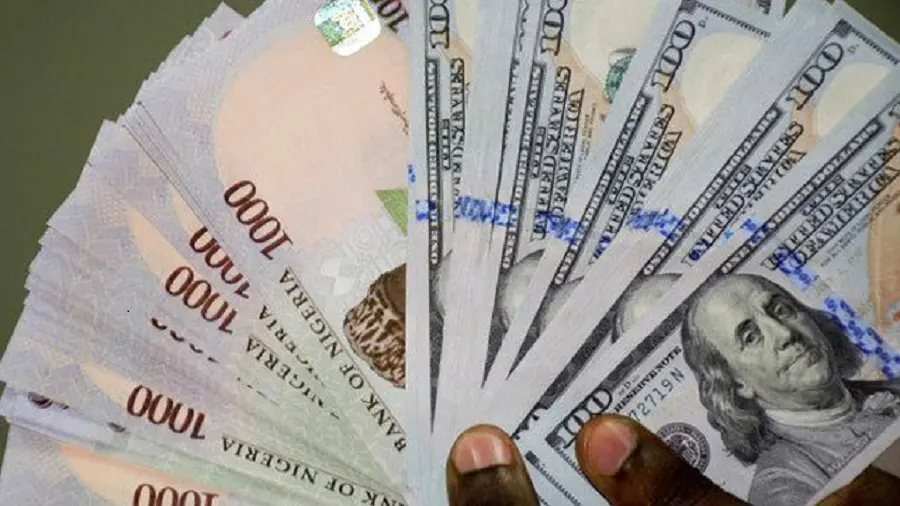
Operatives of the Economic Financial Crimes Commission, on Tuesday, expanded its clampdown on Bureau De Change operators, arresting traders in Abuja, Lagos, Kano and Port Harcourt.


This came as the naira weakened further against the United States dollar at both the official and parallel foreign exchange markets.
The recent raids followed renewed efforts by the Federal Government to tackle the naira’s recent fall against the greenback. 
The activities of currency speculators in the forex markets and the digital cryptocurrency space have reportedly increased pressure on the naira, with the government accusing crypto traders of speculating against the national currency.
Last week, some BDC operators were arrested in Abuja for allegedly speculating against the naira.
Despite resistance by some BDC operators, law enforcement officials have continued to conduct regular raids on unauthorised currency traders in the Federal Capital Territory.
Currency operators, who spoke to one of our correspondents, confirmed that the latest sting operations occurred at various times during the day in Lagos, Kano Port Harcourt and Abuja on Monday.
Malam Yahu, a trader at the popular Wuse Zone 4 market, said currency traders at Lagos, Port Harcourt and Kano confirmed sting operation by EFCC operatives, a development that disrupted market activities.
He said the fear also trickled down to the Abuja market as traders decided to reduce trading for fear of being arrested.
Yahu also said the naira was bought and sold for N1,520/$ and 1,540/$.
He said, “The naira is now N1,540 and we are buying at N1,520. But the issue now is that the EFCC guys scattered the market in Lagos, Port Harcourt and Kano today. As a result of the development, the traders in Abuja were very cautious about trading.
“So in Abuja today, people are afraid because we don’t know when they will come too and nobody wants to be arrested. It is also part of the reason for the high rate.
“Traders are also afraid of buying at a high price because they are cautious that the dollar may crash at any time. Our brothers in Lagos and Port Harcourt are complaining about the arrests.
Another trader, Abubakar Taura, confirmed the same rates and the arrests by security agents.
“Yes, we heard today that EFCC operatives have started arresting people in other states,” he said.
The President, the Association of Bureau De Change Operators, Aminu Gwadabe, confirmed the raid, saying however that the EFCC operatives primarily focused on street traders.
He confirmed that some registered BDC operators were affected in the raid.
“Yes, the EFCC operatives raided street traders although some of our members were also affected. The government is trying to deal with illegal practices. We believe the currency will appreciate with time,” he said.
At the parallel market, the naira closed at N1,540 per dollar.
This represents 4.05 per cent or N60/$1 depreciation compared to the N1,480 quoted on Monday on the black market.
The renewed naira depreciation after the gains in April 2024 was attributed to a shortage of dollars occasioned by the repatriation of funds by foreign portfolio investors.
Similarly, official FX trading at the Nigerian Autonomous Foreign Exchange Market witnessed a depreciation in the value of the local currency by 3.04 per cent as the dollar was quoted at N1,520 on Tuesday, weaker than N1,478 quoted on Monday.
This is the lowest in over six weeks and the first time the official rate will close above N1500/$1 since March 19, 2024.
The intra-day high also plummeted to N1,568/$1 from N1,515 recorded on Monday pointing to an even weaker exchange rate at some point during the day, according to data from FMDQ, where currencies are traded officially.
The intra-day low was N1,350 on Tuesday from N1,301 recorded on Monday.
The intra-day high represents the highest price at which the dollar traded against the naira on the official market during a single day of trading. The exchange rate typically fluctuates throughout the day
The amount of dollars supplied by willing buyers and willing sellers also decreased by 40.8 per cent or $88m to $128.76m from $217.64m on Monday.
The naira had extended its appreciation from mid-March till mid-April, before the recent decline. The naira however closed flat against the dollar in April, appreciating only by about 0.04 per cent in the official market.
The temporary stability occurred after the CBN interventions aimed at curbing speculation on the naira.
Some of the measures taken by the CBN included the prohibition of Foreign Currency Collaterals for Naira Loans and the directives to the International Money Transfer Operators to align their exchange rates with prevailing market rates at the official foreign exchange market.
In February 2023, the Yemi Cardoso-led CBN implemented the first interest rate hike, raising the MPR by 400 basis points to 22.75 per cent. This was followed by an additional increase in March, raising the MPR by 200 basis points to 24.75 per cent. The hikes in interest rates coincided with a strengthening of the naira, which appreciated to as high as N1,150/$1.
Commenting on the latest development, an economist at the Nigerian Economist Summit Group, Faith Iyoha, said the naira was still experiencing volatility due to the absence of fundamental FX liquidity policies.
Faith, who spoke in a telephone interview on Tuesday, said the sufficient condition for strengthening the naira must be an increase in FX liquidity which according to her is only possible through exports and foreign capital inflow, both of which the country currently lacks.
She added that although the apex bank had made some changes, there was still a need for an improved macroeconomic space.
She said, “The exchange rate has been largely volatile over time and there are fundamental reasons why it has been like that.
“It is important to give credence to the reforms that CBN has put in place and other regulatory approaches but while these are necessary approaches, they are not sufficient to strengthen the naira.
“The sufficient condition for strengthening the naira must be an increase in FX liquidity which is only through exports and foreign capital inflow.
“From the export angle, while we have crude oil, the production has been largely below 2m barrels and that means an instability in inflow.”
She added, “We still have to improve non-oil exports as well. In terms of capital importation, we have seen the exit of portfolio investors due to large instability and there is no clarity in the market. There is instability in the sense that we are not certain about the policies that are going to come up in the next few months especially when we talk about taxes and levies.
“So you see that the cybersecurity levy has been suspended, such policies give investors a sense of instability and uncertainty and in that way, they exit the market. So it is important to state that for the naira to gain stability, we must improve FX inflow, especially through trade.
“We must create macroeconomic stability that incentivises the inflow of foreign capital and if it doesn’t happen, there is no way we can sustain the strength that the naira gained based on reforms by the CBN.”
MAN, LCCI react
Meanwhile, members of the Organised Private Sector have reacted to the development.
The President of the Manufacturers Association of Nigeria, Francis Meshioye, said the continuous fluctuation of the exchange rate had made it difficult for manufacturers to construct and stick to a fairly predictable business model.
He further stated that manufacturers would inevitably be forced to review prices to reflect the prevailing exchange rate to remain in business.
Meshioye said, “All the plans we have made recently have to be reviewed, which is not good, not only for the economy but the unpredictability of our business model. Our business model is a floating one.
“It is not good for the economy because the international business community relies on the business model that you presented, and we have to continue to review our business model.
“Take for instance, some of our members have had to change prices because of the fluctuations. Manufacturers will continue to do business based on the current costs and the replacement costs of their products. You don’t want to sell a product and be out of stock because you are unable to replace it.”
On his part, the President of the Lagos Chamber of Commerce and Industry, Gabriel Idahosa blamed the shortfall in dollar supply for the recent depreciation of the naira.
Idahosa predicted that fluctuations in the exchange rate would continue as it is a natural consequence of floating the local currency.
He, however, cautioned that if the depreciation was allowed to persist, price hikes would once again become commonplace in the marketplace.
He said, “The market is struggling to stabilise that is why we are seeing this level of volatility. The CBN is managing a very difficult situation because we don’t have established trade flows from our non-oil exports.
Asked if manufacturers have implemented price hikes if the depreciation continues, Idahosa said, “Yes, of course. It will happen. We are hoping that the exchange rate does not get to that precipice of N1,800 or N1,900.”
Meanwhile, the National President of the Nigerian Association of Chambers of Commerce, Industry, Mines and Agriculture, Dele Kelvin Oye, also expressed concerns over the significant depreciation of the naira, noting that it poses multiple challenges for the country.
Oye, in a statement, expressed worry over the impact of the currency depreciation on import costs and inflation, reiterating the need for the government to stabilise the naira by potentially pegging and defending it.
He said, “The significant depreciation of the naira, now at 1500 to the dollar, poses multiple challenges for Nigeria. The weakening currency increases import costs, affecting prices of everything from food to electronics, thereby fueling inflation and reducing the purchasing power of Nigerians, especially those on fixed incomes. Higher import costs also escalate production expenses in sectors reliant on foreign materials, impacting overall business operations.
“Government and business foreign debt servicing costs rise as more naira is needed per dollar, straining financial resources and potentially reducing public service funding. While a weaker Naira might attract foreign investment by making assets cheaper, it could also deter investors seeking stability.”
He further stated, “On a positive note, a devalued naira enhances the competitiveness of non-oil exports like agriculture and manufacturing on the global market. However, this benefit is contingent on the country’s ability to efficiently increase production.
The NACCIMA president advised that “Given these complexities, the government must stabilise the Naira by potentially pegging and defending it, rather than leaving it to market forces, a strategy even economically stronger nations like Qatar and Saudi Arabia employ.”
Foreign portfolio outflows
Meanwhile, foreign outflows of investment on the Nigerian Exchange Limited hit N119.81bn in the first quarter of 2023.
This was revealed in the latest domestic and foreign portfolio investment report released by the NGX recently.
During the quarter under review, foreign outflow on the local bourse increased month on month, from N37.33bn in January to N40.88bn in February and N41.60bn in March.
On a year-on-year comparison, foreign outflow worsened by 236 per cent from N35.59bn at the end of March 2023 to N119.81bn in March 2024.
In contrast, foreign inflow at the end of March stood at N93.37bn, driven by a 111.23 per cent increase between February and March 2024 to N52.66bn from N24.93bn.
The monthly report was collated from trading figures from market operators on their Domestic and Foreign Portfolio Investment flows.
According to the report, foreign capital inflow into the market has consistently increased since the beginning of the year, from N15.78bn in January to N24.93bn in February and N52.66bn in March, bringing the year-to-date inflow to about N93.37bn, which is about 415.29 per cent higher than N18.12bn inflows recorded for the same period in 2023.
Total foreign transactions on the exchange stood at N213.18bn at the end of the quarter.
Credit: PUNCH