Economy
Nigeria orders oil marketers to open CNG pumps in filling stations
- /home/naijuinz/public_html/wp-content/plugins/mvp-social-buttons/mvp-social-buttons.php on line 27
https://naijablitznews.com/wp-content/uploads/2024/05/CNG-pumps-1000x600.jpg&description=Nigeria orders oil marketers to open CNG pumps in filling stations', 'pinterestShare', 'width=750,height=350'); return false;" title="Pin This Post">
- Share
- Tweet /home/naijuinz/public_html/wp-content/plugins/mvp-social-buttons/mvp-social-buttons.php on line 72
https://naijablitznews.com/wp-content/uploads/2024/05/CNG-pumps-1000x600.jpg&description=Nigeria orders oil marketers to open CNG pumps in filling stations', 'pinterestShare', 'width=750,height=350'); return false;" title="Pin This Post">
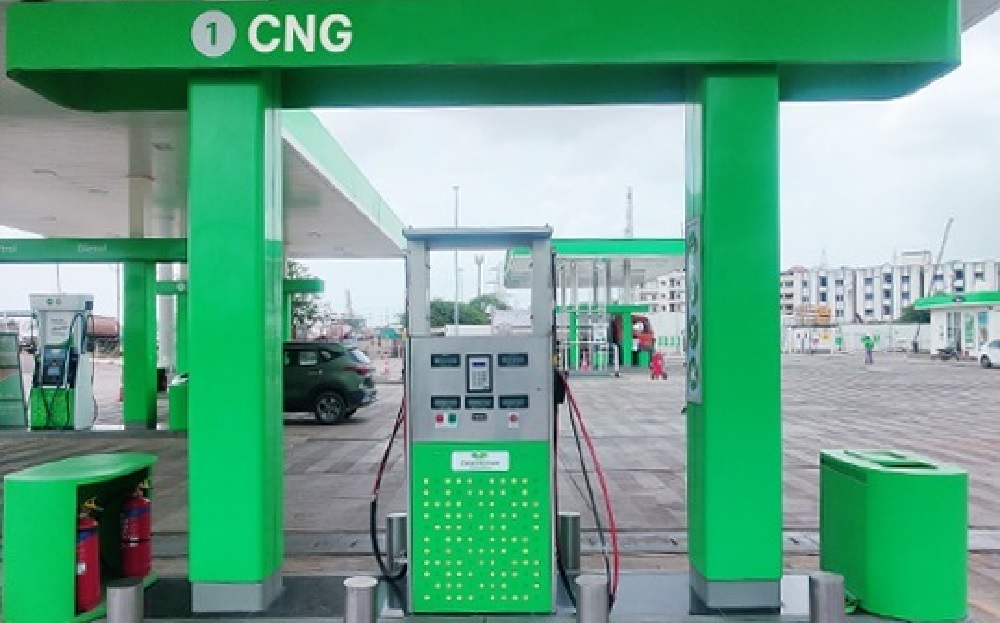
The Nigerian government has concluded plans to ensure marketers open Compressed Natural Gas pumps in filling stations across the country.
For that, the government said intending retail licensees would be now required to establish a CNG point in their filling stations before getting final government approval.
The government asked oil marketers to commence the process of establishing Compressed Natural Gas points at their filling stations to increase consumer accessibility.

The Chief Executive of the Nigerian Midstream and Downstream Petroleum Regulatory Authority, Farouk Ahmed, disclosed this during a meeting with key oil marketing companies on Tuesday in Abuja.
The discussion was to address the issues of incessant scarcity of petroleum products in the country and propose alternative solutions.
Ahmed also disclosed that a major conversation they had was in the area of the Compressed Natural Gas initiative of the Federal Government.
He implored the major marketers to explore the availability of CNG in their gas stations as President Bola Tinubu has directed that government vehicles to be purchased henceforth must be CNG-powered.
He said new applications for retail licences would no longer be approved without CNG points.
Ahmed, who described the push by the federal government to encourage the use of CNG as an alternative to petrol as a revolution, said the government was determined to reduce the burden of petrol on the economy.
He added, “We also discussed the CNG revolution and our collective effort to ensure that we reduce the burden on the economy by having an alternative by having an alternative to PMS which is very costly especially due to exchange rate fluctuations and instability. we are looking at gas because we have it in abundance, we have over 200 trillion cubic feet of gas. All we need is to harness the industry to produce, invest and be good for the consumer and CNG is the way to go.
“We discussed our plans and collective responsibility to add CNG in our petrol stations very soon just like we have PMS, diesel and kerosene, we also want to have CNG so that it would provide easy access to the consumers but of course, we have to address the supply side and we are working with the producing companies, our sister agency, NUPRC and NNPC Limited as well as Gas Aggregation Company of Nigeria to ensure that the product is also available at a competitive cost to the consumers.
“Secondly, we want to reduce the burden of the importation and consumption of PMS. we explored the possibility of converting the energy requirement of retail outlets and depot by the stakeholders here going into solar but of course there is a high entry cost and we have discussed that and it is going to be in phases.
By doing so, we will reduce the demand for diesel in terms of powering our generators by utilising solar options. Once we are done with consultations, we will require that CNG add-ons be put in petrol stations and for new applications, one of the requirements will be that you must have CNG add-on in the petrol station”, he said.
Speaking to journalists after the meeting, the chief executive stated that authority will not dictate the price band of the products but assured that stopgaps like the Dangote Refinery would bring succour to the local industry.
He said the government would not set the price of petroleum products from the Dangote refinery upon its full operation.
He stressed that though the government was encouraging local refining of petroleum products to reduce imports, it would not compel oil marketers to buy from Dangote Refinery as the decision was commercial.
The authority had recently stated that it would soon issue a fully valid operating licence to the 650,000 barrels per day capacity petroleum refinery. The facility started releasing Automotive Gas Oil, popularly called diesel to the domestic market in April this year. It has yet to release Premium Motor Spirit, popularly called petrol.
He said, “There are concerns about the ability to import petroleum products especially diesel and aviation fuel and the advent of the Dangote refinery. We allayed the fears of the marketers and told them that the Dangote refinery is a major achievement in our country because the past we were importing every litre of petroleum products we required except those supplied by modular refineries. And as an oil-producing country, we believe at NMDPRA that we should support our local industry. And that is why we encourage our marketers to patronise our local refineries.
“But, at the same time, it is a commercial decision that they have to make between the suppliers and the clients. NMDPRA will not determine how much it is sold or how much you are buying. It is their own decision to go to Dangote refinery and purchase, and for Dangote refinery to determine the price they sell. As a regulator, we will not determine the price, we are only interested that the nation is well supplied.”
On the recent shortage of petrol across the country, Farouk blamed it on the logistics problem faced by NNPC Limited in moving products from offshore to onshore depots.
He also hinted at plans to equip retail outlets and trucks with trackers to oversee product movement, dispensing, and volume accounting to obtain a precise estimate of our national consumption.
“We also talked about our national consumption, the requirement for our national consumption for petrol stations, retail outlets and trucking industries to put some trackers that monitor the movement of the product as well as the dispensing and accounting for the volume sold or transported so that we can have a very good estimate of our national consumption. Because currently what we do is rely on trucking information rather than the actual delivery into retail outlets or other consumption areas.”
Speaking on behalf of the companies, the CEO, Matrix Energy, Mr Abdukabir Adisa Aliu said the companies were ready to support the government in its effort to increase energy sources for Nigerians.
“It is the country first and it is when you have a good country that the marketers will be able to operate and the consumers would be able to buy. I think the decision of the Federal Government supersedes all other decisions that we have. We are all in alignment with the decisions of the government and plead with Nigerians to be patient”, he stated.

Economy
See Dollar to Naira exchange rate today, September 9, 2026
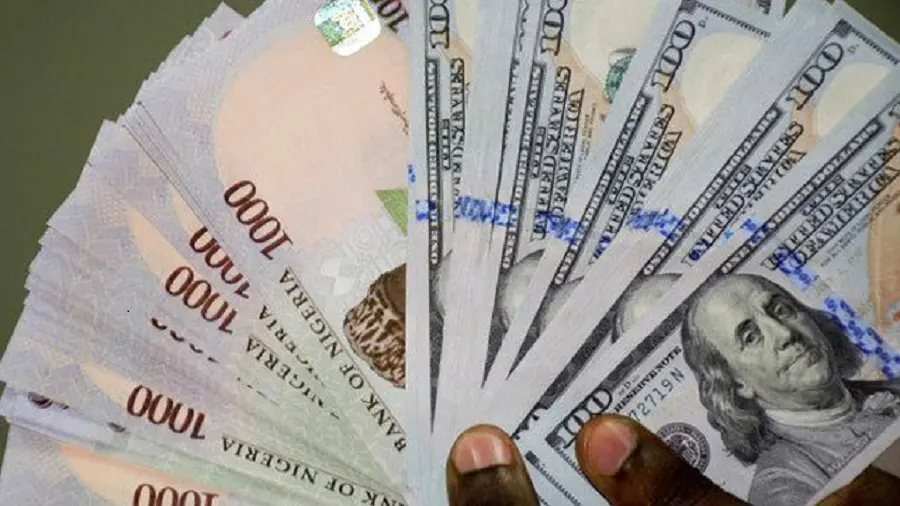
The Naira yesterday appreciated to N1,387 per dollar from N1,390 in the parallel market on Monday.
Similarly, the naira appreciated to N1,322.9 per dollar in the Nigerian Foreign Exchange Market, NFEM.
Data from the Central Bank of Nigeria, CBN, showed that the indicative exchange rate for the naira fell to N1,322.9 per dollar from N1,320 per dollar on Monday, indicating N2.9 appreciation for the local currency.
Consequently, the margin between the parallel and official markets narrowed to N64.1 per dollar from N70 per dollar on Monday. The value of interbank turnover in NFEM declined by 48.07 percent to $55.6 million from $107.07 million on Monday.
Economy
CBN tightens watch on banks over terrorism financing
The Central Bank of Nigeria (CBN) has announced that it will be paying closer attention to how banks and other financial institutions in the country are being used, or misused, to move money that could fund terrorism.
In a statement signed by Hakama Sidi-Ali, Acting Director of the apex bank’s Corporate Communications and Investor Relations Department on Tuesday, the CBN said it has made terrorism financing supervision one of its current priorities. According to the statement, this is part of the bank’s “ongoing commitment to protecting the Nigerian financial system from abuse by illicit actors.”
What this means in plain terms is that the CBN will be looking more closely at how banks identify and manage the risk of their platforms being used to fund terrorism, how well they monitor suspicious transactions linked to terrorism financing, how they carry out sanctions ordered against specific individuals or groups, and how promptly they report suspicious activity connected to terrorism financing.
The statement explained that this new push covers four broad areas: how financial institutions manage terrorism financing risk, how they monitor transactions for signs of terrorism financing, how they carry out targeted financial sanctions, and how they report suspicious transactions linked to terrorism.
The apex bank said it will not be sitting back and waiting for problems to surface on their own. Instead, it plans to use a risk-based approach, which means banks and institutions seen as more exposed to this kind of risk will attract closer attention.
This will involve both on-site inspections, where CBN officials visit institutions directly, and off-site checks, where the bank reviews reports and data from a distance.
The goal, the statement said, is to support “effective Anti-Money Laundering, Countering the Financing of Terrorism and Countering Proliferation Financing (AML/CFT/CPF) controls across the financial sector,” referring to the fight against money laundering, terrorism financing, and the financing of weapons proliferation, all of which are governed by existing Nigerian laws and regulations.
The CBN also linked this move to Nigeria’s wider efforts, both at home and internationally, to fight terrorism financing and the financing of weapons proliferation, and to protect the integrity of the country’s financial system.
The apex Bank did not name any specific institution under investigation or give a timeline for these actions, but noted that “further supervisory engagement will be undertaken as appropriate,” suggesting that more steps could follow depending on what its checks turn up.
For the ordinary Nigerian, the announcement signals that the CBN wants banks to be more careful and more accountable in how they track the movement of money through the financial system, particularly where there is any possible link to terrorism or the funding of violent groups.
It is also a reminder that financial institutions operating in Nigeria are expected to follow strict rules designed to keep the banking system safe from being used for illegal purposes.
Economy
FG increases pension for soldiers
The Federal Government has approved a new pensionable salary structure for personnel of the Nigerian Armed Forces.
The new structure affects personnel in the Nigerian Army, Nigerian Navy and Nigerian Air Force and took effect from September 1, 2026.
The approval was contained in a circular issued on September 3 by the National Salaries, Incomes and Wages Commission.
Under the new arrangement, Generals, Admirals and Air Chief Marshals occupy the highest level, with their annual pensionable salaries ranging from ₦21.9 million to ₦29.75 million, depending on their salary steps.
The highest figure works out to roughly ₦2.48 million per month when divided by 12.
Lieutenant Generals, Vice Admirals and Air Marshals will have annual pensionable salaries between ₦16.99 million and ₦25.91 million.
Major Generals, Rear Admirals and Air Vice Marshals will receive pensionable salaries ranging from about ₦14.98 million to ₦23.9 million annually.
For Brigadier Generals, Commodores and Air Commodores, the approved annual pensionable figures range from ₦13.86 million to ₦16.39 million.
Colonels, Captains and Group Captains will have annual pensionable salaries between ₦8.31 million and ₦9.49 million, while Lieutenant Colonels, Commanders and Wing Commanders will fall between ₦7.55 million and ₦8.74 million.
Majors, Lieutenant Commanders and Squadron Leaders will have pensionable salaries ranging from ₦5.99 million to ₦7.01 million annually.
Captains, Lieutenants and Flight Lieutenants will receive between ₦5.28 million and ₦6.42 million.
At the junior officer level, Second Lieutenants, Midshipmen and Pilot Officers will have annual pensionable salaries ranging from ₦4.92 million to ₦5.59 million.
The new structure also covers non-commissioned personnel.
Warrant Officers across the three services will have annual pensionable salaries between ₦4.53 million and ₦5.17 million, while Master Warrant Officers will receive between ₦3.94 million and ₦4.93 million.
Warrant Officers will have annual pensionable salaries ranging from ₦3.46 million to ₦4.35 million. Staff Sergeants, Petty Officers and Flight Sergeants will have figures between ₦2.98 million and ₦3.76 million.
Sergeants and Leading Seamen will have annual pensionable salaries ranging from ₦2.81 million to ₦3.16 million, while Corporals and Able Seamen will receive between ₦2.48 million and ₦2.73 million.
Lance Corporals and Seamen will have pensionable salaries between ₦2.32 million and ₦2.58 million annually.
Privates, Ordinary Seamen and Aircraftmen will have figures ranging from ₦2.28 million to ₦2.49 million.
The government clarified that the amounts contained in the new schedule are meant for calculating pension benefits.
They should not be treated as the actual monthly salaries or take-home pay of serving military personnel.
-
Entertainment21 hours agoWhy I Rejected Political Offers That Could Have Made Me Billionaire – Actress Omotola
-
Metro21 hours agoI sold my newborn twins for N300,000, stole other children for baby factory — Suspect
-
Sports21 hours agoNFF Appoint Augustine Eguavoen As Super Falcons Interim Head Coach
-
News20 hours agoFG Moves To End Certificate Fraud With Nat’l Learner ID
-
News21 hours agoNational Open University Appoints Acting Bursar Days After Marafa Was Shot Dead In Zamfara
-
Entertainment20 hours agoSocialite Igho “Tiny” underwent 5 different penis enlargement procedures with us — Clinic reveals
-
News13 hours ago49.70kg heroin: Fugitive drug kingpin, Festus Ibewuike, arrested after years on the run+Photos
-
Economy14 hours agoSee Dollar to Naira exchange rate today, September 9, 2026

Warning: Undefined variable $user_ID in /home/naijuinz/public_html/wp-content/themes/zox-news/comments.php on line 49
You must be logged in to post a comment Login