
News
Attorney General should prosecute States that fail to pay minimum wage – Falana




By Francesca Hangeior.
A human rights lawyer Femi Falana has called on the Attorney General of the Federation to sanction states that fail to pay the current N30,000 minimum wage.
He said since the payment of the minimum wage is an agreement entered into freely, state governments unable to honour such a deal are breaching the law.
“Once a new agreement, a new minimum wage becomes the law of the country. The Federal Government has a duty, and the Attorney General of the country has a duty to drag any state government that does not pay to court,” he said.
“I mean, the attorney general can just file a new case, which is a good development, by saying over the years, we have accused state governments of diverting monuments for local governments.”
Since the removal of fuel subsidy and the floating of the naira calls for a new minimum wage have reached new highs as the cost of living skyrocketed in the country.
Despite several meetings, the Federal Governments and labour unions have not agreed on a new minimum wage. Frustrated by the development, workers downed tools on Monday, grounding economic activities in critical sectors.
But Falana believes that since states have more money after the subsidy removal, they cannot claim a lack of funds to pay the minimum wage.
“There is no state in Nigeria today that cannot pay more than the minimum wage because the government removed fuel subsidy last year and told Nigerians that the money made from that policy shall be [paid to state governments] ” the legal practitioner said.
Falana says state governments will be compelled to pay the minimum and he is pushing for the deduction of workers’ salaries from the source.
“I heard you earlier. Oh, some people cannot pay N30,000 minimum wage. It shouldn’t be coming from the government because that is an admission of illegality,” Falana said.










President of the Senate, Senator Godswill Obot Akpabio, has felicitated the First Lady, Senator Oluremi Tinubu, on the occasion of her 66th birthday today, September 21, 2026.
Akpabio in a statement which he personally signed, described the First Lady as “a remarkable woman,” saying: “Your Excellency, your life reflects faith, service, sacrifice and quiet strength. From the classroom to public office, the Senate and the position of First Lady, you have demonstrated that leadership is measured by its impact on people’s lives.
“Through your compassion for the vulnerable, advocacy for women and children, and the interventions of the Renewed Hope Initiative, you continue to advance the hope of a better Nigeria.”
The Senate President also celebrated the First Lady as “a devoted wife, mother and grandmother whose grace and strength have supported His Excellency, President Bola Ahmed Tinubu, GCFR, and inspired many.”
Akpabio, on behalf of the Senate, the National Assembly and his family, wished the First Lady “abundant health, enduring happiness, divine favour and many more years of purposeful service.”
He concluded by saying: “Happy 66th Birthday, Your Excellency.
“May God continue to strengthen and preserve you, making your life an even greater blessing to your family, our nation and humanity.”

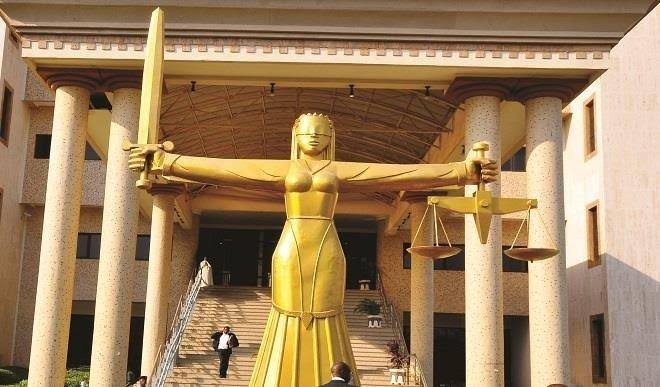
Nigerians can now obtain affidavits from the Federal High Court without travelling to any court premises, thanks to the court’s Electronic Court Management System (ECMS) e-Affidavit Portal.
The fully digital platform allows applicants to register, complete forms, upload documents, make payment and download a verified affidavit from anywhere with an internet connection.
The portal was set up to deliver a secure and efficient process for affidavit applications and related court services. It operates under the Nigeria Data Protection Act (NDPA) 2023.
The process, obtained from the Federal High Court’s e-Affidavit Portal on Sunday, shows that applicants can access a range of affidavits covering name changes, correction of dates of birth, loss of documents, change of signature, next of kin, marriage, banking and other purposes.
The portal also provides applicants with a means of tracking their applications and downloading completed affidavits after payment and approval.
Here is how to apply:
1. Create an account
Applicants are required to register on the Federal High Court’s Electronic Court Management System portal at https://portal.fhc.gov.ng/.
During registration, users are asked to provide their full name, phone number, date of birth, email address and a password.
The name entered should be the name that the applicant wants to appear on the affidavit.
After registration, the applicant should log in to the portal and select the affidavit module.
2. Complete your profile
Before starting a new affidavit application, applicants are required to complete their affidavit profile.
The portal requests information including the applicant’s native town, residential address, occupation, NIN, country of origin, state of origin, gender, religion and date of birth.
Applicants are also required to upload a passport photograph and an identity card.
The Federal High Court advises applicants to ensure that all information supplied is accurate before saving the profile.
3. Choose the type of affidavit
After completing the profile, applicants can access the list of available affidavit services.
The portal offers several categories, including:
Name change: Affidavit of Change of Name, Correction of Name and Harmonisation of Name(s)
Date of birth: Statutory Declaration of Age, Declaration of Age for a Minor and Correction of Date of Birth.
Loss and incidents: Loss of Items, Burglary, Theft, Robbery, Damage, Missing Person and other related affidavits.
Identity and personal matters: Good Conduct, Next of Kin, Guardianship, Verification of Address and State of Origin.
Marriage: Bachelorhood, Marriage Declaration, Spinsterhood and Non-impediment.
Banking: Change of Bank Phone Number, Non-Indebtedness and Single Account Ownership.
General purpose: Authorisation, Transfer of Ownership, Claim of Ownership, Sponsorship, Affidavit of Means and others.
Institutional affidavits: Good Conduct and Non-Membership of Secret Cult/Terrorist/Militant Group, Hostel Accommodation and other applications.
There are also options for affidavits relating to academic documents, political office candidacy and other institutional purposes.
4. Fill out the application
After selecting an affidavit, the applicant is taken to the relevant application form.
Depending on the affidavit selected, the form may require the applicant to provide personal details, the purpose of the affidavit and information specific to the application.
For example, an application for correction of date of birth requires the applicant to state the reason for the correction, the wrong date of birth and the correct date of birth.
Applicants are also required to provide their email address and phone number and select a preferred Federal High Court.
The available court options include Federal High Court divisions in different states and Abuja.
5. Upload the required documents
The portal requires applicants to provide a recent passport photograph, a valid means of identification and a signature, which can be uploaded or drawn.
Accepted identification documents include a National Identification Number, international passport, driver’s licence or voter’s card.
The portal states that uploaded passport photographs, identification cards and signatures must meet its specifications, with each file limited to 300KB in the application form reviewed.
6. Preview the application
After entering the required information, applicants should click the preview option to review their application.
The preview displays the information supplied, including the applicant’s name, identification details, affidavit information, contact details and selected court.
Applicants should carefully check the information at this stage before submitting the application because the portal states that payments are final, non-refundable and non-transferable.
7. Agree to the terms and submit
After checking the information, the applicant must agree to the portal’s terms and conditions and consent to the processing of personal data in accordance with the Nigeria Data Protection Act.
The application can then be submitted.
8. Pay the required fee
The portal then directs applicants to make payment electronically.
The payment options include Paystack and Remita.
The application reviewed for this report displayed a fee of N1,797 for the selected affidavit.
Applicants should, however, confirm the amount displayed for their particular application before making payment, as fees may vary by service or change over time.
The portal warns that payments are final, non-refundable and non-transferable.
9. Download the affidavit
After payment and processing, the completed affidavit can be downloaded through the portal, while a copy is also sent to the applicant’s email address.
The Federal High Court says affidavits issued through the portal are protected with unique barcodes and reference numbers that can be used for verification.
Applicants are warned that falsifying, altering or misusing an affidavit constitutes a criminal offence and may attract legal consequences.
Important things applicants should know
The portal says applicants whose applications are queried for additional information or documents must respond within 72 hours.
Failure to make the required payment or respond to a query within the stipulated period can result in automatic deletion of the application without a refund or further notice, after which the applicant would have to start a new application and make a fresh payment.
The portal also says applicants’ personal information, including NIN, passport photographs, signatures and contact details, is collected for affidavit applications, verification and other lawful purposes.
The Federal High Court’s e-Affidavit Portal is available through its Electronic Court Management System. Federal High Court e-Affidavit Portal.

Human rights lawyer, Femi Falana, SAN, has called on the Attorney-General of Niger State, Nasiru Mu’azu, to ensure the speedy investigation and prosecution of all persons found culpable in the deaths of 37 suspected illegal miners who died in the custody of the Nigeria Security and Civil Defence Corps in Minna.
Falana, in a statement on Saturday, said the Attorney-General should direct the relevant authorities to investigate the circumstances surrounding the deaths and prosecute any NSCDC personnel or other individuals indicted by the investigation.
The call came amid a Federal Government investigation into the deaths, which occurred on Thursday, September 17, after scores of people arrested during raids on suspected illegal mining sites were detained at an NSCDC facility in Minna.
The government has since constituted a 10-member independent committee to investigate the incident and suspended officers linked to it pending the outcome of the probe.
The Niger State Governor, Umaru Bago, also confirmed the death of 37 detainees and said forensic and medical examinations, including autopsies, were being conducted to establish the cause of the deaths.
The incident has generated protests in Minna, with reports indicating that some of the detainees were teenagers. Accounts from survivors and relatives have raised concerns about overcrowding and poor ventilation in the detention facility, although authorities have yet to establish a definitive cause of death.
Falana said, “The Attorney-General of Niger State, Nasiru Mu’azu Esq. should ensure a speedy investigation by the State Police Command and immediate prosecution of all indicted suspects by the State Ministry of Justice.”
According to him, the NSCDC had confirmed that more than 50 people were arrested over alleged illegal mining, with profiling and documentation still ongoing.
He described the deaths as a reminder of longstanding concerns over the treatment of suspects in detention facilities across the country, arguing that the circumstances surrounding the Niger incident should not be treated as an isolated occurrence.
Falana recalled the 1980 incident in which about 50 criminal suspects reportedly died after being locked inside a police transport van, popularly known as a “Black Maria,” at the premises of the Tinubu Magistrate Court in Lagos.
He argued that despite such incidents, overcrowding and poor conditions in detention facilities had continued to expose suspects to serious risks.
“The best way to honour the 37 suspects that were suffocated to death last week is to ensure that detention centres in the country meet the United Nations Standard Minimum Rules for the Treatment of Prisoners, known as the Nelson Mandela Rules,” he said.
The United Nations’ Mandela Rules set minimum standards for the treatment of prisoners, including requirements relating to accommodation, sanitation, ventilation, healthcare and the humane treatment of people deprived of their liberty.
Falana also linked the Niger incident to a broader concern about the manner in which suspects, particularly people arrested for minor or alleged offences, are detained before trial.
He urged the authorities to ensure that the investigation into the deaths establishes individual responsibility rather than ending with administrative sanctions.
The Federal Government has said the investigation into the Niger deaths would be comprehensive, transparent and unhindered, while the Minister of Interior, Olubunmi Tunji-Ojo, said the government owed the families of the deceased and Nigerians an explanation of what happened.
Falana also called on the Attorney-General of Ondo State, Olukayode Ajulo, SAN, to prosecute persons allegedly responsible for the mass poisoning that has killed 48 people in the state.
The National Agency for Food and Drug Administration and Control said 182 cases had been recorded as of September 17 following the reported consumption of locally prepared alcoholic and herbal concoctions in parts of Ondo State.
NAFDAC said five victims had become totally blind while two others suffered partial blindness. Preliminary laboratory analysis also detected high concentrations of methanol in samples of the suspected beverages.
The affected communities include New Town, Odole, Okele, Orita Odigbo, Araromi-Obu and Oniparaga, with Odigbo Town and Araromi-Obu recording the highest number of cases. The agency said cases had also been reported in Irele Local Government Area.
NAFDAC said 15 people had been arrested in connection with the production, sale and distribution of the suspected toxic drinks, while investigations and surveillance were continuing.
Falana urged Ajulo to take over the case with a view to ensuring the prosecution of suspects found responsible for the deaths.
The lawyer said the two incidents in Niger and Ondo underscored the need for the relevant authorities to pursue accountability where investigations establish criminal responsibility, rather than allowing cases involving multiple deaths to end without prosecution.

Akpabio felicitates First Lady Oluremi Tinubu at 66, hails commitment to a better Nigeria

NPFL: Rangers, Abia Warriors, Inter Lagos bag away wins

BBNaija S11: Yusuf, Bells, Chimsom Chuka evicted




-

 News17 hours ago
TeeJay Yusuf mourns Ex-Kogi Governor Ibrahim Idris
-

 News20 hours ago
Ekiti ADC senatorial candidate demands police probe into campaign office attack
-
 Sports17 hours ago
EPL: Shearer Warns Arsenal After Brighton Humbling
-
 News22 hours ago
How God Brought My Wife Back After Six-Month Coma — Akpabio
-

 News16 hours ago
Just in: Former Kogi Governor Ibrahim Idris reportedly dies in UK
-
 News21 hours ago
Fraud: EFCC Expands Insurance Recapitalisation Investigations To Industry
Warning: Undefined variable $user_ID in /home/naijuinz/public_html/wp-content/themes/zox-news/comments.php on line 49
You must be logged in to post a comment Login