By Gloria Ikibah
Speaker of the House of Representatives, Rep. Tajudeen Abbas has said that in the review ofthe 1999 Constitution (As Amended), critical areas to be considered include implementing comprehensive electoral reforms to address the gaps identified in the aftermath of the 2023 general elections, strengthening the enforceability of legislative instruments; and institutional strengthening for greater accountability, among others.
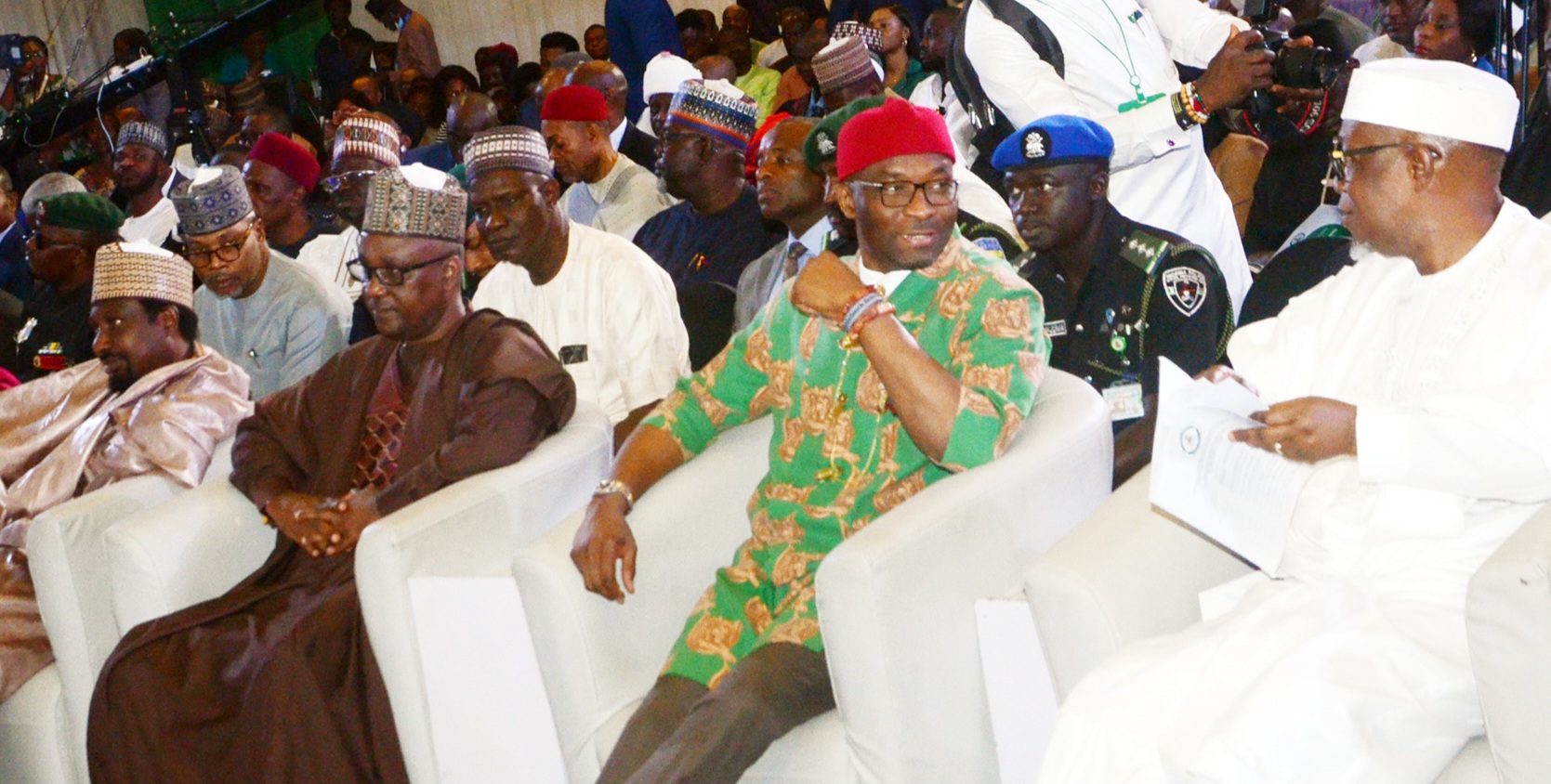
Speaker Abbas who stated this at the inauguration of the House Committee on Constitution Review and Citizen Engagement organised by the House Committee on the Review of the Constitution of the Federal Republic of Nigeria 1999 (As Amended) on Monday in Abuja, noted that these areas are crucial for reinforcing the democracy and ensuring that the governance structure meets the needs and aspirations of all Nigerians.
He explained that several Bills have already been introduced in both the Senate and House, on some of these important issues.
He said: “We expect the Sixth Alteration under this Tenth National Assembly to be the most comprehensive yet. As such, the task before the Constitution Review Committee is profound. The House Agenda is ambitious in its scope and encompasses wide-ranging issues pivotal to our national growth.
“Among these are: devolution of powers, including state policing; enhancement of fiscal federalism through local government autonomy; further decongesting the Exclusive Legislative List; recognising and assigning constitutional roles for traditional institutions; and promoting inclusivity, particularly greater gender equity and women representation into appointive and elective positions.
“Regarding the latter, I implore this Committee to align its work with the Legislative Agenda. I urge you to revisit the issue of additional or reserved seats for women across legislative bodies, twinning in joint tickets and conferring citizenship on foreigners married to Nigerian women.
He highlighted that “since the inception of the Fourth Republic, the Constitution has been subjected to five alterations with landmark changes that have strengthened the democratic institutions, federalism and governance generally.
“Under the 9th Assembly, the Fifth Alteration made some of the most far-reaching amendments. It clarified and reinforced financial autonomy for State Houses of Assembly and Judiciary, decongested the Executive List, defined guidelines for the First Session and Inauguration of Members-Elect of the National and State Houses of Assembly, and deleted reference to the provisions of the Criminal Code, Penal Code, Criminal Procedure Act, Criminal Procedure Code or Evidence Act, among others. All these made the Fifth Alteration the most extensive since 1999.
“We expect the Sixth Alteration under this Tenth National Assembly to be the most comprehensive yet. As such, the task before the Constitution Review Committee is profound. The House Agenda is ambitious in its scope and encompasses wide-ranging issues pivotal to our national growth.
“However, in making recommendations and proposals that potentially have far-reaching impacts (such as state police), I strongly recommend that we adopt a scientific approach grounded in empirical evidence rather than ideology, personal beliefs, or political expediency. I also challenge us to go beyond traditional and generic prescriptions and explore gradualism in law making with the understanding that social change can be achieved in small, discrete increments rather than in abrupt strokes or grand solutions. This gradual process will allow us to pilot innovative solutions, engage in meaningful experimentation, and gather concrete data and facts to inform our decisions.
“Also, this approach ensures that reforms are not only effective but also adapted to the unique needs and challenges of our great nation. Through this careful and considered process, we can achieve sustainable and impactful changes for the good of our country and all Nigerians”, he noted.
Speaker Abbas revealed that the methodology to be employed by the Committee will emphasise inclusivity, transparency, and collaboration even as he assured that the House will work closely with the Executive arm (both at the Federal and sub-national levels).
“This partnership stems from recognising their pivotal role in governance, ensuring that our review process is comprehensive and considers the practical aspects of implementation. Equally, the process will involve State Houses of Assembly to foster consensus and expedite adoption by States. But more importantly, the process will be deeply rooted in engaging with the Nigerian people at all levels, including traditional and religious institutions, pressure groups and trade unions, ethno-religious organisations, the diaspora community and much more.
“As we embark on the essential task of Constitutional review, the House has adopted a strategy of timely commencement. This proactive approach is designed to ensure thorough engagement and deliberation. By starting early, we aim to facilitate a comprehensive review process, allowing ample time for robust public engagement, detailed analysis, and thoughtful consideration of proposals for amendments. This approach also ensures that the review is concluded in good time and avoids some of the setbacks experienced in the past occasioned by late commencement”, Abass added.
The Speaker urged all members and Nigerians to approach the process with an open mind and spirit of patriotism, adding that the constitutional amendment process is both costly and laden with contentious issues, but the benefits far outweigh the challenges.
“It is an opportunity to address the pressing issues that have emerged in our polity, to close gaps in our legal system, and to strengthen the foundations of our democracy. As such, I urge all members of the Committee on Constitution Review, and indeed all Nigerians, to approach this exercise with an open mind, a spirit of patriotism, and a commitment to the greater good. Our goal should not be to win arguments but to build consensus, to not just amend laws but to forge a more unified, just, and prosperous Nigeria”.
Earlier in his welcome remarks, Deputy Speaker of the House and Chairman of the CRC, Rep. Benjamin Kalu, called on Nigerians to advocate tirelessly for change, holding elected representatives accountable and demand accountability at every turn.
He assured that the committee will work diligently to deliver on its assignment within the next 24 months, and will wholeheartedly seek the cooperation and support of all Nigerians.
According to Kalu, the Constitution Review Committee of the 10th National Assembly stands ready to embrace the challenges and opportunities that lie ahead.
He added that leveraging the power of technology, social media, and inclusive
engagement, will ensure that every voice is heard, every perspective is considered, and every citizen is empowered to participate in shaping the nation’s future
He said: “Today marks an important moment in the history of our great nation as we convene for the Inauguration and Citizen’s Engagement of the House of
Representatives Committee on the Review of the Constitution of the
Federal Republic of Nigeria, 1999 (as amended).
“Our constitution, the foundation of our democracy, stands as a testament to
our collective aspirations for a just, equitable, and prosperous society. Yet,
as we confront the realities of the 21st century, it is incumbent upon us to
recognize the imperative for constitutional reform, to ensure that our laws reflect our people’s evolving needs and aspirations.
“As James Madison, the “Father of the American Constitution,” once
eloquently stated, “The Constitution of a Republic … ought to contain within
itself provisions for its own improvement as time and circumstance may
require.” Heeding this wisdom, we must embark on this reform journey with
open minds and hearts, acknowledging the dynamic nature of our society
and the need for our governing document to adapt accordingly.
“As we gather here today, it is important to highlight the areas that are
currently at the forefront based on the bill proposals we have received so
far – some of them include the establishment of state police; state access to mines; increased participation of women in politics; clear specification of the taxes/levies to be collected by each tier of government and the provision for the office of the Mayor of the Federal Capital Territory Abuja.
He disclosed that several bill proposals that were passed during the Fifth Constitution alterations but did not make the President’s assent have been brought back.
These bills include “Powers to the National Assembly and State Assemblies to Summon the President and State governors, and Requirements of the Government to Direct Policies Towards Ensuring the Rights to Food and Food Security.
“This highlights the dynamic nature of the constitution review process and
its salientness to the democratic strengthening of the country.
“It is important to reiterate that we are willing to accommodate more proposals to enhance our Constitution and strengthen our democracy. In addition, we await executive-sponsored bill proposals that reflect issues on the renewed hope agenda of Mr President.
“It is also important to note the amendments to the constitution carried out by previous assemblies, which include but are not limited to the financial independence of State Houses of Assembly and State Judiciary; redesignating “Prisons” as “Correctional Services” and then transferring them from the exclusive legislative list to the concurrent legislative list to enable the state’s participation.
“Others include transferring “railways” from the exclusive legislative list to the concurrent legislative list; enabling states to generate, transmit, and distribute electricity in areas covered by the national grid; and requiring the President and Governors to submit the names of persons nominated as Ministers or Commissioners within sixty days of taking the oath of office for confirmation by the Senate or State House of Assembly
“We particularly saw this come into action when President Bola Ahmed
Tinubu submitted his ministerial list two days before the deadline on
Thursday, the 27th of July in 2023.
As we move forward, states should commence domestication of these
amendments to generate the required results and propel Nigeria towards a
brighter future.
“Thus, the call to action is clear, and the pathway forward is illuminated by
the principles of dialogue, advocacy, participation, unity, and inclusivity.
“Let us heed the voices of our fellow citizens, from all walks of life, and engage in open, inclusive, and transparent dialogue on constitutional reform. Let us bridge divides, build consensus, and forge a common vision for the future
of Nigeria.
“Participation is not merely a right; it is a sacred duty bestowed upon us as
citizens of this great nation. I call upon every one of you to actively participate in the constitutional reform process, to lend your voices, ideas, and expertise to craft a constitution that reflects the values and aspirations of all Nigerians”.
Naijablitznews.com reports that the 45-member committee is comprising one member from each of the 36 states of the Federation and the FCT.
The committee is chaired by the Deputy Speaker, Rt. Hon. Benjamin Kalu, while the House Leader, Hon. (Prof) Julius Ihonvbere, is the Committee’s Deputy Chairman. To ensure greater inclusion, the Committee will also have six (6) additional women, one from each of the six geo-political zones. Furthermore, the House Zonal Caucus Leaders have been co-opted in an advisory capacity to advise the Committee on issues relating to their respective zones. Lastly, the Committee’s secretariat will also include a representative of people living with disabilities to ensure that their concerns are properly accommodated.
The mandate of the Committee is to receive and consider proposals for alteration of the 1999 Constitution (as amended), create a forum for stakeholders and the public to make inputs into the review process and collaborate with the Senate and the State Houses of Assembly as required by law.