
News
UK lists more companies licensed to sponsor Nigerians’ work visa + FULL LIST

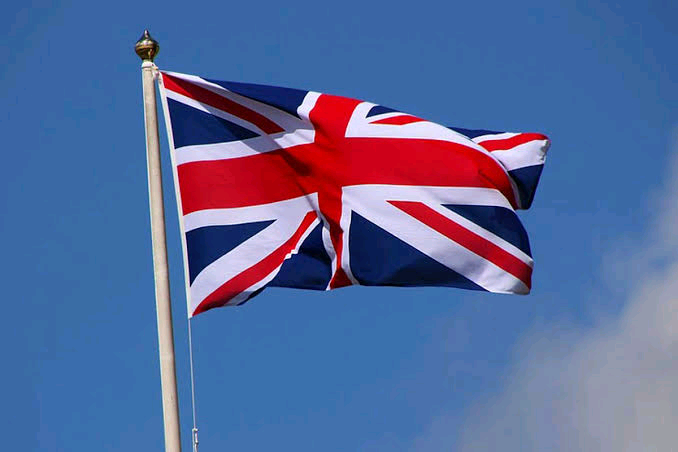


The United Kingdom has increased the number of organisations licensed to sponsor workers on the worker and temporary worker immigration routes.
Interested Nigerians are advised to visit the listed company’s website and search for available vacancies.
A breakdown shows that the approved companies are in technology, commerce, education, media and advertisement, and engineering sectors, among others.
According to the UK government, a Skilled Worker visa allows you to come to or stay in the UK for an eligible job with an approved employer.
The UK government, in a note on its website, said: “The skilled worker route includes charity workers, skilled workers, creative workers, global business mobility: senior or specialist workers, and international sportspersons.
“You must have a job offer from an approved UK employer before you apply for a Skilled Worker visa.
Approved employers are also known as sponsors, because they are sponsoring you to come to or stay in the UK.”
Companies:
1. McMullan Shellfish
2. (IECC Care) Independent Excel Care Consortium Limited
3. ABOUTCARE HASTINGS LTD
4. £ ESS LTD
5. @ Architect UK Ltd
6. @ Home Accommodation Services Ltd
7. @ Home Accommodation Services Ltd
8. @ Ur Eaz Ltd
9. @@@ FILER LIMITED
10. [AI] INFINITI LIMITED
11. `Brunswick Stores Limited
12. #NAME?
13. 003 Ltd
14. 007 Taxi Limited
15. 0086 Ltd
16. 00Nation Limited
17. 00Nation Limited
18. 01 ACCOUNTING SERVICES LTD
19. 012 Global Ltd
20. 023 LTD
21. 09 Care Limited
22. 0xA Technologies Ltd
23. 1 ACE TRAINING LIMITED
24. 1 ALS LIMITED
25. 1 AND 1 ROUGAMO LIMITED
26. 1 And 5 Tech Ltd
27. 1 Answer Insurance Services LTD.
28. 1 Bishops Avenue Limited
29. 1 Digitals Europe Limited
30. 1 Eclipse Care Solutions Limited
31. 1 Green Foods Ltd
32. 1 Homecare ltd
33. 1 Indus Limited
34. 1 Key Solution Limited
35. 1 Kings Dental Limited
36. 1 Life London Limited
37. 1 MODEL MANAGEMENT LONDON LIMITED
38. 1 Oak Home Care
39. 1 Oak Leisure Ireland Ltd
40. 1 PhysioUK Limited
41. 1 REPAIR LTD
42. 1 Stop Print Ltd
43. 1 STOP REC LIMITED
44. 10 Europe Limited
45. 10 Europe Limited
46. 10 Squared Ltd
47. 100 Percent Cornwall Ltd
48. 100 SHAPES LTD
49. 100% HALAL MEAT STORES LTD
50. 1000 Trades Limited
51. 1000heads Ltd
52. 100Starlings Ltd
53. 101 A+D Lt
54. 101 Harley Street LTD
55. 101 Healthcare ltd
56. 101 Ways Limited
57. 1010 Restaurant @ The Blacksmiths arms
58. 105 West Architects Ltd
59. 1066 PLUMBING AND HEATING LTD
60. 107 Cannon Street Limited
News
2027: Rainbow Coalition Signals Fresh Political Realignment in Nigeria — Sokoto PDP Guber Candidate

The Peoples Democratic Party (PDP) governorship candidate in Sokoto State, Abubakar Sokoto, has described the emerging Rainbow Coalition as another chapter in Nigeria’s long history of political alliances and realignments.
Sokoto, in a statement issued in Sokoto on Tuesday, said political coalitions had remained a recurring feature of Nigeria’s electoral history, with parties and political groups often coming together to pursue shared political objectives.
According to him, while the names, personalities, circumstances and goals behind such alliances may change, political realignment remains an established part of the country’s democratic process.
He cited the 1999 AD-APP joint presidential ticket of Olu Falae and Umaru Shinkafi as one of the notable examples of political cooperation in Nigeria.
He also recalled the Coalition of Progressive Political Parties ahead of the 2015 general elections, as well as the merger involving the Action Congress of Nigeria (ACN), Congress for Progressive Change (CPC) and All Nigeria Peoples Party (ANPP), which eventually led to the formation of the All Progressives Congress (APC).
“The greatest lesson from these experiences is that political coalitions are about people as much as they are about parties,” he said.
On the latest political realignment, Sokoto noted that the Minister of the Federal Capital Territory (FCT), Nyesom Wike, had described the Rainbow Coalition as a multi-party platform mobilising support for President Bola Tinubu’s 2027 re-election bid.
He added that Wike had also maintained that the coalition was not an APC structure.
Sokoto said concerns reportedly expressed by some APC governors over the emerging coalition should be viewed within the broader context of Nigeria’s history of political alliances and realignments.
He urged APC governors and other party leaders to adopt what he described as a pragmatic approach to the developing political configuration ahead of the 2027 elections.
The PDP candidate also called on Nigerians to support efforts aimed at ensuring that the 2027 general elections are free, fair and credible.
News
Niger Miners’ Deaths: ‘Anyone Who Tampers With Evidence Will Face Full Wrath of Law’ — Tunji-Ojo

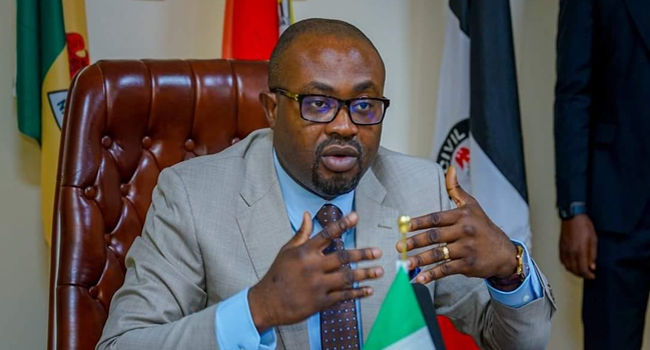
The Federal Government has warned that anyone who attempts to destroy or conceal evidence, intimidate witnesses or obstruct investigations into the deaths of 37 suspected illegal miners in Niger State will face prosecution.
Minister of Interior, Olubunmi Tunji-Ojo, issued the warning on Tuesday in Abuja while inaugurating a 10-member independent investigative committee set up to establish the circumstances surrounding the deaths of the detainees in the custody of the Nigeria Security and Civil Defence Corps (NSCDC).
The 37 detainees died on September 17, days after they were arrested during NSCDC operations against suspected illegal mining in the M.I. Wushishi and Lukoto areas of Niger State on September 15 and 16.
The circumstances and actual cause of the deaths remain under investigations.
Speaking at the inauguration of the panel, Tunji-Ojo directed the NSCDC leadership and all officers linked to the incident to cooperate fully with investigators and ensure that all relevant records and material evidence are preserved.
“All records and material evidence connected to this incident, I have directed that they must be preserved and made available,” the minister said.
He added: “Any attempt by anybody to destroy or conceal evidence, intimidate witnesses or obstruct this investigation will be treated as a serious offence against the nation and it will not be tolerated.
“If it ever happens, I give you my word, the full hammer of the law will descend on such an individual.”
‘We Owe Nigerians the Truth’
Tunji-Ojo said the Federal Government was determined to establish the truth and ensure accountability, regardless of the status of anyone found culpable.
“To Nigerians, I say this: we owe you the truth.
This committee will give you the truth. No officer, no matter how highly placed, or any individual will be shielded if found culpable,” he said.
The minister also appealed to the families of the deceased to remain calm, assuring them that the government would not abandon them.
“To the families who lost loved ones, I appeal for calm and patience. This government will not and will never abandon you,” he said.
Tunji-Ojo charged the committee to conduct a thorough investigation and promised that its findings would not be ignored.
“I challenge you: let your antecedent speak when the report is submitted, and I assure you of one thing: this report will not be swept under the carpet,” he said.
He added that those found culpable would face the appropriate legal consequences.
“We will call a meeting like this; we will present the report, and whoever needs to be prosecuted will be prosecuted, and whoever needs to be dealt with in line with the law will be dealt with,” the minister said.
Panel to Determine Cause of Death, Responsibility
The committee, chaired by retired Deputy Director-General of the Department of State Services (DSS), Jonathan Kure, is expected to establish the identities of the deceased and investigate the circumstances surrounding their arrest and detention.
It will also determine the cause and circumstances of the deaths, establish responsibility, complicity, negligence or misconduct, and recommend appropriate action, including compensation where applicable. The panel is also expected to recommend measures to prevent a recurrence.
The committee has two weeks to complete its investigation and submit its report to the Minister of Interior.
The NSCDC initially attributed the deaths to a suspected disease outbreak, but the official cause has not been established.
The Federal Government has ordered a comprehensive investigation into the circumstances surrounding the deaths.
The incident has generated widespread public outrage, with survivors and relatives making allegations about the conditions in which the detainees were held. Reports have included claims of overcrowding and poor ventilation, as well as allegations that an unidentified substance was sprayed inside the cell. Those claims remain subject to investigation.
Following the incident, the Federal Government suspended the Niger State NSCDC Commandant, Suberu Siyaka Aniviye, along with 20 other officers pending the outcome of the investigation.
The NSCDC subsequently paraded the suspended commandant and other officers linked to the incident at its national headquarters in Sauka, Abuja, as the Corps presented preliminary findings to journalists.
President Bola Tinubu had earlier ordered a full and transparent investigation, saying the government would not tolerate mass deaths arising from official negligence, dereliction of duty or failure by public officials to protect people placed in their care.
Channels Television
News
Akpabio pays condolence visit to Bamanga Tukur family says he was a detribalised Nigerian(Photos)
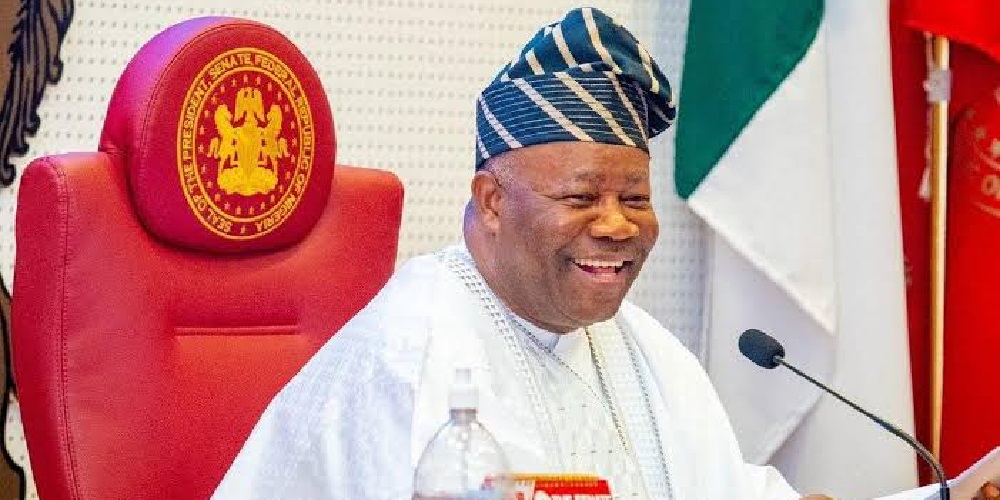
President of the Senate, Godswill Akpabio, has described the late Elderstatesman and former National Chairman of the Peoples Democratic Party(PDP) Alhaji Bamanga Tukur, as a detribalised Nigerian whose contributions to the country transcended ethnic and political boundaries.
Akpabio, who arrived Nigeria from Italy yesterday, stated this while on a condolence visit to the family of the late former governor of the defunct Gongola State on Tuesday. He described the late Tukur as “a detribalised Nigerian, great patriot and towering national figure whose contributions to the country transcended ethnic and political boundaries.”
A statement by his Special Assistant on Media, Jackson Udom, disclosed how Akpabio recalled his personal relationship with the late elder statesman, noting that Tukur had, among other engagements, chaired an event he attended in London in 2009.
“The late Tukur left behind a legacy of love, wisdom and service to the nation and would continue to serve as an example to younger politicians and Nigerians.”
He expressed regret that Tukur was no longer alive to continue sharing his wealth of experience and wisdom, adding that his contributions to national development would remain memorable.
Akpabio also disclosed that the National Assembly would honour the late elder statesman on the floor of the Senate when it resumes, while urging Tukur’s children to continue in their father’s footsteps and uphold the values for which he was known.
Responding on behalf of the family, one of the deceased’s sons, Mahmoud Tukur, thanked the President of the Senate, his wife, Mrs Unoma Akpabio and his entourage for the condolence visit.
Mahmoud also expressed appreciation to President Bola Tinubu and Nigerians for honouring and remembering his father, who died at the age of 90 on Saturday, September 12, 2026.

2027: Rainbow Coalition Signals Fresh Political Realignment in Nigeria — Sokoto PDP Guber Candidate

Niger Miners’ Deaths: ‘Anyone Who Tampers With Evidence Will Face Full Wrath of Law’ — Tunji-Ojo
Akpabio pays condolence visit to Bamanga Tukur family says he was a detribalised Nigerian(Photos)



-
 News21 hours ago
2027: Wike Reveals Why APC Governors Are Opposing Rainbow Coalition
-
News22 hours ago
FCT minister Wike’s words on marble
-
 News13 hours ago
Christian candidates will punish Nigerian Muslims if elected in 2027 elections: APC Lawmaker Ibrahim Shittu
-
 News12 hours ago
Nigeria signs acquisition agreement for 12 Viper Attack helicopters from U.S
-

 Sports13 hours ago
Mohammed Salah Fined, Banned In UK From Driving For Six Months Over Speeding Case
-
 News12 hours ago
Alleged Forgery: Court Releases International Passport Of Ex-Minister Nnaji
Warning: Undefined variable $user_ID in /home/naijuinz/public_html/wp-content/themes/zox-news/comments.php on line 49
You must be logged in to post a comment Login