
News
MTN, Others Threaten To Suspend Services


- /home/naijuinz/public_html/wp-content/plugins/mvp-social-buttons/mvp-social-buttons.php on line 27
https://naijablitznews.com/wp-content/uploads/2024/10/MTN-Nigeria-600x381-1.jpg&description=MTN, Others Threaten To Suspend Services', 'pinterestShare', 'width=750,height=350'); return false;" title="Pin This Post">
- Share
- Tweet /home/naijuinz/public_html/wp-content/plugins/mvp-social-buttons/mvp-social-buttons.php on line 72
https://naijablitznews.com/wp-content/uploads/2024/10/MTN-Nigeria-600x381-1.jpg&description=MTN, Others Threaten To Suspend Services', 'pinterestShare', 'width=750,height=350'); return false;" title="Pin This Post">


If the Central Bank of Nigeria (CBN) and the Nigerian Communications Commission (NCC) fail to address the unsustainable debt of about N250 billion owed mobile network operators (MNOs) as a result of the use of the Unstructured Supplementary Service Data (USSD), the operators might, subject to regulatory approval, suspend supporting the use of the service on the network for banking operations.
USSD is a Global System for Mobile Communications (GSM) protocol that is used to send text messages. It is used for initiating financial transactions such as cash transfer, balance inquiry, payment for services and others.
Fielding questions yesterday from Fellows of the Media Innovation Programme (MIP) sponsored by MTN Nigeria and in partnership with Pan Atlantic University, Ibeju-Lekki, Lagos, who were on inspection of MTN’s key facilities in the city, CEO of MTN, Karl Toriola, said the debt has continued to pile up and is becoming unsustainable to the operators.
Toriola who expressed optimism that the new CBN governor, Yemi Cardoso and the Executive Vice Chairman, NCC, Dr Aminu Maida would resolve the impasse very soon, said if it is not resolved, the operators would be compelled to seek regulatory approval to discontinue allowing commercial banks to run transactions on the platform.
Toriola warned of the dire consequences of government’s refusal to accede to telcos’ demands for tariff adjustment to reflect the realities of the economy, saying the telecom sector is lying critically ill at the intensive care unit (ICU) and may just die if the appropriate therapy is not applied to it.
“MTN and the entire industry are in a dire situation. MTN is loss making because of naira devaluation. The fundamentals need to change. Tariffs have to be changed,” he said, adding that inflation has continued to go up, affecting the prices of commodities, including foodstuffs and services.
He said the complete deregulation of the downstream oil sector has seen the pump price of petrol rise to over N1000 in the country. Similarly, electricity tariff has kissed the skies with the removal of electricity subsidy and the grouping of customers into bands by the power distribution companies (DisCos).
“There should be no delusion, if the tariff doesn’t go up we will shut down,” he warned.
The base transceiver stations (BTS) of the MNOs are powered by diesel and gas in the absence of dependable power supply from the national grid which has been suffering from epilepsy.
Toriola said the company used to be one of the highest payers of corporate income tax to the Federal Inland Revenue Service (FIRS), adding however that it has gone down to zero since the company has stopped making profit.
The MTN CEO said the company has been surviving because it is spending its savings, saying the industry is living on borrowed times. “We must return the industry to profitability,” he said.
He said despite the challenges the industry is facing now, it has transformed the country as it has been enabler to other sectors. Toriola warned that the industry should not be allowed to toe the ignoble path of NITEL.
He said the Global System for Mobile Communications Association (GSMA), a non-profit industry organisation that represents the interests of MNOs globally and hardly speaks to tariff issues, has called for tariff adjustment for sustainability.
Amiloadednews
The Federal Government has endorsed 33 new universities across Nigeria, increasing the total number of universities in the country to 309.
The approvals include seven federal universities, six state-owned universities and 20 private universities.
The seven new federal universities are the Federal University of Environment and Technology, Tai, Rivers State; Federal University of Applied Sciences, Kachia, Kaduna State; Tai Solarin Federal University of Education, Ijagun, Ogun State; Federal University of Agriculture and Developmental Studies, Iragbiji, Osun State; Federal University of Technology and Environmental Studies, Iyin-Ekiti, Ekiti State; Federal University of Agriculture and Technology, Okeho, Oyo State; and the Federal University of Health Science and Technology, Tsafe, Zamfara State.
The six new state universities are Abdulsalam Abubakar University of Agriculture and Climate Action, Mokwa, Niger State; Ebonyi State University of ICT, Science and Technology, Oferekpe, Ebonyi State; University of Aeronautics and Aerospace Engineering, Ezza, Ebonyi State; Benue State University of Agriculture, Science and Technology, Ihugh; Cross River University of Education and Entrepreneurship, Akamkpa, Cross River State; and the University of Innovation, Science and Technology, Omuma, Imo State.
The approvals also include 20 private universities.
Among them are Omega University in Delta State, Regnum Medical University in Lagos State, Transatlantic University of Medicine and Health Sciences in Anambra State, City University in Ogun State, University of Fortune in Ondo State, Eranova University in the Federal Capital Territory, Minaret University in Osun State, Abdulrasaq Abubakar Toyin University in Kwara State, Southern Atlantic University in Akwa Ibom State, Lens University in Kwara State, Monarch University in Ogun State, Tonnie Iredia University of Communication in Edo State, Isaac Balami University of Aeronautics and Management in Lagos State, Kevin Eze University in Enugu State, Bridget University in Imo State, Leadership University in Abuja, Jimoh Babalola University in Kwara State, Greenland University, JEFAP University in Niger State, Azione Verde University in Imo State and Unique Open University in Lagos State.
Disturbed by the manner Ministries, Departments and Agencies of Government, MDAs flagrantly spend money without adequately aligning with Revised Bottom-Up-Cash Management Policy Framework, to this end, the Federal Government welded the big stick by barring MDAs from awarding contracts without warrants.
Ministry of Finance in a circular has ordered that due process must be followed or heavy sanctions awaits such government bodies.
In a circular signed by the Minister of Finance, Taiwo Oyedele in a sighted by this medium, it was expressly stated that :”The revision of this policy will further ensure that MDAs comply with statutory and regulatory provisions governing public financial management”.
In the memo it was also stated that “It should be noted that Accounting Officers who contravene this policy shall be personally liable for any resultant commitments, in accordance with the provisions of • Financial Regulation 310 (Personal Responsibility for Expenditure • Public Service Rules 030402 (Serious Misconduct • Fiscal Responsibility Act Section 48 (Offences and Penalties – Independent Corrupt Practices and Other Related Offences Act (ICPC Section 22 Sub-sections 4.
Under the new framework, no MDA is permitted to issue letters of award, sign contracts or enter into financial obligations unless the corresponding Warrant or Authority to Incur Expenditure covering the full or committed portion of the contract sum has been duly released by the Honourable Minister of Finance and Coordinating Minister of the Economy to the Accountant General of the Federation.
The circular also makes it clear that budgetary allocations alone do not constitute legal authority to spend public funds.
According to the directive, “Estimates in the Appropriation Act or budgetary provisions do not confer automatic spending authority. Only duly released Warrants/AIE issued by the Honourable Minister of Finance and Coordinating Minister of the Economy in line with Financial Regulation 301 confer legal authority to incur expenditure.”
The policy cites Financial Regulation 415, Section 22 of the Fiscal Responsibility Act, 2007, Section 16(1)(b) of the Public Procurement Act, 2007 and relevant provisions of the Independent Corrupt Practices and Other Related Offences Act as the legal basis for the revised framework.
Government said the new measures are designed to align financial commitments with actual funds availability, strengthen expenditure controls and halt the growing accumulation of unfunded contractual liabilities arising from contracts awarded without the necessary financial backing.
The circular also introduces changes to the cash management process by abolishing the requirement for MDAs to submit monthly cash needs before the issuance of Warrants. Instead, Warrants will be issued based on approved budget implementation priorities and available Capital Development Fund balances.
In addition, all MDAs are required to prepare quarterly cash plans in line with their ministerial priorities and procurement plans for submission to the Office of the Accountant General of the Federation to improve cash flow forecasting and budget execution.
The Federal Government warned that Accounting Officers who disregard the directive would bear personal responsibility for any commitments arising from contracts awarded in violation of the policy.
It stated that such officers would be held liable in accordance with the Financial Regulations, the Public Service Rules, the Fiscal Responsibility Act and other applicable laws governing public financial management.
The directive takes immediate effect and supersedes all previous instructions inconsistent with the revised framework. It also provides that all 2026 capital projects across Federal Ministries, Departments and Agencies shall be implemented in accordance with the new policy.
The government directed all Accounting Officers, Directors and Heads of Finance and Accounts, as well as Internal Audit Departments and Units across MDAs and other arms of government, to ensure strict compliance with the circular.
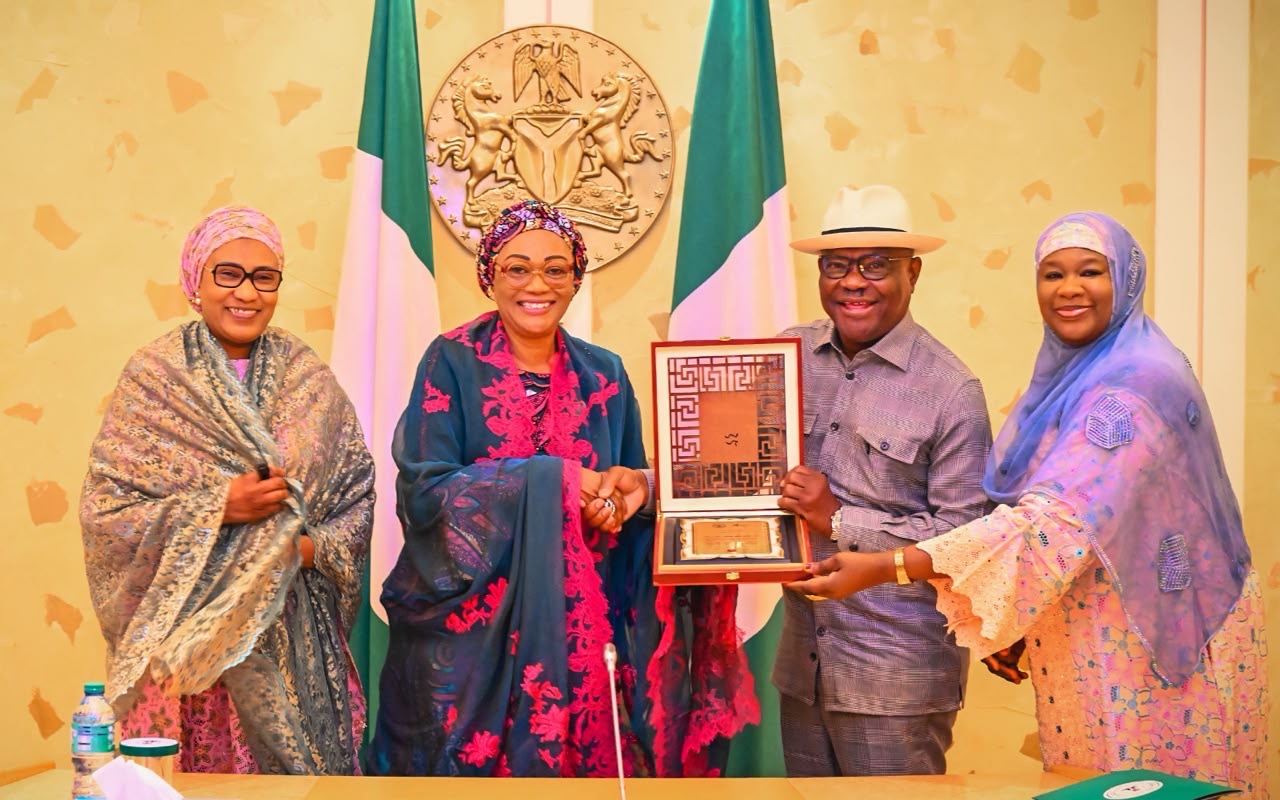
…Commends Wike’s Green Transformation of Abuja, Urges States to Engage Youth in Environmental Protection
First Lady of Nigeria, Senator Oluremi Tinubu has commended the Minister of the Federal Capital Territory (FCT), Nyesom Wike, for transforming Abuja’s City Gate into a major recreational and environmental landmark.
She was speaking during a ceremony to honour the FCT Administration for its environmental efforts which she said is in line with the just concluded category of the ongoing Green Nigeria Challenge of the Renewed Hope Initiative.
Senator Oluremi Tinubu said she was impressed by the transformation of the City Gate, describing it as “unbelievable.”
She stated that despite a ₦50 million prize set aside under the Green Challenge to encourage states to reclaim abandoned spaces and dumpsites, no state entered for that category of the competition.
“It was a ₦50 million prize money and they didn’t enter. This was supposed to get our youth involved,” she said.
The First Lady explained that the initiative was designed to encourage states to convert neglected public spaces into clean and attractive environments.
“The transformation reflects the vision behind the just concluded Community Category of the Challenge which was designed to encourage youth groups to transform degraded public spaces, including dumpsites and abandoned areas, into green parks, gardens and other eco-friendly spaces. Our goal is to compliment government’s effort in beautifying our environment and promoting healthier communities towards improving the quality of life of our people.”
“The remodeled Abuja City Gate is an excellent example of what abandoned public areas can become: a transformed key national landmark that warmly welcomes all Nigerians and visitors to our nation’s capital.”
“When I saw what he did with the City Gate, my God, unbelievable, unbelievable. I want to thank him. He’s done very well.”
“This was to turn around abandoned spaces, dumpsites, and we see a lot of it around the states.”
Senator Oluremi Tinubu also appealed to Wives of State Governors to mobilise the youth to participate in environmental clubs and sustainability initiatives in schools and tertiary institutions.
“I’m using this opportunity to appeal to our First Ladies: Get our young children into the environmental clubs and environmental societies for our youth in tertiary institutions.”
“I remember when I was in the College of Education, I was a member of the Youth Environmental Programme for West Africa. We travelled from Nigeria throughout West Africa by road. It was a memorable experience for us.”
According to the First Lady Senator Oluremi Tinubu, young people must be encouraged to contribute to national development through environmental stewardship.
“We have to engage our young people and make sure that they can help build. Everybody has something to contribute to this country. It’s a great country and that’s why we are doing all we can.”
In his remarks, the FCT Minister, Nyesom Wike revealed that the First Lady personally inspired the transformation of Abuja’s City Gate.
“The First Lady has to be commended for the FCT keying into the Renewed Hope Green Initiative because she has always said we have to change our environment and create opportunities where people can gather and relax.”

List: FG endorses 33 more universities
FG bars MDAs from awarding contracts without warrants

Posterity will judge you well for devt of FCT -First Lady Remi Tinubu




-
 News11 hours ago
Atiku, Obasanjo face-off may not stop until one finally dies– Shehu Sani
-

 News11 hours ago
Kidnapped Kebbi Judge Faruku Bunza finally goes home after relaxing in abductors ‘paradise’ for one week
-

 Metro18 hours ago
Gunmen abduct Catholic seminarian, six others in Enugu
-

 News11 hours ago
Tehran Denies Negotiating With US After Trump Announces Talks
-

 Economy18 hours ago
Dangote commits $800m to double Itori cement capacity
-

 Economy18 hours ago
Mobile market rebounds to highest level since 2024 – NCC
-

 News18 hours ago
State Police: Sharia council warns FG against rushed constitutional amendment
-

 Economy11 hours ago
See Dollar to Naira exchange rate today, August 3, 2026
Warning: Undefined variable $user_ID in /home/naijuinz/public_html/wp-content/themes/zox-news/comments.php on line 49
You must be logged in to post a comment Login