
News
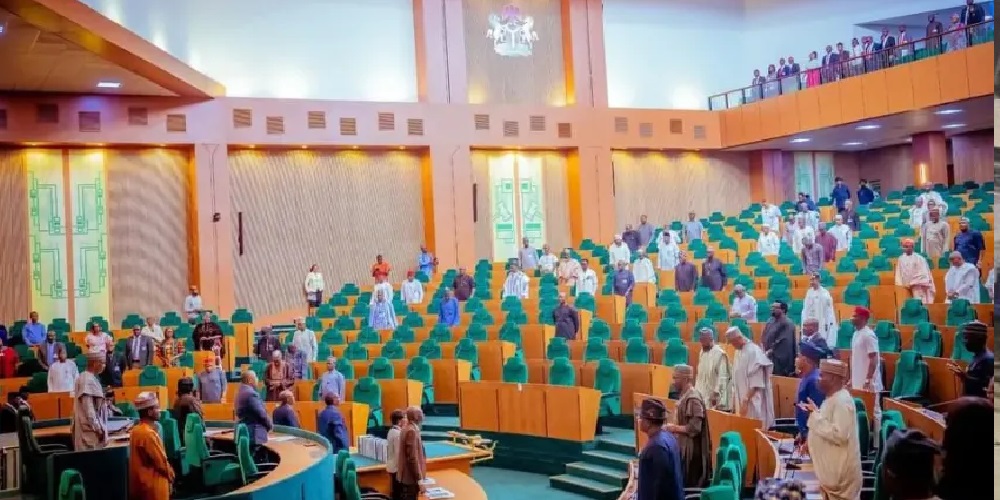
Stakeholders Reject Establishment Of Nigerian Marine Corps



News
BREAKING: Body of UNIZIK Pupil Swept Away by Awka Flood Recovered, Viral ‘Found Alive’ Claim Debunked


The body of Success Ezenwafor, a pupil of Nnamdi Azikiwe University (UNIZIK) Primary School in Awka, Anambra State, who was swept away by floodwaters, has been recovered, authorities and multiple Nigerian news outlets have reported.
The development came on Wednesday, September 23, a day after the child went missing when a vehicle carrying schoolchildren was overwhelmed by floodwaters along the Awka–Nibo–Nise–Enugwu-Ukwu Ring Road, also known as the Nibo–Isiagu Road.
The incident occurred on Tuesday morning, September 22, following hours of heavy rainfall that triggered flash flooding across parts of Awka. Videos from the scene showed vehicles trapped in rapidly rising water and schoolchildren attempting to escape.
According to the Anambra State Police Command, Safe School Operatives, working alongside local residents, rescued seven schoolchildren and two adults from the affected area. The survivors were taken to hospital for medical attention.
Success, however, remained missing after the rescue operation.
A family member later described the pupil as courageous, saying he reportedly broke a window of the vehicle, creating an escape route that enabled some of the other occupants to get out. Success himself was subsequently swept away by the floodwaters.
Viral ‘Found Alive’ Report Sparks False Hope
On Wednesday, social media users began widely circulating a claim that Success had been found alive beneath debris.
A post shared on X claimed that the boy had been rescued alive from under a large pile of debris and vegetation.
The post was accompanied by emotional video footage showing rescuers pulling a child from beneath rubble, prompting widespread celebration and relief online.
However, reports subsequently indicated that the viral video was unrelated to the Awka flood incident.
The footage reportedly showed another child who survived a separate incident involving a building collapse in Awgu, Enugu State.
The conflicting reports generated confusion among members of the public who had been following the search for Success.
Authorities Confirm Recovery of Body.
The Awka South Local Government chairman, Prince Chinedu Okafor, has since confirmed that Success’s body was recovered.
Okafor reportedly made the confirmation while at Amaku Teaching Hospital, where the rescued children were receiving treatment. TheCable and Independent Newspaper Nigeria also reported the recovery, citing the local government chairman and other sources.
TheCable reported that the boy’s body was recovered during the search operation, while the other children remained in stable condition and were receiving medical care.
The recovery brings an end to the search for the young pupil, but also turns what many had hoped would be a miraculous rescue into a tragic loss for his family and community.
Flooding Raises Fresh Safety Concerns in Anambra
The tragedy has renewed concerns about the dangers posed by flash floods in Anambra, particularly along roads used by schoolchildren, motorists and other commuters.
The Anambra State Government said emergency agencies, including the State Emergency Management Agency (SEMA), the National Emergency Management Agency (NEMA) and the state fire service, mobilised after the school bus became trapped in the flood.
Following the latest flooding incidents, residents have also been urged to avoid crossing flooded roads and waterways and to move to safer areas whenever conditions become dangerous.
For the Ezenwafor family, the recovery of Success’s body ends a desperate search that began after he left for school on Tuesday morning.
The incident has also highlighted the potentially fatal speed and force of flash floods, particularly when vehicles become trapped on flooded roads.
As of the latest reports on Wednesday, September 23, authorities have confirmed the recovery of Success Ezenwafor’s body. The viral claim that he was found alive under debris does not appear to relate to the Awka incident.
Independent


PETROAN said it summoned an emergency meeting with its National Executive Council after the NMDPRA raised the fuel under-dispensing issue.
The Petroleum Products Retail Outlets Association of Nigeria (PETROAN) has directed its members nationwide to immediately inspect their dispensing meters following concerns raised by the Nigerian Midstream and Downstream Petroleum Regulatory Authority (NMDPRA) over under-dispensing of petroleum products at retail outlets.
PETROAN National President, Billy Gillis-Harry, disclosed this on Wednesday during an interview on Channels Television’s The Morning Brief programme.
He said the association summoned an emergency meeting with its National Executive Council on Tuesday after the NMDPRA raised the issue, with the meeting lasting until about 10 pm.
“PETRON circulated a message around the country, calling our members to check their meters as quickly as possible,” Gillis-Harry said.
He added that several members had already begun inspecting their equipment, stressing that faulty meters could result in either under-dispensing or over-dispensing.
“Equipment can be faulty over time because of usage,” he said, recalling that he had previously lost money in his own retail business because a faulty meter was dispensing more fuel than customers paid for.
Gillis-Harry assured motorists that PETROAN members would continue to ensure that customers receive the quantity of fuel displayed on the pump.
“But I can tell you that PETRON members will, at all times, insist on making sure that they sell their products one litre for one litre,” he said.
The PETROAN President also urged motorists to pay attention to the quantity displayed on dispensing meters while buying fuel and to request receipts for their purchases.
He explained that customers should know the capacity of their vehicle’s fuel tank and compare it with the quantity displayed on the dispenser.
“Oftentimes, we educate our staff to call the attention of the patron to check the meter while it is being dispensed. And also to get the customer to check after the product has been dispensed,” he said.
According to him, PETROAN also works with the Weights and Measures Division of the Ministry of Industry, Trade and Investment and the NMDPRA to ensure that dispensing meters remain functional and accurate.
“PETRON consistently works with the Weights and Measures Division of the Ministry of Trade and Investment, and also the NMDPRA. These are the two regulatory authorities that ensure that our meters are functional. And they are up to date and accurate,” he said.
The NMDPRA has warned filling station operators against under-dispensing petroleum products, with outlets found short-changing consumers liable to sanctions, including the revocation of their operating licences.
Gillis-Harry said PETROAN had taken the regulator’s concerns seriously and had begun working with its members to address any possible faults.
“But we took what the NMDPRA called our attention to yesterday very seriously. And we already started working on that,” he said.
Channels
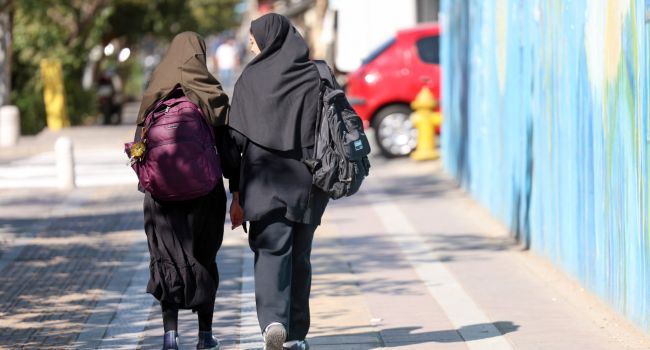
TEHRAN — Millions of Iranian children returned to classrooms on Wednesday as schools across the country reopened after months of disruption linked to the war and security situation in the region.
Parents accompanied their children to school, with girls arriving in uniforms and mandatory headscarves, as the new academic year began in Tehran and other parts of Iran.
The reopening follows months of uncertainty after classes were suspended following the outbreak of the conflict on February 28. One of the deadliest incidents occurred in the southern city of Minab, where a school was struck during the conflict, killing dozens of people, including children.
Iranian officials said the tragedy had cast a shadow over preparations for the new school year, with authorities taking steps to mark the return of students while remembering those killed.
In Minab on Wednesday, Iran’s Vice President for Science and Technology, Hossein Afshin, rang the school bell at a primary school to officially signal the start of the new academic term.
The traditional bell-ringing ceremony is normally associated with the president and forms part of nationwide celebrations welcoming approximately 16.5 million Iranian children back to school.
A separate ceremony featuring President Masoud Pezeshkian was held two days earlier this year, before the Iranian leader travelled to New York to attend the United Nations General Assembly.
The reopening represents a return to normal educational activities after months in which the conflict disrupted daily life and forced schools to close in affected areas.
For many families, however, the first day back to school carries mixed emotions, coming after a period marked by military attacks, deaths and widespread disruption.
The government has sought to maintain the annual school-opening tradition despite the difficult circumstances, while officials have continued to commemorate victims of the conflict.
The new academic year will now see millions of Iranian students resume lessons as authorities attempt to restore regular schooling following the prolonged disruption.

BREAKING: Body of UNIZIK Pupil Swept Away by Awka Flood Recovered, Viral ‘Found Alive’ Claim Debunked

Fuel Under-Dispensing: PETROAN Orders Members To ‘Check’ Meters Nationwide

Kwankwaso Blames Tinubu’s Fuel Subsidy Removal for Nigeria’s Economic Crisis





-

 Economy17 hours ago
Dangote To Support Two Million Women With Refinery IPO Share Ownership – Aliko Dangote
-

 News17 hours ago
Primate Ayodele Blasts Bishops Again! Dismisses Their Defense, Insists Their Endorsement of Tinubu Is Selfish Not Spiritual
-

 News16 hours ago
Osun assembly endorses state police
-

 Metro16 hours ago
Enugu: Man ‘kills’ girlfriend over HIV argument
-

 News17 hours ago
Ex-LASU VC: Public varsities must charge N1m tuition per student to sustain financial independence
-

 Sports17 hours ago
Sadio Mane Builds $20.4m Mango Processing Plant In Hometown
Warning: Undefined variable $user_ID in /home/naijuinz/public_html/wp-content/themes/zox-news/comments.php on line 49
You must be logged in to post a comment Login