Connect with us

News

HoR to Prioritize Technical Education, Digital Learning for National Development – Speaker Abbas

Published

on

ADVERTISEMENT
Zoom Ad
ADVERTISEMENT
Zoom Ad
By Gloria Ikibah
Speaker of the House of Representatives, Rep. Tajudeen Abbas, has reaffirmed the commitment of the 10th House to enacting laws that will advance technical education and foster digital learning across the country.
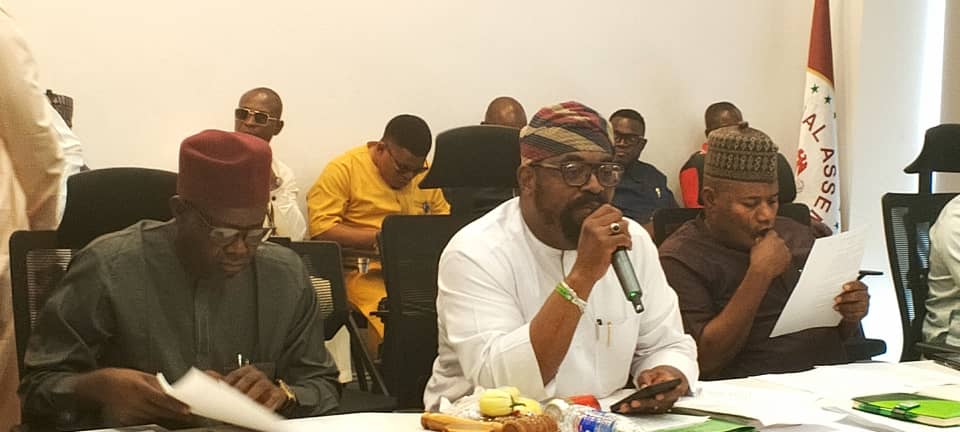
Speaker Abbas who stated this during a public hearing organized by the House Committee on Federal Polytechnics and Higher Technical Education, emphasized the importance of vocational and technical education in addressing Nigeria’s industrial and economic needs.
Naijablitznews.com reports that the hearing focused on four bills aimed at establishing key institutions which include: the National Vocational Centre; Federal Artificial Intelligence Institute in Aliade, Benue State; Federal College of Science and Technology in Askira-Uba, Borno State; and National Institute for Technical and Vocational Education in Wamba, Nasarawa State.
The Speaker who was represented by Rep. Auwalu Gwalabe, noted that polytechnic education remains crucial for Nigeria’s industrial growth.
He stated, “We must strengthen collaboration between the government and stakeholders to ensure these initiatives succeed”.
He highlighted the growing global recognition of the role of science, technical, and vocational education in national development, stressing that theoretical knowledge alone is no longer sufficient.
The Speaker described the public hearing as a demonstration of the House’s commitment to reforming and modernizing the educational sector.
“With the emergence of new technologies such as artificial intelligence, our youth must be equipped with practical skills to thrive in an ever-evolving, technology-driven job market.
“Reforming science and technical education is critical to promoting skills acquisition and empowering our youth to contribute meaningfully to Nigeria’s economic growth and development,” he said.
He also linked functional education to addressing insecurity, arguing that gainfully engaging youths through skills acquisition is essential for national stability.
“The eventual establishment of these proposed institutions will provide access to quality technical education, address the skills gap, promote innovation, and support government efforts to diversify the economy,” Abbas explained.
He therefore assured Nigerians that the proposed institutions would bridge the gap between education and employment while meeting global standards and addressing local needs.
“These initiatives represent a commitment to our nation’s future, where education drives economic growth, social mobility, and national development,” Abbas added.
Chairman of the Committee, Rep. Fuad Kayode Laguda, reinforced the importance of the bills, describing them as a step toward sustainable human capital development and economic empowerment.
He called for active participation from stakeholders to ensure the proposed laws effectively address Nigeria’s economic challenges.
“The passage of these bills will not only empower the workforce technologically but will also address unemployment, poverty reduction, and youth restiveness while promoting industrialization,”* Laguda said.
“We need purposeful deliberations and positive inputs to enrich these bills and ensure their success,” he stated.
The proposed institutions, when established, are expected to transform technical education and equip Nigerian youths with the skills necessary to drive economic development and secure a prosperous future for the country.

Continue Reading
Advertisement
Click to comment

Warning: Undefined variable $user_ID in /home/naijuinz/public_html/wp-content/themes/zox-news/comments.php on line 49

You must be logged in to post a comment Login

Leave a Reply

News

Abbas hails Team Nigeria for sterling outing at Commonwealth Games

Published

on

ADVERTISEMENT
Zoom Ad
ADVERTISEMENT
Zoom Ad

By Kayode Sanni-Arewa

The Speaker of the House of Representatives Hon. Abbas Tajudeen, has hailed Team Nigeria on their sterling performance at the Commonwealth Games in Glasgow, Scotland, saying the national contingent made their country proud at the sports tournament.

Speaker Abbas, in a statement issued by his Special Adviser on Media and Publicity, Musa Abdullahi Krishi, commended the Nigerian athletes for their patriotism and commitment to their country, noting that they were strongly determined to keep Nigeria on the map of sports excellence.

While noting that trophies and medals only symbolise performance ratings, the Speaker noted that it is discipline, resilience, and determination that make victory a reality. These, he stated, have earned Nigeria 24 medals—10 gold, 7 silver, and 7 bronze—at the latest edition of the Commonwealth Games.

Advertisement

Describing Team Nigeria as the country’s “global sports ambassadors,” Speaker Abbas thanked the Nigeria Olympic Committee and the National Sports Commission for creating the logistics and support needed for the athletes to win medals.

The Speaker urged Nigerians, especially the youth, to draw inspiration from Team Nigeria, especially regarding discipline and excellence in any field they find themselves in. He urged all to remain patriotic citizens and good ambassadors of Nigeria across the world.

Continue Reading

News

Aviation Agencies, Airlines Clash Over 5% Levy as Minister Misses Reps Hearing

Published

on

ADVERTISEMENT
Zoom Ad
ADVERTISEMENT
Zoom Ad

By Gloria Ikibah

Sharp divisions emerged within Nigeria’s aviation industry on Thursday as regulators, service providers, airline operators and aviation training8 institutions advanced conflicting proposals on how the statutory five per cent Ticket Sales Charge (TSC) should be shared during a public hearing organised by the House of Representatives Committee on Aviation.

The hearing, which focused on proposed amendments to the Civil Aviation Act, 2022 and the Nigerian Airspace Management Agency (NAMA) Act, brought together major stakeholders seeking changes to the current revenue allocation formula.

Noticeably absent was the Minister of Aviation and Aerospace Development, Festus Keyamo, despite the significance of the proposed amendments to agencies under his supervision.

Advertisement

Although stakeholders agreed that the aviation sector requires stronger and more sustainable funding, there was little consensus on how the existing revenue should be distributed.

However, the Nigerian Civil Aviation Authority (NCAA) opposed any reduction in its allocation, insisting that the regulator depends heavily on the Ticket Sales Charge to discharge its statutory oversight responsibilities.

Director-General of Civil Aviation, Capt. Chris Najomo, argued that while the NCAA supports improved funding for all aviation agencies, any review of the revenue-sharing formula must comply with International Civil Aviation Organisation (ICAO) standards.

According to him, unlike NAMA, which generates significant income from commercial air navigation services, the NCAA relies substantially on the statutory levy to perform its regulatory functions.

Advertisement

“We submit that NCAA’s allocation of the five per cent Ticket Sales Charge be restored to 65 per cent to overcome the deficiencies identified by ICAO at its last audit and bring Nigeria in line with global best funding practices,” Najomo said.

He stressed that aviation safety depends on more than legislation.

“Aviation safety is not sustained by legislation alone. It depends upon competent inspectors, effective surveillance, continuous certification, recurrent technical training, international cooperation and an independent regulator possessing the financial capacity to discharge its statutory mandate,” he added.

Domestic airline operators, however, maintained that the issue goes beyond simply redistributing the existing revenue.

Advertisement

Speaking on behalf of the Airline Operators of Nigeria (AON), former NAMA Managing Director and aviation expert, Capt. Roland Iyayi, described the current funding structure as outdated and burdensome to operators.

“The five per cent service charge has outlived its usefulness. It has created a burden on domestic airlines,” Iyayi said.

He disclosed that the association had already submitted a comprehensive proposal advocating broader institutional reforms across the aviation sector rather than merely adjusting the current sharing formula.

According to him, airlines are struggling with escalating operational costs, particularly aviation fuel, which now accounts for nearly 40 per cent of operating expenses.

Advertisement

He explained that many operators now find it increasingly difficult to remit the statutory levy because much of their ticket revenue is consumed by fuel costs.

While backing NAMA’s request for a larger share of the existing pool, the airline operators proposed replacing the percentage-based levy with a unit charge system similar to the Passenger Service Charge collected by the Federal Airports Authority of Nigeria (FAAN).

Iyayi also proposed the establishment of an Aviation Development Fund into which all industry revenues would be paid before being transparently distributed among aviation agencies.

He further urged lawmakers to exempt aviation agencies from the Fiscal Responsibility Commission’s remittance requirements, arguing that surplus revenues should remain within the aviation sector for infrastructure development instead of being transferred to the Consolidated Revenue Fund.

Advertisement

The airline operators also recommended that revenues from obstacle clearance fees currently collected by the NCAA should be transferred to NAMA, which they said performs the technical assessments required for such approvals.

Declaring the hearing open on behalf of the Speaker of the House of Representatives, Rt. Hon. Abbas Tajudeen, Chairman of the House Committee on Aviation, Rep. Abdullahi Idris Garba, said the proposed amendments were intended to strengthen transparency, improve institutional funding and enhance safety across Nigeria’s aviation sector.

He assured stakeholders that every memorandum submitted during the hearing would receive fair and objective consideration before the committee presents its recommendations to the House of Representatives.

The committee is expected to review all submissions before deciding whether to amend the contentious revenue-sharing formula governing the aviation industry’s five per cent Ticket Sales Charge.

Advertisement
Continue Reading

News

Just in: Court sacks top APC candidate from contesting 2027 election

Published

on

ADVERTISEMENT
Zoom Ad
ADVERTISEMENT
Zoom Ad

By Kayode Sanni-Arewa

A Federal High Court in Abuja has removed Timehin Adeleye as the All Progressives Congress (APC) candidate for the Owo/Ose Federal Constituency House of Representatives election in Ondo State ahead of the 2027 general election.

The court ruled that Abdugani Arobo is the rightful APC candidate after finding that he won the party’s primary election.

The judgment was delivered on Wednesday by Justice Peter Lifu following a suit filed by Arobo against the APC and the Independent National Electoral Commission (INEC). Arobo challenged the party’s decision to submit Adeleye’s name as its candidate.

Advertisement

Although the APC National Working Committee forwarded Adeleye’s name to INEC, the decision was opposed by some party members and leaders in Ondo State, prompting Arobo to take the matter to court.

In its judgment, the court held that the APC did not make a lawful return from the primary election and said the evidence presented by the party contained contradictions.

Justice Lifu ruled that Arobo won the APC primary election held on May 16, 2026, after securing the highest lawful votes.

Advertisement
Continue Reading

Trending

Copyright © 2024 Naija Blitz News