Connect with us

News

Stakeholders Reject Establishment Of Nigerian Marine Corps

Published

on

ADVERTISEMENT
Zoom Ad
ADVERTISEMENT
Zoom Ad
By Gloria Ikibah
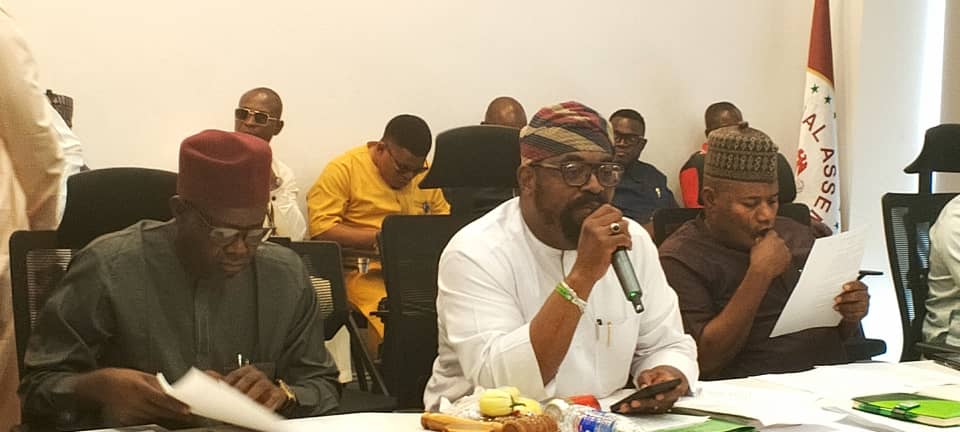
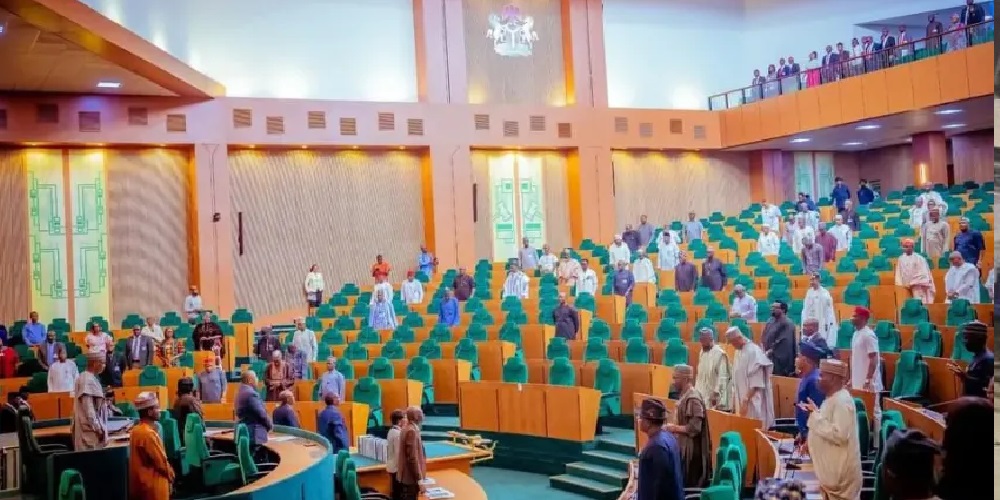
Stakeholders have rejected the establishment of Nigerian Marine Corps at
a public hearing organised by the House of Representatives Committee on Navy, Monday in Abuja.
Lawmakers, Nigerian Navy, Nigerian Maritime Administration and Safety Agency (NIMASA), Nigerian Shippers Council and several Civil Society Organisations (CSOs), all spoke against a Bill for an Act to establish Nigerian Marine Corps.
The Bill, which seeks to promote maritime security and enhance the safety of the blue economy of Nigeria, titled “A Bill for an Act to Establish Nigerian Marine Corps to Promote Maritime Security (HB 225)”, was sponsored by Rep. Alex Egbona (Cross River), passed second reading on the floor of the House on Thursday, 30th November, 2023, and was referred to the House Committee on Navy for a public hearing.
Speaking against the Bill Rep. Philip Agbese, Member representing Ado/Okpokwu/Ogbadibo Federal Constituency, said the Bill proposes to create a new federal body tasked with maritime law enforcement and defense responsibilities traditionally managed by the Nigerian Navy and other existing agencies, such as NIMASA, and would amount to duplication of functions, if allowed to scale through.
Agbese who spoke on behalf of 66 other Members emphasised that, it was their duty to critically examine proposed legislation with a view to ensure its aligns with the best interests of the nation and to avoid the creation of unnecessary or duplicative structures within government agencies.
“Acting under the mandate to promote efficient governance and resource management, we hereby call for the total and complete rejection of the bill proposing the establishment of the Nigerian Marine Corps.
“It is our contention as Members of this legislative body that the creation of this new entity would only result in significant overlap, redundancy, and logistical strain, creating operational inefficiencies and imposing unwarranted financial demands on the government.
“The proposed Act outlines the creation of a maritime enforcement agency charged with enforcing or assisting in the enforcement of federal laws on, under, and over Nigeria’s high seas and other waterways, Exclusive Economic Zone (EEZ) and required to maintain a state of readiness to function as a specialized service within the Nigerian Navy in times of war. This proposed body raises multiple operational, economic, and strategic concerns particularly in the areas of jurisdictional conflicts, wartime readiness, legal authority, and environmental management.
“We have thoroughly examined this bill and its objectives and we assert that the establishment of a Nigerian Marine Corps is both redundant and counterproductive, given the existing roles, mandates, and capacities of the Nigerian Navy and other maritime agencies.
“We therefore firmly and unequivocally call for the total defeat of the bill and a recommendation for its immediate withdrawal, while highlighting the compelling need to prioritize efficiency, fiscal responsibility, and coherent maritime governance”.
Representing of the Nigeria  Police Force, SP Nandom Vongjen, Staff Officer Marine Section, described the Bill as ill-advised, and stressed that it does not only lead to duplication of duties, which a section of the Force is currently undertaking, but it would result to proliferation of maritime security outfits and tantamount to a parallel unit of the armed forces of Nigeria.
“The proposed Nigerian Marine Corps, while well-intentioned, has the potential to create more problems than it solves. A more prudent approach would be to strengthen existing agencies and optimize their capabilities to ensure effective maritime security. By streamlining existing structures and fostering inter-agency cooperation, Nigeria can enhance its maritime security capabilities without incurring unnecessary costs or creating additional bureaucratic hurdles”, he said.
In their separate submissions, the Chief of Training & Operations of Nigerian Navy, Rear Admiral Olusegun Ferreira; Coordinator, NIMASA, Abuja Zonal Office, Mrs. Moji Jimoh and Director, Legal Services, Nigerian Shippers Council, Mr. Bala Saleh; underscored the need to strengthen the already existing agencies, rather than creating new ones which could pose more security threats to the nation.
All the Members of the Civil Society Organisations who attended the public hearing, spoke against the Bill, urging the House to kill the Bill during the third reading, describing it as unnecessary.
Earlier Chairman, Committee on Navy, Rep. Yusuf Gagdi, in his opening remarks said establishing the Nigerian Marine Corps is a strategic initiative to enhance the country’s maritime prowess, protect our waters, and foster a secure environment for trade and economic growth.
According to Rep. Gagdi the bill represents a proactive step towards safeguarding our national interests and ensuring the safety of the coastal and marine environments.
He stressed the need for collaboration and dialogue in shaping the future of the nation’s maritime safety and security.
“Establishing the Nigerian Marine Corps is not merely a legislative effort but a strategic initiative to enhance our maritime prowess, protect our waters, and foster a secure environment for trade and economic growth.
“Given Nigeria’s vast maritime resources and the increasing threats to maritime security, this bill represents a proactive step towards safeguarding our national interests and ensuring the safety of our coastal and marine environments,” he said.
Speaker Tajudeen Abbas, said the hearing represents another step in the shared commitment to the democratic process and collective resolve to advance the security, stability, and prosperity of our great nation.
He said the focus on marine intervention is firmly rooted in the legislative agenda of the 10th House of Representatives, particularly in our goals of Economic Diversification and Agricultural Development.
“Central to these goals is the exploration and sustainable development of the Blue Economy. This aligns closely with our commitment to addressing Climate Change and promoting Environmental Sustainability. Among other efforts, this includes engaging stakeholders to review the National Oceans Policy, which emphasizes the sustainable management and conservation of Nigeria’s marine and coastal resources.
“Today’s hearing, however, centres specifically on maritime security—an essential pillar for harnessing the full potential of Nigeria’s maritime sector. The proposed bill seeks to establish a Nigerian Marine Corps to safeguard national maritime and related infrastructures, protect our territorial waters and coastal lands, and enhance security mechanisms within Nigeria’s maritime domain.
“Globally, nations have recognized the importance of dedicated marine forces in securing their maritime interests. The United States Marine Corps, the Russian Naval Infantry, and the South Korean Marine Corps are prime examples. These entities provide invaluable support for amphibious operations, maritime security, and national defence. Our vision for the Nigerian Marine Corps is no different. This is not merely about creating another military branch but establishing a specialized and well-trained unit to address Nigeria’s unique maritime challenges and opportunities.
“The realities of our time demand bold action. Global peace is increasingly fragile, and Nigeria faces security challenges exacerbated by its proximity to regions of instability. As such, it is pragmatic and necessary for Nigeria to bolster its military capabilities, with a strong emphasis on naval warfare and maritime security.
“However, this is not solely a matter of defence. The Marine Corps, as envisioned in this bill, will also play a pivotal role in promoting climate and environmental sustainability. By aiding in the management and conservation of Nigeria’s coastal resources, the Corps will contribute to the broader national and global agenda of environmental stewardship,” he said.
However stakeholders at the hearing kicked against the bill.
Those who spoke on behalf of the CSOs include, Abdullahi Bilal, Spokesman for Security Analysts & Research Forum in Africa; Okwa Daniel, Executive Director, Centre for Social Justice, Equity & Transparency; Daniel Momoh Prince, National President, Nigerian Unemployed Youth Association; Igwe Ude-Umanta, Convener, Coalition of Civil Society Organisations on Economic Watch; Opialu Fabian, Executive Director, Centre for Human Rights & Advocacy in Africa Network; amongst others.
While adjourning the hearing, the Chairman, assured Nigerians that due diligence would be done in carrying out legislative actions on the Bills, saying, the Committee was an impartial body and as such, would not take sides in doing its work.

Continue Reading
Advertisement
Click to comment

Warning: Undefined variable $user_ID in /home/naijuinz/public_html/wp-content/themes/zox-news/comments.php on line 49

You must be logged in to post a comment Login

Leave a Reply

News

93 percent of inmates are State offenders, half don’t need jail — Tunji-Ojo

Published

on

By

ADVERTISEMENT
Zoom Ad
ADVERTISEMENT
Zoom Ad

Minister of Interior, Dr Olubunmi Tunji-Ojo, has disclosed that 93 percent of inmates in Nigerian custodial facilities are state offenders, with only 7 percent held for federal offences, adding that a significant proportion of these inmates do not require incarceration in the first place.

Tunji-Ojo, who spoke on Wednesday in Abuja at the Regional Conference on the Classification of Prisoners and the Use of Technology in Prisons in Africa, jointly organised by the United Nations Office on Drugs and Crime UNODC and the African Correctional Services Association ACSA, said the Federal Government had moved decisively to decongest correctional facilities by targeting inmates jailed for minor offences.

“93% of our inmates in Nigeria are state offenders. Only 7% are federal offenders. And of this 93%, I want to tell you before this president came on board, a lot of them were for minor offences that had no need for incarceration,” the minister said.

He recounted how he ordered an audit of inmates held over minor fines and compensation judgments soon after assuming office.

Advertisement

“When I became minister, I called my permanent secretary, I called the Controller General of the Correctional Service, and I said, listen, give me the data, the record of people who are in correctional centres for fines and compensation of less than 500,000 or something. And guess what? Over 4,000 people,” he said.

According to him, the exercise exposed the futility of keeping such offenders in custody at public expense. “I said, what is the sense in this? Because I feed them in a year with more than 10 times of the fine. So how is the government benefiting? And we were able to clear that, and in one day, we decongested our correctional centre by 5% in one day. In one day,” he said.

The minister said the episode underscored a broader question that correctional authorities across Africa must confront: whether their facilities are rightly overcrowded. “The question is this. Is your correctional centre rightfully overcrowded? That is the question. You have to look at those particular offences. You will realise that more than 30, 40, 50 percent are offences that do not warrant incarceration,” he said.

Tunji-Ojo also disclosed that recidivism in Nigeria’s correctional centres had fallen sharply under the current administration, from about 13,000 cases annually in 2023 to 1,000 last year, a development he attributed to expanded access to education and vocational training for inmates. He said the correctional service currently has 62 inmates pursuing postgraduate studies, 261 in undergraduate programmes, 1,125 in formal education, 18 National Open University centres domiciled in correctional facilities, and 9,582 inmates enrolled in vocational and non-formal rehabilitation programmes.

Advertisement

He said Nigeria had also gone three years without recording a single jailbreak or attack on a correctional facility, a feat he linked to improved data management and inter-agency information sharing. He cited an incident in which an escaped inmate was rearrested after attempting to obtain a Nigerian passport using biometric data linked across security agencies. “Immediately he put his finger at the level of Nigeria immigration service to procure a passport. Immigration saw it immediately that he was an inmate. And immediately they reached out to correctional service and he was arrested right there,” he said.

The Controller General of the Nigerian Correctional Service, Sylvester Ndidi Nwakuche, said Nigeria has continued to modernise its correctional system through reforms anchored on the Nigerian Correctional Service Act, 2019.

He said effective prisoner classification has become a strategic tool for identifying inmates’ risks, protecting vulnerable prisoners, deploying resources efficiently and delivering targeted rehabilitation programmes.

Nwakuche added that integrating technology into correctional administration would enhance record management, improve information sharing and strengthen institutional accountability, stressing that no single correctional service possesses all the solutions to today’s security and rehabilitation challenges. “We have a unique opportunity to exchange ideas, share practical experiences and collectively develop solutions that will strengthen correctional systems across Africa,” he said.

Advertisement
Continue Reading

News

Corruption Charges: Ex-CCT Chairman Umar gets N100m bail as trial begins Oct 29

Published

on

By

ADVERTISEMENT
Zoom Ad
ADVERTISEMENT
Zoom Ad

Six days after he was remanded in prison custody, a High Court of the Federal Capital Territory (FCT), sitting in Maitama, on Wednesday granted bail to the former chairman of the Code of Conduct Tribunal (CCT), Mr Danladi Umar, to the tune of N100 million.

The court, in a ruling delivered by Justice Peter Kekemeke, further directed the erstwhile CCT boss, who is facing a four-count corruption charge, to produce one surety in like sum.

According to the court, the surety must be an owner of a property located within the Federal Capital Territory (FCT), Abuja, who must depose to an affidavit of means.

Besides, the court ordered the defendant to surrender his international passport and not travel out of the country without permission.

Advertisement

The case was subsequently adjourned to October 29 for trial.

Umar was, on July 9, after being arraigned before the court by the Economic and Financial Crimes Commission (EFCC), remanded to Kuje prison.

The anti-graft agency said its investigations revealed that the defendant abused his official position by conferring an undue advantage on himself while he served as head of the tribunal.

He was alleged to have collected kickbacks totalling about N15.5 million from contractors.

Advertisement

The prosecution told the court that the defendant, in 2021, used his wife’s bank account to collect the sum of N5.5 million from a contractor engaged to paint the headquarters of the CCT in Abuja.

It was further alleged that on January 25, 2024, he also used his wife’s account to collect another N6 million from a contractor that handled the digitisation of the tribunal’s records.

Furthermore, the defendant was accused of directing a contractor to pay N2.43 million for his daughter’s tuition fee at Baze University, Abuja.

He was said to have committed offences punishable under Section 19 of the Corrupt Practices and Other Related Offences Act, 2000.

Advertisement

However, upon his arraignment, the embattled former CCT chairman pleaded not guilty to the allegations.

At the resumed proceedings on Wednesday, his legal team, led by Mr Sunday Edward, prayed the court to release him on bail pending the conclusion of the trial.

His bail application was anchored on Section 36(5) of the 1999 Constitution (as amended), as well as Sections 162 and 163 of the Administration of Criminal Justice Act (ACJA), 2015.

Even though the prosecution counsel, Mr Christopher Mshelia, opposed the bail request on the premise that the defendant had the capacity to influence some of the proposed witnesses, Justice Kekemeke dismissed the objection.

Advertisement

He held that nothing was adduced to establish that the defendant could interfere with an investigation that had already concluded, with all documentary evidence frontloaded before the court.

The court further set aside the prosecution’s claim that the defendant could commit another offence or evade trial.

It held that the charges contained bailable offences.

It will be recalled that the defendant, while in office as CCT Chairman, on January 23, 2019, issued a controversial ex parte order that led to the removal of a serving Chief Justice of Nigeria (CJN), Justice Walter Onnoghen.

Advertisement

Following the ex parte order, the late President Muhammadu Buhari, on January 25, swore in the next most senior jurist of the Supreme Court, Justice Tanko Muhammad, as Acting CJN.

Although Onnoghen later voluntarily resigned his position as CJN on April 4, Umar went ahead and convicted him on April 18, 2019, on the federal government’s allegation that he had failed to properly declare his assets as required by law.

He gave the federal government the go-ahead to confiscate all monies in five accounts belonging to the former CJN and also removed him as chairman of both the National Judicial Council (NJC) and the Federal Judicial Service Commission (FJSC).

In 2024, the Senate, citing alleged gross misconduct, removed Umar as chairman of the CCT.

Advertisement

President Tinubu has since appointed Mr Abdullahi Bello to head the tribunal.

Some of the counts in the charge against the former CCT chairman read:

“That you, Danladi Yakubu Umar, while serving as the Chairman of the Code of Conduct Tribunal and Chairman of the Code of Conduct Tribunal Tenders Board, on or about the 5th day of October, 2021, in Abuja, within the jurisdiction of this Honourable Court, did confer upon yourself a corrupt and unfair advantage by causing the sum of N5,500,000.00 (five million, five hundred thousand naira only) to be paid to your wife, Zulaihatu Danladi Umar, through her Keystone Bank Account No. 6031167105, by Kurchmives International Limited, a sub-contractor under the contract awarded by the Code of Conduct Tribunal to Momanaf Global Ventures Limited for internal and external painting of the headquarters of the Code of Conduct Tribunal, and thereby committed an offence contrary to Section 19 of the Corrupt Practices and Other Related Offences Act, 2000, and punishable under the same section.”

“That you, Danladi Yakubu Umar, while serving as the Chairman of the Code of Conduct Tribunal and Chairman of the Code of Conduct Tribunal Tenders Board, on or about the 25th day of January, 2024, in Abuja, within the jurisdiction of this Honourable Court, did confer upon yourself a corrupt and unfair advantage by causing the sum of N6,000,000.00 (six million naira only) to be paid to your wife, Zulaihatu Danladi Umar, through her Zenith Bank Account No. 2085458208, by Portal Realities Limited, a sister company of JTF Global Links Limited, a company which was awarded the contract for the digitalisation of the Code of Conduct Tribunal management records by the Code of Conduct Tribunal, and thereby committed an offence contrary to Section 19 of the Corrupt Practices and Other Related Offences Act, 2000, and punishable under the same section.”

Advertisement
Continue Reading

News

INEC portal submission completed before deadline, says LP

Published

on

By

ADVERTISEMENT
Zoom Ad
ADVERTISEMENT
Zoom Ad

The Labour Party has dismissed reports alleging that it failed to upload the names of its presidential and vice-presidential candidates before the Independent National Electoral Commission’s nomination portal closed, insisting that it completed the process four days ahead of the deadline.

In a statement issued in Abuja on Wednesday, National Publicity Secretary, Ken Asogwa, described the reports as “patently false and misleading” and urged its members and supporters to disregard them.

Asogwa explained that it successfully uploaded the names of all its duly nominated presidential, vice-presidential and National Assembly candidates before the July 14 deadline set by INEC.

According to him, the names of the party’s presidential and vice-presidential candidates were uploaded on July 10, in compliance with the electoral umpire’s timetable and guidelines.

Advertisement

He said, “The Labour Party wishes to categorically state that it successfully completed the upload of the names of all its duly nominated candidates for the presidential and National Assembly elections ahead of the closure of the INEC nomination portal on 14th July, 2026.

“Our attention has been drawn to media reports in certain quarters alleging that the party failed to upload the names of its presidential and vice presidential candidates before the expiration of the INEC deadline.

“This claim is patently false, misleading, and exists only in the imagination of the purveyors of that fake news.

“For the avoidance of doubt, the Labour Party successfully uploaded the names of its presidential and vice presidential candidates on 10th July, 2026, four clear days before the close of the INEC nomination window on 14th July, 2026.

Advertisement

“The process was completed seamlessly and in full compliance with the commission’s guidelines.”

The party also faulted the media report, accusing the unnamed organisation that published it of failing to verify the claim with the party’s leadership.

“It is, however, disturbing that a media organisation would publish such a weighty and misleading report without making the slightest effort to verify the information with the leadership of the Labour Party, particularly when the story was purportedly sourced from an anonymous INEC official.

“This raises legitimate questions about the professional responsibility of the media organisation concerned and whether the publication was intended to serve some ulterior political objective rather than the public interest,” he stated.

Advertisement

Asogwa, however, expressed confidence that INEC’s publication of the final list of validly nominated candidates for the 2027 general elections would settle the matter.

He urged Nigerians to ignore the report, insisting it was a deliberate attempt to discredit it ahead of the elections.

“In any event, INEC has already published its timetable for the release of the final list of validly nominated candidates for the 2027 general elections.

“Once the commission makes the publication, Nigerians will clearly see the names of all duly nominated candidates of the various political parties, including those of the Labour Party, thereby putting this baseless misinformation to rest.

Advertisement

“We, therefore, urge our teeming members, supporters and the general public to disregard the fake report in its entirety.

“Those who have become unsettled by the renewed strength, growing acceptance and increasing momentum of the Labour Party should channel their energies into preparing for the electoral contest ahead rather than resorting to crude propaganda and discredited tactics.

“This latest attempt has collapsed under the weight of the facts, like a pack of cards,” the statement added.

The clarification comes amid heightened political activities as parties conclude the nomination of candidates for the 2027 general elections in line with INEC’s timetable.

Advertisement

The electoral body earlier fixed 6 p.m. on July 11 as the deadline for the upload of names for presidential, vice presidential and National Assembly candidates by respective parties, before extending the deadline to Tuesday, July 14.

Continue Reading

Trending

Copyright © 2024 Naija Blitz News