
News
“6,000 Medical doctors Left for Nigerians: Opportunities for African Traditional Medicines, Medical Cannabis, and the Revenue Item for the Tax Reform Bills”

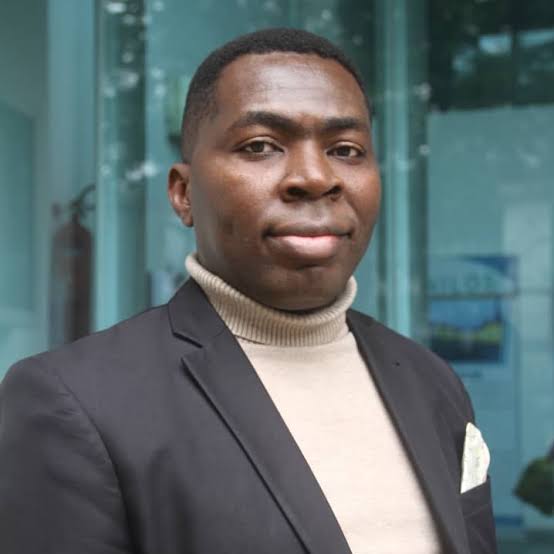


By
Dr. Tonye Clinton Jaja,
Executive Director,
Nigerian Law Society (NLS).
On 23rd January 2025, it was reported that:
“…about 1,300 (medical) consultants left Nigeria in the last five years.
On Thursday, the Medical and Dental Consultants Association of Nigeria (MDCAN) said only 6,000 consultants are left in the country.
The association’s president, Muhammad Mohammad, said this during the association’s National Executive Council (NEC) Meeting in Ilorin, Kwara State.”
According to the World Health Organisation (WHO) “ratio of medical doctors to population varies by country and can be used to determine how many physicians a service area needs.
The World Health Organization (WHO) recommends a ratio of one doctor per 1,000 people.”
Going by the current population of Nigeria, which is approximately 230,000,000 (two hundred and thirty million persons), it means that the ratio of medical doctors to the Nigerian population is three medical doctors to one hundred and fifteen thousand persons (3:115,000).
So assuming that a medical doctor takes two days to attend to one Nigerian citizen or resident, it would take the said medical doctor one full year (without taking any holiday) to attend to the said quota of 115,000.
This ratio (3:115,000) is 100 times above the WHO recommended standard ratio of one medical doctor to 1,000 population (1:1000).
As bleak as these statistics may appear, it presents an opportunity for both the receipt of foreign exchange and development of indigenous traditional medicine manufacturing.
Medical cannabis (popular known as Indian hemp or “Igbo”, “weed”, “ganja”) is now the new “crude oil” and foreign exchange earner for many African countries such as the Kingdom of Lesotho.
As far back as the year 2008, Lesotho amended it’s laws to comply with the relevant United Nations legislation to decriminalise and permit the cultivation and sale of the species of cannabis that is known as “medical cannabis”.
“Following the December 2, 2020, vote by the United Nations Commission on Narcotic Drugs, the removal of cannabis and cannabis resin from that Schedule entered into force in 2021. Since 2021, cannabis and cannabis resin remain listed in Schedule I of the Single Convention, alongside extracts and tinctures of cannabis.”
In a nutshell, the implication was that: “At that time, the ECDD, a Committee of the United Nations Office of Drugs and Crimes advised that certain cannabis-derived medicines like cannabidiol (CBD)have no potential to be abused or cause dependence but have significant health benefits for children with treatment-resistant epilepsy, and therefore should not be placed under international control.”
With this re-classification of cannabis, “In the 2019 African Cannabis Report, Lesotho’s industry was projected to be worth at least $92m (£76m) by 2023.”
Revenue in Lesotho’s Cannabis market is forecasted to reach US$3.77m in 2025. The revenue is anticipated to demonstrate an annual growth rate (CAGR 2025-2029) of 1.17%, leading to a market volume of US$3.95m by 2029.”
The BBC reported that:
The high altitude combined with fertile soils, untainted by pesticides, enables growers to produce a high-quality crop, valued all over the world.
Last year, (2017) Lesotho became the first African country to legalise the cultivation of marijuana for medicinal purposes, spawning a new sector in a country where the economy struggles to create employment opportunities.”
Going by the foregoing, Lesotho has increased it’s foreign exchange earnings through the sale of medical cannabis to Canada and other European countries that utilise it for the manufacture of medicines for treatment of cancer and epilepsy.
Let it be repeated here that Lesotho legalised the cultivation of MEDICAL CANNABIS for production of medication. This is different from cannabis that is used for recreational use. This species is not legalised.
This distinction is very important considering that some law-makers frown at the idea or even the mere mention of cannabis (Igbo, weed, ganja, skunk, etc.).
About the year 2022, or thereabouts, I still recall the difficulty of convincing my wife (who is a lawyer not to mention others) about why I was involved as a legal consultant for the drafting of a Bill to Legalise the Cultivation of Medicinal Cannabis in Nigeria. The said Bill was sponsored by Hon. Miriam Onuoha of the House of Representatives, National Assembly of Nigeria.
During my legislative advocacy, to promote the said Bill, the current majority leader told me point-blank that his constituents would not be happy that he is supporting a Bill to legalise the cultivation of MEDICAL CANNABIS, which he kept referring to as “Igbo” (the pidgin English language name) instead of the botanical name (cannabis sativa), which sounds more refined!!!!
I also approached a very popular human rights lawyer who is also a Senior Advocate of Nigeria-SAN to support the advocacy by filing a public interest lawsuit to compel the National Assembly to enact a law to give effect or “domesticate” the said UN legislation that de-classified cannabis. He “diplomatically” turned it down because of the risks to his reputation.
However, the current Deputy Speaker of the House of Representatives, National Assembly who had taken his time to read about the medical value of medicinal cannabis is on record as giving 100% support to the said Bill.
Several medical doctors provided myself and other members of our team with results of scientific studies that support the medical and medicinal benefits of the species of cannabis known as medical cannabis. It was an eye-opener for me.
It was based on those tangible, empirical evidence that I supported the drafting of a Bill for legalisation of cultivation of MEDICAL CANNABIS.
And it is on that basis that I now support the opportunity for Nigeria to increase it’s foreign exchange earnings through the cultivation of MEDICAL CANNABIS.
This has to be done under very strict regulations.
As the Government of Lesotho is doing, they enter into a direct partnership agreement that allows the foreign companies to be involved in the cultivation and processing and exporting of the medical cannabis.
It is not safe to allow indigenous Nigerians to be involved directly in the cultivation and processing and packing and exporting (“make them no come smoke am, or steal am finish”-as we would say in pidgin English language).
From the foregoing, it is obvious that the dearth of medical doctors in Nigeria present a golden opportunity for the growth and development of indigenous traditional medicine industry in Nigeria.
The Nigerian soil and tropical climate supports the growth of plants and trees that are the raw materials for production of medicines that can cure a lot of ailments.
Growing up as a child, I inherited asthma, as my grandfather was always with an inhaler. On one of the boat rides from ogoniland to my village (Opobo town) in the year 1987 or thereabouts, because of the exposure to cold breeze, I suffered an asthma attack and I was rushed to the local hospital upon disembarking from the boat. My mother who witnessed the whole incident told me that it was an elderly person with knowledge of local herbs that boiled some plants that was used to revive me after I drank it. And that was the last time, I experienced any sort of asthma attacks not even when I was resident in the United Kingdom, which has a colder weather than Nigeria. Till today, I have not used any inhaler, since the year 1987.
So this is a testament to the potency of our traditional medicines.
However, we are not paying attention to it as an alternative source of medicine and foreign exchange earnings.
It is hoped that this current dearth of medical doctors in Nigeria will open our eyes to the golden opportunity.
As the saying goes: “God never closes a door, without opening a window somewhere else”-Sound of Music (1964)!!!






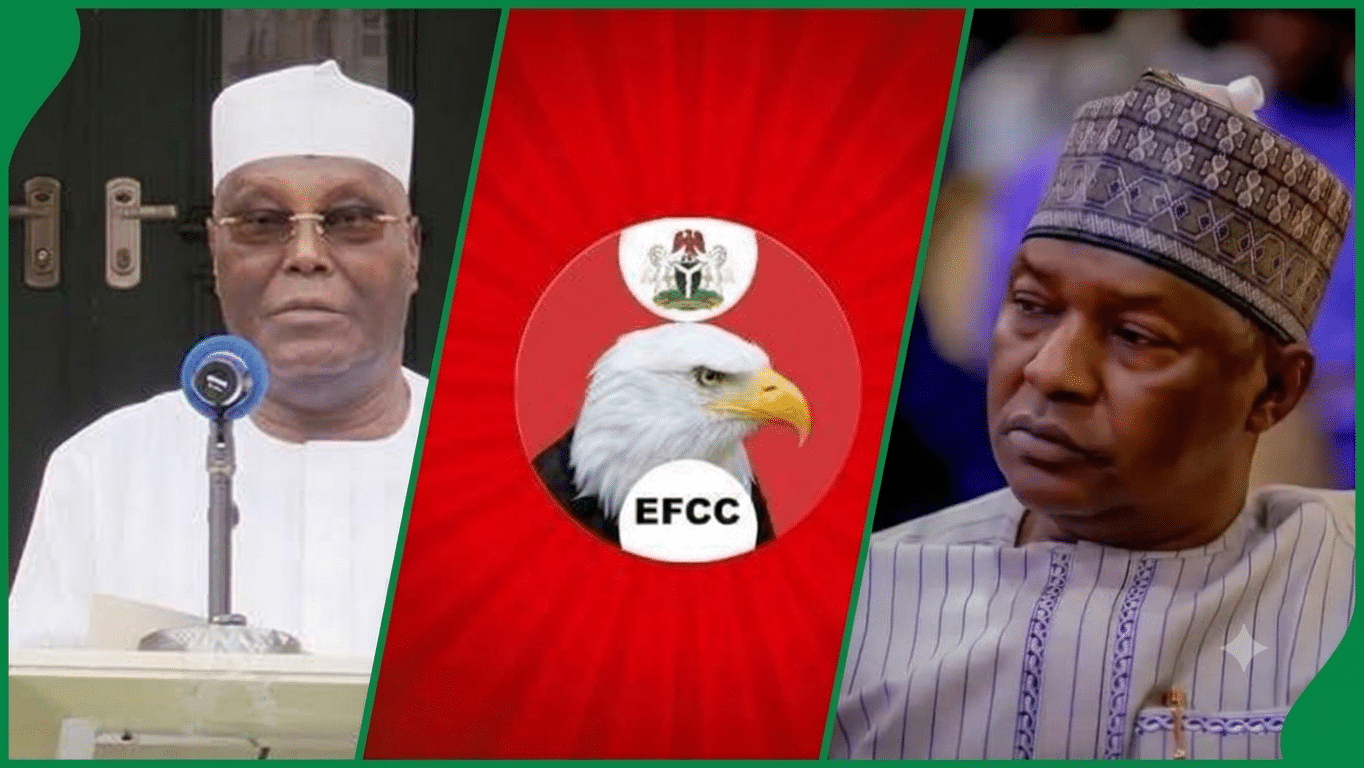
The Economic and Financial Crimes Commission (EFCC) has constituted a team to investigate individuals named in alleged questionable dealings linked to the Mambilla Hydroelectric Power Project, following a recent ruling by the International Chamber of Commerce (ICC) in Paris, France, in favour of Nigeria.
Sources familiar with the development told Premium Times that the investigative team is being supervised by the Chairman of the EFCC, Ola Olukoyede.
The investigation comes days after the ICC tribunal dismissed major claims brought before it by Sunrise Power and Transmission Company Limited against Nigeria over the 3,960-megawatt Mambilla Hydroelectric Power Project in Taraba State.
The company had made a claim against the Federal Republic of Nigeria, demanding $680 million as a settlement sum and interest in respect of another arbitration in which it is claiming over $2.7 billion in compensation and interest.
Delivering its verdict on Thursday, the tribunal directed Sunrise and its promoter to refund Nigeria’s legal fees of $11.8 million. It also rejected Sunrise’s claim for an order that Nigeria should pay the company $400 million in satisfaction of the settlement sum of $200 million and the default sum of $200 million.
The tribunal insisted that Leno Adesanya, the promoter of Sunrise, is bound by the arbitration agreement with Nigeria pursuant to the settlement agreement, adding that it has jurisdiction over Nigeria’s counterclaim against him and his firm.
According to sources, EFCC investigation will focus on individuals mentioned in the tribunal’s findings over payments and transactions that the panel described as raising concerns or ‘red flags.’
The tribunal revealed that many Nigerian politicians and individuals who held public offices were named as associates or officials who had dealings with Adesanya
The officials include former Vice President Atiku Abubakar, his then-wife Jennifer Douglas, Abubakar Malami, Olu Agunloye, Sambo Dasuki, his son Abubakar Dasuki, Abdullahi Yola, and Dere Awosika.
Malami, a former Attorney-General of the Federation (AGF), was severely criticised by the tribunal for acting against Nigeria’s national interest. He was accused of maintaining an “inappropriate relationship” with Adesanya, and entering into a corrupt deal. Already, Mr Malami is facing trial after the EFCC accused him, his wife, and son of conspiring to conceal, disguise and retain about N8.7 billion proceeds of unlawful activities.
Atiku, former vice president of Nigeria, was named by the tribunal in its review of a $500,000 payment made by Adesanya on 30 January 2003 from the Swiss bank account of his offshore company, China Castle Investments Ltd, to a US bank account belonging to Ms Douglas, Atiku’s ex-wife.
The payment was made less than four months before the Mambilla BOT contract was purportedly awarded to Sunrise by then Minister of Power and Steel, Olu Agunloye. Mr Adesanya told the tribunal that the money was part of a foreign-exchange transaction carried out for Atiku through his bureau de change business.
But the tribunal said that the explanation was not supported by documentary evidence. It said Adesanya did not produce records showing the underlying naira payment, the exchange rate applied, instructions from Atiku or his aides, correspondence concerning the transaction or documentation establishing its commercial purpose.
The tribunal also noted that neither Atiku nor Ms Douglas provided a witness statement or declaration supporting the explanation.
It noted that Atiku had led a Nigerian government delegation to Beijing in July 2002, which included Adesanya, during which the Nigerian government and the Chinese state-owned NCPEC signed a memorandum of understanding covering, among other projects, the Mambilla project.
However, Atiku has denied being indicted by the tribunal and said he was not responsible for awarding the contract.
Agunloye, a former minister of Power and Steel, was linked to payments he described as part of “medical expenses”. He is currently standing trial over charges relating to the Mambilla power project.
The tribunal also questioned payments of $1.74 million made to Abubakar Dasuki, the son of Sambo Dasuki, a former National Security Adviser (NSA), adding that the transaction raised “considerable red flags.”
The tribunal said Dasuki failed to substantiate his claim that the payment was a loan, citing inconsistencies in his evidence, the absence of a loan agreement and the lack of records showing how the transaction was accounted for by Sunrise.
Yola and Awosika were also named among those involved in alleged bribery and the receipt of controversial payments.
Sources told Premium Times that the EFCC may invite Atiku and his ex-wife, Douglas, for questioning in the coming days or weeks.
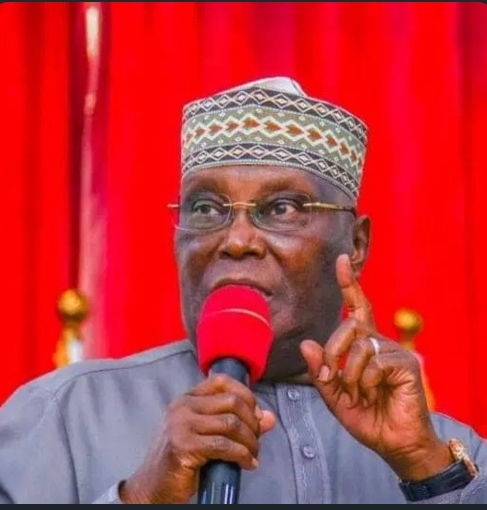
Former Vice President Atiku Abubakar has demanded an explanation from President Bola Ahmed Tinubu over his decision to stay away from the United Nations General Assembly for the third consecutive year.
Atiku’s criticism followed the Presidency’s announcement that Vice President Kashim Shettima would represent Tinubu and lead Nigeria’s delegation to the 81st Session of the UNGA in New York. The 2026 General Debate is scheduled for September 22 to 28.
In a statement issued on Sunday by his Senior Special Assistant on Public Communication, Phrank Shaibu, Atiku said Tinubu had been absent from the 79th UNGA in 2024, the 80th in 2025 and would again not attend the 81st session in 2026.
Atiku, the presidential candidate of the African Democratic Congress, said the repeated delegation of the Vice President could no longer be regarded as routine diplomatic representation.
He argued that the UNGA provides heads of government with an important platform to advance their countries’ interests, hold bilateral meetings, attract investments, pursue trade opportunities and engage development partners.
According to him, while Shettima could effectively represent Nigeria, the Vice President’s participation could not completely substitute for the President’s personal presence and visibility at a major international diplomatic gathering.
Atiku further argued that Nigeria could lose opportunities for investment and development financing when the President is absent from such high-level engagements.
“The cost is eventually transferred to ordinary citizens: fewer investments mean fewer businesses and fewer jobs,” he said.
The former vice president also questioned reports that Nigeria’s Permanent Representative to the United Nations, Jimoh Ibrahim, had secured a seat for Tinubu close to United States President Donald Trump during the General Assembly.
“The seat was secured, but the President disappeared,” Atiku said.
He also questioned reports that the Tinubu administration had spent up to $9 million on American lobbyists, asking why Nigeria would commit such funds to lobbying efforts in the United States while the President repeatedly stayed away from the UN gathering in New York.
“What exactly did Nigerians purchase with that money?” Atiku asked.
Questions over Tinubu’s US legal history
Atiku subsequently raised questions about Tinubu’s past legal proceedings in the United States, citing Case No. 93 C 4483 before the US District Court for the Northern District of Illinois.
He referred to the forfeiture proceedings involving funds held in accounts in Tinubu’s name and those of associated companies, alleging that US court documents linked the funds to narcotics trafficking and money laundering.
Atiku said the proceedings ultimately resulted in the forfeiture of approximately $460,000 to the US government.
However, he stressed that he was not claiming Tinubu was legally barred from entering the United States.
“We are not asserting that Tinubu is legally prohibited from entering the United States. The Presidency has announced no such restriction,” Atiku said.
He nevertheless questioned whether Tinubu’s past legal history in the US had any connection with his repeated absence from the UNGA.
“Nigerians are therefore entitled to ask whether Tinubu’s three consecutive UNGA absences have anything to do with this documented American history,” he said.
Atiku called on the Presidency to explain the reason for Tinubu’s absence if there was no legal, diplomatic, medical or personal impediment preventing him from attending.
“Has one man’s personal history become a burden on Nigeria’s diplomatic engagement?” he asked.
He also questioned whether the President’s absence could affect Nigeria’s diplomatic engagement with the United States and other countries.
Atiku concluded by demanding greater transparency from the Presidency over the decision to send Shettima to the UNGA for a third consecu
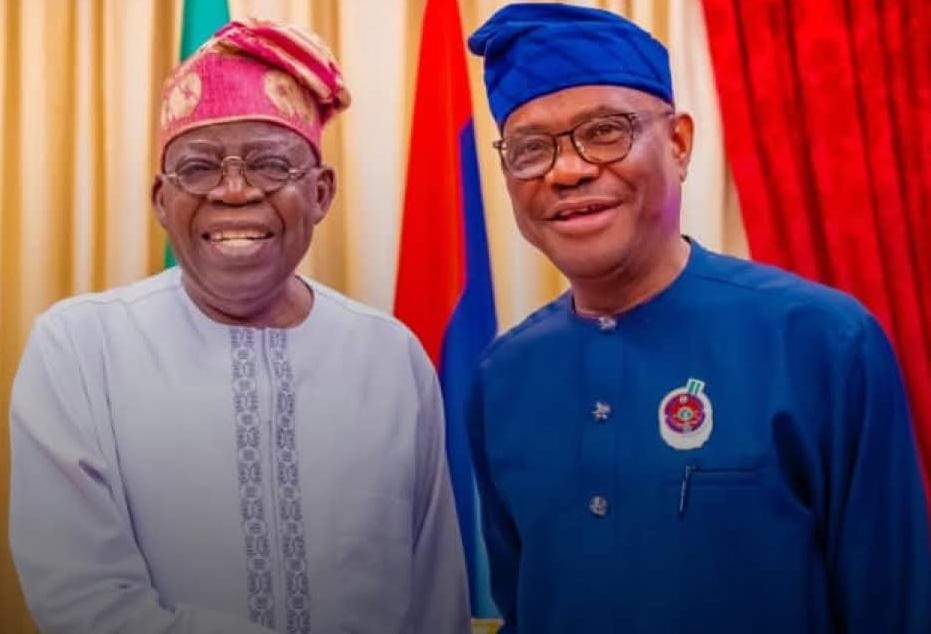
President Bola Ahmed Tinubu is moving to give Minister of the Federal Capital Territory (FCT), Nyesom Wike, a clearly defined role in his 2027 presidential re-election campaign, with the former Rivers State governor expected to coordinate campaign activities in Rivers and the FCT.
The emerging arrangement, reported by THISDAY on Monday, is designed to harness Wike’s political network in the two territories without formally placing him within the hierarchy of the All Progressives Congress (APC), despite his prominent support for Tinubu’s re-election.
Wike remains a member of the Peoples Democratic Party (PDP) and has repeatedly stated that he has no intention of joining the APC to support Tinubu’s second-term bid.
The reported arrangement comes amid growing tensions between Wike and some APC governors over the structure and control of political mobilisation ahead of the 2027 elections.
Wike to Coordinate Rivers, FCT
Wike has consistently maintained that he does not need to belong to the APC or occupy the position of Director-General of Tinubu’s campaign council before supporting the President’s re-election.
Instead, the FCT minister has publicly declared that his objective is to deliver Rivers State and the FCT for Tinubu in 2027.
During a media interaction in Port Harcourt earlier this month, Wike described himself as the “General Commander of the Political Infantry” in Rivers and the FCT.
“You do not need to be governor before you can be in charge. I am the General Commander of the Political Infantry; therefore, I am in charge. So also in FCT. I owe the President to give these two,” Wike said.
The proposed campaign arrangement would give a formal framework to the political responsibility Wike has already publicly claimed in the two territories.
The reported move comes after Tinubu constituted the APC Presidential Campaign Council in August, with former Zamfara State Governor Abdulaziz Yari appointed Director-General.
Imo State Governor Hope Uzodimma was named secretary, while Tinubu serves as chairman. Vice President Kashim Shettima and APC National Chairman Nentawe Yilwatda were named vice-chairmen.
Senate President Godswill Akpabio, House of Representatives Speaker Tajudeen Abbas and Yobe State Governor Mai Mala Buni were also assigned deputy director-general roles.
However, the emerging campaign structure is not expected to operate strictly through a single chain of command. According to the report, Akpabio and Deputy Senate President Jibrin Barau are expected to operate with distinct responsibilities rather than directly reporting to Yari.
The arrangement is reportedly intended to accommodate the different political blocs and influential figures expected to play roles in Tinubu’s re-election campaign.
Why Wike’s Role Is Different
Wike presents an unusual political situation for the Tinubu campaign.
Although he remains a PDP member, he has become one of the President’s most prominent political allies outside the APC.
His relationship with Tinubu became particularly significant during the 2023 presidential election, when Wike and four other PDP governors known as the G5 refused to support the party’s presidential candidate, Atiku Abubakar.
Wike subsequently supported Tinubu while remaining in the PDP.
After the election, Tinubu appointed him Minister of the FCT, making him one of the most prominent opposition-party politicians serving in the APC-led Federal Government.
Since then, Wike has repeatedly defended the Tinubu administration and declared his support for the President’s 2027 re-election bid.
The reported campaign arrangement comes against the backdrop of disagreements between Wike and APC governors over his proposed Rainbow Coalition.
Wike has described the coalition as a cross-party platform designed to mobilise support for Tinubu’s presidential re-election.
Thisday

Man City Survive Sunderland Scare, Liverpool Sneak Past Bournemouth

Fresh Crisis: Atiku, Malami, Others Fingered As EFCC Begins Fresh Probe Of Mambilla Power Deal

Atiku Challenges Tinubu Over Third Straight UNGA Absence, Questions ‘American Baggage’




-

 News17 hours ago
TeeJay Yusuf mourns Ex-Kogi Governor Ibrahim Idris
-
 News21 hours ago
Ekiti ADC senatorial candidate demands police probe into campaign office attack
-
 Sports18 hours ago
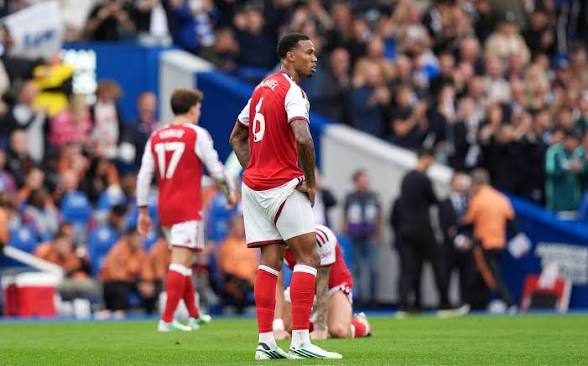
EPL: Shearer Warns Arsenal After Brighton Humbling
-
 News22 hours ago
How God Brought My Wife Back After Six-Month Coma — Akpabio
-
 News16 hours ago
Just in: Former Kogi Governor Ibrahim Idris reportedly dies in UK
-

 News20 hours ago
Arewa Youths Hail NNPCL Boss Ojulari For Launch of Nigeria’s Pioneer Smart Self-Service Station
Warning: Undefined variable $user_ID in /home/naijuinz/public_html/wp-content/themes/zox-news/comments.php on line 49
You must be logged in to post a comment Login