
News
Oil Trade Sector Flags Key Concerns Over Tax Reform Restrictions

- /home/naijuinz/public_html/wp-content/plugins/mvp-social-buttons/mvp-social-buttons.php on line 27
https://naijablitznews.com/wp-content/uploads/2025/02/IMG-20250226-WA0017-1-1000x600.jpg&description=Oil Trade Sector Flags Key Concerns Over Tax Reform Restrictions', 'pinterestShare', 'width=750,height=350'); return false;" title="Pin This Post">
- Share
- Tweet /home/naijuinz/public_html/wp-content/plugins/mvp-social-buttons/mvp-social-buttons.php on line 72
https://naijablitznews.com/wp-content/uploads/2025/02/IMG-20250226-WA0017-1-1000x600.jpg&description=Oil Trade Sector Flags Key Concerns Over Tax Reform Restrictions', 'pinterestShare', 'width=750,height=350'); return false;" title="Pin This Post">


…as manufacturers association call for fair implementation
By Gloria Ikibah
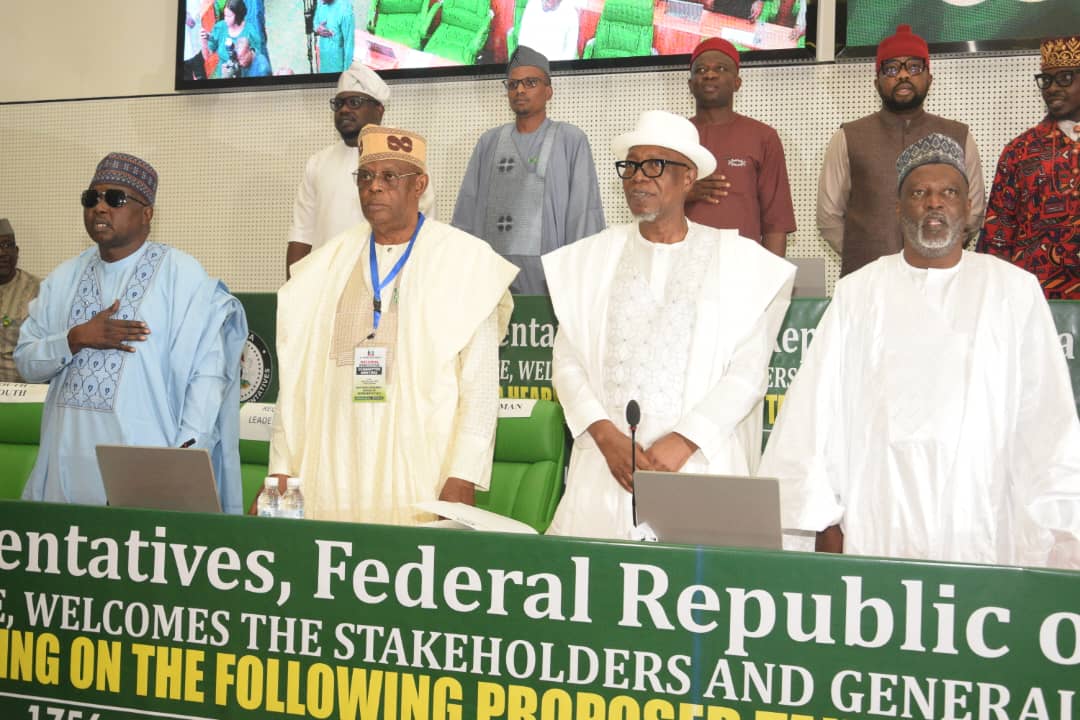
The Oil Producing Trade Sector (OPTS) has raised concerns over four key tax reform restrictions: limited access to tax incentives, increased effective tax rates, exclusion of recently announced incentives, and contract stabilization issues.
Speaking at the resumed 3-day public hearing on the Tax Reform Bills in Abuja, OPTS representative Oluwole Oladimeji highlighted specific concerns regarding Sections 57 and 85 of the proposed law. He emphasized the need for clarity on the minimum effective tax rate and investment utilization under the new framework.
“How do you work with Section 57? It introduces a minimum effective tax rate, but clarity is needed on how it will be computed,” Oladimeji stated.
He also pointed to the need for further explanation on three-year tariff limits and the application of tax credits in investment calculations.
“If I move on to another section of concern, on the three-year tariff limits, section 85, subsection 4, it talks about the three-year tariff limit on recouped tax credits. And this, if implemented, will reduce the benefits of the non-associated tax, as well as the due potential consequential fiscal derivatives.
“The third element on that list has to do with clarity that is needed with respect to section 85, subsection 1b, that says that the tax credit will not be applicable after the 10th year, i.e., before the 11th year. Our request regarding this is, one, that if we are going to have an even minimum effective tax rate at all, all taxes should be included in the basis for determining this. Secondly, that all tax credits will be utilized before the issue of any minimum tax, effective tax rate, will even arise at all.
“And then, with respect to the 11th year, that the current provision in section 85, subsection 1b should be extended by putting provision except carried forward from the 10th, so that if we are going to utilize tax credits in the 10th year, it will not be lost at all when we have only tax allowance that is also applicable. Then, another thing we would like to talk about is related to section 85, subsection 2, which provides that the incentives, tax incentives, will only be applicable to companies under the PIM. This will be the use of section 78, which covers section 78 through 88, and here we have the map incentives in there.
“So the way the thing is now, it will be only available to companies that are converted to PIM. And to cure this, we propose that there should be a remapping of the current section 78 to chapter 8, that includes incentives, so that one would not think that it is particularly restricted to companies under the particular tax regime. Because if this is not done, it will be introducing a limitation that is not in the executive order signed by the President in 2024.
“Another area of concern is section 92, subsection 3, which as currently drafted, says that the company shall be excluded from other incentives if it has utilized associated gas incentives. Now, gas incentives have typically determined a project, not a company. And the exclusion clause currently existing is overly broad and can give us other incentives.
“Another element of concern under this restriction on utilization of tax incentives has to do with section 104, which today knocks off investment tax credits enjoyable, allowable under section 4 of the deep offshore and inland leasing production sharing contract. What section 104 talks about today is only investment tax allowance.
“It has removed the investment tax credit that is currently a trade dispute. So our request is that there should be a retention of the current provision of section 4 of the deep offshore act that we are proposing. I will give you a second indicator to look at now, which has to do with increase in effective tax rates”.
In section 146, Oladimeji observed a sharp increase in the heat rate, rising from 7.5% to a progressive 15% in 2013. Additionally, sections such as 21, 27, 69, 94, and 97, along with sections 1–4, introduce penalties when P80 is due—whether on an expense or an asset that is not charged. This results in the affected expense or asset being non-deductible for tax purposes.
He furthermore noted that, the current wording of the law lacks clarity on how P80 will be treated, raising concerns that businesses might face penalties simply because of unclear payment terms. “The issue of P80 penalties has already been addressed in the Nigerian Tax Acquisition Regulations, particularly in Sections 64 and 121, which outline penalty conditions for unpaid P80.
“It is important to note that Nigeria already has a well-established legal framework for determining capital allowances and utilizing SAFE under existing laws, such as the Petroleum Profits Tax Act, the Petroleum Industry Act, the Deep Offshore and Inland Basin Production Sharing Contract Act, and CITA. The aim of the Tax Committee should be to simplify these laws, not introduce unnecessary complications.
“The oil and gas industry operates in collaboration with multiple government agencies, including the ATD, CDMA, FRS, and CBA, as well as partnerships with the NNPC. These collaborations involve project reviews, performance assessments, and audits. Therefore, tax reforms must prioritize simplification and efficiency, ensuring that regulatory burdens do not make doing business more difficult. Overloading companies with excessive tax obligations will ultimately increase costs and hinder economic growth”, he added.
The President of the Manufacturers Association of Nigeria (MAN), Otunba Francis Meshioye commended the federal government for adopting a structured and consultative approach to tax reforms. He noted that this method would facilitate early revenue generation and drive inclusive economic growth.
Meshioye expressed confidence that the proposed reforms under the Constitutional Reconciliation Bill would effectively tackle the long-standing issue of multiple and excessive taxation.
However he highlighted the growing concern over arbitrary levies imposed by regulatory bodies at various levels of government, as well as the unlawful collection of taxes and fees by non-state actors, which continue to create an unpredictable business environment.
“We look forward to the implementation of these reforms to address the persistent challenges of high taxation and restrictive policies. It is our hope that this will usher in a new era where the National Assembly refrains from approving arbitrary levies on businesses to finance government agencies,” he stated.
He cited a recent instance where businesses were required to contribute a percentage of their market capitalization to sustain certain financial indices. He warned against such measures, emphasizing that they place undue strain on businesses.
Meshioye welcomed the planned reduction of the Corporate Income Tax (CIT) rate from 30% to 27.5% in 2025 and 25% in 2026, aligning with global trends toward lower income tax rates. He described this move as a positive step that would ease financial pressure on manufacturers, attract investment, and reinforce the government’s commitment to reducing the cost of doing business in Nigeria.
Addressing concerns related to tax rates in free trade zones, he stressed the importance of maintaining clarity and ensuring that tax policies align with existing laws. He argued that rather than undermining the incentives for businesses operating within the zones, a fair tax structure would create a level playing field between companies within and outside these zones, particularly in relation to sales into the customs territory.
Meshioye underscored the need for a balanced approach to taxation, ensuring that Nigeria’s trade policies remain competitive while protecting the country’s tax base.
He pointed to Section 16 of the Real Tax Clause as a crucial reference for maintaining fairness and economic stability.
The hearing continues on Friday when the Nigerian National Petroleum Company Limited will present their observations.










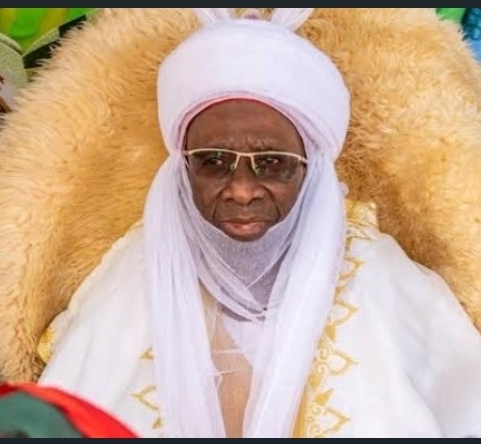
The Emir of Gumel in Jigawa State, Alhaji Dr. Ahmed Muhammad Sani II, has died.
The monarch passed away on Thursday in Egypt.
His death has thrown the people of the Gumel Emirate and residents of Jigawa State into mourning, with tributes expected to continue to pour in from across the state and beyond.
The death of the respected traditional ruler is a significant loss to his family, associates and the entire Gumel community. Prayers have been offered for Almighty Allah to forgive his shortcomings and grant him eternal rest in Aljannatul Firdaus.
Prayers were also offered for Allah to grant his family, loved ones and the people of Gumel the strength and patience to bear the loss.
The death of the Emir represents a major loss to the Gumel Emirate, given the important role traditional institutions play in promoting peace, unity, cultural values and community development.
The Gumel Emirate is one of the historic traditional institutions in northern Nigeria, with a rich heritage and longstanding influence in the social and cultural affairs of its people.
As Emir, the late Alhaji Dr. Ahmed Muhammad Sani II, CON, served as custodian of the traditional institution and provided leadership to the people of the emirate.
His passing is expected to be deeply felt by members of the royal family, traditional title holders, community leaders and residents across the emirate.


United States federal agents have nabbed a podcaster, Azariah Southworth, in Los Angeles over allegations that he threatened to kill US President Donald Trump.
According to New York Post on Thursday, Southworth was taken into federal custody in Los Angeles following an investigation into the alleged threats against Trump.
Southworth is known for hosting the Yass, Jesus podcast and previously hosted the Christian television programme, The Remix. His arrest has brought federal authorities’ attention to statements allegedly made by him concerning the president.
The allegations against Southworth have not been established in court, and details of any criminal charges filed against him were not immediately available in the report. Federal authorities typically investigate threats against the president as potential federal offences.
US law prohibits knowingly and willfully threatening to kill, kidnap or inflict bodily harm on the president. Such cases can result in federal prosecution if investigators determine that a statement meets the legal threshold for a criminal threat.
Federal authorities have pursued similar cases involving alleged threats against Trump in recent years.
The US Department of Justice has previously announced charges and convictions involving people accused of making threats against the president online and through other forms of communication.
Authorities have also stressed in previous cases that an arrest or criminal charge does not establish guilt. Prosecutors are required to prove the allegations in court, while defendants are presumed innocent unless convicted.
Southworth’s arrest comes amid continued security concerns surrounding threats against Trump and other US public officials. Further details about the allegations, possible charges and Southworth’s next court appearance are expected to emerge as the federal case proceeds.
The Federal Capital Territory Administration (FCTA) has commenced a city-wide desilting of drainage channels following heavy torrential rainfalls that triggered flash floods across parts of the nation’s capital.
Inspecting the ongoing clearance operations along the Airport Expressway on Thursday, Mr Richard Dauda, acting Executive Secretary of the Federal Capital Development Authority (FCDA), said the exercise was directed by the FCT Minister, Mr Nyesom Wike.
The directive followed a flash flood that flooded the Airport Expressway on Tuesday.
According to Dauda, the effort is to mitigate flood risks during the peak of the rainy season.
Dauda noted that while recent downpours align with earlier meteorological warnings and climate change trends, the Abuja Master Plan inherently recognises certain areas, including the Airport Expressway axis as flood plains.
He assured residents that while resilient infrastructure was originally built to handle high water volumes, human activities have severely compromised its efficiency.
“Some of these drainage facilities over time have been silted. Part of the cause is residents dumping refuse into drainage channels.
“When rain falls, it washes down polythene bags, waste, and even large objects that block the outlets,” he said.
Dauda highlighted two major human factors aggravating the flash floods: illegal development and widespread infrastructure vandalism.
Exposing a major choke point along the expressway, Dauda pointed to a triple-cell box culvert meant to discharge a powerful stream flowing from the Galadima Roundabout.
He explained that a private developer had illegally constricted the waterway further downstream by constructing retaining walls to expand a personal plot.
“What that causes is that the volume of water that ought to pass no longer passes, causing detention, backflow, and eventual flooding.
“To restore adequate discharge capacity, we must remove the structures built by this developer,” he said.
Dauda also decried the theft of metal gully inlet covers by vandals, which allows large debris to flow directly into underground drains instead of being sieved at the surface.
“When vandals steal these covers, it’s like stealing from yourself as a taxpayer,” he remarked.
To permanently curb the theft, he revealed that the FCDA is exploring replacement materials made from non-recyclable compounds rather than steel or cast iron.
The FCDA boss confirmed that workers were already desilting trapezoidal drains, U-channels, and culvert outlets along the Airport Expressway, with plans to reconstruct damaged points where necessary.
Dauda urged Abuja residents to stop dumping refuse into waterways, warning that government infrastructure can only protect the city if public cooperation is guaranteed.

Nigerians react as UK permits foreign workers to change employers

Emir of Gumel dies in Egypt

US Federal agents nab Podcaster Azariah over alleged threats to Kill Trump


-

 Foreign18 hours ago
I’ve Come To My Senses – Katie Price Ends Marriage After Discovering Husband’s Crypto Wallet Had Just £2.22 And Not £37million He Had Claimed
-

 Metro18 hours ago
Bandits impose N40m levy on Sokoto community, threaten attack
-
 News18 hours ago
‘I’ve been unable to access my salary for two years’ – Police corporal tenders resignation
-

 Economy18 hours ago
Iran’s Currency Crashes Past 2.2 Million Against one Dollar as Military Strikes Intensify
-
 News24 hours ago
Fake Agency: Reps Trace 58 Bank Accounts, 12 Entities to Adeyemi Over Alleged PFIPC
-
 News18 hours ago
Hardship: Tinubu Feels your Pain, APC Gov tells Nigerians
-

 Economy18 hours ago
See Photos As US Releases $1 Coins Featuring President Trump
-

 Foreign18 hours ago
Like Mother, Like Daughter? Brigitte Macron’s 42-Year-Old Daughter Dating 22-Year-Old Man
Warning: Undefined variable $user_ID in /home/naijuinz/public_html/wp-content/themes/zox-news/comments.php on line 49
You must be logged in to post a comment Login