News
NAPTIP rescues 19 girls impregnated by one man in Abuja Estate
A Chilling revelation of 19 pregnant girls rescued from an estate in Abuja, impregnated by a single man, has intensified calls for a coordinated national assault on human trafficking.

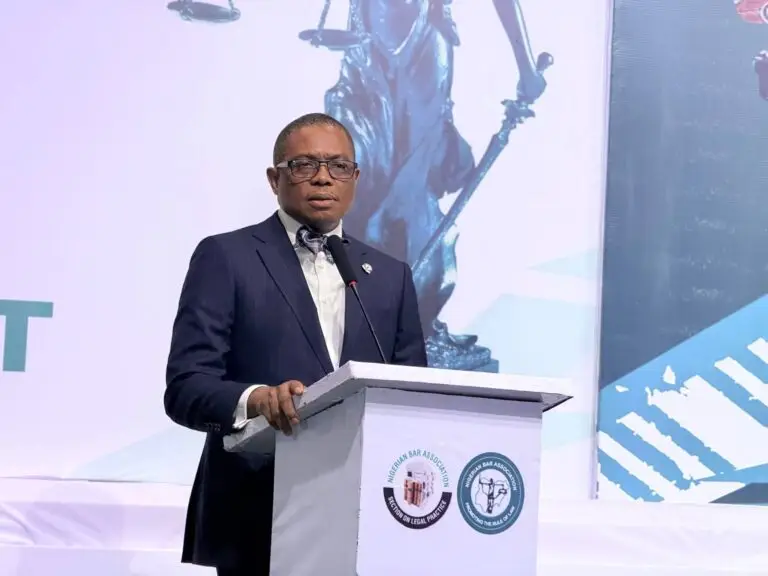
The disturbing case, disclosed by the Director-General of the National Agency for the Prohibition of Trafficking in Persons (NAPTIP), Hajia Binta Adamu Bello, underscores the deepening crisis of trafficking in persons across Nigeria.
Speaking during a strategic meeting at the headquarters of the Nigerians in Diaspora Commission (NiDCOM) in Abuja, the Commission’s Chairman/CEO, Hon. Abike Dabiri-Erewa

described the situation as a national emergency that demands an all-out, whole-of-government and whole-of-society response.
This is a very dangerous and heartbreaking situation, Dabiri-Erewa said, reacting to the news of the 19 victims. She urged the government to declare a war against human trafficking, stressing that it is not just a NAPTIP problem but a national problem, requiring all relevant agencies to work together.
“It’s a very dangerous field. We must declare a war against human trafficking. And the idea about the multi-agency collaboration, NAPTIP, NIDCOM, Refugee Commisdion, Humanitarian , even Ministry of Youth need to join us in this fight,” she said.
Dabiri-Erewa called for intensified efforts to name and shame traffickers publicly, in the same manner as drug barons, and urged stricter penalties as a deterrent to others.
The NiDCOM boss emphasized the importance of stronger inter-agency collaboration involving NiDCOM, NAPTIP, the National Commission for Refugees, Migrants and Internally Displaced Persons (NCFRMI), the Ministry of Humanitarian Affairs, and the Ministry of Youth Development.
“No agency can do this alone,” she stressed, and added that NAPTIP needs full support,better funding, flexible policies, and unflinching political will. We must unite to protect our young people from predators.
Dabiri-Erewa also acknowledged the support of First Lady Senator Oluremi Tinubu, the International Organization for Migration (IOM), Wema Bank, civil society groups, neighbouring countries, and Nigerian Diaspora communities in the rescue and reintegration of trafficked persons.
In her remarks, Hajia Bello reiterated that human trafficking is a growing menace that cannot be tackled in isolation.
She commended NiDCOM for its consistent support, particularly during the recent rescue of 231 young Nigerians from Ghana, and expressed hope for deeper cooperation between both agencies.
“We need massive public awareness. Every household, every school, every community must be informed about the evil of trafficking,” she said.
Bello reaffirmed NAPTIP’s commitment to safeguarding the rights and dignity of vulnerable Nigerians, while pushing for broader societal vigilance and accountability.
The meeting concluded with a renewed pledge by both agencies to intensify advocacy, rescue operations, and policy reforms aimed at crushing trafficking networks and protecting Nigeria’s youth from exploitation.
News
Over 29 Feared K!lled in Adamawa Community Attack on Football Spectators- Gov Fintiri confirms
No fewer than 29 people were killed in Adamawa State, Governor Umar Fintiri confirmed on Monday.
Residents said the attackers targeted young people who had assembled at a football pitch, marking yet another episode of violence in Nigeria.
The incident occurred on Sunday evening in Guyaku community, Gombi Local Government Area of the North-East state, near the Cameroon border—an area frequently affected by insurgent and criminal activities.
The attack comes at a time when Nigeria’s security challenges are drawing increasing attention both domestically and internationally, especially with general elections less than a year away.
Governor Fintiri, who visited the community on Monday, confirmed the death toll, according to a statement by his spokesperson on social media.
Residents corroborated the figures.
A local resident, Philip Agabus, told Agence France-Presse (AFP) that villagers had gathered at the football pitch when insurgents stormed the area and began shooting indiscriminately.
Another resident, Joshua Usman, said the victims were mostly youths, including some women watching the match. He added that the attackers also burned places of worship, homes, and motorcycles.
The governor’s office, citing a community leader, Aggrey Ali, said the assailants operated for hours, killing residents and destroying property.
Footage aired on local television showed a burnt church and several charred motorcycles.
While Governor Fintiri blamed Boko Haram militants, the Islamic State West Africa Province (ISWAP) later claimed responsibility, stating that it killed at least 25 Christians and set fire to a church and nearly 100 motorcycles, according to the SITE monitoring group.
Fintiri condemned the attack, vowing that it would not go unpunished and promising intensified security operations to restore peace.
Since 2009, insurgency led by Boko Haram and ISWAP has claimed tens of thousands of lives and displaced millions in Nigeria’s North-East, according to the United Nations. The conflict has also spread to neighbouring Niger, Chad, and Cameroon.
Nigeria is now seeking technical and training support from the United States to strengthen its military operations against insurgents amid a resurgence of violence.
Another Attack On Lamurde
In a separate incident on Sunday, over 100 kilometres away in Lamurde area, another attack occurred, reportedly linked to farmland disputes in several villages.
Bulus Daniel, Chairman of the Lamurde Local Government Council, confirmed that lives and properties were lost.
15 Pupils, Proprietor’s Wife Rescued In Kogi
Meanwhile, in Kogi State, security forces rescued 15 pupils abducted alongside 23 children and the wife of a school proprietor during an attack on an unregistered orphanage and school.
The State Commissioner for Information, Kingsley Femi Fanwo, confirmed the rescue and said efforts were ongoing to secure the release of the remaining victims.
School abductions remain a persistent problem in Nigeria due to weak security and ransom demands by perpetrators.
Despite repeated government assurances, mass kidnappings continue to disrupt education, commerce, and travel, raising concerns among citizens about the effectiveness of security measures.
News
Flight Cancellations Continue Amid Aviation Fuel Palaver
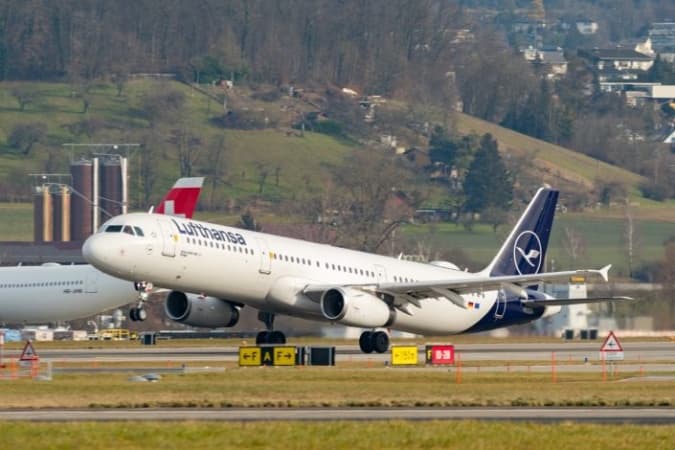
Air travelers continue to face delays, suspensions, and cancellations as airline operators grapple with the unavailability of Jet A1 fuel.
At the Nnamdi Azikiwe International Airport in Abuja, passengers scheduled to board a United Nigeria Airlines flight (UN0572) from Abuja to Benin were left stranded following repeated rescheduling of their flight after waiting for over six hours.
The flight, originally scheduled for 12:20 p.m., was first moved to 4:20 p.m. However, just as passengers anticipated departure, an announcement was made shortly before 7:00 p.m. that the flight had been further rescheduled to 7:00 a.m. the next day.
The affected passengers remain stranded, with no provision made for overnight accommodation or transportation.
One of the passengers, who identified himself as Akporoba Monday Olomu, spoke to Channels Television, lamenting the treatment by the airline.
“I bought a ticket with United Nigeria Airways, Abuja to Benin, scheduled for 2:20, 14:20 hours today. I was here at 14:20 hours, the flight was shifted to 16:20 hours, which was 4:20 p.m., and then again, no information from the attendant or the manager until about this time, which is 1902 hours GMT.
“One of the managers just walked in carelessly, asking everybody to go and come back tomorrow morning at 7 o’clock. Then my question is, where do I go? How do I go? Where do I start from? I’m asking the manager to book a place for me, or arrange accommodation or space, take me there so you can bring me back tomorrow morning at 7 o’clock, the time you have given, and then they are turning this offer down,” the passenger lamented.
News
US Considering Latest Iranian Proposal
The White House said on Monday that it was examining Iran’s latest proposal to unblock the Strait of Hormuz, two months after a US and Israeli offensive sent shockwaves through the global economy.
Peace talks between the United States and Iran to end the Middle East war and fully reopen the vital strait have so far proven inconclusive since a ceasefire came into force.
Trump met with top security advisors on Monday to discuss an Iranian proposal after Tehran passed “written messages” to Washington via Pakistan, spelling out its red lines in negotiations, including on nuclear issues and the Strait of Hormuz, the Fars news agency reported.
The proposal was “being discussed”, spokeswoman Karoline Leavitt told a White House briefing.
Asked about the terms of Iran’s proposal, Secretary of State Marco Rubio told Fox News “it’s better than what we thought they were going to submit,” but questioned whether it was genuine.
“We have to ensure that any deal that is made, any agreement that is made, is one that definitively prevents them from sprinting towards a nuclear weapon at any point,” he said.
Iran’s top diplomat blamed Washington on Monday for the failure of peace talks during a visit to Russia, where President Vladimir Putin promised him Moscow’s support in ending the war.
“The US approaches caused the previous round of negotiations, despite progress, to fail to reach its goals because of the excessive demands,” Iranian Foreign Minister Abbas Araghchi said.
Araghchi was in Saint Petersburg after visiting Oman and Pakistan, the main mediator in the Middle East war.
Islamabad had hosted a first, unsuccessful round of US-Iran talks, and Araghchi’s visit had raised hopes for more negotiations over the weekend.
But US President Donald Trump scrapped a planned trip by his envoys Steve Witkoff and Jared Kushner.
Trump told Fox News if Iran wanted talks, “they can call us” — adding the cancellation does not signal a return to hostilities.
Tehran would first need guarantees that Washington and Israel would not attack again if it was to offer security assurances in the Gulf, Iran’s envoy to the UN said.
Meanwhile in Saint Petersburg, Putin and Araghchi both voiced their commitment to their countries’ “strategic relationship” following their meeting.
Araghchi said the war, which began when the United States and Israel attacked Iran on February 28, showed “Iran’s true power” and stability.
But back home in Tehran, the mood was more sober.
“Everything in the country is up in the air right now. I have not worked for a long time,” small business owner Farshad told Paris-based AFP journalists.
“The country is in complete economic collapse.”
Feeling the pinch
Though the US-Iranian ceasefire holds, the war’s economic shock waves continue to reverberate.
Tehran resident Shervin, a photographer, said he was feeling the pinch.
“It is the first time that I have reached a point where I was late on my rent. I still don’t have any projects,” said Shervin, 42.
Iran has blockaded Hormuz, cutting off flows of oil, gas and fertiliser and sending prices soaring.
In response, the United States has imposed a blockade of Iranian ports.
Trump faces domestic pressure to find an off-ramp as fuel prices rise, with midterm elections due in November and polls showing the war is unpopular among Americans.
Iran’s Revolutionary Guards say they have no intention of easing their market-rattling chokehold of the strategic waterway.
Ebrahim Azizi, head of the national security commission in Iran’s parliament, said a proposed law for managing the strait would make the Islamic republic’s armed forces the overseeing authority, with levies to be paid in Iranian rial.
The head of the UN’s maritime agency, Arsenio Dominguez, said there was “no legal basis” for imposing transit fees.
Rubio also rejected the idea.
“They cannot normalise — nor can we tolerate them trying to normalise — a system in which the Iranians decide who gets to use an international waterway, and how much you have to pay them to use it,” he told Fox News Channel’s “America’s Newsroom.”
‘Playing with fire’
Violence has continued on the war’s Lebanese front, despite a recently extended ceasefire between Israel and Iran-backed Hezbollah, with Beirut’s health ministry reporting Israel killed four people in the south.
Fifty-one others were wounded, including three children, the ministry added.
Hezbollah drew Lebanon into the Middle East war by firing rockets at Israel, which responded with strikes and a ground invasion.
The group’s leader Naim Qassem on Monday rejected planned direct negotiations between Lebanon and Israel as a “grave sin,” vowing to “not back down”.
Shortly afterwards, the Israeli military said it had begun hitting Hezbollah targets in Lebanon. Israel maintains that under the terms of the truce, it can act against imminent threats.
Israeli Prime Minister Benjamin Netanyahu said Hezbollah’s rockets and drones remained a threat meriting military action.
Israeli Defence Minister Israel Katz warned that “Qassem is playing with fire.”
Lebanese President Joseph Aoun, responding to Qassem, said his “goal is to reach an end to the state of war with Israel.”
But Israeli army chief of staff Eyal Zamir said 2026 was “likely to be another year of fighting” for Israel on all fronts.
-
News23 hours agoJust in: Sanwo-Olu finally approves Hamzat as his preferred successor
-
News22 hours agoAlleged Shooter At Trump Press Dinner To Appear In Court
-
News10 hours agoXenophobia: Two Nigerians K!lled in South Africa
-
News23 hours agoNNPP : Count us out of Ibadan national summit
-
Entertainment10 hours agoVeteran Nollywood Actor Dies In His Sleep
-
News22 hours agoCourt Grants Accelerated Hearing In Trial Of Alleged Coup Plotters
-
News10 hours agoSowore mocks Malami at court, says ‘ You see how it feels now to be persecuted’
-
News18 hours ago2027: Obi, Igbo leaders, consult with Jonathan in a closed-door meeting in Abuja

You must be logged in to post a comment Login