
News
Just in: Nigeria’s FX Inflows Threatened Over American Lawmakers Proposed US Tax On Remittances




By Kayode Sanni-Arewa
Lawmakers in the United States are weighing new legislation that could have far-reaching implications for emerging markets, particularly those that rely heavily on remittance inflows to bolster foreign exchange reserves and support currency stability.
The proposed bill aims to impose a 5% tax on all remittances sent from US residents to recipients abroad, as part of efforts to improve fiscal revenues. We note that if passed, the legislation would require senders to pay the tax at the point of transfer, thereby increasing the cost of cross-border remittance transactions. Under the proposed framework, the 5% tax burden would fall on the sender in the US. However, there is a provision in the bill that allows verified US citizens to claim the remitted amount as a tax credit, potentially offsetting the financial impact for that group.
For Nigeria, the implications are particularly concerning, given the critical role remittances play in supporting the current account balance. In 2024, remittance inflows reached a five-year high of US$23.8bn, equivalent to approximately 12.7% of GDP, and accounted for about 17% of the growth in the current account. We highlight that these inflows have been crucial in easing external financing pressures, supporting the stability of the local currency, and enhancing the disposable income of Nigerian households amid a challenging macroeconomic environment. Given that the US is reported to be one of the largest sources of remittances to Nigeria, any increase in the cost of sending funds could dampen overall inflows and adversely impact the many households that depend on remittances to sustain their livelihoods. Our baseline projections indicate that remittance inflows could rise by 6.2% year-on-year (YoY) to reach US$25.3bn, 13.4% of GDP, in 2025. However, the introduction of the proposed levy may dampen this momentum, potentially resulting in slightly lower inflows than anticipated.
Beyond the direct financial burden, the proposed tax may unintentionally encourage the growth of informal or black-market remittance channels. Migrants abroad ineligible for tax credits may seek alternative and unregulated methods to send money home. This could undermine financial transparency, reduce the traceability of cross-border flows, and complicate the government’s efforts to harness remittances for national development.


Halima Dangote, daughter of Nigerian industrialist Aliko Dangote, has disclosed the long-term ambition of the Dangote family to grow the business empire founded by her father into a company valued at about $200 billion.
Halima made the disclosure while speaking about the responsibilities that come with being a member of one of Africa’s most prominent business families.
According to a report by GhanaWeb, she said the family’s ambition goes beyond preserving the wealth created by Aliko Dangote, stressing that the next generation is expected to build on his achievements and significantly expand the conglomerate.
She also challenged the perception that she and her siblings have had an easy life simply because they were born into a wealthy family.
According to her, being the children of a highly successful businessman comes with significant expectations, particularly the responsibility of protecting, managing and expanding the business built by their father.
The Dangote Group has evolved from its beginnings as a trading company into a diversified conglomerate with operations spanning several key sectors of the African economy.
Its businesses include cement manufacturing, fertiliser production, petroleum refining and petrochemicals, among other industrial activities.
One of the group’s biggest investments is the Dangote Petroleum Refinery, which has expanded its operations and increased its processing capacity as it seeks to play a major role in meeting energy demand in Nigeria and beyond.
The conglomerate has also continued to pursue expansion across Africa, with investments aimed at strengthening its position in manufacturing and other strategic industries.
Halima’s comments underscore the role the younger generation of the Dangote family is expected to play in the future of the conglomerate.
Rather than simply inheriting the wealth accumulated by their father, the family is looking to expand the businesses and create an enterprise that operates on an even larger scale.
The proposed $200 billion valuation is a long-term ambition, not the current value of the Dangote Group. The target reflects the scale of growth the family hopes to achieve through expansion into new markets and increased investment in existing businesses.
Aliko Dangote has consistently pursued large-scale investments in sectors including refining, petrochemicals, fertiliser and cement, as part of his broader push to build globally competitive African businesses.
With the next generation increasingly involved in the family business, Halima’s remarks point to a long-term succession strategy focused not only on preserving the Dangote legacy but also on expanding its economic footprint.
The $200 billion ambition therefore represents the scale of the challenge facing the family’s younger generation as it seeks to sustain the conglomerate’s growth and build on the foundation laid by its founder.
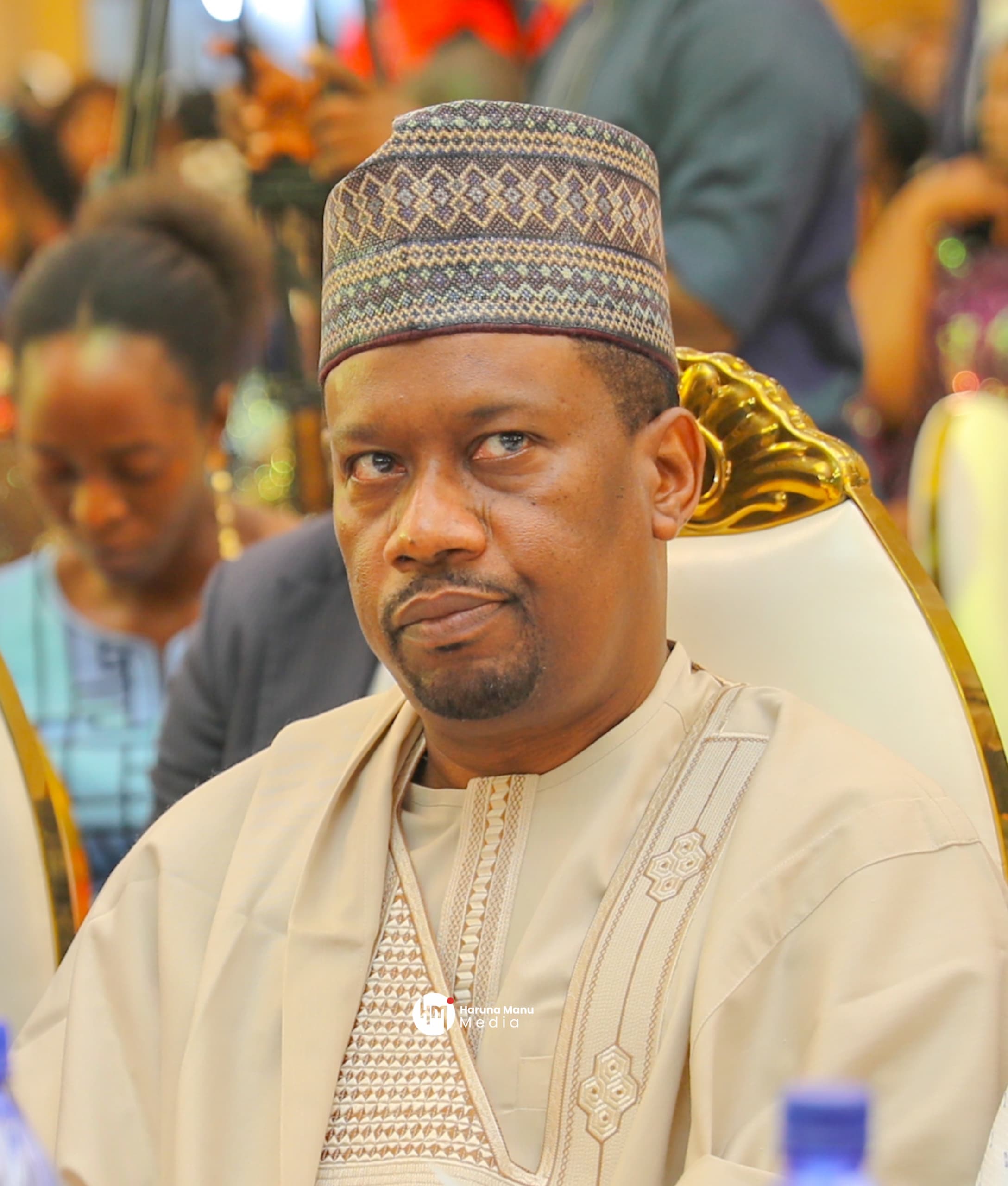
…hails Gov Kefas, security agencies timely intervention
Senator representing Taraba Central, Haruna Manu, has appealed for calm and peaceful coexistence following the recent clash between Fulani and Mambilla communities in Sardauna Local Government Area of Taraba State.
Manu, in a statement personally signed by him, expressed condolences to the families of those who lost their lives in the violence and urged residents to put the incident behind them and embrace peace.
The clash reportedly occurred last Tuesday in Mbamga communities along the Nigeria-Cameroon border, leaving nine residents dead.
Reacting to the development, the senator called on his constituents and members of the affected communities to remain calm and avoid actions that could further escalate tensions.
“I want to appeal for understanding and plead with the families of the victims of the clash. This development is uncalled for, especially at this trying period for all and sundry,” Manu said.
He also commended Taraba State Governor, Agbu Kefas, for what he described as his timely intervention in the crisis.
“I want to equally thank His Excellency, Dr Agbu Kefas, for his timely intervention to quickly nip the clash in the bud before it escalates,” he added.
The former Taraba Deputy Governor also praised security operatives for restoring peace to the communities.
Manu urged the various communities to continue to promote peaceful coexistence and work together to prevent a recurrence of violence in the area.

More than 6,000 members of the Nigeria Democratic Congress (NDC) have defected to the Peoples Democratic Party (PDP) in Enugu State ahead of the 2027 general elections.
The defectors, led by the NDC’s former Enugu State Contact and Mobilisation Coordinator, Godwin Obasi, were formally received into the PDP by the party’s state leadership in Enugu on Saturday.
The reported figure of more than 6,000 was given by the defectors’ leadership and has not been independently verified. �
Vanguard News +1
Obasi said the group comprised members drawn from all 260 electoral wards and 17 local government areas of the state.
He said they decided to leave the NDC following dissatisfaction with what he described as the party’s choice of unpopular candidates for various elective positions.
“We decided that we were going to join the PDP. It is our right and choice. So, after we congregated, we are here today to officially join the PDP.
“We are from all the 260 wards and 17 local government areas in the state, and all of us have moved into the PDP from today,” Obasi said.
Obasi had earlier been identified as the NDC’s state coordinator for contact and mobilisation in Enugu, where he was involved in building the party’s grassroots structure ahead of the 2027 elections. �
Blueprint Newspapers Limited +1
Receiving the defectors, the Enugu State PDP Chairman, Vitus Okechi, welcomed their decision and assured them of equal rights and full participation in the affairs of the party.
Okechi said the new members would be integrated into the party’s structure and given opportunities to participate in its activities.
Also speaking, the PDP governorship candidate in the state, Uche Nnaji, assured the defectors of their full integration into the party.
Nnaji used the occasion to launch fresh criticism against the Enugu State Government, alleging that the administration had failed to fulfil some of its promises to residents.
He urged residents to participate actively in what he described as efforts to change the political direction of the state ahead of the 2027 elections.
Nnaji particularly criticised the state’s taxation policies, alleging that the government’s revenue drive was placing undue pressure on residents without corresponding benefits.
He further alleged that taxation had extended to newborn babies and deceased persons, while questioning the tangible impact of the revenue generated by the government.
On pensions and gratuities, Nnaji alleged that retirees in the state were being denied their entitlements.
“Our pensioners are not being paid. Enugu is the only place where pensions and gratuities are not being paid to our people.
“Nothing is paid to our people. Everybody is in a mess.
“Imo and Anambra pay their pensions and gratuities to date. What sin have we committed in Enugu State?” he asked.
Nnaji also claimed that the Enugu State Government had received substantially more federal funds under President Bola Tinubu than the three previous administrations combined.
He alleged that the funds received in about three years exceeded what the administrations of former governors Chimaroke Nnamani, Sullivan Chime and Ifeanyi Ugwuanyi received during their combined 24 years in office.
“And President Bola Ahmed Tinubu has released so much money to all the states. What this government here has received is more than what the three previous governors, Chimaroke, Sullivan and Ugwuanyi put together.
“What they received in 24 years, this government has received in about three years. We are talking of trillions,” he said.
He also questioned the level of internally generated revenue reported by the Enugu State Government in 2025, alleging that the revenue collection had imposed additional hardship on residents.
The allegations made by Nnaji were political claims made during the defection event and were not independently verified in the reports reviewed. �
wazobiareportersng.com.ng
Meanwhile, PDP chieftain Basil Ani described the movement of the NDC members into the PDP as a boost to the party’s grassroots mobilisation efforts ahead of the 2027 elections.
The development comes as political parties in Enugu intensify grassroots mobilisation and positioning ahead of the 2027 general elections.

Dangote Family Targets $200bn Empire, Halima Reveals

Senator Manu Urges Calm After Fulani-Mambilla Clash, Condoles With Victims’ Families

2027: Over 6,000 NDC Members Dump Party, Join PDP in Enugu




-

 News22 hours ago
Social media abuzz as Aisha Buhari, Seyi Tinubu, Dino Melaye, others attend pre-wedding in Spain
-

 News22 hours ago
Nicki Minaj follows Peter Obi on X after viral repost
-

 News22 hours ago
TikToker remanded over alleged defamation of Kano politician
-

 Politics22 hours ago
NDC Dissociates Itself From OK Movement PCC, Says Political Party Is Serious Business
-

 Metro22 hours ago
NDLEA officer drowns chasing drug suspect into Delta river
-
 News22 hours ago
How ASUU brought snake to my office – Former VC
Warning: Undefined variable $user_ID in /home/naijuinz/public_html/wp-content/themes/zox-news/comments.php on line 49
You must be logged in to post a comment Login