
Economy
CBN slashes FG loans by over N4tn

- Share
- Tweet /home/naijuinz/public_html/wp-content/plugins/mvp-social-buttons/mvp-social-buttons.php on line 72
https://naijablitznews.com/wp-content/uploads/2024/02/CBN.jpg&description=CBN slashes FG loans by over N4tn', 'pinterestShare', 'width=750,height=350'); return false;" title="Pin This Post">


The Central Bank of Nigeria recorded a significant decline of N4.145tn in net loans and receivables in 2024, driven primarily by a reduction in its overdraft exposure to the Federal Government and changes across other loan categories.
According to the apex bank’s audited financial statements, net loans and receivables at the bank level dropped from N16.122tn in 2023 to N11.977tn in 2024. At the group level, the figure declined from N15.091tn to N10.959tn, reflecting a N4.132tn drop.
The most substantial adjustment came from the overdraft extended to the Federal Government under the Ways and Means provision.
The Ways and Means provision in Nigeria refers to the CBN’s practice of extending temporary advances to the Federal Government to cover short-term funding gaps. Governed by Section 38 of the CBN Act, 2007, this facility allows the government to borrow up to 5 per cent of its previous year’s actual revenue.
However, this limit was exceeded under the previous administration, leading to concerns about fiscal discipline and monetary policy implications.
In response to the growing concerns over the excessive use of the Ways and Means facility, the National Assembly approved the securitisation of N22.7tn of these advances in 2023.
This move effectively converted the short-term overdrafts into long-term debt instruments, aiming to mitigate inflationary pressures and restore monetary stability.
Also, the Federal Government repaid a part of this obligation, with reports indicating that N7.3tn has been paid back so far. This repayment aligns with the government’s commitment to reducing reliance on central bank financing and enhancing fiscal responsibility.
This facility, which stood at N7.948tn in 2023, was scaled down to N3.268tn in 2024, a sharp reduction of N4.679tn or 58.89 per cent. The decline aligns with Governor Yemi Cardoso’s reform stance and a shift away from fiscal dominance, following years of criticism over the central bank’s role in deficit financing.
The PUNCH earlier reported that the CBN’s earnings from the Federal Government’s overdraft facility declined from N1.6tn in 2023 to N3.1bn in 2024. Also notable was a major increase in the CBN’s Standing Lending Facility, which grew from N29.431bn in 2023 to N386.904bn in 2024.
The CBN’s SLF serves as a critical tool for managing short-term liquidity within the banking sector. It allows authorised financial institutions to borrow funds from the CBN to address temporary liquidity shortages, ensuring stability in the financial system.
Although relatively small within the total portfolio, the increase indicates renewed activity in the interbank lending space. Long-term loans also rose by N712.673bn, from N2.009tn in 2023 to N2.722tn in 2024, suggesting sustained CBN participation in select financing programmes with extended maturities.
In contrast to intervention-based programmes that saw widespread contraction, certain legacy and operational exposures remained stable or expanded slightly. Notably, AMCON Notes rose from N3.902tn in 2023 to N4.136tn in 2024, an increase of N234.096bn.
These notes remain a key part of the CBN’s financial system stabilisation efforts and are backed by a sinking fund arrangement. The “Other Loans” category, which includes legacy or miscellaneous lending not classified under specific programmes, declined marginally at the group level by N8.722bn, from N539.377bn to N530.655bn.
At the bank level, however, the line item held steady at N116.187bn. Staff loans grew from N58.521bn to N65.644bn at the group level and from N58.521bn to N65.194bn at the bank level, while Nigerian Treasury Bonds remained unchanged at N423m.
The financial statement also revealed that Promissory Notes previously valued at N23.028bn were completely cleared by 2024. Similarly, the NESI Stabilisation Strategy Limited Debenture, which held a balance of N802.918bn in 2023, was reduced to zero in 2024.
The CBN established the NESI Stabilisation Strategy Limited (NESI SS Ltd) as a Special Purpose Vehicle to address liquidity challenges in the Nigerian Electricity Supply Industry.
This initiative involved the issuance of debentures to raise funds aimed at settling outstanding payment obligations to market participants, service providers, and gas suppliers.
These loan eliminations further contributed to the sharp drop in the bank’s total gross loans and receivables. Gross loans at the group level declined from N16.391tn in 2023 to N12.767tn in 2024, a contraction of N3.624tn.
At the bank level, gross loans fell by N3.645tn from N17.422tn to N13.778tn. These figures reflect a broad reduction in exposure across lending categories.
At the same time, the allowance for Expected Credit Losses increased from N1.3tn in 2023 to N1.801tn in 2024 at the bank level and from N1.3tn to N1.808tn at the group level, signalling stricter credit risk recognition and improved provisioning discipline.
The PUNCH observed that the CBN recovered a total of N252.996bn from beneficiaries of its intervention loan programmes in 2024, following the decision by Governor Olayemi Cardoso to phase out the Bank’s controversial development finance initiatives.
At the bank level, intervention loans fell from N3.336tn in 2023 to N3.083tn in 2024, marking a year-on-year recovery of N252.996bn. The group position similarly declined from N1.883tn to N1.658tn, indicating a recovery of N224.64bn.
The repayments span across several programmes, including the Anchor Borrowers’ Programme, Real Sector Support Facility, Commercial Agricultural Credit Scheme, BOI Debentures, and other legacy interventions.
The Anchor Borrowers’ Programme, which has faced significant public scrutiny due to rising defaults and limited transparency, recorded one of the highest recoveries. Outstanding balances reduced from N424.825bn in 2023 to N311.903bn in 2024 at the group level, reflecting a repayment of N112.922bn.
At the bank level, the figure declined from N408.801bn to N296.830bn. Originally launched in 2015 to support smallholder farmers by linking them with off-takers, the programme has come under criticism from the National Assembly, which recently directed the CBN to recover over N1tn disbursed under the scheme, citing poor recovery levels.
The Commercial Agricultural Credit Scheme also recorded a sharp drop in outstanding balances, declining from N101.783bn in 2023 to N58.453bn in 2024, a recovery of N43.33bn.
The Real Sector Support Facility reduced from N98.237bn to N60.730bn within the same period, resulting in a repayment of N37.507bn. Meanwhile, the BOI Debenture balance dropped by N9.941bn to N52.055bn, and the Export Development Facility saw a minor decrease of N802m to N139.621bn.
The Non-Oil Export Facility recorded a recovery of N5.855bn, falling to N8.071bn. The NIRSAL Lending Debenture, however, saw a slight increase, rising from N268.655bn to N269.380bn.
The facility remains one of the largest on the CBN’s balance sheet, with repayment efforts still ongoing. The Micro, Small and Medium Enterprises loans remained largely stable, dipping slightly from N443.652bn to N442.730bn.
The NBET Payment Assurance Facility recorded a modest decline from N48.317bn to N44.954bn, while the Nigerian Mortgage Refinance balance fell by N744m to N36.855bn.
The six per cent Perpetual Debentures decreased from N4.793bn to N1.246bn, indicating a recovery of N3.547bn. Under the Accelerated Agricultural Development Scheme, the outstanding balance dropped from N4.365bn to N990m, amounting to a recovery of N3.375bn.
The Nigerian Youth Investment Fund rose slightly from N95m to N112m. The balance for Advances to the Federal Mortgage Bank of Nigeria remained unchanged at N9m.
The NESI Stabilisation Strategy Limited Debenture, a large-scale intervention in the power sector, was fully cleared, with the loan balance falling from N802.918bn in 2023 to nil in 2024.
Similarly, the NESI Stabilisation Strategy Limited Loan declined by N8.461bn to N368.371bn.
Cardoso, who assumed office in 2023, had announced a strategic departure from the previous administration’s interventionist finance model, arguing that such practices distorted monetary policy transmission and reduced private sector lending.
Speaking at a press briefing after the first Monetary Policy Committee meeting of 2024, Cardoso said, “The intervention has two dysfunctions. One it takes a lot of time for something you do not have an expertise to do, and two, if not carefully handled, creates a lot of distortions in your economy through inflow of money supply.”
He added, “The interventions that took place in the recent past were estimated in excess of N10tn. I’m not talking about ways or means. What was the budget of the federal government of Nigeria? What was the budget of the largest states in Nigeria? Do the maths and it would tell you the extent of damage too much of what may appear to be good things can do to an economy.
“So, for me, it’s a major issue. A number of things will be naive to say. We’re not going to get directly involved in interventions; those that are out there need to be properly monitored to ensure they come back in.
“We have to ensure that we monitor them to ensure that they come back in, and we’re doing so. We are already doing that and with various degrees of success at some point in time, in the interest of transparency, those figures will be made public.
“The time when we have failed interventions is over. There is no wiggle room to take up interventions that have a great potential to fail and do not get down to the people who were intended to in the first place.”
The 2024 financial statement validates this policy pivot, with significant recoveries suggesting efforts by the apex bank to restore its focus on monetary stability and financial sector discipline.
While the CBN has halted new applications under its intervention schemes, repayments and recoveries remain active. The drawdown of these programmes has continued to generate debate, with stakeholders divided on their legacy.
Supporters maintain that the interventions shielded key sectors during periods of fiscal constraint, while critics argue that inadequate monitoring and weak recovery structures made the programmes vulnerable to abuse and unsustainable over the long term.

The National Bureau of Statistics (NBS) has reported that Value Added Tax (VAT) collections rose to ₦2.42 trillion in the first quarter of 2026 (Q1 2026), up from ₦2.20 trillion recorded in Q4 2025.
According to the VAT Q1 2026 report, the figure represents a 9.98 per cent increase on a quarter-on-quarter basis.
The bureau stated that of the total revenue collected during the period, local payments accounted for ₦1.11 trillion, while foreign VAT payments stood at ₦830.47 billion. Import VAT contributed ₦477.55 billion.
“Value Added Tax (VAT) in Q1 2026 was ₦2.42 trillion, showing an increase of 9.98% on a quarter-on-quarter basis from ₦2.20 trillion in Q4 2025.
“Of the total VAT collected, local payments stood at ₦1.11 trillion, foreign VAT payments were ₦830.47 billion, while import VAT contributed ₦477.55 billion during the quarter,” the NBS stated.
The report further showed that sectors such as food services and accommodation recorded ₦13.20 trillion, while arts, entertainment, and recreation contributed ₦8.98 trillion to VAT-generating activities.

Nigeria’s crude oil production surged to an 11-month high in May 2026, with the country exceeding its Organisation of the Petroleum Exporting Countries (OPEC) production quota.
The average crude oil production recorded during May represents 102 per cent of Nigeria’s 1.5mbpd of production quota allocated by OPEC.
The production report released by the Nigerian Upstream Petroleum Regulatory Commission (NUPRC) on Thursday disclosed that Nigeria’s oil production averages 1,530,354 barrels of crude oil and 170,446 barrels of condensates per day (bpd).
According to the report, this brings the total combined production to 1,700,800 barrels per day and consolidates Nigeria’s position as Africa’s largest oil producer.
The report said the production performance during the review period remained robust, with combined crude oil and condensate output ranging from a low of 1.51 million bpd to a peak of 1.86 million bpd.
It said the May 2026 production figures represented the highest recorded by Nigeria since July 2025, when output surged to 1,712,282.
“In strict crude oil terms (excluding condensates), the 1.53 million barrels recorded in May 2026 represents the highest Nigeria has witnessed since January 2025, when crude oil production hit 1.538mbpd.
“The latest crude oil production statistics thus represent a 15-month high on a month-on-month basis, production rose by 2.77 per cent in May 2026 as against 1.48mbpd in April,” it said.
The report said the broader production trend over the last five months had also remained positive.
It said combined crude oil and condensate output increased from 1.48 million bpd in February to 1.54 million bpd in March, 1.66 million bpd in April, and 1.7 million bpd in May, underscoring sustained growth in Nigeria’s hydrocarbon production.
According to the report, among production streams, Bonny Terminal led the pack with a total blend of 293,870 bpd, closely followed by Forcados Terminal at 289,900 bpd, Qua Iboe ranked third with 173,360 bpd, while Escravos Oil Terminal contributed 135,470 bpd.
It said the Odudu (Amenam Blend) accounted for 63,250 bpd across the top five production streams during the month under review.
The NUPRC attributed the rise in production to sustained positive momentum, as operations remained stable throughout the reporting period, with no significant pipeline or facility outages recorded.
It added that all previously scheduled turnaround maintenance activities had been completed, thereby improving operational reliability and production efficiency.
(NAN)
The Central Bank of Nigeria (CBN) has issued draft guidelines that would impose stricter controls on transactions between banks, financial institutions and their affiliated entities as part of efforts to protect depositors’ funds, strengthen consumer protection and reduce risks within the financial system.
The proposed ‘Guidelines on Ring-Fencing Operations of Closely Linked Entities in the Nigerian Financial System’ seek to establish clear operational and functional boundaries among entities under the same corporate group and prevent the commingling of activities across different licence categories.
In a circular signed by the Director of the Financial Policy and Regulation Department, Dr Rita Sike, the apex bank said the framework was developed to promote a safe, sound and stable financial system, safeguard consumer interests and strengthen regulatory oversight.
According to the CBN, the guidelines prescribe requirements relating to governance, intra-group transactions, segregation of customer funds and data, operational independence, recovery and resolution planning, and consolidated supervision.
“The guidelines are intended to strengthen consumer protection, enhance transparency and accountability, mitigate contagion risks among closely linked entities, and preserve financial stability while supporting innovation and fair competition within the financial services sector,” the bank stated.
Under the proposed framework, boards of closely linked entities would be required to ensure that such entities operate independently and maintain separate governance, risk management and control structures. Each entity would also be expected to have a dedicated board and establish policies that ring-fence its operations from those of affiliated companies.
The CBN also proposed limits on overlapping leadership roles within financial groups, stating that the number of directors serving simultaneously on the boards of closely linked entities should not exceed 20 per cent of the total board membership.
To strengthen oversight, the draft guidelines require external auditors to certify annually the effectiveness of board-approved policies and processes designed to ensure operational independence.
The apex bank further proposed that all intra-group transactions must be conducted on arm’s-length terms and reported to the regulator on a quarterly basis.
It also stated that no closely linked entity should extend a loan to, or guarantee the obligations of, another affiliated entity without prior written approval from the CBN.
“The boards of closely linked entities shall ensure that transactions between such entities are conducted at arm’s length and are properly documented,” the draft stated.
The guidelines place significant emphasis on customer onboarding and consumer protection. Where customers choose services offered by an affiliated company, the receiving entity would be required to establish a direct business relationship with the customer, conduct its own KYC verification and provide account or wallet details where necessary.
The draft also requires affiliated entities to remain adequately capitalised at all times and ensure that critical functions are managed independently.
To reduce operational risks, the CBN proposed restrictions on the use of shared technology infrastructure , as entities would not be allowed to use their information technology platforms to offer services outside the scope of their licences or process transactions on behalf of affiliated entities.
The regulator said it could require the separation of data centres where necessary to reduce contagion risks and ensure that each entity can operate independently.
The framework further seeks to protect customer funds by requiring strict separation of accounts belonging to affiliated entities and daily reconciliation of balances, with discrepancies corrected within 24 hours.
Customer funds would not be permitted for intra-group lending, servicing debts, proprietary trading activities, external borrowings or operational expenses of related entities.
The CBN also proposed tighter controls on customer data, requiring data to be stored independently and prohibiting its sharing among affiliated entities without the explicit consent of customers, except as permitted under the Nigeria Data Protection Act.
“Sharing of customer data between closely linked entities without explicit consent of the customer is prohibited,” the draft guidelines stated.
The proposed framework further requires promoters of closely linked entities to establish a non-operating holding company structure. Such holding companies would be required to maintain regulatory capital at least 20 per cent above the combined minimum capital requirements of their subsidiaries.
However, shareholders unwilling to establish a holding company may choose to merge affiliated entities into a single business, subject to regulatory conditions, including the surrender of excess licences.
The CBN has exposed the draft guidelines for public review and invited stakeholders to submit comments before July 9, 2026.

Retired Major General Dies in Bandits’ Captivity Despite Rescue Efforts

APM 2027 Race Takes Dramatic Turn as Waziri Gains Edge Over Makinde

Three years after : Senator Manu’s unequalled constituency outreach that cuts across Taraba Central (Photos )




-

 Sports12 hours ago
Just in: Thomas Partey to miss Ghana’s World Cup opening match
-
 Metro12 hours ago
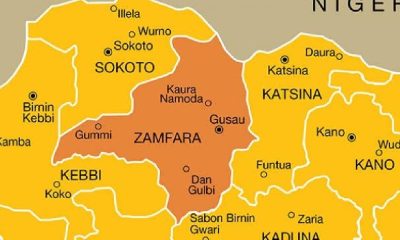
Sad democracy Day as bandits kill 17 farmers in Zamfara
-

 Entertainment12 hours ago
“Do Not Ever Use My Music” – Ariana Grande Slams The White House For Using Her Song
-

 News12 hours ago
2027: We’re Focused On Taking Aso Rock – NDC Dismisses ‘Crisis’ Reports
-

 Entertainment12 hours ago
Veteran Nollywood Actor Is Dead
-
 News12 hours ago
Gombe Rep Yaya Bauchi Tongo dies
-

 News23 hours ago
Democracy Has Come to Stay – Speaker Abbas
-

 News12 hours ago
NDC: Dickson, Obi hold closed door meeting amid internal crises
Warning: Undefined variable $user_ID in /home/naijuinz/public_html/wp-content/themes/zox-news/comments.php on line 49
You must be logged in to post a comment Login