Connect with us

News

Osun must refund seven month’s LG allocations, AGF tells S’Court

Published

on

ADVERTISEMENT
Zoom Ad
ADVERTISEMENT
Zoom Ad

The Attorney General of the Federation and Minister of Justice, Lateef Fagbemi, has urged the Supreme Court to compel Osun State Government to refund seven months’ local government allocations to the Minister of Finance.


The request was contained in a response filed through Fagbemi’s counsel, Chief Akin Olujimi SAN, to a suit instituted by the government via its attorney general.

Osun had sued the AGF as the sole defendant, alleging that the Federal Government failed to release the statutory allocation due to its 30 local government councils for March 2025.

In the suit marked SC/CV/379/2025, the state government claimed that whenit queried the Ministry of Finance over the unpaid allocation, the Minister of Finance, Wale Odun, allegedly said he was acting under the AGF’s directive.

Advertisement

However, the AGF denied the claim, challenging the legitimacy of the suit, accusing the state government of contempt for allegedly disobeying a July 11, 2024, Supreme Court judgment.

Fagbemi argued that Osun’s reliance on the 2004 case of AG Lagos State v. AG Federation—where the Supreme Court ordered the release of withheld funds to Lagos State—was misplaced.

In a counter-affidavit deposed by the Special Assistant to the President, Taye Oloyede, the AGF insisted that neither he nor the Minister of Finance instructed the withholding of Osun’s LG funds.

Oloyede testified that on May 22, 2025, in his presence, the Minister of Finance denied ever receiving such instructions.

Advertisement

According to the affidavit, Osun State never alleged that the President issued an order, nor did it provide evidence that the LG funds were deliberately withheld.

Oloyede emphasised that direct payment of allocations to LGs requires only that they submit account details to the Ministry of Finance.

He claimed the individuals currently administering Osun’s LGs were elected under the previous APC-led state government and remain in office until October 2025.

He asserted that Osun failed to show that its LGs had submitted their account details to the Finance Ministry.

Advertisement

Oloyede further argued that the plaintiff failed to show that it had the legal authority or consent of the LGs to initiate the lawsuit.

Instead, the affidavit indicated Osun’s intention to use the LG allocations to fund state-level health and education initiatives—directly contravening the Supreme Court’s judgment prohibiting states from managing LG finances.

He also pointed out that an earlier Federal High Court ruling in favour of the Osun State Governor had been overturned by the Court of Appeal.

Fagbemi insisted the Osun State Government was in contempt of the July 11, 2024, Supreme Court order in AGF v. Attorney General of Abia State & Others, which ruled that LG allocations must be paid directly to LG councils and not through state governments.

Advertisement

The order barred states from collecting or disbursing LG funds. Osun, listed as Defendant 29 in that suit, had acknowledged the order but allegedly continued to receive and spend LG funds from July 2024 to February 2025.

The AGF described Osun’s lawsuit as a calculated attempt to gain the Supreme Court’s backing to continue violating its own ruling.

He called it an “egregious contempt” and asked the court to enforce judicial accountability.

“The only way to vindicate the authority of this court,” he stated, “is to order the plaintiff to pay back all LG funds collected between July 2024 and February 2025. These should be remitted to the Minister of Finance for onward transfer to the respective local governments.”

Advertisement

In a five-ground preliminary objection, the AGF argued that: “The plaintiff is not entitled to be heard due to contempt. The plaintiff has no right of appeal against the Supreme Court’s decision. The case does not present a genuine dispute to trigger the court’s original jurisdiction under Section 232(1) of the Constitution. The plaintiff has no locus standi to sue on behalf of local governments. Only LGs—not state governments—can seek redress for unpaid allocations. The AGF stressed that Osun State had improperly appointed itself as a ‘watchdog’ over LG funds, despite having no authority to litigate on their behalf.

“If any LG has been wrongly deprived of its funds,” he concluded, “it is the council itself—not the state government—that has the right to sue.”

Meanwhile, it was gathered that Osun State government has withdrawn the suit. However, Olujimi, who confirmed this, said the suit remains in court until the application for withdrawal is formally heard by the court in September.


Advertisement
Continue Reading
Advertisement
Click to comment

Warning: Undefined variable $user_ID in /home/naijuinz/public_html/wp-content/themes/zox-news/comments.php on line 49

You must be logged in to post a comment Login

Leave a Reply

News

NDLEA starts nationwide training of counselors on standard rehab guidelines(Photos)

Published

on

ADVERTISEMENT
Zoom Ad
ADVERTISEMENT
Zoom Ad

. We’ll continue to entrench best global practices in our drug demand reduction efforts, says Marwa

The National Drug Law Enforcement Agency (NDLEA) has commenced a comprehensive training programme for its counselors nationwide, aimed at standardizing operational protocols and strengthening clinical competencies in line with global best practices for drug demand reduction.

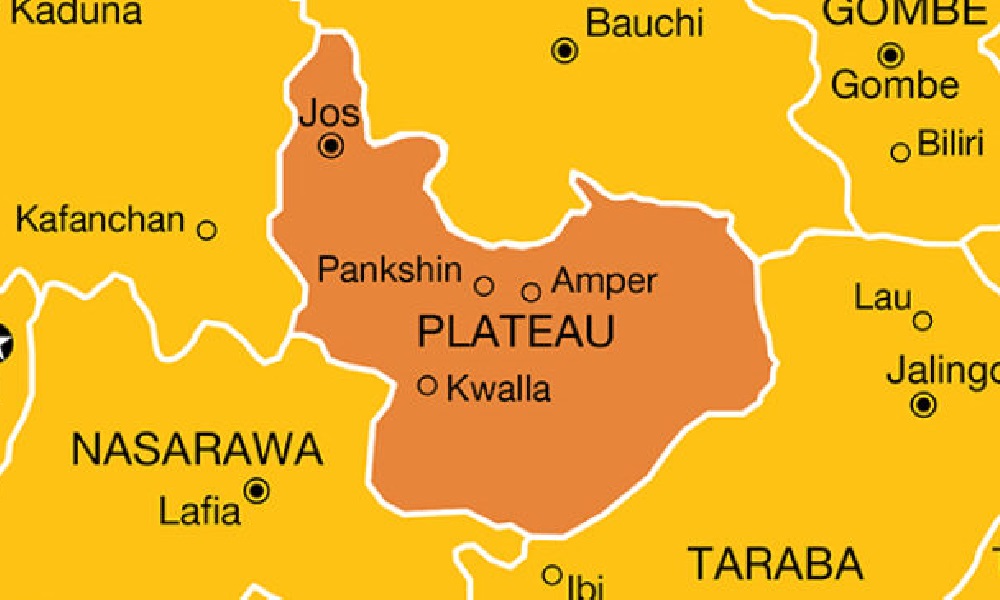
The training, which commenced at the NDLEA Academy, Jos, Plateau State, is being coordinated by the Directorate of Counseling, Treatment and Rehabilitation (DCTR) and brings together over 100 counselors drawn from the Agency’s formations across the country.

The exercise marks the first Agency-driven capacity-building programme of its kind for NDLEA counselors in several years, a development that has been widely commended by participants as a demonstration of the Agency’s renewed commitment to the professional growth of its counseling workforce.

Advertisement

Speaking at the commencement of the phase 1 of the exercise, Chairman/Chief Executive Officer of the Agency, Brig Gen Mohamed Buba Marwa (rtd) who was represented by the Director, Counseling, Treatment and Rehabilitation, ACGN Bashir Ibrahim, said the training is critical to revitalizing staff morale and equipping officers with modern therapeutic tools to tackle the evolving complexities of substance use disorders, describing it as a reaffirmation of the rehabilitation pillar of the Agency’s mandate and a guarantee that clients across NDLEA facilities receive evidence-based, quality interventions.

According to him, “key objectives of the training include harmonizing practice through uniform protocols across all State Command rehabilitation facilities; enhancing clinical proficiency to address emerging psychoactive substances and co-occurring mental health disorders; aligning the Agency’s rehabilitation practices with national and international standards; strengthening ethics, confidentiality and quality assurance; improving data management for evidence-based policymaking; promoting continuous professional development through peer review and clinical supervision; and optimizing rehabilitation outcomes by reducing inconsistencies in service delivery.”

He said the initiative underscores the Agency’s commitment to building a resilient, well-equipped counseling workforce capable of responding effectively to the nation’s drug demand reduction needs, adding that the training is expected to significantly improve the quality of care across NDLEA rehabilitation facilities and reinforce the integrity of Nigeria’s drug treatment and rehabilitation architecture.

Marwa assured that the Agency will continue to invest in the capacity of its personnel as part of its holistic approach to tackling drug supply and demand reduction in the country.

Continue Reading

News

Gov Muftwang saddened over demise of Dotun Oladipo condoles with family says he was an outstanding media practitioner

Published

on

ADVERTISEMENT
Zoom Ad
ADVERTISEMENT
Zoom Ad

The Governor of Plateau State, Caleb Manasseh Mutfwang, has extended his heartfelt condolences to the Oladipo family and the Nigerian media industry following the passing of Dr. Samson Dotun Oladipo, a veteran journalist and distinguished media professional.

In a condolence message, Governor Mutfwang described the late Dr. Oladipo as an ace journalist and a towering figure in the media industry, whose immense contributions to journalism helped shape public discourse, promote democracy and good governance, and project a positive image of Nigeria before the international community.

The Governor commended his decades-long career in journalism, marked by professionalism, intellectual depth, integrity, and an unwavering commitment to ethical journalism.

He noted that Dr. Oladipo’s dedication to mentoring and nurturing younger professionals contributed significantly to building a new generation of journalists equipped with the knowledge, skills, and values required to serve the nation creditably.

Advertisement

Governor Mutfwang recalled with nostalgia his encounter with Dr. Samson Dotun Oladipo during one of the visits of the Nigerian Guild of Editors to Plateau State for its Annual General Meeting, describing the memory as a cherished one, and expressed deep sorrow over his passing.

Governor Mutfwang said the demise of Dr. Oladipo, a newspaper editor and later Publisher of the Eagles Online platform, was not only a monumental loss to his immediate family, the Nigerian Guild of Editors (NGE), the Nigerian Union of Journalists (NUJ), and the journalism profession, but also a profound loss to the entire media community and the nation, considering his remarkable contributions to journalism and national development.

On behalf of his family, the Government and the peace-loving people of Plateau State, Governor Mutfwang conveyed his deepest sympathies to the Oladipo family, the Nigerian Guild of Editors, the Nigerian Union of Journalists, and the entire media community over the painful loss. He prayed that Almighty God would grant the deceased eternal rest and comfort the family, colleagues, and all those mourning his passing.

Advertisement
Continue Reading

News

Discovery: ‘True Tomb’ Of Jesus Christ Found After 2,000 Years Matches Biblical Description Account

Published

on

ADVERTISEMENT
Zoom Ad
ADVERTISEMENT
Zoom Ad

After years of searching, Italian archaeologists have discovered an ancient site that matches a Bible description of the tomb where Jesus Christ was buried.

This was made known by a preliminary study in the Jerusalem archaeological journal Liber Annuus.

“We have found evidence of a funerary landscape,” lead archaeologist Francesca Romana Stasolla, of the “La Sapienza” University of Rome, told the Daily Mail.

The researchers had been excavating Jerusalem’s Church of the Holy Sepulchre, a fourth century Roman Church that was built over a holy site where many Christians believe Christ was crucified, buried and then resurrected.

Advertisement

True tomb? of Jesus Christ found after 2,000 years and it matches the Biblical description
The church of the Holy Sepulchre

As a result, it’s become a mecca for religious pilgrims from across the world, attracting around four million visitors per year.

?True tomb? of Jesus Christ found after 2,000 years and it matches the Biblical description
Pilgrims praying at the Church of the Holy Sepulchre

During the final phases of the excavations in 2025, the team found a peculiar landscape that suggests they might have been onto something.

Advertisement

Underneath the church was an abandoned quarry, cultivated plots of land, rock-cut tombs and an ancient garden.

Coincidentally, the Book of John said: “At the place where Jesus was crucified, there was a garden, and in the garden a new tomb, in which no one had ever been laid.”

While no one had been found in the tomb, the abundance of parallels was compelling.

John 19:20 says that the crucifixion occurred close to Jerusalem, while Hebrews 13:12 claims that it occurred outside the city gate, which was the exact location of the quarry at the time of Christ.

Advertisement

Sections of the quarry measured 20 feet deep and had been filled with dirt, suggesting that it served a pastoral purpose.

The site’s agricultural function was further supported by the discovery of olive trees and grapevines — possibly the same plant referenced in John 19:41 — that date back to the time of Jesus‘ de@th, which is believed to have happened around 33 A.D.

“The gospel mentions a green area between the Calvary and the tomb, and we identified these cultivated fields,” Stasolla told the Times of Israel.

In fact, the graves, which were carved directly into the stone, proved that it was an actual burial ground, and matched descriptions by Matthew, Mark and Luke of Jesus’ grave as having been carved from rock.

Advertisement

The evidence goes beyond parallels to the Bible. One particular chamber had been obstructed by a Roman structure built during Emperor Hadrian’s reign in the second century.

Around 200 years later, builders employed by Constantine’s workers destroyed the Roman structure and dug up the site to reveal the tomb, which they then separated from the other chambers.

While this doesn’t definitely prove that this was Jesus’ burial site, the campaign to preserve it suggested that knowledge of the site had been passed down to early generations of Christian worshippers.

“The real treasure we are revealing is the history of the people who made this site what it is by expressing their faith here,” Stasolla told the Times. “Whether someone believes or not in the historicity of the Holy Sepulchre, the fact that generations of people did is objective. The history of this place is the history of Jerusalem, and at least from a certain moment, it is the history of the worship of Jesus Christ.”

Advertisement
Continue Reading

Trending

Copyright © 2024 Naija Blitz News