Connect with us

News

INTERVIEW: Politicians are not really keen on reforming our electoral laws-DG CCLCA, Dr Nwambu

Published

on

ADVERTISEMENT
Zoom Ad
ADVERTISEMENT
Zoom Ad

… it’s mere lip service

… insists the snail process of reformation is deliberate aimed at 2027

By Emmanuel Agaji

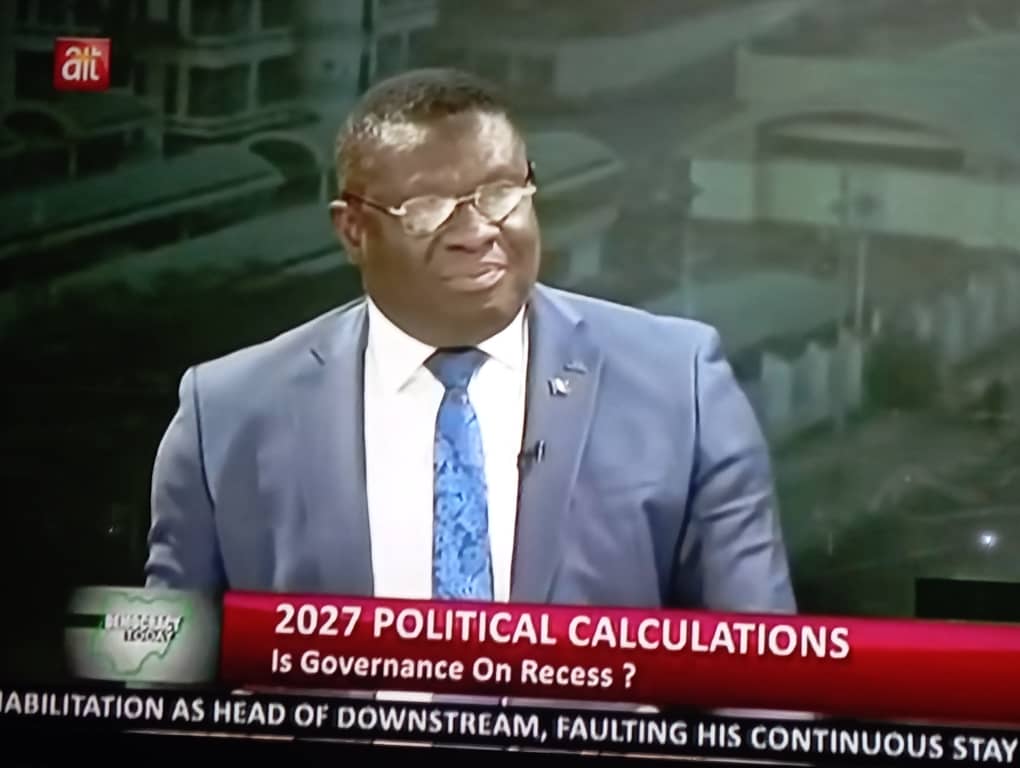
Dr Gabriel Nwambu is the Director General of Centre for Credible Leadership and Citizens Awareness CCLCA, a seasoned activist with more than two decades of practical experience, in this interview, he exposed the insincerity of politicians towards electoral reforms and the hidden agenda, excerpts.

Advertisement

Electoral reforms may influence whoever wins or loses an election no matter the level of election; national Assembly, presidential, local government election and whichever one of them. But do you think our politicians are truly in support of electoral reforms as we have heard it a number of times so far?

We have been observing with keen interest the issues that are playing out in the polity. Nigerians are talking about electoral reforms, INEC has also submitted a bill, Civil Societies have also done same.
But if you watch very closely what is happening, it is evident, it is very clear that there seem to be a deliberate tactic to delay, to buy time so that eventually the time will not allow for the requisite reforms to take place.

So I think that the legislative arm of government is playing its own game and up till now we’ve not even heard anything from the executive arm of government. So I think it is just a lip service.

The reality is that the body language of both the executive and the legislative arm of government is showing very clearly that we are not ready for electoral reforms.
It is just lip service and it is aimed to just buy time and at the end of the day they will now say you see what is happening, we cannot make the requisite reforms because of time, election is already here.

Advertisement

In other words, there is no iota of sincerity on the part of the legislature in carrying out this rather important assignment before the next round of polls.

Of course, this is clear, very simple. If you look at the way the legislative arm of government convened some meetings, convene sittings when there are pressing issues in the country.

If you see the manner with which they pass, give authorities to borrowing of money from the executive arm of government. You will know that there is just delays, unnecessary delays.
We need electoral reforms in Nigeria to get it right. For instance, we are saying that we would want an electronic transmission of election results to be made mandatory.

If you say that there is no form of sincerity on the part of the legislature, how then do you explain the fact that the two chambers of the National Assembly recently convened public hearings on electoral reforms and constitution amendments in the six geopolitical zones of the country; the Senate ended his own much earlier though than the House of Representatives. The House of Representatives own must have rounded up its own lately. So if they are not prepared for electoral reforms how come then they constituted public hearings in the six geopolitical zone of the country where prominent Nigerians even attended?

Advertisement

This is a national television and there are limits to which I can draw clarity. See, the truth of the matter is that the legislative arm of government, some persons that are in the legislature now are beneficiaries of the abnormalities that have taken place as a result of our electoral framework that is not put in proper perspective. A lot of them are beneficiaries. So they are jittery.

Most of them are aware that if the requisite framework is being done, if the requisite reforms are done, it will be difficult for them to come back in that chamber either Red or Green Chambers. So what they are doing is just a cosmetic that is it.
Most of them are aware that they are beneficiaries of the abnormalities. So they will just buy time and at the end of the day you will see, I’ll come back to this station to tell you that I told you that most of these things will not be passed.
And you see there are sensitive areas that will make our elections close to perfect.

Give me like a few of them, the kind of reforms that you are looking at.

Number one, we are saying that the appointment of the INEC chairman should not be done by the executive arm of government so that the chairman would be completely, not just the chairman, the chairman and national commissioners and resident electoral commissioners should not be appointed by the president and commander-in-chief so that they will be completely insulated from executive interference.
Now we are proposing that it is pertinent, it is imperative we bring in bodies like the NJC to make the appointment so that it would seem, we know that these things might not be 100 % perfect but at least it gives it some very, very clear moral backing. It makes it look more transparent than the executive arm of government just appointing them directly. It doesn’t make sense. That is one.

Advertisement

Two, it is also pertinent that funds that gets to INEC come directly from the federal allocation to INEC. Instead of every time INEC needs money they will now go cap in hand, go through the legislative arm before funds will get to them that is wrong.

So in other words the executive and the legislative arm of government can deliberately decide to starve the commission of funds so that they will be compelled to possibly do their biddings. So these are some of the issues we have actually opined.

If you talk about the representation of women and people living with disabilities and all that, we want a definite number of seats to be reserved for them so that we have more inclusivity in terms of the participation of women. Affirmative action for women and people living with disability including albinos. So these are some of the issues we think we should do.
And then we have the compulsory and mandatory transmission of election results.

In other words electronic transmission of the results.
R: Yes, electronic transmission of results that is the form EC8 series should be transmitted directly from the polling unit level straight to the central server and that transmission should be made compulsory with very stringent as much as 10 years imprisonment for any presiding officer who refuses as a result of issues emanating from himself, who refuses to transmit should serve at least for 10 years so that it will be stringent and with no option of fines.

Advertisement

So this will make it very serious and it will make Nigeria appear to be a more serious and concise nation. Not when the interpretations in courts have differed, you now have the manual and up till now it’s not even very clear.

Each time they go to court the interpretation seems to support the manual system of result collation. So, it makes it for those who manipulate, it makes it easy for people who intend to snatch ballot boxes to continue to perpetrate their actions.
We also opine that INEC should be unbundled. There should be a separate commission that is in charge of prosecution of electoral offenses.

Election petition tribunal, party monitoring and all of those.
R: Yes, a petition tribunal other than INEC, party monitoring and party registrations should be another body too.
Then we are also saying that it is pertinent we do all the elections including that of the local government in one day. That would increase voter participation. We talk about voter apathy all the time.

You don’t think that is going to aid your election rigging and all that when there are so many elections and INEC is no longer able to monitor all of these in one day.
R: INEC is going to prepare very well.

Advertisement

Remember it has not been unbundled yet. So in the event that comes first…?
R: If all the bills, the proposals made by the Civil Societies is implemented, I think it will go a long way in strengthening our democracy.

You talked about electronic transmission of result, that’s making more use of technology in the times that we are in, which is good but INEC is already making use of technology, remember the BVAS and of course the last election when INEC promised to transmit election results, to paste election results on the IREV in real time but INEC itself later announced that they had technical glitches and the result couldn’t be viewed as it promised. Apart from that you mentioned sending election results to INEC central server, there was a time INEC denied having a central server after it admitted that it did have. So will the introduction of more use of technology be accepted by INEC to begin with before it can even talk about being sustainable?
R: Of course we have to get everything cleared. The 2023 general elections was, especially that of the presidential election and National Assembly elections. We know what happened, INEC actually apologized that they had a technical hitch.

Now but what we as Nigerians are still asking is that that technical hitch, we do not know what has happened. Who is responsible for the technical hitch? What actually transpired? Was the server deliberately switched off? Nigerians deserve and have the right to know some of these things.
The fact that some of these things are shrouded in darkness makes people more inquisitive. They want to know and who and who are responsible for that central server. And why was it switched off? If it was switched off.

Why was the technical hitch, the technical glitch, why did it take place in the presidential election while in the state assembly and governorship elections, it was okay. So, what happened?
Nigerians deserve the right to know some of these things and until some of these things are brought to bear, they’re making it look more suspicious that is it.

Advertisement

Talking about INEC, it is the country’s only apex electoral body at this point, it has not been unbundled yet so everything regarding election at all levels begins and ends with INEC. It gave a warning today and it appears it has suddenly woken up to live up to his duties, to his mandates. It gave a warning, a serious warning at that to all political parties in Nigeria to stop forthwith the campaign and electioneering activities towards 2027 polls because it is not time yet because it’s supposed to be according to electoral act 150 days before polling day but it has been going on, a lot of defections and endorsements of the candidate for presidency.
Continue Reading
Advertisement
Click to comment

Warning: Undefined variable $user_ID in /home/naijuinz/public_html/wp-content/themes/zox-news/comments.php on line 49

You must be logged in to post a comment Login

Leave a Reply

News

How I delivered ten pregnant women while in captivity, nurse reveals

Published

on

ADVERTISEMENT
Zoom Ad
ADVERTISEMENT
Zoom Ad


A nurse who recently regained her freedom after nearly six months in captivity has narratted the severe conditions endured by the abducted women and children, saying she helped 10 pregnant women give birth without gloves or proper medical equipment.

Amirah Salihu was among the victims abducted during the February 3 attack on Woro and Nuku communities in Kaiama Local Government Area of Kwara State.

Salihu, who is the daughter of the chief of Woro community, disclosed her experience during an interview on Channels Television’s Politics Today.

Advertisement

She said the captives faced acute food shortages and were forced to sleep in exposed locations, including near a river, where they were frequently drenched by rainfall.

According to her, the abductors often gave them little food, with guinea corn, salt and seasoning sometimes serving as their only meal.

The nurse said her professional training became crucial when some of the women went into labour during their captivity.

She explained that she assisted about 10 pregnant women to deliver their babies despite the absence of gloves and other essential medical supplies.

Advertisement

She said, “When the pregnant women started going into labour, I had to assist them. I helped about 10 women deliver their babies, even though I had no gloves or proper equipment.

“It was difficult, but I had to do what I could to help them survive and deliver safely.”

Salihu added that the abductors eventually discovered she was a nurse and attempted to persuade her to remain with them because of her medical knowledge.

She said she rejected the proposal because her priority was to regain her freedom and return to her family.

Advertisement

The rescued victim also recalled the killing of two of her brothers during the attack, alleging that the assailants targeted her family because of her father’s opposition to their activities in the community.

She said her father had previously resisted attempts by the attackers to gain access to Woro and had sought military intervention to protect the residents.

According to her, the attackers struck when the soldiers were no longer present in the community.

She said her father had previously resisted attempts by the attackers to gain access to Woro and had sought military intervention to protect the residents.

Advertisement

According to her, the attackers struck when the soldiers were no longer present in the community.

Salihu further said the abductors justified their actions by claiming they wanted residents to abandon Nigeria’s democratic system and follow their interpretation of religious laws.

However, when asked about sexual violence during the period, she said she was not aware of any rape or sexual assault among the captives.

The victims were part of the 176 women and children abducted during the February 3 attack on Woro and neighbouring Nuku.

Advertisement

They were released on Wednesday after spending almost six months with their abductors. The Kwara State Government later disclosed that 13 children had died in captivity, while 12 others were yet to return.

Kwara State Governor, AbdulRahman AbdulRazaq, received the freed victims in Ilorin and commiserated with families who lost loved ones.

He subsequently visited a hospital where 14 rescued victims were undergoing treatment, including three women who delivered babies while in captivity.

Advertisement
Continue Reading

Foreign

STRATEGIC AUTONOMY: NIGERIA’S DOCTRINE FOR SELF-DETERMINATION IN A MULTIPOLAR WORLD

Published

on

ADVERTISEMENT
Zoom Ad
ADVERTISEMENT
Zoom Ad

In an era defined by geopolitical competition, trade wars, sanctions regimes, and shifting alliances, one phrase has migrated from European policy papers to the heart of African diplomacy: “Strategic Autonomy”.

For Nigeria, this is not a new experiment in isolation, nor is it a nostalgic return to Cold War non-alignment. As I outlined in a recent address from the Ministry of Foreign Affairs in Abuja, it is something far more direct and more urgent.

Strategic autonomy is alignment to Nigerian national interest. Once you are clear in what constitutes your national interest, you align with those interests regardless of which party is at the receiving end. That is the foundation. I am aware of scholarly publications that was recently put together by the Nigerian Institute of International Affairs on the subject.

While the Ministry prepares the full concept note charting new fronts in a multi polar world, let me share the preliminary framework guiding Nigeria’s foreign policy under President Bola Ahmed Tinubu.

Advertisement

Our goal is simple: to ensure that Nigeria, and by extension Africa, is not an object of geopolitics, but a subject that defines its own future.

What Strategic Autonomy means for Nigeria and Africa
Strategic autonomy is often misunderstood as withdrawal. It is the opposite. It is engagement on our terms. Today, Nigerian Foreign Policy has shifted. Gone is the era of reactive alignment. The Tinubu 4Ds agenda is anchored on strategies that are clearly designed to bring succor to Nigerians. The deliberate pursuit of Nigeria’s national interest across economic, security, technological, and diplomatic domains, without being locked into any single bloc. Nigeria’s strategic autonomy rests on 5 pillars in a world of continuous alignment. Together, they form the blueprint for how Nigeria engages a world that is no longer unipolar, but contested, transactional, and opportunity-rich.

NATIONAL INTEREST, NIGERIA FIRST 
Alignment to Nigerian national interest is the guiding rule. For Nigeria, Foreign Policy begins at home. Every treaty, partnership, and diplomatic gesture is measured against one question: does it deliver jobs, infrastructure, security, defence and dignity for Nigerians?

This principle was tested in the enforcement of the One China Policy. When diplomatic lines were blurred, the Ministry acted decisively: relocating trade missions from Abuja to Lagos, Nigeria’s commercial hub, and reaffirming that Nigeria speaks with one voice.  There is no room for diplomatic blunder in Nigeria. The message is clear: Nigeria will be a partner, not a pawn. Strategic autonomy means clarity of position first, and flexibility in tactics second.

Advertisement

ECONOMIC DIVERSIFICATION 
AfCFTA + global partnerships like China’s zero-tariff access. Nigeria is done with aid-for-diplomacy. The new model is trade-for-growth. Under President Bola Ahmed Tinubu’s Renewed Hope Agenda, Nigeria is leveraging two levers simultaneously: 

1. Continental integration through the African Continental Free Trade Area, to build regional value chains. 

2. Global partnerships that open markets. China’s zero-tariff policy for eligible Nigerian exports is a case in point, creating new pathways for agriculture, manufacturing, and solid minerals to reach 1.4 billion consumers.

From the Lagos-Calabar coastal transport system to industrial parks in Ogun and Lekki, Chinese, European, and Gulf investments are being steered toward productive sectors. The goal is not dependency, but diversification: more partners, more markets, more Nigerian-made exports.

Advertisement

SECURITY SOVEREIGNTY
African-led, but open to any partner that delivers results. Nigeria’s security doctrine is rooted in the principle that Africans must lead African solutions. ECOWAS, the AU, and regional counter-terrorism frameworks remain central.

But strategic autonomy also means pragmatism. On terrorism, maritime security in the Gulf of Guinea, and cyber threats, Nigeria is open to cooperation with any partner, East or West that brings intelligence, technology, and capacity without conditions that undermine sovereignty. The benchmark is simple: results for Nigerian communities. Partnerships are judged not by ideology, but by impact on the ground.

TECHNOLOGICAL AGENCY 
Build, don’t just buy. Lead in AI and digital infrastructure. The 21st century will be won on data, chips, and talent. Nigeria refuses to be only a consumer. This is the essence of Minister Bosun Tijjani’s reforms in our digital ecosystem.  Through partnerships in 5G, fiber optics, and smart cities, Nigeria is negotiating technology transfer, not just procurement. Engagement with the World Artificial Intelligence Organization and related partnerships signal intent: to move from adoption to authorship.

The aim is to build domestic capacity in AI, fintech, and digital governance, so that Nigerian developers, not just foreign vendors, shape the platforms used daily by 200 million Nigerians. Technological agency is sovereignty in the digital age.

Advertisement

DIPLOMATIC FLEXIBILITY 
Engage all major powers without being locked into one camp. In a multipolar world, alignment is a choice made per issue, not per decade. Nigeria maintains a Comprehensive Strategic Partnership with China on infrastructure and more. It deepens trade and security ties with the US and EU. It expands South-South cooperation with India, Brazil, and the Gulf. It leads on the continent through AfCFTA and AU reform.

This is not non-alignment. It is multi-alignment: engaging all, belonging to none, and extracting maximum value for Nigeria from each relationship. Strategic autonomy is alignment to Nigerian national interests. Nigeria’s 5 Pillars offer more than a foreign policy. They offer a template for mid-sized and emerging powers navigating great power competition. It is a policy of conviction without rigidity. Of partnership without dependence. Of ambition without illusion.

Nigeria will continue to deepen partnerships that deliver infrastructure, jobs, and technology, but always on Nigerian terms. In 2026, the measure of sovereignty is not who you oppose. It is what you are able to build.

We can no longer afford an economy built only on exporting raw materials to one market and importing finished goods from another. The African Continental Free Trade Area gives us the platform to build regional value chains. At the same time, we must diversify globally. This is why we welcome China’s decision to grant zero-tariff treatment to 53 African countries, while we simultaneously deepen trade with the EU, the US, the Gulf, and our neighbors in ECOWAS. No single partner can meet all our development needs, and we will not be dependent on any one.

Advertisement

The primary duty of any government is the protection of its citizens. That principle must guide our security partnerships. African-led solutions through the AU and ECOWAS remain our first choice. But we will not outsource our judgment. We greatly appreciate the US but if any country says he can help me to wipe out terrorism in Nigeria in the next two weeks, will I say because I’m friend to the US I will not agree? No,”. The safety of Nigerians comes first. Strategic autonomy means we evaluate every security offer by one metric: does it deliver peace, security and stability for our people?

In a multipolar world, we must talk to everyone and be forced to choose no one. This is not duplicity. It is maturity. We have demonstrated this in recent weeks. We condemned Afrophobic attacks in South Africa because the dignity of Nigerians abroad is non-negotiable. We pushed the agenda at the recent ECOWAS Summit in Freetown Sierra Leone where President Tinubu’s voice was clear and unambiguous. At the same time, we are preserving and strengthening the Nigeria-South Africa strategic partnership because both countries benefit from trade, investment, and regional leadership. That is strategic autonomy in practice.

The 4D Agenda meets a fragmenting World
The global shifts make this doctrine necessary today.  Today, we have multipolarity. The unipolar moment has passed. Power is diffused across Washington, Beijing, Brussels, New Delhi, Riyadh, and other capitals. Under President Tinubu’s 4D Foreign Policy Agenda: Demography, Development, Diaspora and Democracy — Nigeria’s diplomacy is calibrated to one question: what does this mean for Nigerian citizens? Ideological blocs are secondary to results.

Africa has 60% of the world’s youngest population. By 2050, one in four people on earth will be African.  Nigeria will be the third most populated country in the world by 2050. We cannot allow our future to be scripted by others. We must define our own development model, centered on jobs, skills, and innovation. In this context, some analysts have described our approach as “pragmatism devoid of doctrine.” I disagree.

Advertisement

“I don’t agree with that kind of characterization. Everything foreign policy is about national interest,”.  What we are doing is giving that age-old principle a modern name and structure. We are drawing from our own history. As one of my lecturers at the University used to say, “ non-alignment is alignment to your national interest.” That remains true. Doctrine without delivery is rhetoric. For strategic autonomy to produce tangible benefits, Africa must take deliberate steps.

We must fully implement AfCFTA to unlock a $3.4 trillion single market. That means reducing tariffs, harmonizing standards, and building cross-border infrastructure. We must invest heavily in energy and infrastructure. No factory runs without power. No trade happens without roads, rail, and ports. Strategic autonomy requires industrial power.

Africa must speak with one voice in global forums — at the UN, G20, and WTO. Africa’s 54 countries carry more weight together than separately. It is time to protect and deepen democratic institutions. Autonomy should never be confused with authoritarianism. The legitimacy of our choices comes from the consent of our people.

Let me be clear. Strategic autonomy is not about turning our backs on partners. It is about choosing partners freely. It is the right to trade with anyone, learn from everyone, and be dominated by no one. The world is fragmenting into blocs. Africa’s best option is not to join a bloc, but to become a bloc ourselves — economically integrated, politically coherent, and diplomatically confident.

Advertisement


Written by Ambassador Sola Enikanolaiye,
Minister of State for Foreign Affairs, Federal Republic of Nigeria

Continue Reading

News

Bode George Still Angry Over His Failed PDP National Chairmanship Bid, No Regret Stopping Him – Wike

Published

on

ADVERTISEMENT
Zoom Ad
ADVERTISEMENT
Zoom Ad

The Federal Capital Territory (FCT) Minister, Nyesom Wike, has said that he had no regret Stopping Peoples Democratic Party (PDP) former Deputy National Chairman, Chief Bode George, from becoming the party National Chairman, saying; “his anger is because we didn’t allow him to be PDP National Chairman and no regret doing so.”

In a statement on Saturday, by his Senior Special Assistant on Public Communications and Social Media, Lere Olayinka, the FCT Minister said the political frustration of Bode George has further been compounded by the emergence of Deji Doherty, a personality he does not want to see as the one in charge of the party in Lagos State.

“He wanted to be PDP National Chairman, and was carrying on like the position was his birthright. We stopped him because it was the turn of the South-South. Since then, he has not stopped being angry.

“As a sitting governor, I visited his house in Maitama, Abuja, to appease him after the national convention, his wife attempted to walk me out, but for the intervention of former governor of Ondo state, Olusegun Mimiko,” the minister said.

Advertisement

He described Bode George as a failed politician, who despite all the privileges and power has not won anything for the PDP in Lagos State since 1999, adding that “We have managed him even though we know that he has no value. But as it is, since he wants to keep dancing naked in the market place of politics, we can’t but allow him.”

The Minister reiterated that leadership of a political party is not by name, title or being a founding father. Rather, it is about what you are able to bring to the table in terms of winning elections, and in this regard, Bode George is a complete disaster.

“Even his Unit 001 in Ward E2, Evans Street, Lagos Island, he has never won for the PDP. In 2019 Presidential election, APC had 84 votes while PDP had 40. In the 2023 elections, he transferred his voter’s card to Eti Osa, PDP had four votes in his polling unit,” Wike said.

Wike said since it appeared that he (Bode George) is not busy, he will continue to make his likes busy by creating reason for them to jump from one television station to the other.

Advertisement
Continue Reading

Trending

Copyright © 2024 Naija Blitz News