Economy
Naira in 9th position as Weakest Currency In Africa-Report
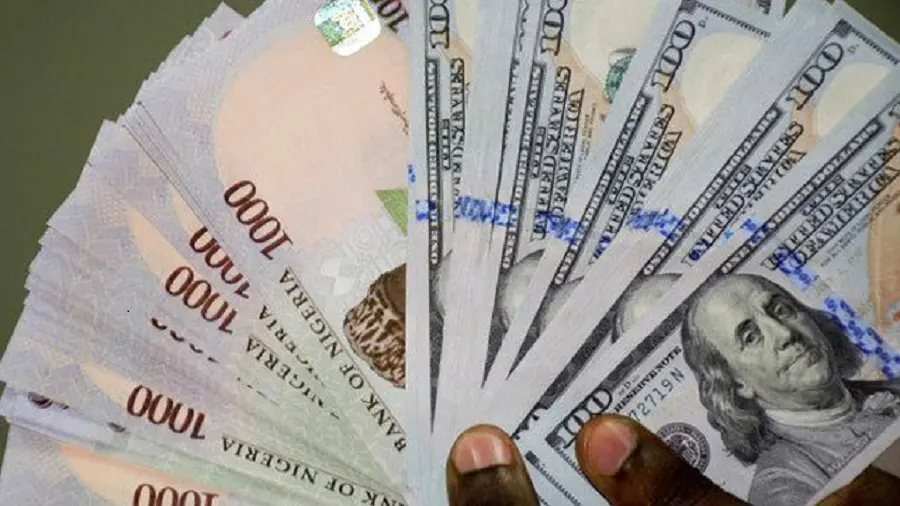
The Nigerian Naira has been positioned as the ninth weakest currency in Africa, according to the latest Forbes currency calculator report for September 2025.

The ranking, which relies on real-time data provided through the Open Exchange Rates API, updates every five minutes to reflect live trading activity. It factors in demand and supply dynamics, economic stability, and overall market sentiment affecting different African currencies.
According to the report, the São Tomé & Príncipe Dobra topped the list as the weakest African currency at 22,282 per $1, followed by the Sierra Leonean Leone at 20,970 per $1, and the Guinean Franc at 8,680 per $1.

Other currencies on the weak list included:
Ugandan Shilling – 3,503 per $1
Burundian Franc – 2,968 per $1
Congolese Franc – 2,811 per $1
Tanzanian Shilling – 2,465 per $1
Malawian Kwacha – 1,737 per $1
Nigerian Naira – ₦1,490 per $1
Rwandan Franc – rounding off the top 10
On the other hand, the continent’s strongest currencies were listed as:
Tunisian Dinar – 2.90 per $1
Libyan Dinar – 5.40 per $1
Moroccan Dirham – 9.91 per $1
Ghanaian Cedi – 12.31 per $1
Botswanan Pula – 14.15 per $1
Africa currently consists of 54 recognized countries, according to the United Nations.
Naira’s Weakness Amid Signs of Economic Stability
Although the Naira remains among Africa’s weakest-performing currencies, recent figures suggest that Nigeria’s broader economy may be experiencing some relief.
Data from the National Bureau of Statistics (NBS) shows that headline inflation dropped from 24.5% in January 2025 to 20.12% in August 2025, representing the fifth consecutive month of disinflation.
Analysts attribute this improvement to:
Steady foreign exchange inflows from oil exports and diaspora remittances
A boost in agricultural output
The Central Bank of Nigeria’s (CBN) tight monetary stance, which kept the benchmark interest rate at 27.5%
Expert View and Outlook
According to Dr. Omoniyi Akinsiju, chairman of the Independent Media and Policy Initiative (IMPI):
“Nigeria recorded a rare disinflation in 2025, with inflation falling from 24.5% in January to 20.12% in August the sharpest mid-year slowdown in over a decade.”
Looking ahead, IMPI projects that inflation could fall further to 17% by December 2025, offering hope that consumer prices may stabilize and provide some relief to households battered by years of rising costs.
While the Naira continues to rank low against other African currencies, signs of easing inflation and stable forex inflows suggest that Nigeria may be inching toward economic stability, even if currency strength remains a major challenge.
Economy
See Black Market Dollar To Naira Exchange Rate Today 20th April 2026
The Black Market Dollar-to-Naira Exchange Rate for 20th April 2026 Can Be Accessed Below.
IMPORTANT NOTE: The exchange rate changes hourly. It depends on the volume of dollars available and the Demand. This means…you can buy or sell 1 dollar at a certain rate, and the price can change (high or low) within hours.
The official naira black market exchange rate in Nigeria today, including the Black Market rates, Bureau De Change (BDC), and CBN rates.
Please note that the exchange rate is subject to hourly fluctuations influenced by the supply and demand of dollars in the market.
What’s the dollar to naira black market today, 20th April 2026?
The exchange rate for a dollar to naira at Lagos Parallel Market (Black Market) players sell a dollar for ₦1400 and buy at ₦1390 on Monday 20th April, 2026, according to sources at Bureau De Change (BDC).
Please note that the Central Bank of Nigeria (CBN) does not recognize the parallel market (black market), as it has directed individuals who want to engage in Forex to approach their respective banks.
Dollar to Naira Black Market Rate Today
Dollar to Naira (USD to NGN) Black Market Exchange Rate Today
Selling Rate ₦1400
Buying Rate ₦1390
Dollar to Naira CBN Rate Today
Dollar to Naira (USD to NGN) CBN Rate Today
Highest Rate ₦1348
Lowest Rate ₦1340
Disclaimer:NEWSRAIN NIGERIA does not set or determine forex rates. The official NAFEX rates are obtained from the FMDQOTC website. Parallel market rates (black market rates) are obtained from various sources, including online media outlets. The rates you buy or sell forex may be different from what is captured in this article.
Economy
CBN, FMDA introduce the Nigerian Overnight Financing Rate
The Central Bank of Nigeria (CBN) in collaboration with the Financial Markets Dealers Association (FMDA) has introduced the Nigerian Overnight Financing Rate (NOFR).
The new initiative is a standardized benchmark, aimed at enhancing transparency, strengthening monetary policy transmission, and deepening Nigeria’s money market.
The introduction of the NOFR was made known in a statement issued on Sunday by the Director, Corporate Communications of the CBN, Mrs. Hakama Sidi Ali.
The apex bank explained that the NOFR was developed to align Nigeria with global best practices in short-term interest
rate benchmarks.
Moreover, it said the initiative is expected to improve price discovery and transparency, while promoting consistent pricing of money market instruments.
“It will enhance the effectiveness of monetary policy, support financial innovation, boost investor confidence, and strengthen risk management across the financial system,” the CBN said.
The introduction of NOFR positions Nigeria alongside leading global benchmarks such as SOFR in the United States, SONIA in the United Kingdom, €STR in the Eurozone, and TONA in Japan.
Also, it complements African benchmarks such as the JIBAR in South Africa.
The CBN added that the benchmark was adopted after a stakeholder engagement session held on February 27, 2026, with market participants formally endorsing the initiative.
It further disclosed that following the subsequent regulatory approval, NOFR is now in use, with the CBN serving as the benchmark administrator.
“The bank will ensure governance, transparency, and regular publication of the rate,” the statement stated.
Economy
Naira Slumps At Official FX Market
The Nigerian naira depreciated slightly against the United States (US) dollar, trading at N1,343.6398 per dollar at the Central Bank of Nigeria (CBN) official foreign exchange window on Friday, 17th April, 2026.
According to the data on the CBN’s official platform, the naira traded at the Nigerian Foreign Exchange Market (NFEM) rate of N1,343.6398/$per dollar and closed at N1,342.5000 per dollar.
When compared with the previous trading rate, the Nigerian currency traded at N1342.3037 on 16th April, 2026. With this, the Nigerian currency depreciated slightly by a minimum of N1.3.
At the parallel market, the naira-to-dollar exchange rate for the buying rate didn’t change while the selling rate increased by N3 when compared to that of the previous trading rate.
According to Aboki FX , the Naira-to-dollar exchange rate at the black market on Friday, 17th April, 2026, was N1,395 and N1,405 per dollar for buying and selling rate respectively.
-
News23 hours agoPDP Holds First NEC Meeting After Police Reopen National Secretariat
-
News24 hours agoJust in: Terrorists invade military camp, k!ll three soldiers in Kwara
-
News8 hours ago2027: APC Snubs Gbenga Daniel, Throws Weight Behind Dapo Abiodun for Senate
-
News17 hours agoTinubu approves N15bn take off grant for new police academy
-
News8 hours agoBillionaire Blord Steps Out Of Prison Into Brand New Vehicle (Video)
-
News20 hours agoNYSC Reschedules Orientation Date For Enugu, Osun Corps Members
-
Economy19 hours agoSee Black Market Dollar To Naira Exchange Rate Today 20th April 2026
-
News17 hours agoIran executes two men over spying for Israel