
News
HOW FAR WITH THE FCTA/CHINA COLLABORATION?


- /home/naijuinz/public_html/wp-content/plugins/mvp-social-buttons/mvp-social-buttons.php on line 27
https://naijablitznews.com/wp-content/uploads/2025/06/Minister-Nyesom-Wike-and-President-Bola-Tinubu.jpg&description=HOW FAR WITH THE FCTA/CHINA COLLABORATION?', 'pinterestShare', 'width=750,height=350'); return false;" title="Pin This Post">
- Share
- Tweet /home/naijuinz/public_html/wp-content/plugins/mvp-social-buttons/mvp-social-buttons.php on line 72
https://naijablitznews.com/wp-content/uploads/2025/06/Minister-Nyesom-Wike-and-President-Bola-Tinubu.jpg&description=HOW FAR WITH THE FCTA/CHINA COLLABORATION?', 'pinterestShare', 'width=750,height=350'); return false;" title="Pin This Post">


BY BOLAJI AFOLABI
Sports, football in particular is almost a religion across many nations. The humongous economic and financial importance of football; through multi-dollar investments, endorsements, and other commercial activities has seen rapid increase, and interests of the vast majority of people in the “beautiful game.” This is not forgetting the open-ended social, cultural, and diplomatic benefits. A recent report by an international media platform revealed that, football, in some countries contributes a sizable percentage of employment opportunities to different classifications of people. The chain effect of employment in the sector cuts across sex, age, and other considerations. Every properly structured club has full compliments of workers drawn from different professions.
Experts in varied fields of medicine; psychologists; dieticians; the media; environmentalists; groundsmen; and many others are recruited by clubs. These, and other factors have made football the darling of many people around the world.
Nigeria is no exception. Agreed, the management of our football is still tottering, largely due to the calibre and quality of the administrators, but football has become the “main menu” amongst the vast majority of people. On a regular basis, the huge numbers that converge on homes, leisure spots, relaxation joints, and events centres to watch matches are breathtaking. With the crowded football calendar that includes UEFA champions league; Europa league; UEFA conference league; and the respective leagues in England, Spain, Italy, and other nations in Europe, and across the world, people congregate at various locations almost, as a ritual to savour the skills, tackles, and numerous theatrics associated with the game. Of particular mention is the rising patronage of women to the growing population of football followers. On match days, at centres, in groups, on the streets, on the air waves, and other platforms, the brilliance, understanding, and knowledge exhibited by women are usually outstanding.
From observation, the number of enthusiasts who besiege viewing centres are more. Indeed, there has been an upsurge in recent years. This fast-growing trend can be explained. With the rising incidents of betting, many youths and some adults, stay glued to the giant television sets at centres to monitor matches, hoping to “hit jackpots.” By the way, it is expected that the National Orientation Agency, (NOA), and other relevant MDAs will take necessary steps towards addressing the implications of youths involvement in betting, and some other negative vices. For some others, it is a necessary escape route; even if momentary from the thoughts of hunger, hardship, and harrowing conditions they are passing through. A few others throng viewing centres to run away from the realities of pervading poverty and pressures from their households. Some other patrons, who may not necessarily be ardent lovers of football, described the viewing centres as veritable platforms for discussions on topical issues, and networking opportunities.
Events that unfolded on Saturday, September 28, 2024 confirmed the latter categorization. The writer was in the company of a few friends, and others who were regular patrons of a viewing centre in the Wuse 2 area of Abuja; that has virtually become the commercial and economic hub of the city centre. After watching a few “matchday 6” rounds of matches involving Wolves versus Liverpool; Chelsea and Bright & Holve Albion; Arsenal versus Leicester; and Everton vs Crystal Palace, it was time for gists, debates, information, and updates. Taking turns to analyse the staggering hyperinflation and its attendant accentuating hardship, and corrosive poverty among people, it was agreed that there should be a human face to every economic policy by the government. Typical of doctors who do ward rounds on in-patients in hospitals, the group mirrored activities of major MDAs; giving kudos and knocks as may be necessary.
As the early night-moons were descending, signalling the end of a fruitful relaxation day, a member who will prefer anonymity, spoke about the number of bilateral relations between Chinese firms and the Federal Capital Territory Administration, (FCTA) for infrastructure development. As expected, this triggered hours of back and forth by every member of the group. Many, angered by the negative outcomes of similar initiatives by a former influential Minister; in a different Ministry, and Heads of some agencies under the Buhari administration, wondered why the present leadership of the FCTA would follow the same route. Described as a wild goose chase, it was predicted that, like others before it, nothing positive will emerge from the pact.
The group engaged in further condemnation of the FCTA’s decision in exploring similar initiatives, which allegedly became conduits for fleecing our commonwealth by some very senior officials in the past administration. Though there was consensus that given the glaring infrastructure deficits in the FCTA, largely due to lack of political will and exposure by previous administrations, the capital city deserves urgent and decisive actions but the Chinese option did not bode well with members of the group. However, comments made by an elderly man; who confessed to have eavesdropped on our discussions sort of became healing balm for us all. He said, “young men, listening to all your thoughts, and views gives me encouragement that Nigeria will be great again. You have all shown passion for, and commitment towards the development of the capital city. Look at the cup half full and not half empty. What are the immediate challenges of the FCTA? Are the Minister’s initiatives targeted at resolving these issues?”
Indeed, there are empirical studies that confirmed that the capital city is in dire need of infrastructural development. Many residents are unanimous about the glaring decay, and deficits that pervades facilities in the city. Angered about these deplorable conditions, many residents have concluded that the situation may become worse if urgent steps are not taken. Following almost a decade of non-activity and non-ingenious actions by previous administration, the capital city (and satellite areas) were dotted with the dearth of infrastructures. From roads to water, lighting, education, and health, the vagaries of glot and gloom were evidently visible for every dispassionate person to see, and experience. Residents, and visitors were wondering when these development challenges would be addressed, for Abuja to emerge as Africa’s “events capital.”
Perhaps, realizing the imperatives of infrastructure as a catalyst towards ensuring multi-sectoral development of Abuja, Barrister Nyesom Wike, the FCTA Minister sometime in September 2024, entered agreements with some Chinese companies. The Memorandum of Association, (MOU) was signed in Beijing, China by Wike (for the FCTA), and Chen Si Chang and Lan Meizhong (for the China Civil Engineering Construction Cooperation, CCECC, and China Geo-Engineering Corporation Overseas Construction, CGCOC), on the sidelines of the Forum on China-Africa Cooperation, (FOCAC), which was held at the asian giant nation.
According to reports, these and other MOUs were for roads, water, power, health, education, and a few other critical sectors. It is instructive to note that, one year into bilateral relations, appreciable strides have been achieved. The CGCOC, for instance completed the Greater Abuja Water Works project in record time. The project, as the “main artery” of the water supply system has tripled the city’s daily capacity to over 700,000 cubic meters from the former 240,000. Impressed by the company’s performances, the FCTA signed an agreement with the Chinese Geo-Engineering Corporation Nigeria; a subsidiary of the CGCOC for improved water supply to Kubwa, Bwari, and Karu, Kwali, Kuje, Gwagwalada satellite towns.
The CCECC, and CGCOC have completed solar powered electrification of some streets in Asokoro, Guzape, Central Business District, Wuse, Garki, Mabushi, and Katampe. Others are Gwarimpa, Life Camp, Kado, Jabi, and Jahi. In its resolve to improve on the provision of power to residents amidst serial cases of theft, defacing, and destruction of panels, poles, and other materials, Minister Wike launched the “Light Up Abuja” initiative, a few days back. Also, the China Engineering & Machinery Corporation, (CMEC) is providing support towards the development of a Gwagwalada Independent Power Plant. The FCTA and Hunan Province, China collaboration has yielded positive impacts in the education sector. Companies including the China Road & Bridge Corporation, (CRBC) are strengthening cooperation in education towards facilitating infrastructural development. The firms are upgrading facilities, and providing learning facilities in some FCTA schools within the city-centre, and satellite towns, as proof of the successes of the MOUs.
Somehow, the overwhelming successes of the FCTA/China collaboration are evidently obvious, and unmistakably visible in roads infrastructure. Confident that the completion of long-abandoned roads will not only open-up many areas, but increase economic activities, and improve security of lives and properties, Wike ensured that contractors (which includes Chinese companies) went back to site. This courageous decision proved instructive, as many roads were completed. The Abuja South Outer Ring Road Phase 2 project constructed by the China Land Overseas Nigeria, (CLON) which covers the exit point of the capital city to neighbouring Nasarawa State, and many others, are successful fallouts of the collaboration.
No doubt, the laudable performances of these companies can be described as fidelity to the MOUs signed with the FCTA. More importantly, the dynamic drive, iron-cast resolve, and commitment of Wike and his team towards ensuring the infrastructure make-over of the capital city is the necessary impetus that has made these changes reality. It is encouraging that satellite towns are also factored as beneficiaries of timely delivery of projects by the companies. As it is, many residents of Abuja; including critics of Wike acknowledge the strings of impactful projects completed or on-going. As expected, residents of Abuja still desire more of these projects. Aware of this, Wike, at the flag-off of a few more road projects, this week promised to include health, education, and other sectors in the next round of infrastructure programmes.
* BOLAJI AFOLABI; a Development Communications specialist was with the Office of Public Affairs, The Presidency, Abuja.

Pope Leo has appointed two Nigerians to key positions in the Vatican’s Dicastery for Evangelization.
According to Fides News Agency, the appointments were announced alongside those of three other African Catholic leaders.
Archbishop Alfred Adewale Martins of Lagos was named a member of the Dicastery for Evangelization (Section for First Evangelization and New Particular Churches), one of the Vatican’s principal departments responsible for missionary activities and the establishment of new local Churches.
Also appointed as a consultor of the same Dicastery is Father Wenceslaus C. Madu, C.M.F., Vice-Chancellor of the Claretian University of Nigeria, Nekede.
Other African appointees as members of the Dicastery are Cardinal Fridolin Ambongo Besungu, OFM Cap, Archbishop of Kinshasa in the Democratic Republic of the Congo, and Archbishop Andrew Nkea Fuanya of Bamenda, Cameroon.
Archbishop François Sylla of Conakry, Guinea, was also appointed as a consultor.
The appointments are expected to strengthen African representation in the Vatican’s evangelization mission and governance of new particular Churches.
The Nigerian Army has warned that terrorist and criminal groups were increasingly exploiting cyberspace to recruit members, raise funds, coordinate attacks and spread propaganda, describing the trend as a growing threat to Nigeria’s national security.
The Chief of Army Staff (COAS), Lt.-Gen. Waidi Shaibu, raised the alarm on Tuesday at the 2026 Nigerian Army Cyber Warfare School Seminar in Abuja.
Represented by the Deputy Chief of Special Services and Programmes, Maj.-Gen. Jeremiah Manjang, the Army Chief said cyberspace has evolved into a strategic battlefield where both state and non-state actors operate with unprecedented speed, making security threats more complex and difficult to counter.
He noted that hostile actors no longer require physical presence to disrupt critical infrastructure, compromise sensitive information, manipulate public opinion or undermine national security through anonymous cyber attacks.
According to him, terrorism, insurgency, banditry, kidnapping, separatist agitations, organised crime, misinformation and disinformation are increasingly being enabled, coordinated and amplified through digital platforms and cyber networks.
“The reality is that terrorist and criminal groups now exploit cyberspace for recruitment, propaganda, fundraising, intelligence gathering, attack coordination and concealment of illicit financial transactions. This demands a proactive and coordinated national response,” he said.
Shaibu said the changing nature of security threats had compelled the Nigerian Army to strengthen its cyber capabilities to effectively address complex, asymmetric and technology-driven challenges.
He called for stronger cyber intelligence capabilities driven by artificial intelligence (AI), machine learning and advanced data analytics to improve early warning systems, threat detection and predictive security analysis.
The COAS also advocated deeper collaboration among government institutions, the military, law enforcement agencies, academia and the private sector, stressing that cybersecurity can no longer be handled by a single institution.
He emphasised the need for sustained investment in indigenous cyber capabilities, research, technological innovation and human capacity development to protect Nigeria’s digital sovereignty and enhance national resilience against emerging threats.
Shaibu further stated that integrating cyber capabilities into conventional military operations would strengthen surveillance, intelligence gathering, geospatial analysis, command-and-control systems, situational awareness and overall operational effectiveness.
Earlier, the Commandant of the Nigerian Army Cyber Warfare School, Brig.-Gen. Jacob Bawa, said the seminar was organised to deepen cybersecurity awareness, strengthen cyber resilience and promote collaboration among security stakeholders.
Bawa noted that Nigeria’s increasing reliance on digital technologies has exposed critical infrastructure, including telecommunications, power systems, financial institutions and government databases, to cybercriminals, terrorists and hostile state actors.
He said the Cyber Warfare School was established as a centre of excellence for cyber warfare training, education and research.
According to him, participants at the seminar would examine cyber resilience, threat intelligence, incident response, cyber warfare and emerging technologies with a view to developing practical recommendations for strengthening Nigeria’s cybersecurity architecture.
Also speaking, cybersecurity expert Abdulhakeem Ajijola warned that national security now depends significantly on the protection of digital systems, noting that artificial intelligence is transforming military operations, command structures and the protection of critical infrastructure.
Ajijola urged Nigeria to develop sovereign cyber capabilities, warning that excessive dependence on foreign-controlled software, platforms and artificial intelligence systems could undermine national resilience, operational continuity and independent decision-making during periods of crisis.
He stressed that while technology should be deployed to strengthen national sovereignty, responsibility for operational decisions must remain with human commanders.
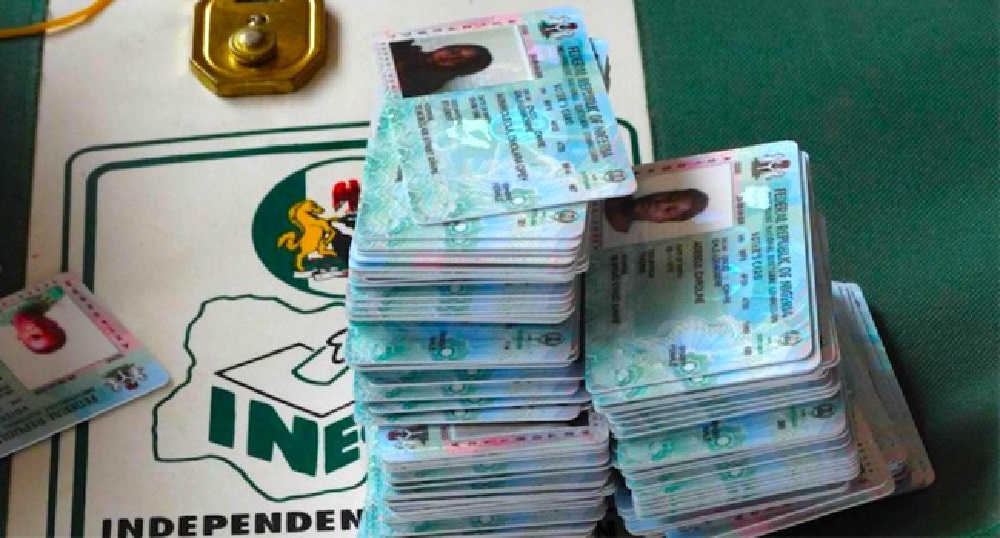
Kano and Lagos states have continued to lead the ongoing Continuous Voter Registration exercise ahead of the 2028 general election, with 118,207 and 78,360 registered voters, respectively.
However, the seven states in the North West and their counterparts in the North Central are leading the zonal distribution of registered voters, with 414,208 and 262,252 registered voters, respectively.
These figures are contained in data released by the Independent National Electoral Commission (INEC) at the end of week seven in the last phase of the registration exercise, which began in August 2026.
The CVR exercise, which is expected to conclude on the 20th of July 2026, is suspended in Ekiti and Osun states due to the off-cycle governorship elections in both states.
Kano and Lagos are closely followed by Taraba with 64,293, Sokoto with 64,019, Jigawa with 57,304, Kaduna with 53,998, Benue with 52,861, Bauchi with 52,603, Ogun with 48,684, and Niger with 48,267 registered voters.
Ondo State has the fewest registered voters, with 8,578; Akwa Ibom, 14,253; Plateau, 16,878; the Federal Capital Territory, 21,826; and Enugu and Borno, 24,225.
Meanwhile, the Commission has charged media practitioners in the country to treat vote buying as a frontline investigative priority ahead of the August 15, 2026 Governorship Election and asked journalists to help document incidents with the specificity needed to trigger prosecution.
National Commissioner and Chairman, Information and Voter Education Committee (IVEC), Mohammed Kudu Haruna, made the call at a One-Day Media Stakeholders’ Forum in Osogbo, Osun State.
Haruna described vote buying as the most alarming development to emerge from the June 20, 2026, Ekiti State Governorship Election, saying political actors and their agents were widely reported to have offered cash to voters at polling units, in some cases through numbered vouchers redeemable outside polling locations to evade detection.
Haruna cited Section 22 of the Electoral Act 2026, which prescribes a fine of not less than five million naira, imprisonment of up to two years, or both, and a ten-year disqualification from contesting public office for persons convicted of vote trading.
He called on editors to allocate dedicated resources to the issue before, during and after Election Day, and on reporters to capture names, locations, amounts and the structure of coordination in their investigations, adding that such reporting would feed directly into an enforcement framework involving the Commission, the Economic and Financial Crimes Commission, the Nigeria Police Force and the State Security Service.
He said the Commission had concluded major pre-election preparations for Osun State, including clearing candidates from fourteen political parties, enrolling 381,817 new voters during the Continuous Voter Registration exercise, and arranging the deployment of the Bimodal Voter Accreditation System (BVAS) and the INEC Result Viewing Portal (IReV) across all 30 local government areas.
He cited the performance of these technologies in Ekiti, where BVAS recorded a 96 per cent functionality rate and IReV achieved a 98 per cent result-upload completion rate, as a benchmark for the Osun exercise.
The National Commissioner also highlighted declining voter turnout nationally, noting that accreditation in the Ekiti election covered fewer than four in every ten registered voters. He urged media organisations to extend their reach to voter mobilisation, alongside continued public enlightenment on the dangers of vote buying and the importance of result verification through IReV.
Osun State Resident Electoral Commissioner, Mrs Oluwatoyin Babalola, described the media as an indispensable partner of the Commission in promoting democratic values through objective reporting and public enlightenment, and called for continued collaboration to deliver a peaceful and credible election.
INEC Director, Voter Education and Publicity, Mrs Victoria Eta-Messi, said the forum was designed to strengthen INEC’s working relationship with media professionals, provide updates on election preparations, and clarify the Commission’s processes under the Electoral Act 2026.

US Supreme Court Upholds State Bans On Transgender Athletes In School

Lampard extends Coventry stay after promotion to EPL

Pope Leo appoints two Nigerians to key Vatican roles



-
 News17 hours ago
Relief for Activist, Sowore as court grants him fresh N200m bail
-

 News17 hours ago
Billionaire wife Shade Okoya breaks silence following cheating allegations
-
 News17 hours ago
FG secures release of 136 Nigerians from Ethiopian prisons after Justice Ekwo’s judgment
-
 News24 hours ago
Court directs INEC to immediately register ADA
-
 News16 hours ago
TETFund challenges scientists to fast-track Nigeria’s first Lassa fever vaccine
-
 News21 hours ago
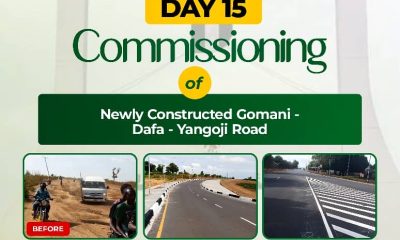
DAY 15 of Projects Commissioning in the FCT
-

 Economy13 hours ago
See Black Market Dollar To Naira Exchange Rate Today 30th June 2026
-

 News17 hours ago
Ardo Risku: Fear grips Idoma communities as security checkpoints disappear after Fulani leader’s death