
News
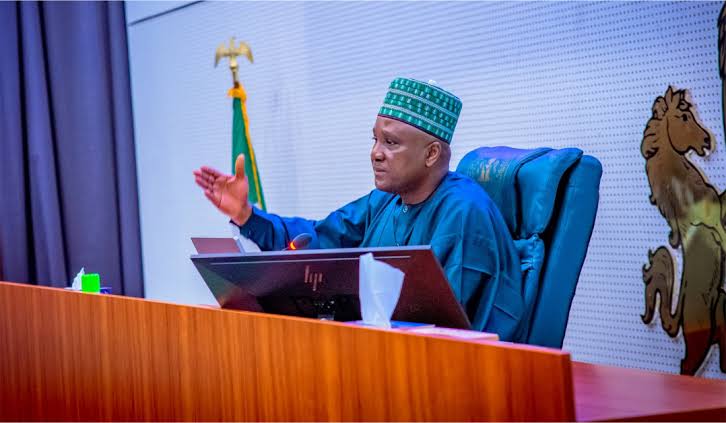
Abbas Urges Lawmakers to Deepen Reforms as House Resumes Plenary

- /home/naijuinz/public_html/wp-content/plugins/mvp-social-buttons/mvp-social-buttons.php on line 27
https://naijablitznews.com/wp-content/uploads/2024/09/images-17.jpeg&description=Abbas Urges Lawmakers to Deepen Reforms as House Resumes Plenary', 'pinterestShare', 'width=750,height=350'); return false;" title="Pin This Post">
- Share
- Tweet /home/naijuinz/public_html/wp-content/plugins/mvp-social-buttons/mvp-social-buttons.php on line 72
https://naijablitznews.com/wp-content/uploads/2024/09/images-17.jpeg&description=Abbas Urges Lawmakers to Deepen Reforms as House Resumes Plenary', 'pinterestShare', 'width=750,height=350'); return false;" title="Pin This Post">


By Gloria Ikibah
Speaker of the House of Representatives, Rt. Hon. Abbas Tajudeen, has urged members of the Green Chamber to renew their commitment to enacting laws that will make a tangible difference in the lives of Nigerians, as the National Assembly resumes legislative duties following its 2025 annual recess.
Welcoming lawmakers back to plenary on Tuesday, Abbas described the resumption as a “pivotal midpoint” in the life of the 10th Assembly.
He said the period ahead will be crucial for consolidating on the gains already made and for driving key reforms, particularly in the areas of electoral integrity, constitutional review, and national security.
The Speaker who acknowledged the achievements made by the House, stated that it had surpassed previous assemblies in terms of legislative output and efficiency.
“The 10th House has been the most productive since 1999,” Abbas declared, expressing satisfaction with the dedication of his colleagues to legislative excellence.
He added that while the progress recorded was commendable, the expectations of Nigerians remained high, and the House must respond with renewed purpose and unity of vision.
Abbas restated the commitment of the legislature to meaningful governance reforms aimed at strengthening democracy, improving public trust, and addressing the pressing socio-economic challenges facing the nation.
“Between June 2023 and mid-2025, the House considered 2,263 bills, passed 237, and secured Presidential assent for 50.
“These cover critical areas such as power reform, student loans, cybersecurity, tax policy, and regional development”, Abbas said.
The Speaker noted that collaboration between the legislature and the executive had yielded “timely budgets, aligned reforms and effective policy outcomes,” while maintaining institutional independence.
On the economy, Abbas highlighted signs of “cautious optimism,” citing five consecutive months of declining inflation to 20.12 percent and improved food prices. He commended recent diplomatic breakthroughs that restored UAE visa services and Emirates flights to Nigeria, as well as enhanced security operations leading to the disruption of insurgent networks and rescue of abducted citizens.
However, he acknowledged that Nigerians still face “high living costs, underemployment and insecurity,” urging lawmakers to pursue targeted legislative responses to tackle these challenges.
Abbas outlined major legislative priorities for the coming months, beginning with the ongoing constitutional amendment process. He disclosed that 87 proposals on devolution of powers, local government autonomy, judicial reform, and socio-economic rights were awaiting consideration and voting.
“We must complete these votes and transmit the approved amendments to the State Assemblies before the end of December,” he said, emphasising the need to conclude the process ahead of the 2027 general elections.
The Speaker also placed emphasis on finalising electoral reforms to strengthen democracy and credibility of future polls. He said the Electoral Act Amendment Bill would address issues such as electoral violence, inclusivity for persons with disabilities, and dispute resolution timelines, while introducing single-day voting and more democratic party primaries.
He further announced plans for the establishment of an Electoral Offences Commission, adding that the goal was to “produce a new Electoral Act that stands the test of time.”
A major highlight of Abbas’ address was his call for support of the Reserved Seats Bill for women, aimed at improving Nigeria’s poor record of female representation in politics.
“Currently, women hold fewer than 5% of seats in the National Assembly. The bill proposes creating additional seats to be contested exclusively by women,” he explained.
“They will not affect existing seats but will expand opportunities for representation. We are all HeForShe, and how we vote on this bill will shape how history and our daughters remember us.”
On security, Abbas said it was time to move from debate to action on multi-level policing, noting that creating state police through constitutional amendment remained a viable option. He also proposed revising the Police Act 2020 to devolve recruitment and deployment of community police officers to states under federal oversight.
He maintained that economic recovery and job creation must remain central to legislative priorities, calling for stronger support for small and medium-sized enterprises (SMEs), technology innovation, and renewable energy.
“We must speed up implementation of the Startup Act, promote vocational hubs and technology parks, and enact laws to attract investment in renewable energy and stabilize power supply,” he stated.
Abbas commended lawmakers for maintaining unity and stability within the chamber, describing the 10th House as a model of “maturity, inclusiveness, and responsible.

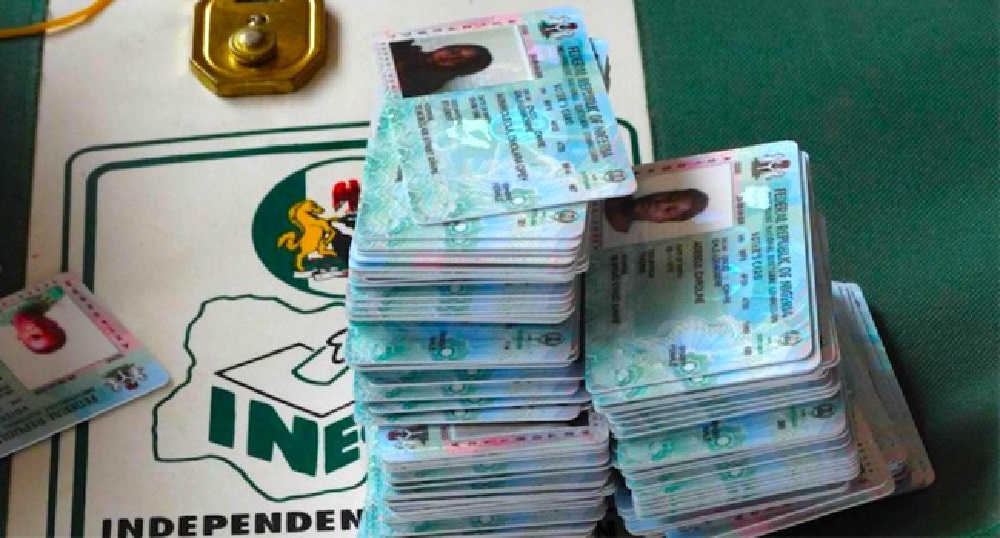
Kano and Lagos states have continued to lead the ongoing Continuous Voter Registration exercise ahead of the 2028 general election, with 118,207 and 78,360 registered voters, respectively.
However, the seven states in the North West and their counterparts in the North Central are leading the zonal distribution of registered voters, with 414,208 and 262,252 registered voters, respectively.
These figures are contained in data released by the Independent National Electoral Commission (INEC) at the end of week seven in the last phase of the registration exercise, which began in August 2026.
The CVR exercise, which is expected to conclude on the 20th of July 2026, is suspended in Ekiti and Osun states due to the off-cycle governorship elections in both states.
Kano and Lagos are closely followed by Taraba with 64,293, Sokoto with 64,019, Jigawa with 57,304, Kaduna with 53,998, Benue with 52,861, Bauchi with 52,603, Ogun with 48,684, and Niger with 48,267 registered voters.
Ondo State has the fewest registered voters, with 8,578; Akwa Ibom, 14,253; Plateau, 16,878; the Federal Capital Territory, 21,826; and Enugu and Borno, 24,225.
Meanwhile, the Commission has charged media practitioners in the country to treat vote buying as a frontline investigative priority ahead of the August 15, 2026 Governorship Election and asked journalists to help document incidents with the specificity needed to trigger prosecution.
National Commissioner and Chairman, Information and Voter Education Committee (IVEC), Mohammed Kudu Haruna, made the call at a One-Day Media Stakeholders’ Forum in Osogbo, Osun State.
Haruna described vote buying as the most alarming development to emerge from the June 20, 2026, Ekiti State Governorship Election, saying political actors and their agents were widely reported to have offered cash to voters at polling units, in some cases through numbered vouchers redeemable outside polling locations to evade detection.
Haruna cited Section 22 of the Electoral Act 2026, which prescribes a fine of not less than five million naira, imprisonment of up to two years, or both, and a ten-year disqualification from contesting public office for persons convicted of vote trading.
He called on editors to allocate dedicated resources to the issue before, during and after Election Day, and on reporters to capture names, locations, amounts and the structure of coordination in their investigations, adding that such reporting would feed directly into an enforcement framework involving the Commission, the Economic and Financial Crimes Commission, the Nigeria Police Force and the State Security Service.
He said the Commission had concluded major pre-election preparations for Osun State, including clearing candidates from fourteen political parties, enrolling 381,817 new voters during the Continuous Voter Registration exercise, and arranging the deployment of the Bimodal Voter Accreditation System (BVAS) and the INEC Result Viewing Portal (IReV) across all 30 local government areas.
He cited the performance of these technologies in Ekiti, where BVAS recorded a 96 per cent functionality rate and IReV achieved a 98 per cent result-upload completion rate, as a benchmark for the Osun exercise.
The National Commissioner also highlighted declining voter turnout nationally, noting that accreditation in the Ekiti election covered fewer than four in every ten registered voters. He urged media organisations to extend their reach to voter mobilisation, alongside continued public enlightenment on the dangers of vote buying and the importance of result verification through IReV.
Osun State Resident Electoral Commissioner, Mrs Oluwatoyin Babalola, described the media as an indispensable partner of the Commission in promoting democratic values through objective reporting and public enlightenment, and called for continued collaboration to deliver a peaceful and credible election.
INEC Director, Voter Education and Publicity, Mrs Victoria Eta-Messi, said the forum was designed to strengthen INEC’s working relationship with media professionals, provide updates on election preparations, and clarify the Commission’s processes under the Electoral Act 2026.
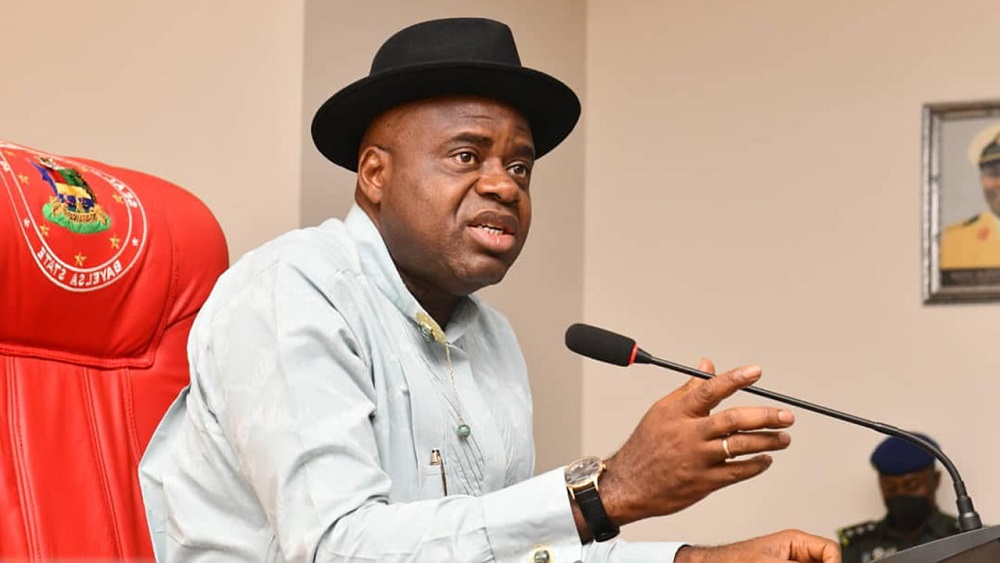
Bayelsa State Governor Douye Diri has approved the removal of the suspended paramount ruler of Swali Community, His Highness, Chief Wilcox Job Seiyefa, from his Ebeniken chieftaincy throne.
Governor Diri, who made the announcement through his deputy, Dr Peter Akpe, during a meeting with stakeholders of Swali Community in Government House, Yenagoa, on Tuesday, said the removal of the paramount ruler was based on recommendations from a fact-finding committee.
A statement by the Senior Special Assistant on Media to the Deputy Governor, Mr Doubara Atasi, recalled that the dethroned Ebeniken, alongside his Council of Chiefs, was suspended by the state government on the 21st of May, 2025 following allegations bordering on aiding and abetting insecurity in Swali Community.
Announcing the withdrawal of recognition of the Ebeniken, the Deputy Governor said the action was in line with Section Six of the state’s Chieftaincy Law, especially in the area of maintaining peace, order and good governance in the state.
According to him, the governor had directed that the process of electing a new paramount ruler, which he described as a major and important community, must commence immediately and be completed within three months.
His words: “The fact-finding committee engaged various stakeholders in Swali Community, and also got advice from security agencies on the way forward.
“From the recommendations of the committee, following their findings, it is clear that, as at the time those actions (causing violence and insecurity) were taken, the leadership was weak and not firm to take decisions to manage the situation.
“So, following the recommendations and the provisions of the state Chieftaincy Law, His Excellency, the Governor, has approved the withdrawal of the Staff of Office of His Highness, Chief Wilcox Job Seiyefa, the suspended paramount ruler of Swali Community, in the interest of peace.
“The government will facilitate the election of a new paramount ruler in Swali Community by setting up an electoral committee, and the election must be conducted within three months starting from 30th of June, 2026.”
The Deputy Governor, however, clarified that all members of the existing caretaker committee would continue to function until a new leadership emerges, except any member who may have interest to contest for any of the elective offices.
Citing relevant provisions of the Chieftaincy Law, he also directed the dethroned paramount ruler to submit the Certificate of Recognition and Staff of Office in his possession to the Secretary of the Yenagoa Local Government Area, who will in turn transmit them to the Governor, not later than one month from the 30th June, 2026.
Dr Akpe, who thanked the people of Epie and Atisai kingdoms as well as security agencies for supporting the government’s peace and security efforts, called on all traditional rulers to keep themselves abreast with the provisions of the Chieftaincy Law to avoid unpleasant consequences.
Meanwhile, following the directive of Governor Douye Diri, a five-member electoral committee has been constituted to midwife the process of electing a new Ebeniken of Swali.
The committee, which is headed by the Special Adviser to the Governor on Chieftaincy Affairs, High Chief Bertola Perekeme, has Barr. Yinkore Terimoh, Gesiye Obireke, Barr. Richard Perekeme as members, while Mrs Domo-Spiff Boma is to serve as Secretary.
In a related development, the state government on Tuesday also set up a seven-man caretaker committee to pilot the affairs of Ogboinbiri Community in Southern Ijaw Local Government Area of the state.
Mr Monday Edugo is chairman of the committee while Dr Moses Areprekumor is secretary with Barr. Francis Eseduo, Mr Allen Okorodo, Mr Peter Akpasi, Mr Christian Brown and Mr Akpu Arthur to serve as members.
Inaugurating the Committee, the Deputy Governor urged people of the oil and gas-rich Ogboinbiri to sink their differences and work cooperatively with the committee to achieve lasting peace in the community.
In his acceptance speech, the Caretaker Committee Chairman, Mr Monday Edugo, expressed gratitude to the state government for finding him and other members of the committee worthy to carry out the assignment.
While assuring the government of the committee’s commitment towards restoring enduring peace and stability in Ogboinbiri, Mr Edugo, however, pleaded with Governor Diri to lift the prevailing dusk-to-dawn curfew imposed on the community.
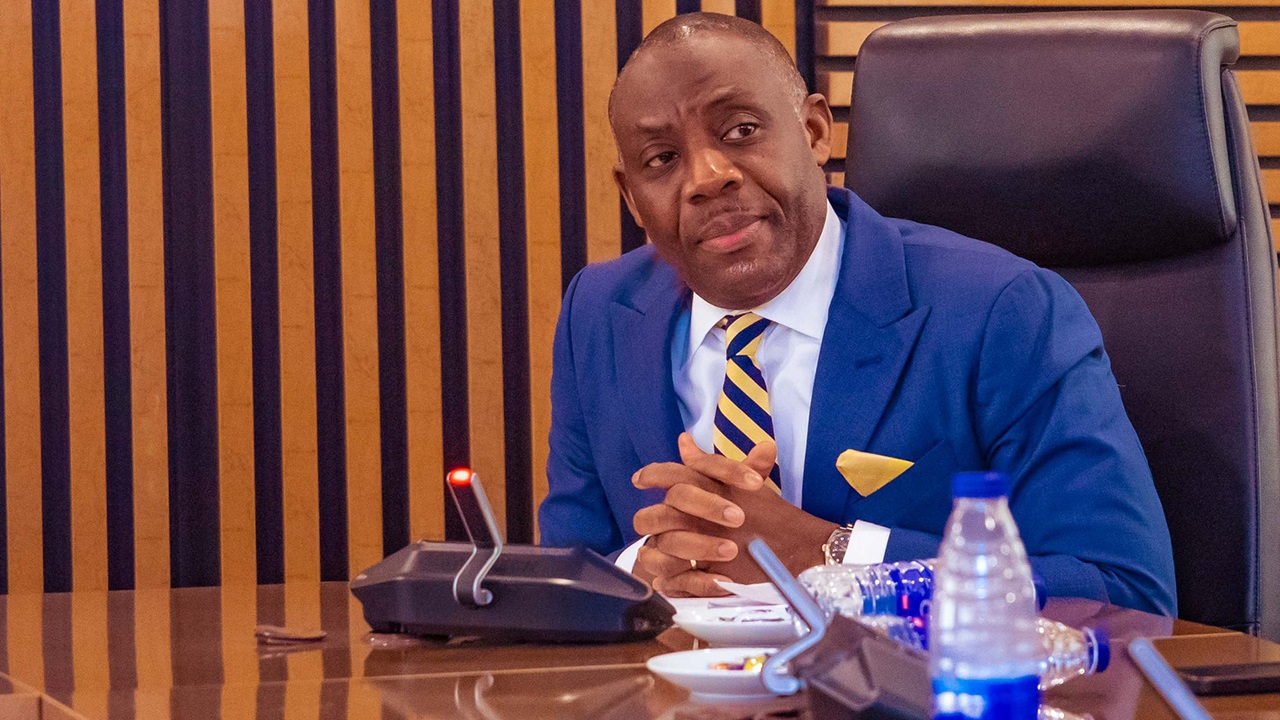
The Federal Government has announced the discontinuation of the disarticulation policy that separated Junior Secondary Schools from Senior Secondary Schools, saying the arrangement has failed and contributed to a crisis of more than 20 million students dropping out before reaching senior secondary.
Minister of Education, Dr Tunji Alausa, disclosed this on Tuesday in Abuja at the inauguration of the UBEC Ministerial Implementation and Monitoring Committee.
He said the policy, which required JSS and SSS to operate separately both physically and administratively, has resulted in overcrowded junior secondary facilities and underutilised senior secondary schools across several states.
According to him, the policy prioritised administrative positions over students’ educational needs and has left thousands of children without access to the next level of learning.
He noted that data from states such as Kaduna and other parts of the north show overflowing JSS classrooms while senior secondary schools remain largely empty because there is one principal for JSS and another for SSS.
“We have 20 million drop out from primary school to JSS. Where are those students? And what we also noticed was that we have 80,000 public primary schools, and junior secondary school, we have just about 15,000. That ratio is one to eight.
“And if you look at the completion rate. So, it’s us as government not doing what we need to do, but the previous government might have failed in this regard, but this government will not fail. We’re fixing this. So, we need to open up as much more opportunities for students to attend these schools, primary schools infrastructure.
“This disarticulation policy has also contributed to this. We’re seeing data from, say, like Kaduna and other northern states, because you have one principal for junior secondary school and another principal for senior secondary schools. We have overflowing JSS, empty senior secondary school.
“So, I can objectively report today that this disarticulation policy has failed. We will phase it out. We can’t be creating positions because we want to create director level for people while we harm our education system. It’s not right. It’s about doing what is good for every Nigerian child.”
Alausa said the proposal to abolish the policy will be tabled for consideration at the next meeting of the National Council on Education as part of efforts to expand access and improve learning outcomes for Nigerian children.
The high-powered committee chaired by Prof. Rashid Aderinoye is to ensure that hundreds of Smart Schools, Bilingual Schools and Alternative Schools funded by the Universal Basic Education Commission are completed, handed over to states and opened for learning.
The Minister said the committee would drive implementation and monitoring to ensure the projects deliver quality education.
He lamented that although UBEC had invested heavily in the three categories of schools across the country, many projects remained unfinished, while several completed schools had yet to be handed over to state governments or integrated into their education systems.
He described the situation as a waste of public resources and a denial of learning opportunities for thousands of children.
Earlier, UBEC Executive Secretary, Aisha Garba, said the Federal Government had made significant progress in expanding access to quality basic education through its Smart Schools, Bilingual Schools and Alternative Schools initiatives.
She disclosed that 37 Smart Schools had been established across the federation, with 24 already conducting academic activities, while the remaining schools were at different stages of completion, furnishing and operational readiness.
She added that under the UBEC–Islamic Development Bank Bilingual Education Programme, 30 schools had been established in nine participating states, with three boarding schools completed and commissioned and four others awaiting commissioning.
She said the Alternative Schools Programme was also expanding access to education for out-of-school children through flexible and inclusive learning.
Garba said the newly inaugurated Ministerial Implementation and Monitoring Team would monitor project implementation, facilitate timely completion and handover of schools, resolve bottlenecks, and ensure government investments translate into fully functional schools.
Speaking on behalf of the committee, Prof. Aderinoye assured that members would discharge their responsibilities with diligence, transparency and commitment to results.
He pledged that the committee would monitor implementation across the country, address delays, and ensure investments improve access to quality education for Nigerian children.

Five states get $3m reward each for budget reforms

Kano, Lagos maintain lead in Continuous Voter Registration

Diri dethrones Bayelsa traditional ruler




-

 News24 hours ago
FEC Approves Major NYSC Reform, Introduces New Uniform, Graduation Ceremony
-
 Economy24 hours ago
NCC earns 3rd spot in 2026 MDAs ranking
-

 Entertainment23 hours ago
South Africa Begins Deportation Proceedings Against Miss Universe Nigeria Chidimma Adetshina
-

 Sports24 hours ago
Brazil Fight Back to Beat Japan 2-1 as Martinelli’s Late Winner Secures World Cup Last-16 Spot
-
 Metro24 hours ago
Soldier, CJTF Member Die During Rescue Of Borno NECO Candidates, Teachers – Nigerian Army Confirms
-

 News15 hours ago
Relief for Activist, Sowore as court grants him fresh N200m bail
-
 News15 hours ago
Billionaire wife Shade Okoya breaks silence following cheating allegations
-

 News23 hours ago
Nigeria Ranked Most Generous Country in The World