…as lawmakers push for full implementation of agricultural laws to strengthen food security


By Gloria Ikibah
The Minister of State for Agriculture, Aliyu Sabi Abdullahi, has stressed the importance of maintaining increased funding for the agricultural sector to bridge existing gaps in crop yields, particularly in rice production. 
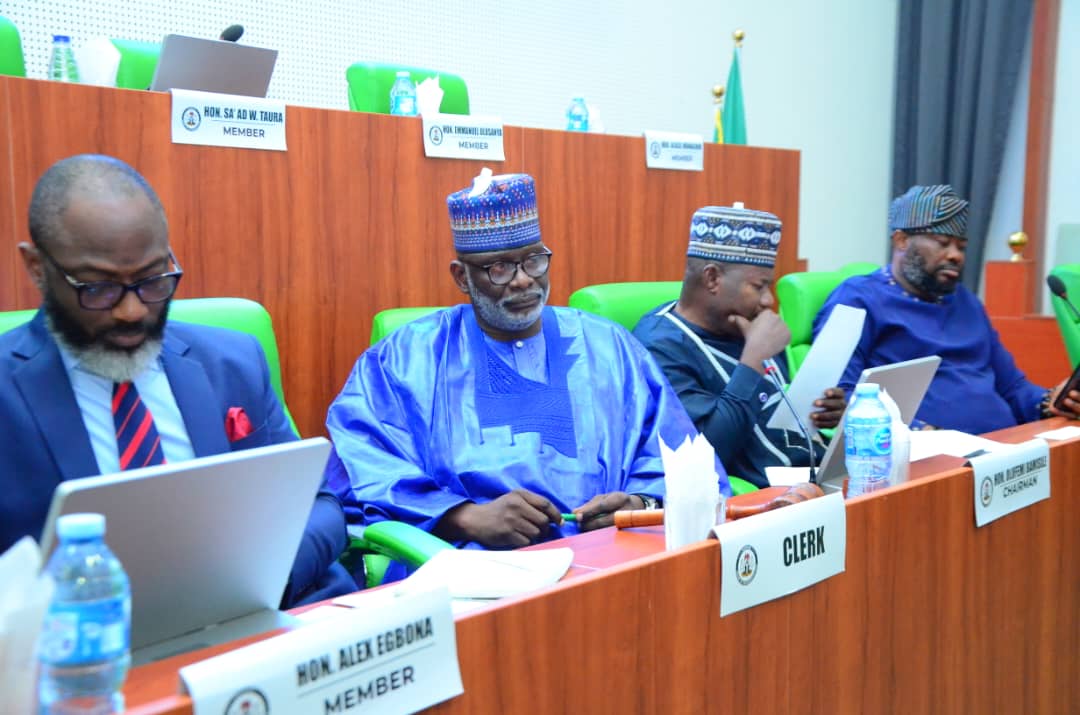
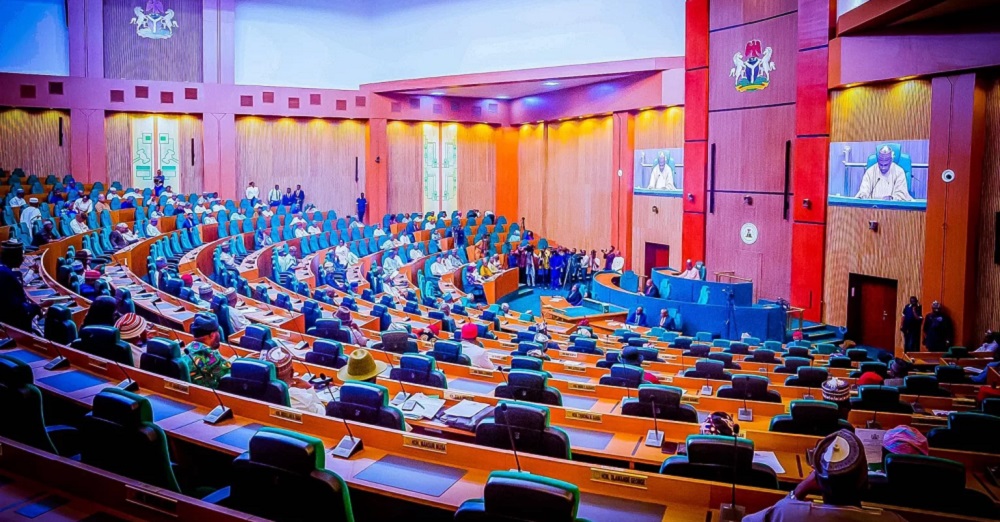
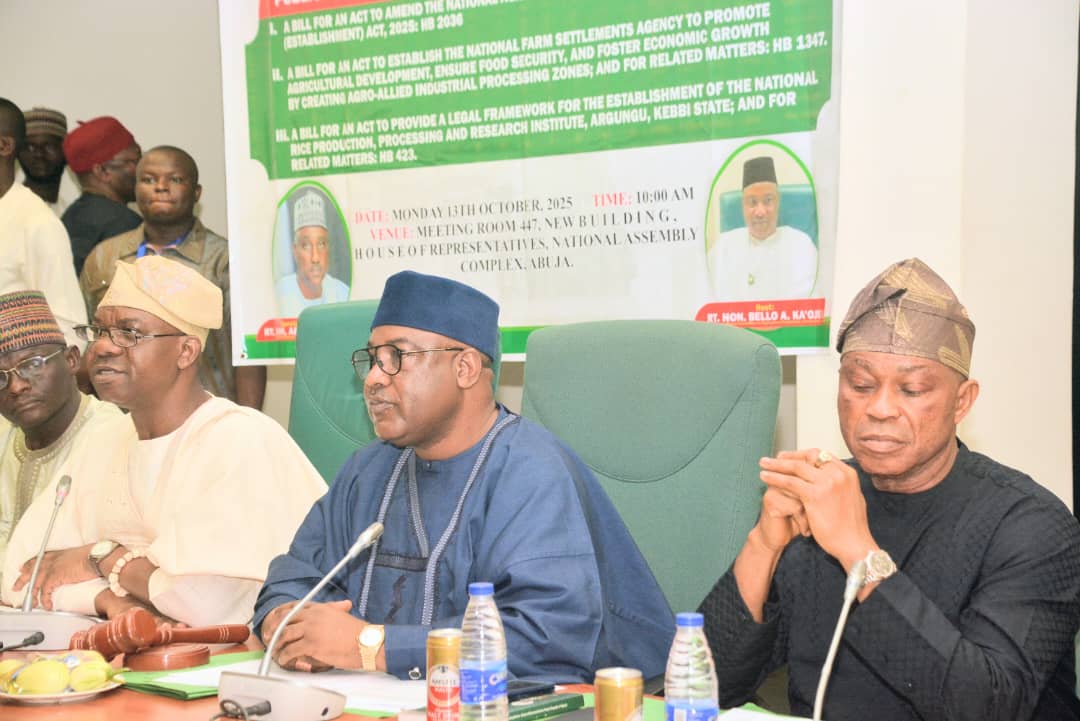
The Minister stated this during a public hearing organised by the House of Representatives Committee on Agricultural Production and Services on Monday, in Abuja.
The session focused on three key bills aimed at driving growth and reform in the sector.
Lawmakers at the hearing reiterated the urgency of enforcing agricultural policies and legislation that would ensure the country achieves sustainable food security.
The bills were:
“A Bill for an Act to Amend the National Agricultural Development Fund (Establishment) Act, 2025 (HB 2036) – a crucial step to fortify our financial commitment to Agriculture;
“A Bill for an Act to Establish the National Farm Settlements Agency to Promote Agricultural Development, Ensure Food Security, and Foster Economic Growth (HB 1347) – an initiative to promote development, secure our food security, and foster economic growth; and
“A Bill for an Act to Provide a Legal Framework for the Establishment of the National Rice Production, Processing and Research Institute, Argungu, Kebbi State (HB 423) – a dedicated effort to achieve self-sufficiency in our staple food”.
He stated that, Nigeria’s yield gap is one of the major problems as it tries to ensure food security in the country.
He said, “For example, the rice we are talking about. The average yield is usually put at about five for those who are doing very well.Hardly will you get people making six. But the average is between 4.5 to 5. And those who are doing very well may get up to six.
“But if you take countries that are producing rice at a very good level, the yield potential is nine to 12 tonnes.Now, if we can concentrate on funding the processes for yield increase, if we are able to double and our farmers are able to get up to seven to eight, I bet you the current 22 million metric tonnes demand in our country for rice, of which we are doing 20 and having 2 million as deficit, we will be able to cover it without any difficulty.
“So I think I want us to use this opportunity, Mr. Chairman and honourable members, to take a look at the strategy that will enable us to achieve the same thing we want to achieve. Is it by opening up more centres? Because, I’m sorry to say, we have turned our institutes into employment centres.
“I’ve served in that system for 20 years before coming onto this side of the National Assembly. And my own point is that I would like honourable members to take a greater look at how we can strengthen the current system we have and make them to give us the maximum productivity they can give. That way our farmers will be able to produce more.
“If you take a look at cassava, sorry to digress on this, if you take a look at cassava, Nigeria is the world producer of cassava for the past 30 years. And it’s simply put at what? What is the average yield of cassava? It’s just about 11 tonnes. That is even those ones that are doing high.
“Now, what is possible in the research system is 49 tonnes per hectare. So if you can even double that, it means the farmers can produce 22 tonnes per hectare. The current 60 million metric tonnes we are producing as a nation that made us number one, we can go to 120.
“If they triple it, we can go to 180. And that is a massive injection into our economy. So I think I would like to plead with this honourable house that while I agree with the fundamental principles of what the bill seeks to achieve, I want us to look inwards and see how we can strengthen the current system to deliver on the current mandates that we have”.
Speaking on the proposed legislation, Abdullahi said the ministry and it’s agencies have aligned with most of the provisions but there are areas that must be looked into to find tune the bills in tandem with existing extant laws.
He added, “In particular, trying to bring in those programmes and projects that we know federal government is making investment on, and for which we want it to be aligned to the National Agriculture Development Fund and its own intention.
“However, maybe there are one or two other issues that bother us on administration, which I think we also have to sit down and look at the general administrative principle before we can see whether it’s in line or not. But in terms of the fundamental principle, I think we are very much in alignment”.
The Speaker House of Representatives, Rep. Tajudeen Abbas, represented by Rep. Ayokunle Isiaka in his opening remarks said the proposed bills are more than just legislation but they are a blueprint for a more secure, prosperous, and self-reliant Nigeria.
He said, “They demonstrate our commitment to harnessing the vast potential of our agricultural resources to improve the lives of our citizens.This hearing aligns with President Bola Ahmed Tinubu’s Renewed Hope Agenda and the declaration of a State of Emergency on Food Security, underscoring our collective resolve to tackle food insecurity and boost agricultural productivity.
“I urge every stakeholder, expert, and citizen to engage actively, sharing your insights, expertise, and concerns. Your voices are essential to crafting robust and effective laws.
“Let us work together to build a resilient agricultural sector that drives our economy, guarantees food security, and uplifts every Nigerian. It is my distinct pleasure to declare this public hearing open”.
Earlier in his welcome remarks, the Chairman of the Committee, Rep. Bello Kaoje said Agriculture remains the backbone of the nation’s economy and most reliable path to inclusive growth and poverty reduction.
He however explained that achieving food security and competitiveness requires sound policies supported by effective legislation.
“This public hearing offers all stakeholders — policymakers, farmers, researchers, investors, and development partners — an opportunity to share valuable perspectives. Your insights today will help us refine these bills to ensure they are practical, forward-looking, and beneficial to all segments of the agricultural sector.
“As a Committee, we are committed to ensuring that every law passed by this House strengthens productivity, enhances innovation, and provides real value to Nigerian farmers. We will continue to collaborate with the Executive, relevant agencies, and the private sector to make agriculture a business that drives national prosperity”, he stated.