By Gloria Ikibah


The founder of Dangote Group, Aliko Dangote, has urged stakeholders to stop using accusations of monopoly as a tool to undermine local investment and industrial development in Nigeria.
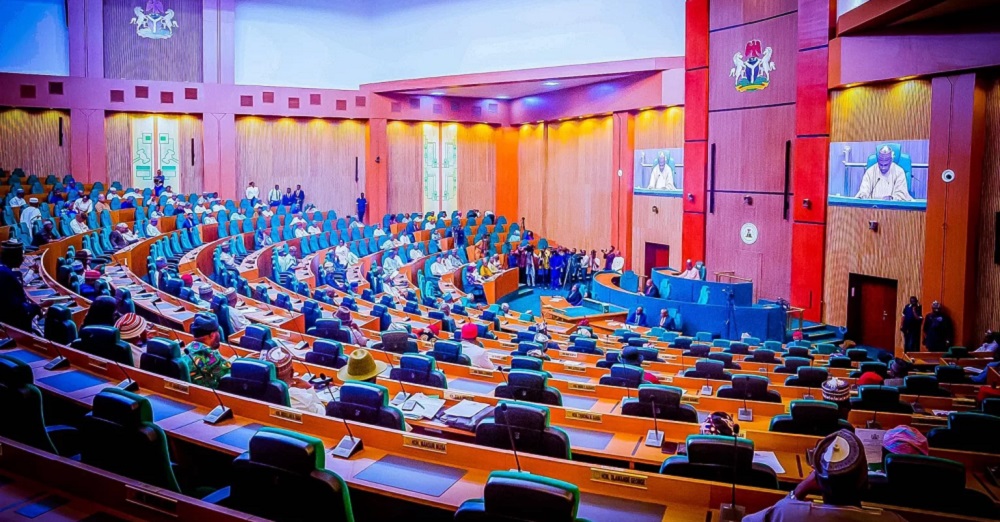
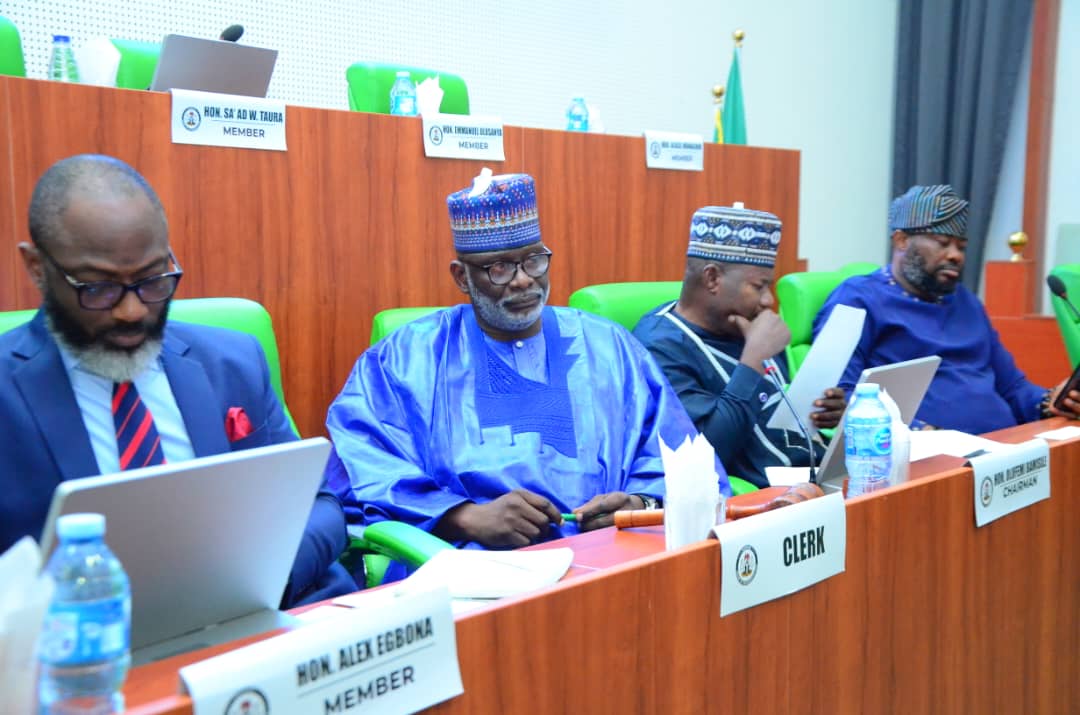
Speaking at the 2025 Inaugural Annual Downstream Petroleum Week organised by the House of Representatives Committee on Petroleum Resources (Downstream), Dangote who was represented by the Group Chief Strategy Officer of Dangote Industries Limited, Aliyu Suleman, stressed that no one is barred from investing in the country. 
He called for stronger policies that foster productivity, innovation and fair competition, rather than discouraging indigenous businesses striving to grow.
He said: “Too many people with the means to build industries chose instead to invest abroad. We decided from afar while adding little value to our economy. We have chosen differently. We have chosen to get to Nigeria. We have chosen to build here, to employ here, to produce here. So let us not use the cry of monopoly to start from growth. No one is prevented from investing.We welcome others to build their own refineries and we will offer support in whatever way we can.
“Nigeria holds the natural competitive advantage in refining. We enjoy proximity to oil and gas supply. We should therefore work together to develop this sector.
“We should work to enact and implement laws that will help this sector to prosper. Let us protect our industries and deliver the economic transformation this country deserves.”
According to him, “today, the Dangote Refinery can meet all of Nigeria’s demand for diesel and jet fuel and still have surplus for export.
He explained that soon, the refinery would be listed on the stock exchange, giving Nigerians the opportunity to become shareholders of this national asset.
Dangote further said that Africa’s refining sector remains underdeveloped, both relative to its consumption and relative to the volume of crude that is produced in Africa.
“While Europe and Asia refine over 95 % of their petroleum product refinement, Africa refines only 40%. In sub-Saharan Africa, there are very few large functional refineries today. This is understandable because refining is capital intensive, it is technologically complex and often is a low margin business. So as a result, many entrepreneurs and governments have chosen to stay away. But at Dangote, we are known for taking bold steps. We are known for making large scale investments to substitute imports and create value in the country.
“Therefore, this is a challenge that we were happy to take. When it came to tackling the refining challenge, we decided to do it even though it was not easy. Building a world-class refinery anywhere in the world is a huge task. It is capital-intensive and very demanding. To build ours, we collected over 2,700 hectares of land, pumped 65 million cubic meters of sand to stabilize the site, installed over 250,000 foundation bars, and laid millions of meters of piping, cabling, and wiring. At peak, we had over 60,000 people on site, of which 50,000 were Nigerians. We had these people working around the clock across hundreds of disciplines and nationalities.
“Today, the Dangote refinery can meet all of Nigeria’s demand for diesel and jet fuel and still have surplus for exports, which can be used in valuable foreign exchange for Nigeria. The refinery can meet 90 % of Nigeria’s PMS requirements. This is based on the official consumption numbers of 50 million per day. Our views are the real consumption, perhaps more about 40 million, in which case we should be able to meet demand.
“Across the world, major oil producers typically meet their petroleum product requirements through their own domestic refineries, not through imports. The United States, for example, imports only about 8 % of their petroleum products requirement. If you look at most of the major crude oil producers, you will see that they do not import more than 10 % of their petroleum products from the US. This is where Nigeria should be heading. And with the advent of the Dangote refinery and unbundling of the sector, we hope that we will get there.
“At the Dangote Group, our strategy across all our businesses is to provide our customers with high quality products at attractive prices. Not just in the refinery, across all the businesses. Same in cement, sugar and the rest. Refined products from our refinery are of higher quality and yet our prices are below import parity and below the average prices across most African countries. Across Africa, PMS and diesel sell for around $1 per litre, net of tax system of sorts. But in Nigeria, the current price is below $0.60 per litre.
“This is a huge cost benefit for Nigerians. Even though the cost benefit may not be immediately obvious because before the advent of the Dangote refinery, subsidies were used to mask the real market price. Still, despite all this, we find ourselves in a situation where Nigeria imports petroleum products, while at the same time Dangote refinery is exporting. This is a paradox that we must address in order for this sector to grow.
“Beyond energy security, domestic refining brought economic benefits. Refineries deliver job creation, skill development, industrial linkages, and exchange rates stability. The shipping sector is handling much more volumes than they used to handle before now. Engineering capacity is strengthened.
“Across Dangote, NNPC and the modular refineries, Nigeria has over one million barrels per day of installed domestic refining capacity. These benefits will multiply if we enable this capacity to operate fully. Across our businesses, the Dangote Group typically focuses on manufacturing, while accessing its distributors with the logistics required to deliver to their customers. Across Africa, we have over 10,000 trucks, who deliver products for our distributors. The same operating model applies to refining. We must all work together to renew distribution costs in order not to burden Nigeria’s energy efficiency.
“Historically, marketers source products from abroad and supply the country via coastal storage terminals. Today there is a domestic alternative. We must therefore find an optimal split of off-take between trucks loading directly at the refinery, versus loading into vessels for transportation to various storage terminals. It does not make economic sense to move products by ship to a nearby coastal depot at additional cost when the same volume could have been evacuated by trucks directly from the refinery.
“We are also working with NPA and the NIMASA to find ways to reduce coastal transport costs as this adds up to the total product costs that end up being passed on to Nigerians. That said, Nigeria’s fighting potential is massive. We are in a place where we can build a refining hub that will process crude from Nigeria surrounding African countries and supply Nigerian commonwealths.
“When we entered the cement sector, Nigeria produced less than two million tons per year. I was totally dependent on imports. Today, through visionary investment, timing execution, and government support, we have 2 million tons of capacity across Africa, and we’ll reach 60 million by next year. Nigeria is now a lead exporter of cement, and by 2027, we plan to export 500 million dollars worth of cement and clean cap annually. The same transformation is happening in refining
“Nigeria is now a net exporter of refined petroleum products, polypropylene and urea. This is a historic turnaround. And we’re not getting started. Soon, the Dangote Refinery would be listed, giving Nigerians the opportunity to become shareholders in this national asset.
“Given its potential, this sector must be nurtured and protected. The current import licensing regime, where import licenses are issued without considering domestic supply, has exposed domestic refineries to unfair competition. This is because most of this import comes from Russia and products from Russia are produced with crude that is priced 25 dollars per barrel, cheaper than Nigerian crude because of the sanctions.
“So this in a way, it is almost like dumping, which hurts domestic refineries. Aside from the crude for naira initiative, graciously introduced by Mr. President, local refineries grant the individual protection or incentives. ”