

Connect with us

News

Reps Order INEC to Settle Unpaid Insurance for Corps Members Hurt, Killed During Elections

Published

on

ADVERTISEMENT
Zoom Ad
ADVERTISEMENT
Zoom Ad

By Gloria Ikibah

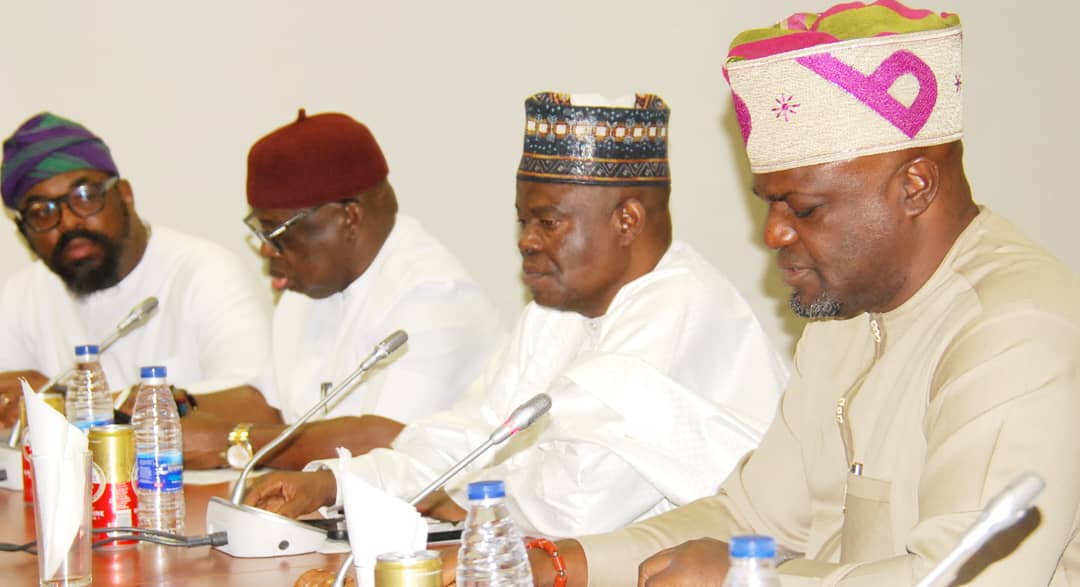
The House of Representatives Committee on Electoral Matters has instructed the Independent National Electoral Commission to immediately settle outstanding insurance premiums for National Youth Service Corps members who were injured or lost their lives while serving as ad-hoc staff during elections.

The directive came after the National Youth Service Corps informed the committee that insurance benefits due to Corps members hurt during the 2023 general elections had still not been released.

Represented by the Director of Welfare, Omotade Ayodele Folorunsho, the NYSC leadership recounted cases of three Corps members shot during the 2023 polls, two in Delta State’s Ukwani area and one in Akwa Ibom, with some left permanently disabled.

Advertisement

He explained that although the NYSC has covered its own component of the insurance, the N1 million due under the agreement with INEC remains outstanding, despite the commission handling the victims’ medical care.

He also decried the long-standing inadequacies in election arrangements, which continue to expose Corps members to danger, leaving many unprotected in moments of crisis.

Overwhelmed with emotion, he recalled the tragic 2011 elections in which ten serving Corps members were killed, noting that he was then a young officer in the Service and personally bore the responsibility of organising their burials.

He also disclosed that Corp members are often poorly renumerated while participating in the elections.

Advertisement

“They are ₦4000 for three to five day training and ₦13, 500 for election day duty. In most cases, these corps members don’t even have a place to sleep. Some of them sleep on bare floor and the following day, they don’t even have water to bath”, he added.

He proposed that the deployment of Corps members during elections should be coordinated through the Office of the National Security Adviser, noting that the NSA already sits on the Inter-Agency Consultative Committee on Election Security and is better positioned to ensure their safety.

Chairman House Committee on Electoral Matters, Rep. Adebayo Balogun, emphasised that the NYSC is not simply another stakeholder in the electoral process but a vital partner in safeguarding the credibility and smooth conduct of elections.

He said “For decades, Corps mémbers have formed the backbone of election day operations, manning polling units across the federation as ad hoc staff of the Independent Nation Electoral Commission (INEC). They carry the burden of ensuring that the voting process is transparent, orderly, and credible.

Advertisement

“However, we cannot ignore the realities they face. Elections in Nigeria are won or lost at the polling units, and because of this, our Corps Members often find themselves exposed to dangers they should never have to confront.

“Reports abound of intimidation, harassment, threats, and attempts at financial inducement. In some tragic instances, these young citizens have been attacked, injured, or even killed in the line of duty, not because they did anything wrong, but because desperate political interests saw them as obstacles to manipulation.

“This is unacceptable. No election is worth the life of even one young Nigerian. The security, welfare, and dignity of Corps Members must not be negotiable.

“We must collectively interrogate the conditions under which Corps Members participate in elections. We must re-examine their security, their compensation, their training, their insurance coverage, their logistical support, and their overall well-being. We must ensure that every Corps Member deployed for election duty returns safely to their families and continue their service to the nation without fear.

Advertisement

“Let me emphasize that the political class and the Nigerian public must pay attention to the welfare of these Corps Members. Too often, national discourse is fixated on questions such as who appoints the INEC Chairman or how leadership positions are allocated.

“While these debates are legitimate, they miss the central point; elections are not decided in Abuja. They are not decided in political party headquarters. They are decided at the polling units, and the young men and women who stand at those polling units deserve our utmost protection and respect. We can strengthen our democracy by strengthening the people who administer it at the grassroots.”

He reaffirmed the readiness of the committee to champion any legislative or policy interventions that will guarantee their safety, improve their working conditions, and acknowledge the patriotic service they render to our democracy.

Rep. Balogun said “the strength of our democracy rests on the shoulders of young Nigerians who stand at the polling units with courage and integrity. We owe them more than appreciation; we owe them protection, dignity, and a system that values their sacrifice”.

Advertisement

In response to the presentation, committee member, Rep. Alex Egbona moved a motion which was unanimously endorsed, directing the electoral commission to ensure that the insurance firm responsible for covering Corps members and INEC staff pays the outstanding premiums to the affected individuals within four weeks.

Continue Reading
Advertisement

News

NCDC Raises Red Flag Over Proposed Health Institute, Cautions Lawmakers on Overlapping Roles

Published

on

ADVERTISEMENT
Zoom Ad
ADVERTISEMENT
Zoom Ad

By Gloria Ikibah

The Nigeria Centre for Disease Control and Prevention (NCDC) has expressed strong reservations about a proposed bill seeking to establish a National Institute for Public Health and Infectious Diseases, warning that the move could create institutional overlap and undermine the country’s disease control system.

The agency’s concerns were presented during a public hearing on the National Institute for Public Health and Infectious Diseases (Establishment) Bill, 2025 (HB 2629), organised by the House of Representatives Committee on Infectious Diseases at the National Assembly in Abuja on Thursday.

In its submission to lawmakers, the Director-General of NCDC, Dr. Jide Idris acknowledged the need to continually strengthen Nigeria’s health security architecture, including disease surveillance, epidemic preparedness and outbreak response. However, it maintained that the proposed institute will replicate responsibilities already assigned to the agency under existing legislation.

Advertisement

According to him, establishing another body with similar mandates risks creating administrative conflicts, duplicating public resources and blurring lines of authority during public health emergencies.

The NCDC boss argued that Nigeria already has a statutory institution responsible for coordinating infectious disease surveillance, prevention and emergency response, and that efforts should focus on strengthening existing structures rather than creating parallel agencies with potentially competing functions.

The development comes as lawmakers consider measures aimed at reinforcing the country’s capacity to prevent, detect and respond to emerging health threats. Supporters of the bill believe a dedicated public health institute could enhance research, coordination and preparedness for future disease outbreaks.

However, Idris insists that any reform intended to improve Nigeria’s public health system must avoid weakening existing institutions or creating uncertainty over leadership and accountability during health crises.

Advertisement

He urged lawmakers to carefully review the provisions of the bill to ensure that any new framework complements, rather than duplicates, the functions currently performed by the nation’s foremost disease control authority.

“The core responsibilities proposed for the new institute are substantially the same as those currently assigned to the NCDC,” Idris said, warning that the Bill raises serious concerns over duplication of mandates, institutional overlap, governance conflicts and fiscal sustainability.

He argued that public health emergencies require a single, clearly recognised national authority, stressing that creating another federal institution with overlapping responsibilities would generate uncertainty over leadership, accountability and operational command during disease outbreaks.

The NCDC further noted that the Bill designates the proposed institute as Nigeria’s National Focal Point for the International Health Regulations (IHR) and empowers it to coordinate national responses to infectious disease outbreaks functions that are already assigned to the NCDC under the NCDC Act and recognised by the World Health Organization (WHO).

Advertisement

According to the agency, such overlapping mandates could create confusion among state governments, development partners and international organisations that currently work through the NCDC as Nigeria’s official public health authority.

Drawing lessons from Nigeria’s successful response to Ebola, COVID-19, Lassa fever, cholera, meningitis, diphtheria, Mpox and other disease outbreaks, Idris maintained that the country’s public health system has evolved around a unified command structure, warning that introducing parallel institutions could fragment emergency response efforts when coordination is most critical.

The Director-General also questioned the financial implications of establishing a new federal institution with headquarters, zonal offices, state structures, governing councils and extensive staffing requirements at a time of competing national priorities.

He expressed concern over proposals to allocate part of the Basic Health Care Provision Fund to the proposed institute, warning that such a move would further stretch an already limited funding mechanism and reduce resources available for existing health priorities.

Advertisement

Idris noted that the Federal Government has invested significantly over the years in building the NCDC’s laboratory network, surveillance systems, emergency operations centres, genomic sequencing capacity, workforce development programmes and outbreak response infrastructure.

According to him, creating another institution with similar responsibilities would duplicate existing investments and undermine the Federal Government’s ongoing policy of streamlining public institutions.

He added that international best practice supports the existence of a single national public health institute responsible for disease surveillance, preparedness and emergency response, noting that Nigeria adopted the same model through the establishment of the NCDC.

The agency therefore urged the National Assembly to strengthen existing public health structures instead of creating parallel institutions.

Advertisement

While reiterating its support for upgrading the National Tuberculosis and Leprosy Training Centre, Saye, Zaria, into a tertiary institution dedicated to teaching, clinical services and research, the NCDC urged lawmakers to review provisions of the Bill that establish what it described as a parallel public health command structure.

The Director-General disclosed that the agency had submitted a detailed clause-by-clause analysis identifying areas of conflict between the proposed legislation and the NCDC Act, 2018, noting that several provisions of the Bill appeared to have been reproduced almost verbatim from the existing law.

He concluded that the issue before lawmakers was not whether Nigeria should strengthen its public health capacity, but whether that objective would be better achieved by strengthening the National Public Health Institute already established by law or by creating another institution with substantially overlapping responsibilities.

Earlier, Speaker of the House of Representatives, Rt. Hon. Tajudeen Abbas, described the proposed institute as a strategic investment in Nigeria’s health security and preparedness against future disease outbreaks.

Advertisement

Represented by Hon. Bashir Zubair, the Speaker said Nigeria’s experiences with Ebola, COVID-19, Lassa fever and other infectious disease outbreaks exposed significant vulnerabilities within the country’s health system and demonstrated the urgent need for stronger institutions capable of anticipating, preventing and responding effectively to emerging public health threats.

He stressed that a country of Nigeria’s population and strategic importance could no longer afford a reactive approach to disease outbreaks but must invest in scientific innovation, research, surveillance and sustainable preparedness.

According to Abbas, the proposed institute would provide a comprehensive framework for integrating disease prevention, surveillance, diagnosis, research, control and management within a coordinated national system while empowering Nigerian scientists to develop home-grown solutions to infectious diseases.

He maintained that the objective of the legislation was not simply to establish another government institution but to build a functional, agile and world-class institute capable of delivering measurable health outcomes for Nigerians and contributing to global public health.

Advertisement

In his opening remarks, Chairman of the House Committee on Infectious Diseases, Rep. Amobi Godwin Ogah, represented by Hon. Mark Esset, said the public hearing was organised to gather views and recommendations from stakeholders on two key pieces of legislation currently before the Committee — the National Institute for Public Health and Infectious Diseases (Establishment) Bill and the Tuberculosis Anti-Discrimination Bill.

Ogah explained that the proposal to establish a national public health institute was informed by findings from an oversight visit by members of the Committee to the National Tuberculosis and Leprosy Training Centre in Saye, Zaria, in October 2025. During the visit, lawmakers observed what he described as vast but underutilised human and infrastructural resources within the facility.

According to him, the discovery prompted the Committee to recommend the transformation of the centre into a national public health institute. It also influenced the decision to expand the Committee’s scope of responsibilities, leading to its renaming from the House Committee on HIV/AIDS, Tuberculosis and Malaria Control to the House Committee on Infectious Diseases.

The lawmaker disclosed that the Presidency had already granted approval for the upgrade of the Zaria-based training centre into a public health institute, expressing confidence that the proposed legislation would enhance Nigeria’s ability to prevent, detect, diagnose, treat and manage infectious diseases more effectively.

Advertisement

Speaking on the Tuberculosis Anti-Discrimination Bill, Ogah said the proposed law is designed to safeguard the rights and dignity of people living with or affected by tuberculosis. He noted that the legislation seeks to tackle stigma and discrimination, while promoting early testing, prompt diagnosis and access to treatment as part of broader efforts to reduce the burden of the disease across the country.

The hearing also featured submissions from representatives of the Federal Ministry of Health and Social Welfare, development partners, civil society groups, professional associations and public health institutions, as lawmakers continue deliberations on the two proposed laws.

Continue Reading

News

Wike Slams David Mark Over ADC Claims On FCT Roads Construction, Defends Tinubu’s Development Agenda

Published

on

ADVERTISEMENT
Zoom Ad
ADVERTISEMENT
Zoom Ad

Minister of the Federal Capital Territory (FCT), Barr. Nyesom Wike, on Thursday took a swipe at former Senate President David Mark over what he described as his poor infrastructure record while in office, arguing that the achievements of President Bola Tinubu’s administration in road infrastructure within three years had surpassed what was accomplished during Mark’s tenure in leadership positions.

Wike spoke at the commissioning of the Interchange at Arterial Road N16–Ring Road II Junction linking Jahi and Gwarimpa districts in Abuja, where President Bola Ahmed Tinubu was represented by Senate President Godswill Akpabio.

The minister’s remarks came in response to recent criticisms from the African Democratic Congress (ADC), which he said had nonetheless acknowledged the administration’s achievements in road infrastructure.

“ADC has conceded that in terms of road infrastructure, Mr. President has done very, very well,” Wike said. “Without roads, you cannot go to hospital, you cannot go to school, and you cannot go to farm. Roads are the bedrock of development in any society.”

Advertisement

Turning his attention to David Mark, whom he identified as chairman of a faction of a ADC, Wike questioned the former Senate President’s record on infrastructure delivery during his eight years in office.

According to him, the Akwanga-Makurdi road remained in deplorable condition despite being awarded during Mark’s tenure as Senate President under a ruling party’s government.

“The poor people could not afford to travel to Makurdi because there was no road. But David Mark, as Senate President then was flying helicopters,” Wike said.

“Today, because of the intervention of this administration, people can drive freely to Makurdi and Otukpo. The same David Mark, who once relied on helicopters can now travel by road too.”

Advertisement

The minister argued that the Tinubu administration had demonstrated what could be achieved through political will and commitment to continuity in governance.

He noted that the Jahi-Gwarimpa interchange project, commissioned on Thursday, was awarded before the current administration took office but had received no mobilisation or significant progress until the present government intervened.

“One of the problems of development in Nigeria is that new administrations often abandon projects initiated by their predecessors.

“But President Tinubu has shown that government is a continuum. What matters is completing projects for the benefit of the people, regardless of who awarded them,” he said.

Advertisement

Wike disclosed that residents of the area had long doubted the project would ever be completed, describing its delivery as a significant milestone in the ongoing transformation of the Federal Capital Territory.

He also rejected claims that the administration’s development efforts were limited to road construction, citing investments in water infrastructure across satellite towns.

The minister recalled the recent commissioning of water projects in Karu and announced that a similar project in Bwari would be inaugurated on July 14.

“It is not correct to say we are only doing roads,” he said.

Advertisement

“In Karu, we commissioned water supply infrastructure, and by July 14 we will commission another major water project in Bwari. These are projects designed to improve the lives of ordinary people.”

Wike challenged critics to point to comparable investments in satellite towns during previous administrations, insisting that the Renewed Hope Agenda was delivering tangible benefits across the FCT.

Continue Reading

News

FG ready to review N70k Minimum Wage-Gbajabiamila reveals

Published

on

ADVERTISEMENT
Zoom Ad
ADVERTISEMENT
Zoom Ad


The presidency has officially confirmed that plans are underway to alter the current national minimum wage configuration because the current economic situation has made the baseline salary unsustainable.

Chief of Staff to the President, Femi Gbajabiamila, made this disclosure while speaking in Abuja on Thursday during an event organized by a group called Working People United.

According to the former Speaker of the House of Representatives, the present N70,000 threshold established under President Bola Tinubu’s administration in 2024 is no longer capable of meeting the practical economic demands faced by citizens across the nation.

Advertisement

Addressing the gathering, the president’s representative pointed out that the current fiscal environment necessitates a thorough re-evaluation of what constitutes a living baseline for Nigerian workers.

He noted that the “N70,000 wage, which was a milestone in 2024 must be honestly reassessed against today’s realities,” signaling a strong commitment from the executive arm to reopen discussions surrounding statutory labor compensation.

Gbajabiamila assured organized labor groups that the administration does not view workers as adversaries but rather as key contributors to the progress of the country.

He emphasized that the government plans to approach the upcoming negotiations with a high level of empathy and cooperation.

Advertisement

“I can confirm to you that when the time comes to begin the process of reviewing the national minimum wage, this administration will approach that endeavor not as an adversary of Labour, but as a partner,” he said.

He further re-iterated the commitment of the president to human capital development and fair treatment of the workforce.

“President Tinubu has said time and again that the custodians of the nation’s machinery deserve a fair and commensurate wage, and as you all well know by now, this is the president who means precisely what he says and does exactly what he means,” Gbajabiamila stated, defending the president’s record on labor issues.

While urging trade unions and workers to maintain a peaceful posture, the Chief of Staff maintained that sustainable national growth requires an ongoing collaboration rather than perpetual conflict.

Advertisement

He mentioned that “It must be said that good governance is not a performance stage by government for the benefit of a passive audience, it’s a partnership between those who govern and those who are governed.”

He also emphasized that the relationship between the ruling political class and the working population remains the most crucial foundation for industrial harmony.

“No where is that partnership more vital than the relationship between government and the working people of Nigeria,” he added.

Concluding his address, the former lawmaker appealed directly to union leaders to choose the path of dialogue over strikes and industrial actions, which often cripple the national economy.

Advertisement

“It is with this understanding in mind that I ask the leaders of organized labour and the members of working people united to remain what you have so often been at your finest, partners in progress rather than antagonist in perpetuity, let us choose to dialog over disruption, because as we have proved again and again, we achieve far more when we visit together than when we retreat, retreat to our separate corners,” Gbajabiamila remarked.

Continue Reading

Trending

Copyright © 2024 Naija Blitz News