
ADVERTISEMENT
ADVERTISEMENT
By Gloria Ikibah
The House of Representatives has commenced a comprehensive investigation into illegal mineral exploitation across Nigeria, pledging to tackle the activities of criminal networks draining the country’s vast mineral resources.
The move was the resolution at a high-level stakeholders’ workshop on extractive industry governance organised by the House Ad Hoc Committee on Mineral Exploitation, Security and Anti-Money Laundering on Monday in Abuja.
Declaring the workshop open, Speaker of the House of Representatives, Rt. Hon. Tajudeen Abbas, described the committee’s assignment as one of the most significant responsibilities before the National Assembly.
He lamented that for years, illegal operators had continued to exploit Nigeria’s mineral wealth, depriving the country of much-needed revenue and weakening its economic potential.
Abbas explained that the workshop was designed to gather credible information, evidence and practical recommendations from regulators, security agencies and operators within the extractive industry before the House considers further legislative action.
He urged participants to speak openly and contribute meaningful solutions.
According to him, “Nigeria cannot achieve economic diversification, fiscal stability or job creation if the sector that should be a second revenue pillar is bleeding from illegality and opacity.
“This is not an inquisition; it is a partnership. Withhold nothing, speak plainly and proffer solutions. The success of this intervention depends on the quality of information we receive and the sincerity of purpose we all bring to this room”.
Earlier, Chairman of the House Ad Hoc Committee on Mineral Exploitation, Security and Anti-Money Laundering, Rep. Sanni Abdulraheem, said the committee was also examining whether existing laws and regulatory institutions were strong enough to close loopholes that continue to encourage illegal mining.
He explained that the investigation will also trace the financial networks through which proceeds from illegal mining are concealed and laundered, while assessing whether security arrangements around mining communities are adequate.
Abdulraheem identified illegal mining, weak enforcement and money laundering as the major factors responsible for the disconnect.
“Nigeria is blessed. Few nations on earth carry the range and richness of mineral deposits that lie across our states—gold, lithium, tin, coal, tantalite and many more. On paper, these resources should be transforming livelihoods, funding schools and hospitals, and strengthening our national economy. Yet, for too long, a troubling gap has persisted between the wealth in our ground and the prosperity in our communities.
“That gap has a name: illegal mining, weak enforcement, and the laundering of proceeds that should belong to the Nigerian people. It is a gap filled instead by criminal networks, by revenue leakages we can no longer afford to ignore, and by security threats that have, in some of our communities, turned mineral-rich land into contested and dangerous territory”, hesaid.
The lawmaker noted that the committee had already engaged several government agencies and, where necessary, issued summons to compel cooperation.
He emphasised that the exercise was not intended to create confrontation but to ensure transparency and accountability.
“Oversight without candour achieves nothing, and reform without accurate information is guesswork dressed as policy,” he added.
Abdulraheem maintained that addressing illegal mining required collaboration among regulators, security agencies, financial intelligence institutions, state governments, traditional rulers, licensed operators and civil society organisations.
He also commended security agencies, particularly the Nigeria Security and Civil Defence Corps (NSCDC) and the Mining Marshals, for their efforts in protecting the country’s mineral resources.
According to him, “We must understand your capacity gaps honestly, so that we can recommend the support and reform you genuinely need.”
He further noted that illicit mining proceeds often pass through complex financial channels that require coordinated efforts to track and dismantle.
“Illicit proceeds do not vanish—they move through accounts, shell arrangements and cross-border channels that can be traced with the right tools and the right political will. We look to your expertise to help this Committee and the nation close those channels,” he said.
He therefore assured participants that all submissions, data and recommendations received during the workshop would form part of the committee’s final report to the House.
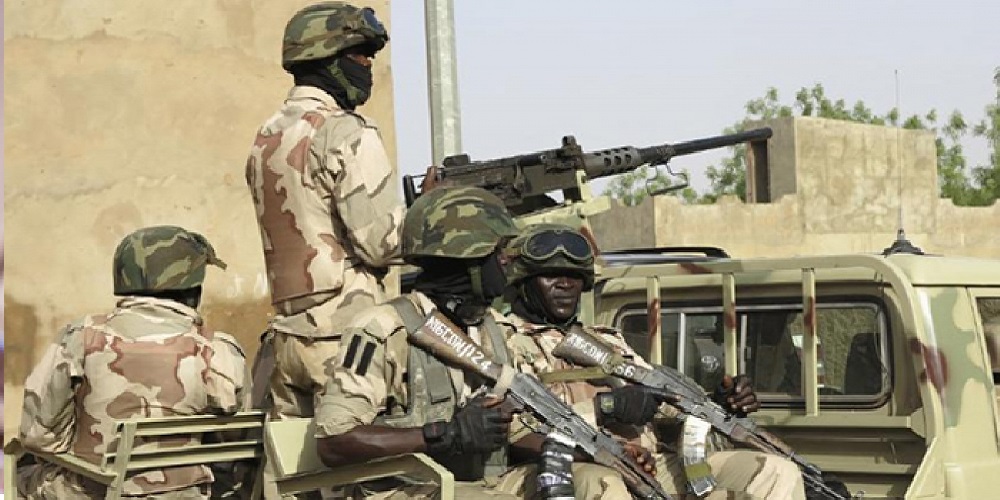
Also speaking at the event, the Nigeria Security and Civil Defence Corps disclosed that its Mining Marshals had arrested more than 671 suspected illegal miners across the country, with 397 already facing prosecution.
Representing the Commandant-General of the NSCDC, Ahmed Audi, the Commander of the Mining Marshals, Attah Onoja, said the Corps had dismantled several illegal mining sites, leading to improved government revenue and renewed investor confidence in the sector.
He, however, identified inadequate logistics, limited manpower, delays in the judicial process and interference from organised criminal syndicates as major obstacles to effective enforcement.
Onoja called for increased funding, improved surveillance technology and the establishment of specialised courts to handle mining-related offences more efficiently.
The workshop attracted regulators, security agencies, industry operators and other stakeholders, who pledged to support efforts aimed at sanitising Nigeria’s mining sector and ensuring that the country’s mineral resources contribute meaningfully to national development.
Warning: Undefined variable $user_ID in /home/naijuinz/public_html/wp-content/themes/zox-news/comments.php on line 49
You must be logged in to post a comment Login