Foreign
15,000-nurse strike hits New York hospitals over pay, safety concerns




Some 15,000 nurses went on strike Monday in New York city at three large private hospital groups over pay and conditions.
Officials declared a state of emergency over the work stoppage which the New York State Nurses Association (NYSNA) said on its website came after months of bargaining for a new contract reached a deadlock.
The association says it is the largest strike by nurses in the city’s history.
Picket lines were set up at several private hospitals across New York including facilities of New York-Presbyterian, Montefiore Bronx, and Mount Sinai.
“Unfortunately, greedy hospital executives have decided to put profits above safe patient care and force nurses out on strike when we would rather be at the bedsides of our patients,” Nancy Hagans, NYSNA’s president, said.
“Hospital management refuses to address our most important issues — patient and nurse safety.”
New York’s Democratic socialist Mayor Zohran Mamdani rallied in support of the nurses Monday, saying “we know that during 9/11 it was nurses that tended to the wounded.”
“We know that during the global pandemic, it was nurses that came into work, even at the expense of their own health,” he said, wearing a red NYSNA scarf.
Mamdani called on all sides to “return immediately to the negotiating table and not leave. They must bargain in good faith.”
The hospital groups involved discharged or transferred a number patients, canceled some surgeries and drafted in temporary staff.
A Mount Sinai spokesperson told CBS News that “unfortunately, NYSNA decided to move forward with its strike while refusing to move on from its extreme economic demands, which we cannot agree to, but we are ready with 1,400 qualified and specialized nurses — and prepared to continue to provide safe patient care for as long as this strike lasts.”

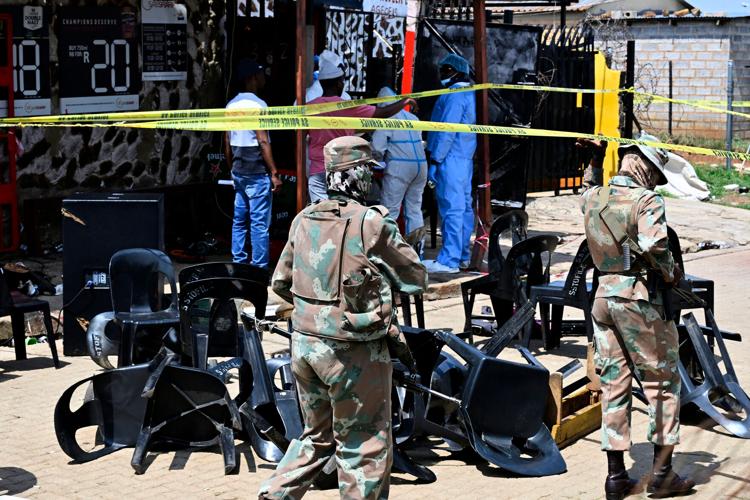
At least 27 people have been killed and 26 others wounded in two separate mass shootings near South Africa’s two biggest cities, Johannesburg and Cape Town, triggering a police manhunt for the attackers.
The shootings occurred within hours of each other, adding to growing concern over gun violence and organised crime in the country.
In the first attack, eight gunmen armed with assault rifles and pistols stormed a tavern in Wedela township, about 80 kilometres southwest of Johannesburg, at around 9:30 p.m. on Saturday.
Police said the attackers opened fire on patrons drinking outside before moving into the tavern and continuing the shooting.
Seventeen people — 13 men and four women — were killed, while 15 others sustained gunshot injuries.
The suspects reportedly searched some patrons and took their mobile phones before fleeing in two vehicles, which they later set ablaze. No arrests had been made as of Sunday, according to police.
The motive for the Wedela attack remained unclear. However, police said preliminary information suggested it could have been linked to an earlier incident at the same tavern.
Deputy provincial police commissioner Major General Fred Kekana said investigators had obtained images of the suspects and were confident they would eventually be identified and arrested.
The shooting occurred in an area where authorities have been intensifying operations against illegal mining and criminal networks operating around abandoned mine shafts.
Second attack near Cape Town
Hours later, another mass shooting was reported in Lwandle township, near Cape Town.
Police said gunmen opened fire at an entertainment venue selling grilled meat at about 1:46 a.m. on Sunday, killing 10 people and injuring 11 others.
Five victims died at the scene, while five others succumbed to their injuries after being taken to medical facilities.
Police said detectives were searching for the perpetrators, with no arrests reported in connection with the attack.
Videos circulating on social media showed people drinking and dancing before gunfire erupted, sending revellers scrambling for safety.
Ramaphosa vows action
The two attacks came just days after another mass shooting near Durban in which 11 people, including a pregnant woman, were killed at a house party.
South Africa has long struggled with high levels of violent crime, with shootings frequently linked to gangs, organised criminal groups and disputes involving local businesses.
President Cyril Ramaphosa condemned the latest attacks and said security agencies would continue efforts to reduce violent crime.
“This cannot go on like this,” Ramaphosa said, stressing that people should not be able to pick up firearms and randomly shoot others.
South Africa has repeatedly deployed soldiers to support police operations in areas affected by serious violence and organised crime.
Despite those efforts, shootings remain a persistent security challenge.
The latest attacks have renewed questions about the availability of firearms, organised crime and the ability of security agencies to prevent repeated mass-casualty shootings.
Police investigations into both incidents are ongoing, and authorities are urging anyone with information about the attackers to come forward.

TikTok on Friday agreed to pay Alabama at least $100 million and enact time limits and other restrictions for teen users, avoiding trial with a settlement modelled on Instagram-owner Meta’s recent agreement with US states.
A trial had been set to begin Monday in the southern US state over claims by Alabama that TikTok misled parents about tools meant to shield children from harmful content.
Attorney General Steve Marshall hailed the settlement as “a great day for Alabama parents.”
“Tonight, they can rest easier knowing real protections are in place to shield their children from the dangers of social media addiction,” he said.
Under the settlement, TikTok will send $100 million to Alabama and could possibly pay up to $300 million in total if other states accept similar agreements.
Alabama’s suit was the latest in a wave of litigation targeting social media companies across the United States over the harm their apps allegedly cause young users.
In August, Meta agreed to pay $18 billion to settle a sweeping lawsuit brought by US states accusing it of designing Instagram and Facebook to get children addicted.
TikTok’s settlement with Alabama mirrors safety provisions agreed by Meta, including a two-hour daily time limit for teens, restricted access from midnight to 6:00 am, and suspending notifications during school hours.
It will also strengthen age verification, ban beauty filters for teenagers, and offer young users a non-personalised content feed.
In addition, it includes a conditional restriction that Meta also agreed to: expanding the nighttime shutdown period to 10:00 pm to 7:00 am, if other platforms also commit to do the same.
– More suits pending –
“TikTok’s priority has always been fostering a safe and positive space where people can be creative, discover what they love, and connect with their community,” a company spokesperson told AFP.
“This builds on our commitment and core objective to continually enhance our robust safety tools to protect teens,” the spokesperson added.
More than a dozen other states, including California and New York, still have active suits against TikTok.
The company has previously settled cases against it that were headed for trial, including a Los Angeles lawsuit brought by a young woman and a suit from a Kentucky school district.
Meta, by contrast, has taken its chances in court — with bruising results.
In March, a jury in New Mexico ordered the Facebook and Instagram owner to pay $375 million after finding it had misled the public about the safety of its platforms for children.
That same month, a Los Angeles jury found Meta and Google’s YouTube negligent in the case of a 20-year-old woman who said she became hooked on social media as a child, awarding her $6 million.
Going to trial would have exposed TikTok to unprecedented public scrutiny of how it handles safety internally, with company documents and executive testimony potentially aired in open court.
Alabama originally sued TikTok and its Chinese parent company ByteDance in April 2025, alleging the app was engineered to hook young users “just like a sophisticated gambling machine.”
The state later narrowed its case to claims under Alabama’s Deceptive Trade Practices Act, focusing on whether TikTok misrepresented the effectiveness of features such as “Restricted Mode” and “Kids Mode.”
Despite TikTok’s assurances that users in that mode should not see mature themes, the accounts were quickly served videos about suicide, self-harm, eating disorders, alcohol and sex, according to the filing.
AFP

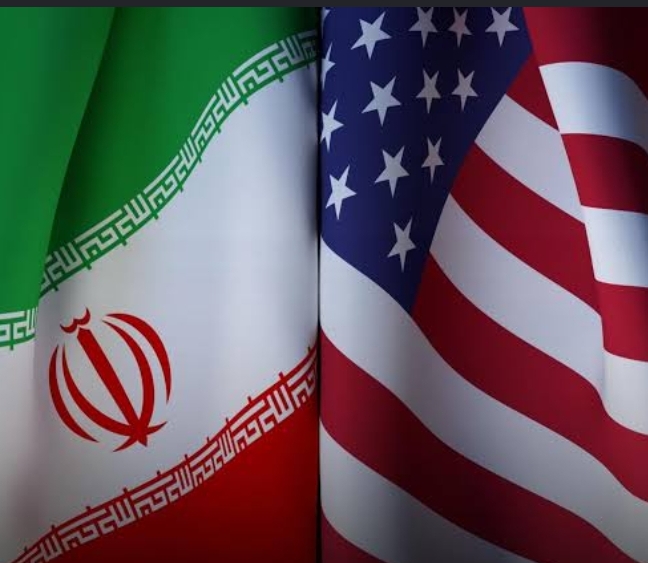
Iranian airlines are facing mounting international restrictions after new US sanctions disrupted flights to several neighbouring countries, while fresh Houthi missile attacks on Saudi Arabia sent global oil prices sharply higher.
The United Arab Emirates on Thursday suspended all flights operated by Iranian airlines until further notice, citing the impact of new US sanctions targeting Iran’s aviation sector. Oman also moved to restrict Iranian flights, while services to destinations including Georgia, Azerbaijan and Baghdad were reported to have been disrupted.
The measures followed a September 23 deadline set by Washington under which companies and service providers around the world could face sanctions for continuing to do business with Iranian airlines.
The US campaign is aimed at extending sanctions pressure beyond Iran by targeting companies in third countries that continue providing services to Iranian carriers.
Iran’s aviation network has already been affected, although international flights have not been completely halted. Flight-tracking data and airport schedules showed Iranian carriers continuing to operate some routes, including services to countries such as China, Afghanistan and Turkey.
Iran has reacted angrily to the restrictions, warning that countries cooperating with the US campaign could face consequences.
A senior Iranian official threatened that airports in countries blocking Iranian flights could eventually become “unusable”, escalating concerns over the potential impact of the sanctions on regional air travel.
Oil prices surge after Saudi missile attacks
The aviation restrictions came as escalating military tensions in the region continued to unsettle global energy markets.
Oil prices jumped on Thursday after Yemen’s Iran-aligned Houthi movement launched missile and drone attacks against targets in Saudi Arabia.
Saudi authorities said their air defences intercepted six ballistic missiles fired towards Taif and Yanbu, two cities in western Saudi Arabia. The Houthis separately claimed attacks on targets in Riyadh and facilities belonging to Saudi Aramco in Yanbu.
The attacks renewed concerns about possible disruptions to Saudi oil exports and major shipping routes in the region, particularly because Yanbu is an important Red Sea outlet for Saudi crude.
Brent crude futures settled at $106.60 per barrel, up $3.52, or 3.4 per cent, while US West Texas Intermediate crude gained $2.45, or 2.7 per cent, to close at $94.61.
Both benchmarks had risen by about five per cent at their session highs before retreating as reports emerged of possible diplomatic efforts between Washington and Tehran.
Strait of Hormuz remains key to oil markets
The possibility of negotiations between the US and Iran also helped limit the rise in crude prices.
Reports indicated that Washington and Tehran were exploring a possible phased arrangement that could involve reopening the Strait of Hormuz in exchange for a relaxation of some US economic restrictions.
The waterway is one of the world’s most important oil transit routes, making any prolonged disruption a major concern for global energy markets.
Saudi Arabia has also been relying on its East-West pipeline to move crude towards the Red Sea as disruptions affect traditional Gulf shipping routes.
The latest developments have therefore placed oil markets under competing pressures: further military escalation around energy infrastructure and shipping routes could increase supply fears, while progress in US-Iran diplomacy and improved access through the Strait of Hormuz could ease those concerns.
For Iran, meanwhile, the new US measures threaten to further isolate its aviation industry and reduce the country’s already limited international air connections.

IGSOSA Restructures, Names Zonal Coordinators, Moves to Strengthen Members’ Welfare

Tinubu Shifts Return Date Again, Now Expected Back Tuesday

Sad! 27 Killed, 26 Injured in Two South Africa Mass Shootings as Police Hunt Gunmen


-

 Sports17 hours ago
2027: NDC chairmen reject Obi-Kwankwaso structures
-
 News18 hours ago
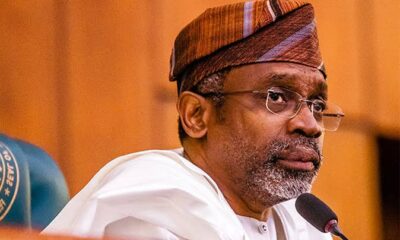
Police, DSS, ICPC Cleared Me of PFIPC Scam Allegations — Gbajabiamila
-

 News17 hours ago
‘I’m like three women’ — Ivie Atuwatse rules out polygamy for Olu of Warri
-
 News18 hours ago
PHOTOS: Jerry Eze leads thousands in prayer at Man United’s Old Trafford
-

 News13 hours ago
Decoupling Sovereignty Index (1): The Anatomy of Becoming Nobody
-

 Metro17 hours ago
Hisbah arrests eight over homosexuality in Jigawa