Economy
Five good camera phone alternatives to Samsung Galaxy S25
- /home/naijuinz/public_html/wp-content/plugins/mvp-social-buttons/mvp-social-buttons.php on line 27
https://naijablitznews.com/wp-content/uploads/2026/01/phones.jpg&description=Five good camera phone alternatives to Samsung Galaxy S25', 'pinterestShare', 'width=750,height=350'); return false;" title="Pin This Post">
- Share
- Tweet /home/naijuinz/public_html/wp-content/plugins/mvp-social-buttons/mvp-social-buttons.php on line 72
https://naijablitznews.com/wp-content/uploads/2026/01/phones.jpg&description=Five good camera phone alternatives to Samsung Galaxy S25', 'pinterestShare', 'width=750,height=350'); return false;" title="Pin This Post">
For smartphone users who prioritise camera performance over brand loyalty, several devices in 2026 now rival—or surpass—the Samsung Galaxy S25 in photography and videography. Equipped with larger high-resolution sensors, advanced cinematic video capabilities, and cutting-edge computational imaging, these phones deliver flagship-quality results that cater to both casual shooters and professional content creators.

Here are the best camera-centric smartphones you can confidently choose instead of Samsung’s Galaxy S25 right now.
1. iPhone 17

The iPhone 17 brings polished imaging with dual 48MP cameras, sensor-shift stabilisation and Dolby Vision HDR video. Its consistent colour science, strong video recording and reliable autofocus make it a dependable camera phone. For users focused on video quality and ecosystem polish, it remains a solid alternative to Samsung’s Galaxy S25.
2. Oppo Find X9
The Oppo Find X9’s triple 50MP camera setup covers wide, periscope zoom and ultrawide shots with ease. Hasselblad colour science, Dolby Vision video, 10-bit LOG recording and strong stabilisation help it capture professional-looking photos and videos that clearly outshine the Galaxy S25’s imaging capabilities.
3. Vivo X300
Vivo X300 is a photography powerhouse led by a massive 200MP primary sensor. Paired with a 50MP periscope telephoto, 50MP ultrawide camera and Zeiss optics, it delivers exceptional detail and dynamic range. Smooth high-frame-rate 4K video and a sharp 50MP selfie camera make it a stronger camera phone than the Galaxy S25.
4. Google Pixel 10
Google Pixel 10 sports a 48MP main camera, 13MP ultrawide and true 5x telephoto produce natural colours and impressive dynamic range. Ultra HDR, AI-powered processing and reliable 4K video make it a smarter camera-focused choice over the Galaxy S25.
5. OnePlus 15
The OnePlus 15 offers excellent value with its triple 50MP camera system powered by Sony’s IMX906 sensor. A 3.5x telephoto lens, 8K video support, Dolby Vision HDR and advanced stabilisation ensure consistent results. It delivers more versatile photography and video performance than the Galaxy S25 at a competitive price.
Economy
IMF questions Nigeria’s $5bn borrowing structure
The International Monetary Fund (IMF) has raised concerns over Nigeria’s plan to secure up to $5 billion in external financing through a derivatives-based arrangement with the First Abu Dhabi Bank in the United Arab Emirates.
The warning was issued by Christian Ebeke, the IMF’s resident representative in Nigeria, who told journalists that such financial structures are often complex and lack transparency in their terms.
According to him, similar transactions in other countries have raised red flags due to limited disclosure and difficulty in fully assessing the obligations involved.
“Our view is that the transaction in these types of structures carry risks. Usually they are opaque, so the terms are not always very transparent when we reviewed these instruments across countries,” Ebeke said.
He advised that Nigeria consider more conventional funding options, including Eurobonds or concessional loans, which he said tend to offer clearer terms and lower risk exposure for sovereign borrowers.
The development comes as Nigeria continues to ramp up external borrowing to finance its fiscal needs and infrastructure plans. On March 31, the National Assembly approved President Bola Tinubu’s request for $6 billion in external loans.
As part of the approval process, the president specifically sought backing for a structured Total Return Swap (TRS) arrangement of up to $5 billion with First Abu Dhabi Bank.
The federal government has argued that the funds would support budget implementation, infrastructure development, and the refinancing of more expensive domestic and external debts.
However, the IMF’s comments add to ongoing global scrutiny of complex sovereign financing arrangements, particularly those involving derivatives-based instruments that can obscure the true cost of borrowing.
Nigeria’s public debt stock currently stands at about $110.3 billion (approximately N159.2 trillion as of December 2025), underscoring concerns about debt sustainability as new borrowing plans expand.
Economy
OPEC+ approves fourth oil output increase since Hormuz closure
The Organisation of Petroleum Exporting Countries and its allies, also known as OPEC+, has approved the fourth oil output increase since the Hormuz closure crisis.
The decision followed renewed commitments by Saudi Arabia, Russia, Iraq, Kuwait, Kazakhstan, Algeria and Oman to support market stability.
In a statement issued at the weekend, OPEC stated: “The seven OPEC+ countries, which previously announced additional voluntary adjustments in April and November 2023, namely Saudi Arabia, Russia, Iraq, Kuwait, Kazakhstan, Algeria and Oman, met virtually on June 7, 2026, to review global market conditions and outlook.
“In their collective commitment to support oil market stability, the seven participating countries decided to implement a production adjustment of 188,000 barrels per day from the additional voluntary adjustments announced in April 2023.
“This adjustment will be implemented in July 2026. The additional voluntary adjustments announced in April 2023 may be returned in part or in full, subject to evolving market conditions and in a gradual manner.
“The countries will continue to closely monitor and assess market conditions and, in their continuous efforts to support market stability, reaffirmed the importance of adopting a cautious approach and retaining full flexibility to increase, pause or reverse the phase-out of the voluntary production adjustments, including reversing the previously implemented voluntary adjustments announced in November 2023.
“The seven OPEC+ countries also noted that this measure will provide an opportunity for the participating countries to accelerate their compensation.
“The seven countries reiterated their collective commitment to achieving full conformity with the Declaration of Cooperation, including the voluntary production adjustments, which will be monitored by the Joint Ministerial Monitoring Committee (JMMC).
“They also confirmed their intention to fully compensate for any overproduced volumes since January 2024. The compensation period will be extended until the end of December 2026.”
It added: “The seven OPEC+ countries will hold monthly meetings to review market conditions, conformity and compensation. The seven countries will meet on July 5, 2026.”
Economy
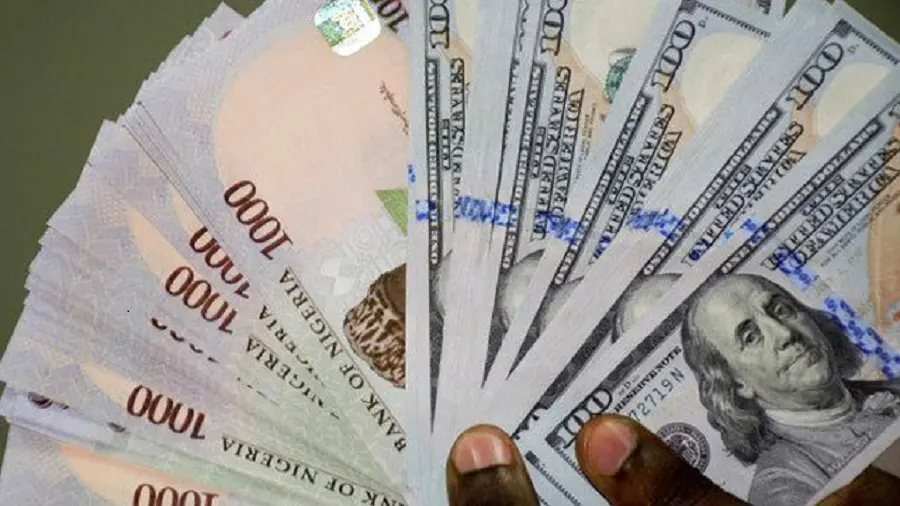
Naira depreciates to N1,397/$ in parallel market
The naira on Friday depreciated to N1,397 per dollar in the parallel market from N1,390 per dollar on Thursday.
Likewise, the naira depreciated to N1,365 per dollar in the Nigerian Foreign Exchange Market, NFEM.
Data from the Central Bank of Nigeria, CBN, showed that the indicative exchange rate for the market rose to N1,365 per dollar from N1,359.75 per dollar on Thursday, reflecting N5.25 depreciation for the naira.
Consequently, the margin between the parallel and official markets widened to N32 per dollar from N30.25 per dollar on Thursday.
The turnover in the interbank foreign exchange market recorded its fourth daily decline by 42.5 per cent to $73.6 million from $128.2 million on Thursday.
This week, the naira strengthened by N1 per dollar in the official market, with turnover in the interbank foreign exchange market climbing to N683.2 million, representing a 76.7 per cent rise compared to N386.54 million recorded the previous week.
However, the local currency weakened in the parallel by N2 against the greenback.
-
News17 hours agoBinani Air Celebrates First Month in the Skies, Eyes Bigger Future
-
News23 hours agoReps Move to Modernise Price Control Law, as Bill Pass Second Reading
-
News23 hours agoBREAKING: ‘Hope Is Here’: Reps Rally Support for State Police Ahead of Crucial Constitutional Vote On Thursday
-
News11 hours agoKano Screens 720 Couples for State-Sponsored Mass Wedding Programme
-
News22 hours agoFCT Projects Commissioning: Tinubu Urges Abuja Residents to pay Ground Rent, Other Taxes To Enjoy More Developmental Projects(Photos)
-
News23 hours agoBlackout hits Abuja, Nasarawa, AEDC explains
-
News22 hours agoINSECURITY: Vice principal two others killed as bandits invade Kogi community, attempt to kidnap WAEC candidates
-
News11 hours agoEx-NNPCL Boss Kyari Challenges Senate Over Arrest Warrant, N210trillion Probe, Cites Medical Trip Abroad