News
US Set To Quit World Health Organization


- /home/naijuinz/public_html/wp-content/plugins/mvp-social-buttons/mvp-social-buttons.php on line 27
https://naijablitznews.com/wp-content/uploads/2025/11/united-states-flag.jpg&description=US Set To Quit World Health Organization', 'pinterestShare', 'width=750,height=350'); return false;" title="Pin This Post">
- Share
- Tweet /home/naijuinz/public_html/wp-content/plugins/mvp-social-buttons/mvp-social-buttons.php on line 72
https://naijablitznews.com/wp-content/uploads/2025/11/united-states-flag.jpg&description=US Set To Quit World Health Organization', 'pinterestShare', 'width=750,height=350'); return false;" title="Pin This Post">


The U.S. is due to officially exit the World Health Organization on Thursday, in the face of warnings it will hit both U.S. health and global health and also in violation of a U.S. law that requires Washington to pay the U.N. health agency $260 million in fees that it owes.
President Donald Trump gave notice that the U.S. would quit the organization on the first day of his presidency in 2025, via an executive order. Under U.S. law, it has to give one-year notice and pay all outstanding fees before departure.
On Thursday, a U.S. State Department spokesperson said the WHO’s failure to contain, manage and share information had cost the U.S. trillions of dollars and the president had exercised his authority to pause the future transfer of any U.S. government funds, support, or resources to the WHO.
“The American people have paid more than enough to this organization and this economic hit is beyond a down payment on any financial obligations to the organization,” the spokesperson said by email.
Over the last year, many global health experts have urged a rethink, including most recently WHO Director General Tedros Adhanom Ghebreyesus.
“I hope the U.S. will reconsider and rejoin WHO,” he told reporters at a press conference earlier this month. “Withdrawing from the WHO is a lose for the United States, and it’s a lose for the rest of the world.”
The WHO also said that the U.S. has not yet paid the fees it owes for 2024 and 2025. Member states are set to discuss the U.S. departure and how it will be handled at the WHO’s executive board in February, a WHO spokesperson told Reuters by email.
“This is a clear violation of U.S. law,” said Lawrence Gostin, founding director of the O’Neill Institute for Global Health Law at Georgetown University in Washington, a close observer of the WHO. “But Trump is highly likely to get away with it.”
Speaking to Reuters at Davos, Bill Gates – chair of the Gates Foundation, a major funder of global health initiatives and some of the WHO’s work – said he did not expect the U.S. to reconsider in the short-term.
“I don’t think the U.S. will be coming back to WHO in the near future,” he said, adding that when he had an opportunity to advocate for it, he would. “The world needs the World Health Organization.”
For the WHO, the departure of the U.S. has sparked a budgetary crisis that has seen it cut its management team in half and scale back work, cutting budgets across the agency.
Washington has traditionally been by far the U.N. health agency’s biggest financial backer, contributing around 18% of its overall funding. The WHO will also shed around a quarter of its staff by the middle of this year.
The agency said it has been working with the U.S. and sharing information in the last year. It was unclear how the collaboration will work going forward.
Global health experts said this posed risks for the U.S., the WHO and the world.
“The U.S. withdrawal from WHO could weaken the systems and collaborations the world relies on to detect, prevent, and respond to health threats,” said Kelly Henning, public health program lead at Bloomberg Philanthropies, a U.S.-based non-profit.
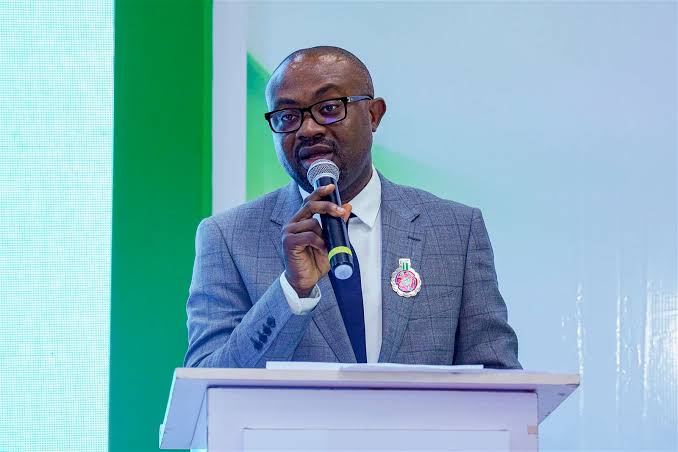
The Honourable Minister of Interior, Hon. Olubunmi Tunji-Ojo, has noted with concern the inconvenience experienced by Nigerians in the United Kingdom regarding the application and processing of their international passport during the ongoing special passport intervention exercise.
The intervention exercise was introduced to provide more options for Nigerians in the United Kingdom to process their application.
Alao Babatunde, Special Adviser to the Minister of Interior on Media and Publicity said; “It is therefore necessary to clarify that this process does not come with extra cost different from the official fees of $150 and $230 for a five-year and ten-year validity passports respectively, exclusive of bank charges.
“Neither the Ministry of Interior nor the Nigeria Immigration Service has introduced any other charges outside the aforementioned,” the statement added.
However, consultations are ongoing with the Ministry of Foreign Affairs to ensure that any inconveniences during this process do not persist any longer.
This government has demonstrated high level of responsibility to Nigerians home and abroad, and remains committed to its promises of providing succour to all.
Applicants are further advised to take advantage of the seamless contactless biometric passport application system.

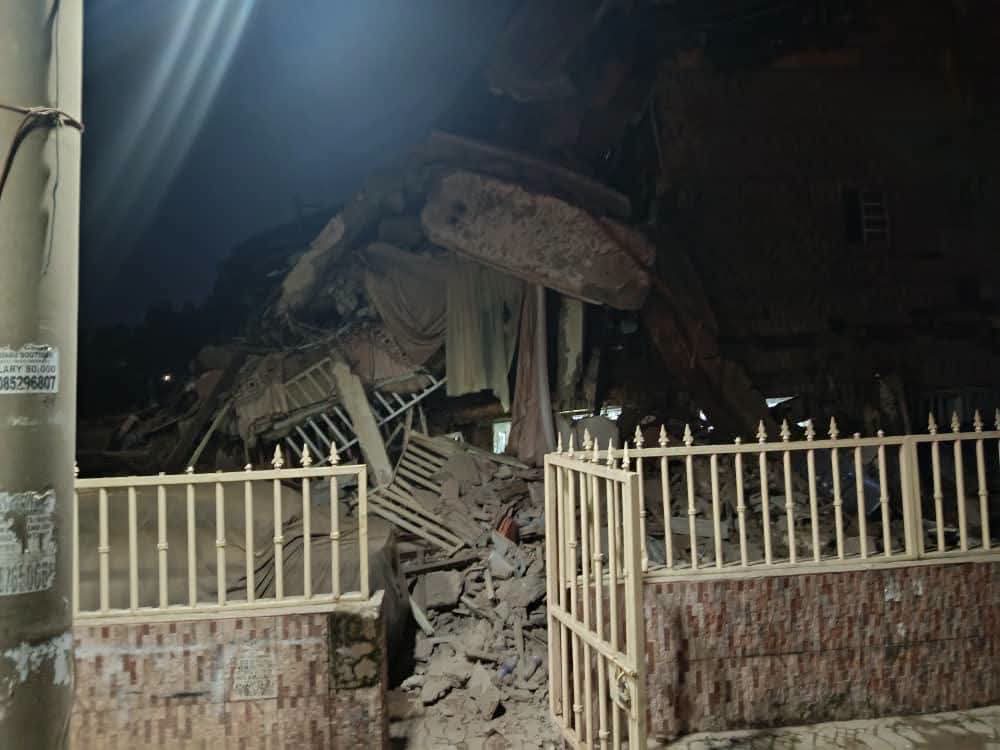
A building collapsed in Wuse axis of Abuja on Monday as FCTA mobilises to the site with rescue barely one hour after it collapsed.
The incident occurred at about 9pm in Wuse Zone 4, Abuja.

Rescue operation is currently going on with men of the FCT Fire Service there.
Three ambulances have been stationed there too.

The FCTA Development Control had sealed up the building earlier in the day and asked the occupants to leave.
Details later….
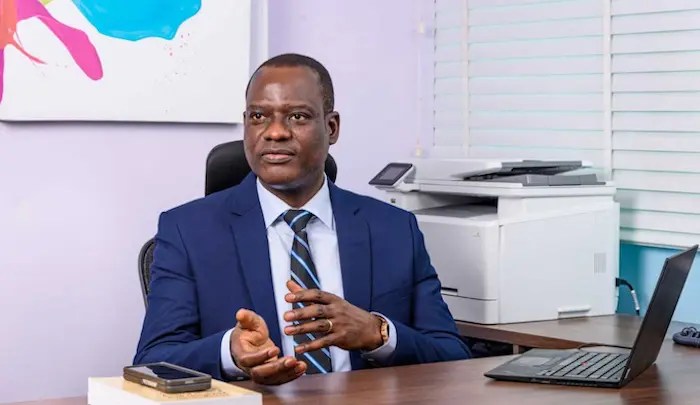
By Gloria Ikibah
The Federal Government has moved to harmonise its economic projections after the Economic Management Team (EMT) approved the establishment of an inter-agency committee to align the key assumptions guiding the nation’s budget and economic planning.
The decision was taken on Monday in Abuja at the latest meeting of the EMT, the Federal Government’s principal platform for economic management and coordination.
The new committee will harmonise projections covering crude oil prices and production, exchange rates, inflation and non-oil revenue used by fiscal and monetary authorities.
The move followed a joint budget retreat and a technical validation workshop which identified inconsistent assumptions among government agencies as one of the factors contributing to budget under-performance.
The committee will also address inconsistencies in the way major economic indicators are reported by government agencies to external stakeholders and the public.
The EMT also reviewed developments across the economy, including agriculture, trade and investment, manufacturing and Nigeria’s preparations to host major continental trade events.
According to the National Bureau of Statistics (NBS), Nigeria’s real Gross Domestic Product (GDP) grew by 4.43 per cent year-on-year in the second quarter of 2026, representing the strongest quarterly growth since the third quarter of 2024.
The meeting was also informed that the nation’s external reserves had risen above $54 billion in early September, the highest level in nearly 18 years, according to data of Central Bank of Nigeria.
The naira has also strengthened, trading in the N1,300s to the US dollar in early September, alongside the increase in foreign reserves.
The EMT noted that FTSE Russell had reclassified Nigeria from “Unclassified” to “Frontier Market” status, with the new classification scheduled to take effect from the market opening on September 21, 2026.
The reclassification marks Nigeria’s return to the index after about three years and is expected to improve the visibility of Nigerian equities among international investors.
The team was further briefed that public debt remained below 40 per cent of GDP, while Nigeria’s sovereign credit outlook from Moody’s had moved from stable to positive.
It also noted the disparity between Nigeria’s nominal dollar GDP and its purchasing-power-parity (PPP) economy, which is estimated at more than $2.2 trillion.
The EMT said the figure demonstrated the potential for Nigeria to achieve a $1 trillion nominal economy by 2030.
EMT Strengthens Coordination
The team approved a revised Terms of Reference that expands its responsibilities to include macroeconomic performance reviews, stronger fiscal and monetary coordination, monitoring of priorities under the Renewed Hope Agenda and periodic assessment of the Federal Government’s financing needs.
Under the new arrangement, the EMT will meet monthly, with at least two strategic sector reviews to be conducted at each sitting.
The Ministry of Finance was also designated as the coordinating custodian for national economic data as part of efforts to improve the reliability and consistency of official statistics.
Line ministries and agencies will remain responsible for their respective datasets, which will serve as inputs into coordinated public releases.
Agriculture Gets Fresh Push
The EMT also examined measures aimed at increasing agriculture’s contribution to the government’s ambition of building a $1 trillion economy by 2030.
The strategy includes reducing post-harvest losses, expanding processing and mechanisation, improving export compliance and ensuring that capital releases are made early enough ahead of planting seasons.
The team also reviewed financing options for agriculture, including the planned recapitalisation of the Bank of Agriculture and the introduction of a new credit window for smallholder farmers.
Government is targeting an increase in agriculture’s share of private-sector credit to 10 per cent by 2030.
Nigeria Prepares for CANEX, IATF
The EMT further reviewed preparations for Nigeria to host the Creative Africa Nexus (CANEX) in November 2026 and the Intra-African Trade Fair (IATF) in November 2027, both in Lagos.
The events are expected to attract exhibitors, international buyers and, in the case of IATF, African heads of state, with organisers projecting significant trade and investment opportunities.
The Ministry of Finance was directed to coordinate funding and customs facilitation for the events in collaboration with the Ministry of Industry, Trade and Investment.
The two ministries are expected to produce a consolidated action plan with clearly assigned responsibilities for the participating ministries.
Speaking on the decisions reached at the meeting, the Minister of Finance and Coordinating Minister of the Economy, Mr Taiwo Oyedele, said the new measures will improve the credibility of government’s economic planning.
“Today’s decisions tighten the link between the numbers we plan with and the actual outturns. A single, harmonised set of assumptions across the fiscal and monetary authorities means fewer surprises in the budget and more credible planning for investors and all Nigerians,” he said.
The EMT said the measures were part of broader efforts to improve economic coordination, strengthen investor confidence and accelerate growth in strategic sectors of the Nigerian economy.

Tunji-Ojo: No Extra Charges For Special Passport Intervention In UK

Iraqi court affirms woman’s right to Change and register her religion from Muslim to Christian

BREAKING: Building Collapses In Abuja as FCTA Mobilises to Rescue Victims




-
 News24 hours ago
Viral videos linking me to bandits manipulated -Sen Buba
-
 News24 hours ago
After tense selection process, Gumel finally gets a new Emir
-
 News24 hours ago
APC reveals what may await Makinde after his presidential bid
-
 Metro24 hours ago
Sad! NOUN bursar shot dead in Zamfara
-
 News24 hours ago
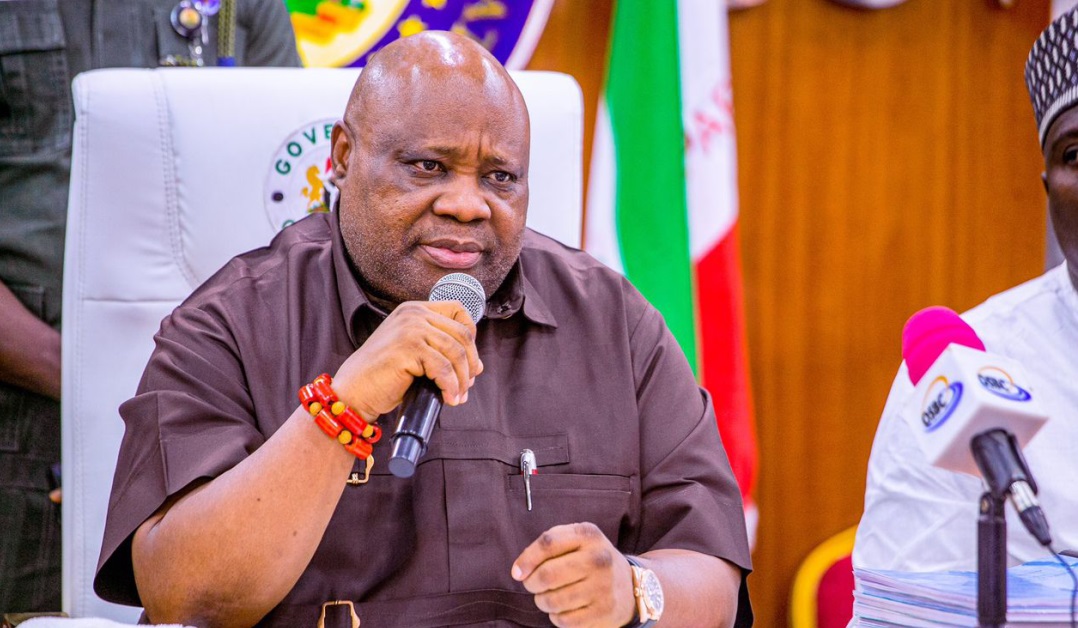
Osun guber: Adeleke’s victory unchallenged as 21-day petition window expires
-

 News19 hours ago
Businesses Feel Pressure as FG’s Domestic Borrowing Surges 90% to N24.7trn
-

 News19 hours ago
Davido’s Friend ‘Tiny’ Ubiribo, Who Died After Penis Procedure, Was Wanted by NDLEA Over Drug Trafficking
-

 Sports24 hours ago
AFCON qualifiers: Osimhen, Onuachu compound Eagles injury worries