
News
Five Nigerian Military Officers Detained Over Alleged Coup Against Tinubu ‘Fall Ill In Custody,’ Wives Plan Protest




At least five out of the military officers detained over the alleged coup d’état to overthrow President Bola Tinubu’s government have reportedly fallen ill.
SaharaReporters learnt that the officers initially detained at the Defence Intelligence Agency were moved into a dark, underground military cell in Abuja a few weeks ago.
“About five of them are critically sick and two of them collapsed last week. Till now, some of them are keeping mum. One of them wasn’t even involved. He is being punished for being aware, but failing to alert the military authorities,” a military source told SaharaReporters.
Meanwhile, some families of the detainees told SaharaReporters they were not informed about the whereabouts of their relatives for months, with the officers being held incommunicado.
“We have been denied access to them since their arrest. We can’t say this was where they were moved to,” one of them said.
“We are planning to massively protest at DIA to demand their whereabouts. DIA office is beside the State House Clinic at Mambilla Barracks. About 15 of us, we want to go and ask if our husbands are still alive,” one of the wives of the arrested officers told SaharaReporters.
“Since they were arrested, the military authorities have denied them access to their families and lawyers,” she continued.
“We can’t continue like this. We don’t have access to their bank accounts as they took away their ATM cards. We can’t pay for our children’s school fees and other things.”
Background
In October 2025, SaharaReporters exclusively reported the arrest of several military officers by the DIA in Abuja over an alleged plot to overthrow President Tinubu’s government.
The case is being handled by the Chief of Defence Intelligence (CDI), Lieutenant General Emmanuel Parker Undiandeye, who heads the military department.
President Tinubu reappointed Undiandeye as Chief of Defence Intelligence on October 24, 2025.
He first assumed office as the 17th CDI on June 23, 2023.
The DIA, established in 1986, is Nigeria’s primary military intelligence body. It is responsible for gathering and providing intelligence to the Nigerian Armed Forces and the Ministry of Defence to counter security threats, safeguard national integrity, and support military operations, including ongoing efforts against terrorism and insurgency.
In October 2025, top military sources disclosed the names and departments of 16 senior military officers who were at the time being detained by the DIA over the alleged plot.
SaharaReporters had earlier exclusively reported that a Nigerian Navy officer, Lieutenant Commander B. Abdullahi, was among the senior officers detained in connection with the case.
Sources at the Defence Headquarters confirmed that the officers, drawn from the Nigerian Army, Navy and Air Force, were arrested in coordinated operations by military intelligence operatives following weeks of covert surveillance.
Below are the profiles of the detained officers as compiled by PREMIUM TIMES:
1. Brigadier General Musa Abubakar Sadiq (N/10321) Brigadier General Sadiq is believed to be the suspected leader of the alleged coup plot.
This is not his first brush with controversy. In October 2024, he was reportedly detained for “alleged diversion of rice palliatives and selling of military equipment, including generator sets and operational vehicles to scrap yards.”
2. Colonel M.A. Ma’aji (N/10668): Ma’aji, born on March 1, 1976, is a Nupe native from Niger State.
3. Lieutenant Colonel S. Bappah (N/13036): Bappah, from Bauchi State is a member of the 56 Regular Course.
4. Lieutenant Colonel A.A. Hayatu (N/13038) is a native of Kaduna State.
5. Lieutenant Colonel P. Dangnap (N/13025) is from Plateau State, Dangnap. He was court-martialed in 2015 alongside 29 others for offences linked to the Boko Haram war.
6. Lieutenant Colonel M. Almakura (N/12983): Almakura, also from Nasarawa State, was born on March 18, 1983.
7. Major A.J. Ibrahim (N/13065): He is from Gombe State and was born on June 12, 1987.
8. Major M.M. Jiddah (N/13003): Born on July 9, 1985, Major Jiddah hails from Katsina State. He is an Infantry officer and member of the 56 Regular Course (2004–2008).
9. Major M.A. Usman (N/15404) is from the Federal Capital Territory, Abuja.
10. Major D. Yusuf (N/14753): Born on May 26, 1988, Major Yusuf hails from Gombe State. He serves in the Ordnance Corps.
11. Major I. Dauda (N/13625): From Jigawa State, Major Dauda joined the Army through the Direct Short Service Commission (Course 38).
12. Captain Ibrahim Bello (N/16266): Born on July 28, 1987, Captain Bello is a member of the Direct Short Service Commission Course 43.
13. Captain A.A. Yusuf (N/16724): Captain Yusuf is a Nigerian Army officer with limited public records available.
14. Lieutenant S.S. Felix (N/18105): Lt. Felix is among the junior officers in detention. Details about his role remain unclear.
15. Lieutenant Commander D.B. Abdullahi (NN/3289): Lt. Commander Abdullahi serves in the Nigerian Navy and is one of two non-Army officers detained in connection with the alleged coup plot.
16. Squadron Leader S.B. Adamu (NAF/3481): Squadron Leader Adamu serves in the Nigerian Air Force. His alleged involvement remains under investigation.
Meanwhile, SaharaReporters had reported that military operatives raided the Abuja residence of a former Minister of State for Petroleum Resources, Timipre Sylva, in connection with the alleged coup plot currently under investigation by the DIA.
Multiple security sources confirmed to SaharaReporters that the operation took place at Sylva’s home in Maitama, Abuja.
According to the sources, a “special military team” carried out the raid after intelligence reports linked a “former South-South governor” to alleged secret meetings with some of the detained military officers.
Sylva later confirmed the military raid on his Abuja residence in a statement, but denied any involvement in the alleged coup plot.
Sahara Reporters
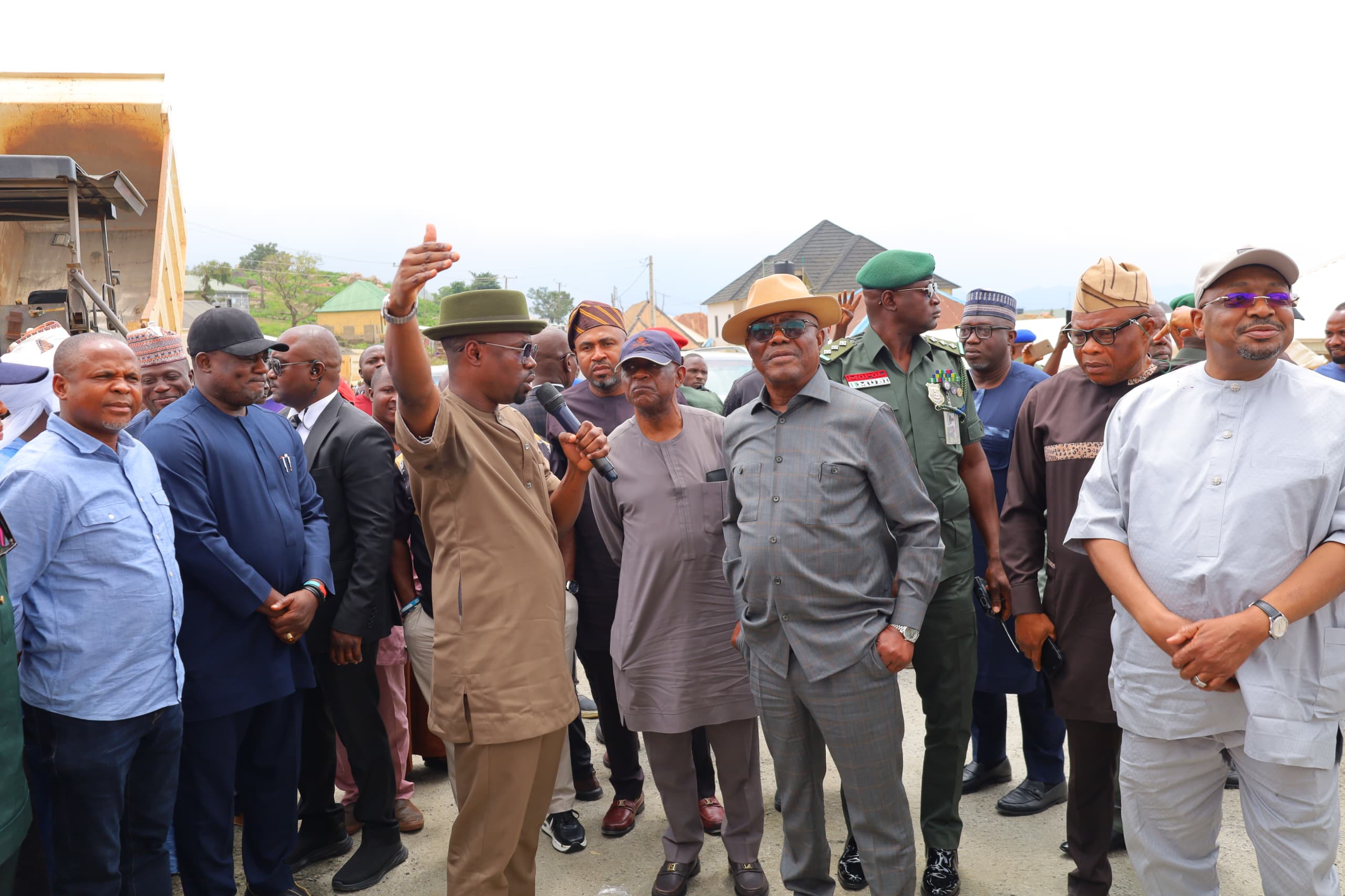
This is Chukuku, along Kuje – Gwagwalada road, Kuje Area Council of the FCT.
Wike don reach here.
Watch:
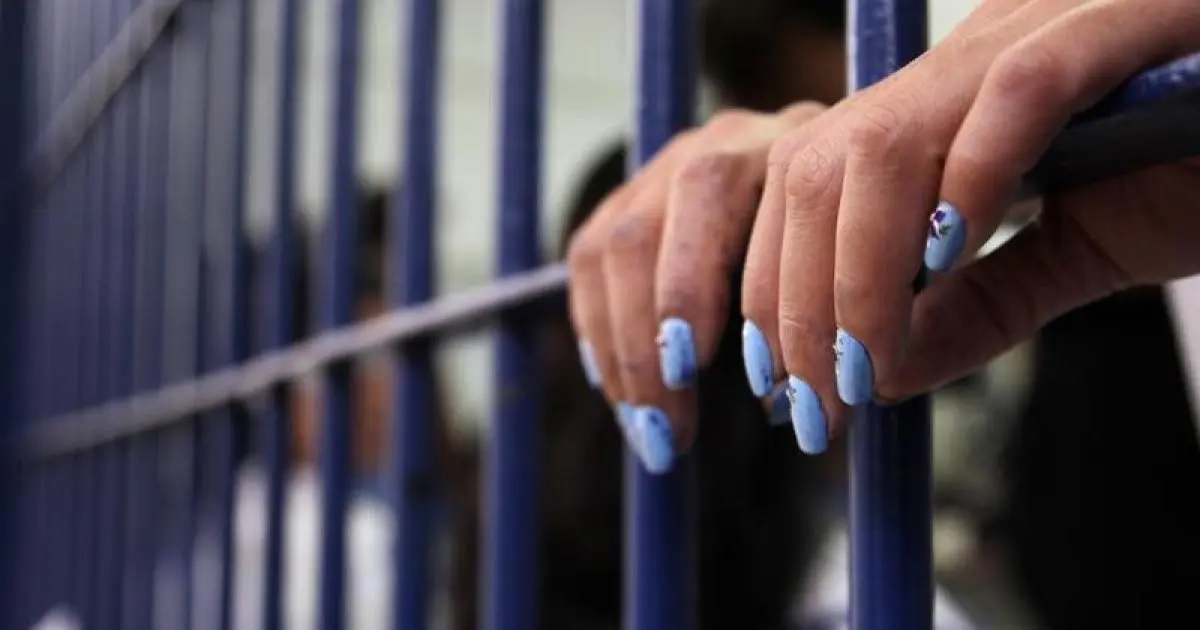
The husband of a woman accused of killing their two-year-old son stood by her in court on Thursday as she pleaded not guilty to a first-degree murder charge.
Corie Walsh, 40, appeared briefly before a judge on September 24 during a preliminary hearing in the case involving the death of her son, Barrett Walsh.
Walsh appeared in a bright red jail uniform with her hair tied back during the roughly three-minute hearing. She stood beside her attorney, who told the court that the defence had subpoenaed her treatment records from the jail.
The records, attorney Andrea Lyon later said, were requested to determine whether Walsh was receiving the mental-health treatment she needs.
The defence is also seeking to have Walsh released before trial to a hospital for treatment, despite a judge rejecting an earlier request this month.
Walsh’s husband, Michael Walsh, sat in the public gallery during Thursday’s hearing alongside an elderly couple who appeared visibly emotional.
As Walsh was led from the courtroom after the hearing, she made eye contact with her husband.
Outside the courthouse, friends comforted Michael, with one supporter telling him, “She will get through this, she’s strong.”
Michael was later heard telling another supporter that he had been “packing up” the family home.
Speaking to reporters outside court, Lyon said Walsh’s family remained firmly behind her.
“Her whole family is here today — her husband, mother, mother’s best friend,” the attorney said.
“They love her and this is not — she’s never been violent… she was psychotic. They all know that and want her to get better. This is not who she is,” Lyon added.
According to court documents, Walsh’s two older children discovered Barrett with a rope around his neck and his feet off the ground in the basement of the family’s home in Frankfort, a suburb about 30 miles southwest of Chicago.
The children reportedly ran to a neighbour’s house for help.
The neighbour called 911 and attempted CPR on the toddler, but he had no pulse and was cold to the touch. Barrett was pronounced dead at the scene.
An autopsy determined that the child, affectionately known as “Bear,” died from “asphyxia due to ligature compression of the neck,” according to court records.
Police later found Walsh fully clothed in a bathtub containing bloodied water. Investigators allege that she had attempted to kill herself by cutting her wrists and thighs with a dull kitchen knife.
Court documents further allege that Walsh confessed to killing her son and described him as the “anti-Christ” and “devil.”
The case has drawn particular attention because prosecutors allege Walsh had become intensely focused on the high-profile case of Lindsay Clancy, a Massachusetts mother accused of killing her three children.
Clancy’s defence argued that she suffered from postpartum psychosis and was legally insane when she fatally strangled her children with exercise bands. Her trial ended in a hung jury and mistrial.
According to Walsh’s defence team, she had discussed the Clancy case with neighbourhood friends shortly before Barrett was found.
During an earlier hearing, defence attorney Robert Kerr said Walsh had sent several “confusing” and “out of character” messages about the Clancy case.
Kerr told the court that Walsh had initially expressed one view about Clancy’s case before suddenly changing her position.
A witness reportedly described Walsh as abruptly saying that Clancy was “100% not guilty”, prompting friends to question whether she was okay and whether someone should check on her.
Walsh’s lawyers have argued that she was “severely mentally ill” and experiencing a psychotic episode when Barrett died.
The defence has also rejected suggestions that Walsh deliberately copied Clancy.
“Describing Corie to have copied Lindsay is to take an easy bait,” Kerr said during a previous hearing, according to a transcript.
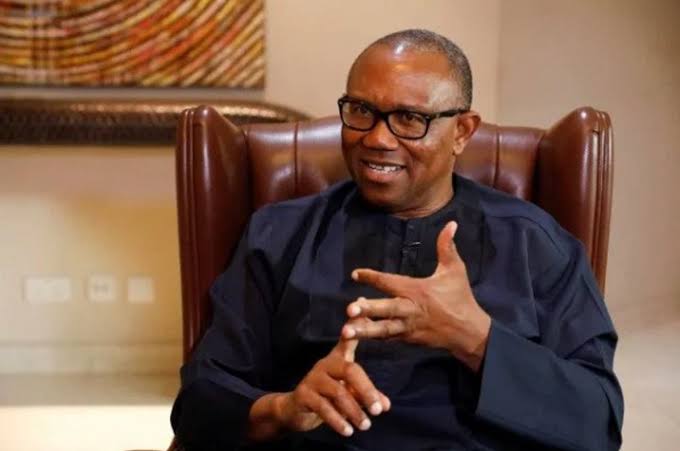
Presidential candidate of the Nigeria Democratic Congress (NDC), Peter Obi, has raised concerns about his personal safety ahead of the 2027 general elections, saying he is not certain he will be alive when Nigerians go to the polls.
Obi made the remarks during an interview on Arise TV on Thursday, where he discussed the political environment ahead of the election and called for a peaceful and democratic process.
The former Anambra State governor said he had been subjected to petitions and investigations in different places, adding that he remained uncertain about what could happen to him before the election.
“As I speak to you, I have also petitioned, I’ve been investigated everywhere. I still hear that I’m not even sure whether I’ll still be alive at the end of this,” Obi said.
He said he was relying on God for protection, while expressing uncertainty over the circumstances surrounding him.
“I’m praying to God for His protection because at this stage, I’m not sure what is happening,” he added.
Obi also appealed to political actors, particularly state governors, to create an environment where presidential candidates and other contestants can campaign freely ahead of the 2027 polls.
According to him, governors have the right to support candidates of their choice, but should not prevent candidates from opposing parties from carrying out their campaigns.
“Some of them will be campaigning for presidency tomorrow. They will be campaigning for other offices tomorrow. Let’s have peace,” he said.
The NDC candidate recalled his tenure as governor of Anambra State, saying he allowed politicians from other parties to campaign in the state, including those supporting candidates who were opposed to him.
Obi’s comments come amid increasing political activity and debate over the conduct and security of the 2027 elections. He has repeatedly called for a peaceful, credible and issue-based electoral process, while urging political actors to avoid actions that could undermine democratic participation.

FCT minister Wike spreads devt as he visits Chukuku in Kuje(Video)

Husband Stands by Mum Accused of Hanging 2-Year-Old Son as She Faces Murder Trial

2027: Peter Obi Raises Alarm Over Safety, Says He May Not Be Alive for Election




-
 Opinion24 hours ago
OF TEEJAY YUSUF, KOGI WEST SENATORIAL DISTRICT, AND RESPONSIVE SERVANTHOOD
-
 News23 hours ago
FG Cuts Late Tax Payment Interest as New Rate Takes Effect October 1
-
 News10 hours ago
Bungudu Council Chairman, Four Others Escape From Terrorists’ Captivity In Zamfara
-
 Politics10 hours ago
FULL LIST: Atiku unveils campaign council, names El-Rufai, Momodu, Melaye
-

 Metro10 hours ago
Nigerian Policemen Harass, Clash With Youths Who Confronted Trucks Carrying Lithium In Abuja Community
-
 News24 hours ago
US Lobbying Firm Warns Against Alleged Attempt to Rig Nigeria’s 2027 Election