Connect with us

News

‘Nigeria not facing fiscal collapse’ – Edun

Published

on

ADVERTISEMENT
Zoom Ad
ADVERTISEMENT
Zoom Ad

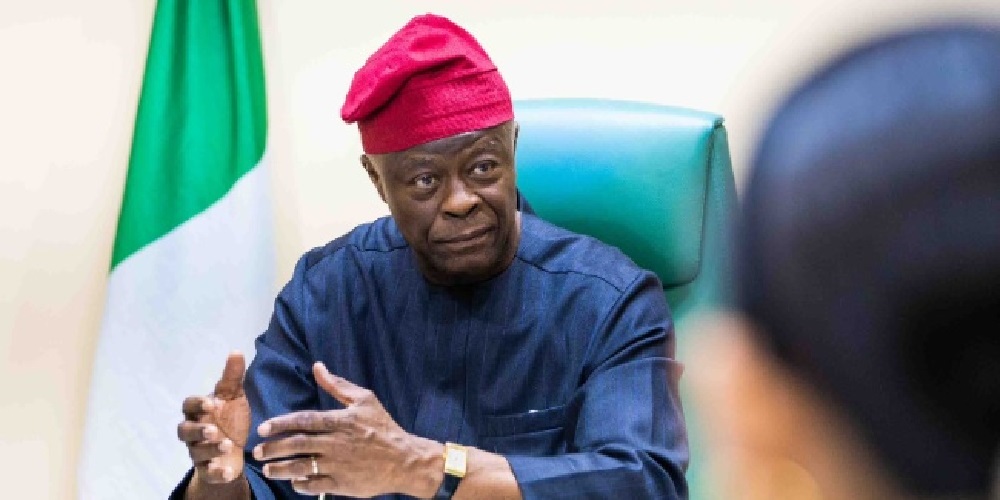
The Minister of Finance and Coordinating Minister of the Economy, Mr. Wale Edun, has said Nigeria is not facing a fiscal collapse but is undergoing a period of fiscal correction driven by economic reforms introduced by the federal government.


In a brief released on Saturday in Abuja, the minister said the country’s current economic adjustments are the result of structural reforms designed to promote transparency, enforce fiscal discipline, and support long-term economic growth.

Edun said the government deliberately chose policies that focus on long-term sustainability rather than temporary measures that could create the illusion of stability.

“Nigeria is not experiencing fiscal collapse. It is undergoing fiscal correction. The reforms are structural, transparency-driven, discipline-enforcing and growth-enabling,” he said.

Advertisement

He explained that available economic data show positive trends in several key areas, including revenue growth and the continued implementation of capital projects.

According to him, the government has also stopped the practice of financing budget deficits through direct monetary support from the Central Bank of Nigeria.

“The evidence shows revenue is rising, capital projects are ongoing, debt growth is largely transparency and exchange-rate driven, and monetary financing has ended. The administration has chosen long-term sustainability over short-term illusion,” he said.

The minister also addressed public concerns about the performance of government revenue collection, particularly regarding the Nigeria Revenue Service.

Advertisement

He explained that misunderstandings sometimes arise because of how federal revenue is collected and distributed within the government system.

“The Nigeria Revenue Service collects a large share of federal taxes and sets internal collection targets,” Edun said.

“However, NRS does not collect all revenue sources. Allocation ratios are applied after revenues reach the Budget Office and the Federation Account Allocation Committee, and meeting an NRS collection target does not automatically mean Federal Government revenue targets are met. This technical sequencing often leads to confusion in public commentary.”

Edun also responded to claims that federal capital projects are not being implemented due to low capital releases to government ministries, departments and agencies.

Advertisement

According to him, such conclusions do not reflect the full picture of how capital spending works in the federal budget.

He explained that federal capital expenditure has two main components. The first component involves capital projects funded directly by the Federal Government from its cash revenues.

This type of spending is handled through ministries, departments and agencies and depends largely on government revenue performance.

“MDA-funded capital is funded directly from Federal Government cash revenue. It is dependent on revenue performance and sensitive to oil shortfalls and debt service pressures,” he said.

Advertisement

Edun explained that when government revenue falls short or when debt servicing obligations increase, releases for these projects may slow down, which can affect performance ratios.

The second component involves capital projects funded through loans from international development partners.

These funds are disbursed directly by multilateral institutions and are tied to specific infrastructure or social programmes.

“Multilateral and project-tied loans are disbursed directly by development partners. They are not cash inflows to Federal Government accounts though captured in the budgets and they are tied to specific infrastructure and social projects,” he said.

Advertisement

According to the minister, such projects continue to move forward even when cash releases to government agencies appear limited.

“Capital projects are ongoing. Execution continues. The financing mix differs. The misunderstanding arises from focusing solely on MDA cash releases rather than total capital execution,” he added.

Edun also explained that increases in Nigeria’s debt service payments in recent years do not necessarily mean the government is borrowing recklessly. He noted that debt servicing rose above budget projections in both 2024 and 2025. In 2024, debt service was projected at ₦8.56 trillion but the actual amount reached ₦12.63 trillion, creating an overshoot of about ₦4 trillion.

For 2025, the budget projected ₦13.12 trillion for debt servicing, but the actual figure rose to ₦14.57 trillion, resulting in an overshoot of about ₦1.45 trillion.

Advertisement

The minister said these increases were largely caused by economic factors rather than excessive borrowing.

One of the key factors, he said, was the depreciation of the naira. He explained that much of Nigeria’s external debt is denominated in foreign currencies.

When the naira weakens against these currencies, the naira cost of servicing the same debt automatically rises.

“When the naira depreciates, the naira cost of servicing the same dollar debt rises automatically. This is a valuation effect and not evidence of new borrowing,” Edun said.

Advertisement

He added that higher domestic interest rates also contributed to the increase in debt servicing costs. According to him, interest rates were raised as part of efforts to control inflation and stabilise the currency. “To stabilize inflation and the currency, monetary policy was tightened, interest rates increased, and domestic debt servicing costs rose,” he said.

Despite these pressures, Edun said the government prioritised key obligations including debt servicing, payment of salaries and pensions, and the continued implementation of capital projects.

He added that these commitments were met without returning to the practice of monetary financing. “This reflects fiscal discipline under strain, not fiscal collapse,” he said.

The minister also addressed concerns about Nigeria’s rising public debt, noting that a large portion of the increase is due to accounting adjustments and exchange rate changes rather than new borrowing.

Advertisement

He explained that about ₦30 trillion previously owed to the Central Bank under the Ways and Means facility was formally recognised and added to the public debt record.

“Previously off-book liabilities are now transparently recorded. This is not new borrowing, it is formal recognition,” he said.

He also pointed to the impact of exchange rate adjustments. According to him, when the naira depreciated, the naira value of Nigeria’s external debt increased significantly.

He said about ₦70 trillion of the nominal rise in public debt can be attributed to exchange rate valuation effects. “Thus, much of the increase is accounting and currency-driven, not borrowing-driven,” he said.

Advertisement

Edun said Nigeria’s debt sustainability should be assessed using broader economic indicators such as the debt-to-GDP ratio, the debt service-to-revenue ratio, the fiscal deficit level and trends in government revenue.

He noted that recent policy reforms, including fuel subsidy removal and improvements in non-oil revenue, are gradually strengthening the country’s fiscal position.

The minister also pointed to strong growth in government revenue in recent years. According to him, Federal Government aggregate revenue increased from ₦12.48 trillion in 2023 to ₦20.98 trillion in 2024.

By November 2025, revenue had already reached about ₦22 trillion. He said the increase reflects improvements in tax administration, stronger remittance discipline by government agencies, efforts to block revenue leakages and improved performance from non-oil sectors of the economy. “The direction is upward and structural,” Edun said.

Advertisement

The minister acknowledged that the economic pressures experienced in 2024 and 2025 reflect the transition from previous fiscal practices to a more transparent system.

He said the country is moving away from an era characterised by hidden deficits and heavy reliance on monetary financing.

According to him, the current reforms include the removal of fuel subsidy, exchange rate liberalisation, the end of Ways and Means financing, tighter monetary policy and improved debt transparency.

He noted that such economic transitions can be difficult in the short term but tend to stabilise over time.

Advertisement

Edun also explained that the implementation timeline of capital budgets has contributed to some of the confusion around government spending.

According to him, the capital budget approved for 2024 was largely implemented in 2025, while a large part of the 2025 capital budget will now be executed in 2026.

Despite the short-term pressures, the minister said the reforms are aimed at building a more stable and sustainable fiscal system for Nigeria’s economy.

Advertisement
Continue Reading
Advertisement

News

EFCC re-arraigns Bauchi Accountant-General, BDC operator over N1.63bn fraud case

Published

on

By

ADVERTISEMENT
Zoom Ad
ADVERTISEMENT
Zoom Ad

The Economic and Financial Crimes Commission (EFCC) has re-arraigned Bauchi State Accountant General, Sirajo Muhammad Jaja, and an unlicensed Bureau de Change operator, Aliyu Abubakar of Jasfad Resources Enterprises, before Justice O. A. Egwuatu of the Federal High Court, Abuja.

The duo were re-arraigned on Tuesday, 28 April 2026, on an amended five-count charge bordering on the conversion of public funds belonging to the Bauchi State Government and money laundering to the tune of N1,635,270,350.9k (One billion, six hundred and thirty-five million, two hundred and seventy thousand, three hundred and fifty naira, nine kobo).

DAILY POST reports that they were earlier arraigned on April 7, 2025, with Jaja as the first defendant, while Abubakar was the second.

However, in the amended charge, marked FHC/ABJCR/101/2025, dated January 5, 2026, and filed on the same date, Abubakar, trading under the name of Jasfad Resources Enterprises, became the first defendant and Jaja the second.

Advertisement

Early in the proceedings, prosecution counsel, Abba Muhammed, SAN, informed the court that the prosecution had filed a second amended charge and prayed the court for the defendants to take their plea.

Count two of the charge reads, “That you Aliyu Abubakar (trading under the name and style of “Jasfad Resources Enterprises,” a purported Bureau de Change operator), Sirajo Muhammad Jaja (Accountant General of
Bauchi State), Abubakar Muhammad Hafiz (at large), between 29 October, 2024 and 31st December, 2024 within the jurisdiction of this Honourable Court, did commit an offence to wit: money laundering by converting the sum of One Billion, Two Hundred and Ninety Million, One hundred and Fifty four thousand, Three hundred and Thirty seven Naira, Two kobo (N1, 290,154,337.2) of public funds, belonging to Bauchi State Government which you transferred from the Bauchi State Sub-Treasury Account, domiciled in United Bank for Africa with account number 1018819396 into the bank account of Jasfad Resources Enterprise domiciled in United Bank for Africa with account number 1023444660 and thereby committed an offence contrary to Section 18(2)(b) and punishable under Section 18(3) of the Money Laundering (Prevention and Prohibition) Act, 2022.”

Count three reads; “That you Aliyu Abubakar (trading under the name and style of “Jasfad Resources Enterprises,” a purported Bureau de Change operator), Sirajo Muhammad Jaja (Accountant General of Bauchi State), Abubakar Muhammad Hafiz (at large), Ari Manga (at large), and Muhammad Aminu Bose (at large), between 3rd January, 2025 and 14th March 2025, within the jurisdiction of this Honourable Court, did commit an offence to wit: money laundering by converting the sum of Four hundred and twenty-six million, One hundred and sixteen Thousand, Thirteen Naira, Seven kobo (N426, 116,013.7) of the public funds, belonging to Bauchi State Government which you transferred from the Bauchi State Sub-Treasury Account, domiciled in the United Bank for Africa with account number 1018819396 into bank account of Jasfad Enterprise, domiciled in United Bank for Africa with account number 1023444660 and thereby, committed an offence contrary to Section 18(2)(b) and punishable under Section 18(3) of the Money Laundering (Prevention and Prohibition) Act, 2022.”

They pleaded “not guilty” to the charges, following which counsel to the first and second defendants, Gordy Uche, SAN, and Chris Uche, SAN, respectively, applied for the defendants to continue to enjoy the bail earlier granted by the court, which was not opposed by the prosecution counsel.

Advertisement

The first defendant’s counsel further moved a motion challenging the competence of the charge and asked the judge to strike out counts two, three, four and five for allegedly being a duplicity of action and to save the defendants from suffering double jeopardy.
This found support from counsel to the second defendant, Chris Uche, SAN, while it faced opposition from the prosecution counsel.

The court, however, reserved a ruling on the contention until the end of trial, citing Section 395 of the Administration of Criminal Justice Act (ACJA) 2015.

In continuation of the trial, the prosecution called its first witness, Prosecution Witness One (PW1), Abimbola Williams, a compliance officer with the United Bank for Africa (UBA) with 20 years’ experience.

She informed the court that the bank, in February 2025, received a request from the EFCC for details of some of its clients.

Advertisement

“The request asked for the bank statements of Jaspa Resources account, Bauchi State Sub-treasury account and the documents were printed and copies given to EFCC,” she said.

The banker, who said that the documents were certified by her, tendered them through the prosecution, and they were admitted in evidence by the court and marked as exhibits.

Although the defence lawyers raised an objection, they said their objection would be expounded in their written addresses.

Further in her testimony, PW1 narrated to the court how money running into multi-million naira, belonging to Bauchi State, was allegedly moved from the Bauchi State Sub-Treasury Account number: 1018819396 to Jasfad Resources Enterprises account number: 1023444660, domiciled in UBA.

Advertisement

She told the court that on October 29, 2024, there was a debit transfer from the Bauchi State Sub-Treasury Account to Jasfad Resources to the tune of N13,144,500. Also that “On October 29, 2024, we have a debit transfer of 1N7,196,300. On October 30, 2024 there were two debit transfers from Bauchi Sub-treasury account to Jasfad Resources Enterprise, first for N50 million and the second for N7, 321,000,” he said.

The witness further disclosed that there were 18 other instances, on different dates within the period, when transfers were made from the Bauchi State Sub-Treasury Account to Jasfad Resources.

Following the conclusion of PW1’s evidence-in-chief, Justice Egwuatu adjourned the matter until 12 May for continuation of trial.

Advertisement
Continue Reading

News

Security operatives foil bandit attack in Katsina

Published

on

By

ADVERTISEMENT
Zoom Ad
ADVERTISEMENT
Zoom Ad

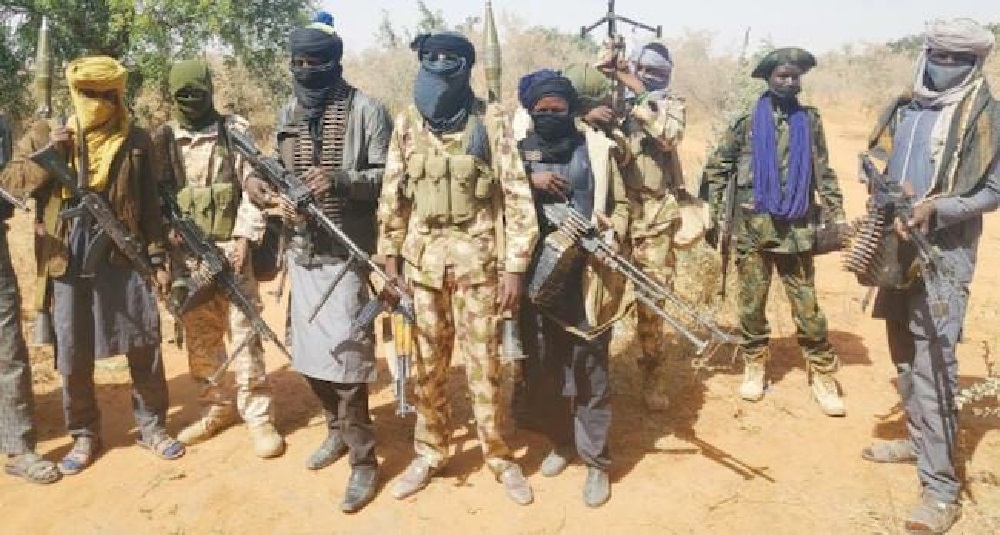
Security operatives have foiled a bandit attack on a community watch and hunters’ base in Sukunkumi village, Kankia Local Government Area of Katsina State.

Security sources said the incident occurred around 7:30 pm on March 26, when about 15 heavily armed bandits on motorcycles attempted to overrun the facility.

According to counter-insurgency expert Zagazola Makama, the sources said security teams quickly moved to the area and engaged the attackers in a gun duel, forcing them to flee into nearby bushes.

The sources added that three motorcycles were recovered at the scene, including two that had earlier been taken from hunters during the clash.

Advertisement

They further stated that a Community Watch member, Yusuf Ibrahim, 30, sustained a gunshot wound to his left leg and was taken to General Hospital Kankia for treatment.

The sources also said patrols and clearance operations have been stepped up in the area to track down the fleeing suspects and prevent further attacks.

Continue Reading

News

Ex-Zamfara Senator Marafa Joins NDC, Citing Court Cases Within ADC

Published

on

By

ADVERTISEMENT
Zoom Ad
ADVERTISEMENT
Zoom Ad

Former Senator representing Zamfara Central Senatorial District, Senator Kabir Garba Marafa, formally defected to the Nigeria Democratic Congress (NDC) on Tuesday, along with his supporters. This move marks his second party switch in under a month.

Senator Marafa, who served in the Senate from 2011 to 2019, was welcomed by the NDC National Leader and Senator for Bayelsa West, Seriake Dickson, at Dickson’s residence in Abuja. The NDC National Chairman, Senator Moses Cleopas, and other party stakeholders were also present.

The defection comes just three weeks after Marafa joined the African Democratic Congress (ADC) on 8th April 2026. He had previously resigned from the All Progressives Congress (APC) on 28th August 2025, citing internal disputes within the ruling party.

Speaking to journalists shortly after receiving his NDC membership card, Marafa explained that his departure from the ADC was prompted by concerns over numerous ongoing legal challenges and the limited time remaining before critical electoral deadlines set by the Independent National Electoral Commission (INEC).

Advertisement

“The point of joining a political party is to provide an opportunity to contest and serve your people. If I were to ask you, what are the chances of the ADC succeeding?” Marafa questioned.

He stressed that his decision wasn’t motivated by ill will towards the ADC. “I’m not wishing them anything bad, as they are my friends and partners. We are united in this struggle. However, considering the number of legal cases pending and the limited time left, anyone intending to contest an election in Nigeria needs to be a member of a substantial political party by, at the latest, 9th May,” he said.

Marafa expressed doubt about the ADC’s ability to resolve its legal issues before key dates for party primaries and candidate registration. “How many court cases are we waiting for to determine the ADC’s fate? Let’s be honest and fair to ourselves. We’re awaiting a decision from the Supreme Court, knowing that the outcome could be evenly split, potentially leading to further litigation.”

He warned that prolonged legal battles could leave him and his supporters without a viable platform. “If that happens, where would we begin? By the time registration closes, what will I tell my people? That I waited in the ADC hoping for a favourable resolution, which isn’t even in their control?”

Advertisement

The former Senator said the decision to move to the NDC followed extensive consultations with his political base and legal advisors. “This is the main reason I met with my supporters to brainstorm and engaged experienced lawyers to assess the situation and advise us. Their advice led me and my supporters to join the NDC.”

Marafa pledged his loyalty to the NDC’s leadership and internal processes. “Therefore, whatever decision my new party, the NDC, takes regarding its presidential candidate when the time comes, we will respect it,” he said.

Senator Dickson described Marafa as a seasoned politician whose arrival would strengthen the NDC, particularly in Zamfara State and the wider North-West geopolitical zone. He urged Marafa to utilise his grassroots network to mobilise support and help address insecurity in the region.

“I welcome and recognise the distinguished delegation you’ve brought with you. Marafa is a significant figure, hailing from the Savannah region of Nigeria,” Dickson said. “This isn’t simply about joining a political party; it’s about a commitment to service, leadership, and delivering results for the people. The NDC is a party for everyone, including the less privileged and those who are hungry and insecure. That’s why our motto is service to the people.”

Advertisement

NDC National Chairman, Senator Moses Cleopas, added that the party is founded on a people-oriented agenda centred on inclusion, service delivery, and national renewal. He noted that the NDC is positioning itself as a credible alternative platform for women, young people, and people with disabilities as political activity intensifies ahead of the 2027 general election.

Marafa’s defection is considered a boost to the NDC’s efforts to expand its presence in the North-West, a region considered crucial in national elections.

Continue Reading

Trending

Copyright © 2024 Naija Blitz News