Economy
Oil tops $100 as Iran vows to keep Hormuz closed

- /home/naijuinz/public_html/wp-content/plugins/mvp-social-buttons/mvp-social-buttons.php on line 27
https://naijablitznews.com/wp-content/uploads/2024/03/crude-oil-production.jpg&description=Oil tops $100 as Iran vows to keep Hormuz closed', 'pinterestShare', 'width=750,height=350'); return false;" title="Pin This Post">
- Share
- Tweet /home/naijuinz/public_html/wp-content/plugins/mvp-social-buttons/mvp-social-buttons.php on line 72
https://naijablitznews.com/wp-content/uploads/2024/03/crude-oil-production.jpg&description=Oil tops $100 as Iran vows to keep Hormuz closed', 'pinterestShare', 'width=750,height=350'); return false;" title="Pin This Post">


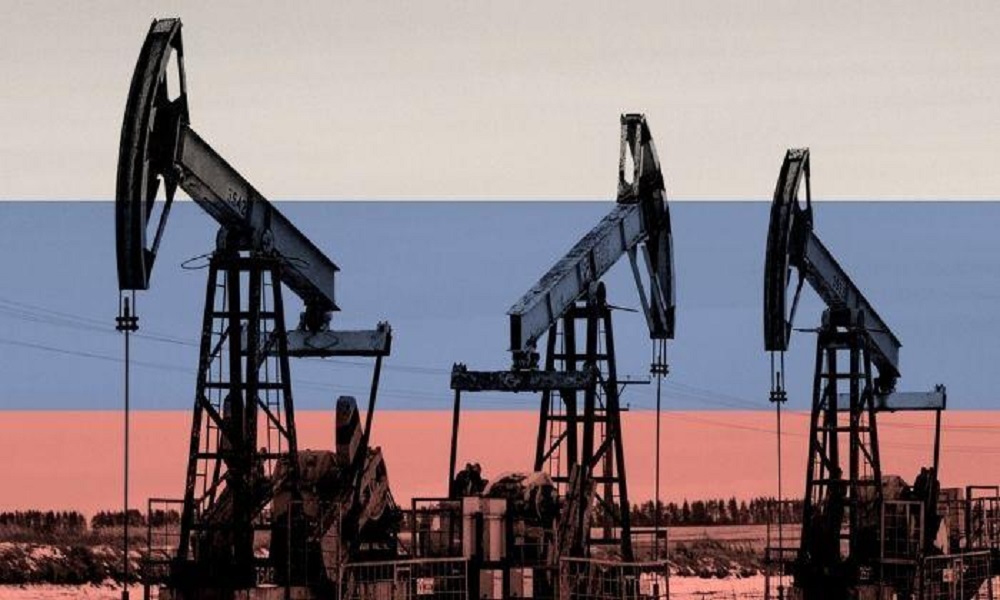
Oil prices soared above $100 and stock markets extended losses as Iran’s new supreme leader ordered the Strait of Hormuz to be kept closed.
Concerns about a long, drawn out conflict were not assuaged by US President Donald Trump saying that stopping the Islamic republic’s “evil empire” was more important than crude prices.
Global markets have been roiled since the United States and Israel launched attacks on Iran. Tehran’s retaliatory strikes on shipping and Gulf neighbours have nearly cut off maritime traffic through the Strait of Hormuz, through which pass around a fifth of the world’s oil and liquefied natural gas.
“Oil prices are up by double-digit percentages again today, as the realisation sinks in that the US is not about to either end the war or institute some kind of convoy system in the region,” said analyst Chris Beauchamp at IG trading and investment platform.
Energy Secretary Chris Wright acknowledged the US military was currently “not ready” to escort tankers through the critical Strait of Hormuz.
Brent North Sea crude, the international benchmark contract peaked at $101.59 per barrel on Thursday.
At $100 per barrel, Brent is up around 38 percent from the eve of the conflict, which began on February 28 when the United States and Israel launched airstrikes against Iran. It is up nearly two-thirds from the start of the year.
Iran’s new supreme leader Mojtaba Khamenei called on Thursday for using “the lever of blocking the Strait of Hormuz”, which the country’s Revolutionary Guards vowed to carry out.
The call followed fresh attacks against Gulf energy targets: an attack on two oil tankers off Iraq killed at least one crew member, while a cargo ship caught fire after being hit by shrapnel.
Oil prices pared their gains after Iran’s deputy foreign minister said that Tehran had allowed ships from some countries to cross the Strait of Hormuz.
The International Energy Agency said the Mideast war “is creating the largest supply disruption in the history of the global oil market”, a day after its member countries agreed to unlock 400 million barrels of oil from their reserves — their largest release ever.
Analyst David Morrison at Trade Nation said that if the announcements of the release of oil from strategic reserves “were supposed to cap prices, then they failed dismally”.
The moves may have “suggested some panic as hostilities across the Middle East intensified”, he added.
The rise in energy prices could cause prices to rise throughout the economy.
“The longer the oil price remains elevated, the more damaging and long lasting the inflation shock will be for the global economy,” noted Kathleen Brooks, research director at trading group XTB.
Wall Street’s main stock indices were down more than one percent in early afternoon trading.
Europe’s leading equity markets closed lower, as did most Asian markets.
eToro US investment analyst Bret Kenwell said that while US equities had held up rather well to date, a long conflict would have a profound impact on businesses.
“If oil doesn’t retreat meaningfully, the pressure won’t just be felt at the pump — it will bleed into margins, spending, and potentially quarters of softer growth,” he said.
The dollar rose further against major rival currencies.
“The dollar has strengthened, driven by safe-haven demand, fears of inflation, and higher-for-longer interest rate expectations,” said Victoria Scholar, head of investment at Interactive Investor.
– Key figures at around 1630 GMT –
Brent North Sea Crude: UP 8.6 percent at $99.88 per barrel
West Texas Intermediate: UP 9.3 percent at $95.38 per barrel
New York – Dow: DOWN 1.2 percent at 46,871.01 points
New York – S&P 500: DOWN 1.2 percent at 6,698.16
New York – Nasdaq Composite: DOWN 1.4 percent at 22,389.89
London – FTSE 100: DOWN 0.5 percent at 10,305.15 (close)
Paris – CAC 40: DOWN 0.8 percent at 7,978.98 (close)
Frankfurt – DAX: DOWN 0.2 percent at 23,589.65 (close)
Tokyo – Nikkei 225: DOWN 1.0 percent at 54,452.96 (close)
Hong Kong – Hang Seng Index: DOWN 0.7 percent at 25,716.76 (close)
Shanghai – Composite: DOWN 0.1 percent at 4,129.10 (close)
Euro/dollar: DOWN at $1.1525 from $1.1574 on Wednesday
Pound/dollar: DOWN at $1.3355 from $1.3419
Dollar/yen: UP at 159.20 yen from 158.92 yen
Euro/pound: UP at 86.31 pence from 86.25 pence
The Central Bank of Nigeria (CBN) has announced that it will be paying closer attention to how banks and other financial institutions in the country are being used, or misused, to move money that could fund terrorism.
In a statement signed by Hakama Sidi-Ali, Acting Director of the apex bank’s Corporate Communications and Investor Relations Department on Tuesday, the CBN said it has made terrorism financing supervision one of its current priorities. According to the statement, this is part of the bank’s “ongoing commitment to protecting the Nigerian financial system from abuse by illicit actors.”
What this means in plain terms is that the CBN will be looking more closely at how banks identify and manage the risk of their platforms being used to fund terrorism, how well they monitor suspicious transactions linked to terrorism financing, how they carry out sanctions ordered against specific individuals or groups, and how promptly they report suspicious activity connected to terrorism financing.
The statement explained that this new push covers four broad areas: how financial institutions manage terrorism financing risk, how they monitor transactions for signs of terrorism financing, how they carry out targeted financial sanctions, and how they report suspicious transactions linked to terrorism.
The apex bank said it will not be sitting back and waiting for problems to surface on their own. Instead, it plans to use a risk-based approach, which means banks and institutions seen as more exposed to this kind of risk will attract closer attention.
This will involve both on-site inspections, where CBN officials visit institutions directly, and off-site checks, where the bank reviews reports and data from a distance.
The goal, the statement said, is to support “effective Anti-Money Laundering, Countering the Financing of Terrorism and Countering Proliferation Financing (AML/CFT/CPF) controls across the financial sector,” referring to the fight against money laundering, terrorism financing, and the financing of weapons proliferation, all of which are governed by existing Nigerian laws and regulations.
The CBN also linked this move to Nigeria’s wider efforts, both at home and internationally, to fight terrorism financing and the financing of weapons proliferation, and to protect the integrity of the country’s financial system.
The apex Bank did not name any specific institution under investigation or give a timeline for these actions, but noted that “further supervisory engagement will be undertaken as appropriate,” suggesting that more steps could follow depending on what its checks turn up.
For the ordinary Nigerian, the announcement signals that the CBN wants banks to be more careful and more accountable in how they track the movement of money through the financial system, particularly where there is any possible link to terrorism or the funding of violent groups.
It is also a reminder that financial institutions operating in Nigeria are expected to follow strict rules designed to keep the banking system safe from being used for illegal purposes.
The Federal Government has approved a new pensionable salary structure for personnel of the Nigerian Armed Forces.
The new structure affects personnel in the Nigerian Army, Nigerian Navy and Nigerian Air Force and took effect from September 1, 2026.
The approval was contained in a circular issued on September 3 by the National Salaries, Incomes and Wages Commission.
Under the new arrangement, Generals, Admirals and Air Chief Marshals occupy the highest level, with their annual pensionable salaries ranging from ₦21.9 million to ₦29.75 million, depending on their salary steps.
The highest figure works out to roughly ₦2.48 million per month when divided by 12.
Lieutenant Generals, Vice Admirals and Air Marshals will have annual pensionable salaries between ₦16.99 million and ₦25.91 million.
Major Generals, Rear Admirals and Air Vice Marshals will receive pensionable salaries ranging from about ₦14.98 million to ₦23.9 million annually.
For Brigadier Generals, Commodores and Air Commodores, the approved annual pensionable figures range from ₦13.86 million to ₦16.39 million.
Colonels, Captains and Group Captains will have annual pensionable salaries between ₦8.31 million and ₦9.49 million, while Lieutenant Colonels, Commanders and Wing Commanders will fall between ₦7.55 million and ₦8.74 million.
Majors, Lieutenant Commanders and Squadron Leaders will have pensionable salaries ranging from ₦5.99 million to ₦7.01 million annually.
Captains, Lieutenants and Flight Lieutenants will receive between ₦5.28 million and ₦6.42 million.
At the junior officer level, Second Lieutenants, Midshipmen and Pilot Officers will have annual pensionable salaries ranging from ₦4.92 million to ₦5.59 million.
The new structure also covers non-commissioned personnel.
Warrant Officers across the three services will have annual pensionable salaries between ₦4.53 million and ₦5.17 million, while Master Warrant Officers will receive between ₦3.94 million and ₦4.93 million.
Warrant Officers will have annual pensionable salaries ranging from ₦3.46 million to ₦4.35 million. Staff Sergeants, Petty Officers and Flight Sergeants will have figures between ₦2.98 million and ₦3.76 million.
Sergeants and Leading Seamen will have annual pensionable salaries ranging from ₦2.81 million to ₦3.16 million, while Corporals and Able Seamen will receive between ₦2.48 million and ₦2.73 million.
Lance Corporals and Seamen will have pensionable salaries between ₦2.32 million and ₦2.58 million annually.
Privates, Ordinary Seamen and Aircraftmen will have figures ranging from ₦2.28 million to ₦2.49 million.
The government clarified that the amounts contained in the new schedule are meant for calculating pension benefits.
They should not be treated as the actual monthly salaries or take-home pay of serving military personnel.


Dollar To Naira Exchange Rate Today 27 January 2023(Black Market)
The Black Market Dollar-to-Naira Exchange Rate for 8th September 2026 Can Be Accessed Below.
NOTE: The exchange rate changes hourly. It depends on the volume of dollars available and the Demand. This means…you can buy or sell 1 dollar at a certain rate, and the price can change (high or low) within hours.
The official naira black market exchange rate in Nigeria today, including the Black Market rates, Bureau De Change (BDC), and CBN rates.
The exchange rate fluctuates hourly based on the supply and demand of dollars in the market.
What’s the dollar to naira black market today, 8th September 2026?
The exchange rate for a dollar to naira at Lagos Parallel Market (Black Market) players sell a dollar for ₦1405 and buy at ₦1395 on Tuesday, 8th September, 2026, according to sources at Bureau De Change (BDC).
Please note that the Central Bank of Nigeria (CBN) does not recognize the parallel market (black market), as it has directed individuals who want to engage in Forex to approach their respective banks.
Dollar to Naira Black Market Rate Today
Dollar to Naira (USD to NGN) Black Market Exchange Rate Today
Selling Rate ₦1405
Buying Rate ₦1395
Dollar to Naira CBN Rate Today
Dollar to Naira (USD to NGN) CBN Rate Today
Highest Rate ₦1320
Lowest Rate ₦1326
CBN tightens watch on banks over terrorism financing

Appeal Court affirms 490-year sentence of ex-NEXIM Bank boss

2027: “You Cannot Stop Us From Entering Your States” — Kwankwaso Warns Governors, Says Nigeria Is Bigger Than Any Election




-

 News24 hours ago
Tunji-Ojo: No Extra Charges For Special Passport Intervention In UK
-

 News24 hours ago
7 Things Parents and Students Should Know About FG’s New Learner Identification Number (LIN)
-

 News24 hours ago
Man Who Returned to Nigeria for His Wedding Beaten to Death
-

 Entertainment24 hours ago
BBN: Nomy Kicked Out Of Big Brother House, Her Participation Revoked
-

 News24 hours ago
Osun: APC Legal Team Rejects Petition Challenging Adeleke’s Victory
-

 News20 hours ago
Tinubu Is Beatable in 2027, I Know Him Well — Makinde’s Running Mate, Daura
-
 News23 hours ago
Fake agency sagas: Ministers, DGs face fresh hurdles over foreign trips
-

 Foreign24 hours ago
Iraqi court affirms woman’s right to Change and register her religion from Muslim to Christian